Cartography of an unfathomable metropolis
Approaching Tokyo without a method is equivalent to losing oneself in the hum of a gray tide of concrete, neon, and overhead cables. With more than two hundred centers dedicated to art, history, science, and everyday micro-history, the Japanese capital operates as a fragmented archive where each district preserves a piece of the national puzzle. Far from strictly commercial circuits, mid-sized and neighborhood museums act as seismographs of Japanese sensibility, capable of explaining in just a few galleries both the aesthetics of emptiness and the obsession with technical precision.
This selection of ten institutions does not seek to exhaust the city’s encyclopedic catalog, but rather to trace a logical route to understanding how a country devastated by earthquakes and military conflict has managed to preserve its memory without renouncing radical avant-gardes. From house-museums hidden in residential alleys to colossal structures signed by global modernity, the journey through these spaces reveals that true Tokyoite identity resides in the permanent contrast between the ancestral and the hyper-technological.
Domesticity and literary genius at Natsume Soseki’s house
In the Shinjuku district, far from the bustle of department stores, stands the memorial dedicated to Natsume Soseki, the author who inaugurated modern Japanese literature with pivotal works such as I Am a Cat. The current building faithfully reconstructs the study where the writer spent his final years, a modest space of austere dignity that contrasts with the dizzying expansion of today’s metropolis.
Crossing the threshold of this house allows one to grasp the intellectual dilemma of Meiji-era Japan: the urgent need to assimilate Western thought without losing the classical Asian substrate. The display cases preserve glasses, notebooks, and first editions with marginal notes that testify to the sharp critical gaze of an author who dissected the contradictions of a society undergoing accelerated mutation.
Craftsmanship and folk lineage in the pavilions of Komaba
The Japan Folk Crafts Museum, known as Nihon Mingeikan and located in the peaceful Meguro neighborhood, embodies an aesthetic philosophy radically opposed to courtly luxury. Founded in 1936 by the philosopher Soetsu Yanagi, this center champions the concept of mingei: utilitarian beauty created by anonymous artisans through everyday objects of ceramics, textiles, and wood.
The building itself, constructed with noble woods and traditional carpentry techniques, invites unhurried contemplation. Here, imperial treasures destined for distant admiration are not exhibited; instead, rice bowls, indigo-dyed fabrics, and bamboo baskets demonstrate how true artistic excellence can flourish in the humblest, most earthy utility.
The archaeology of industrial design in the heart of Shinjuku
21_21 Design Sight, conceived by architect Tadao Ando and designer Issey Miyake, redefines the conventional museum concept into an idea laboratory. Located in Midtown Park, its semi-submerged structure and folded steel roofs mimic the tension of a sheet of paper, anticipating the experimental vocation of its temporary exhibitions.
This space examines how design is not mere superficial decoration, but a tool for social and economic transformation. The exhibitions range from the ergonomics of kitchen utensils to future applications of biomaterials, connecting legendary Japanese precision with the ecological challenges of the 21st century.
Culture in Tokyo is not exhibited as a conquered trophy, but as a continuous conversation between domestic memory and technological audacity.
International avant-garde and cutting-edge architecture in Roppongi
The National Art Center, Tokyo, a masterpiece by Kisho Kurokawa, immediately stands out for its undulating glass-and-steel facade and two massive inverted cones housing cafes and reading rooms. This gigantic cultural container lacks a permanent collection, allowing it to function as a dynamic showcase for global and national artistic trends.
Boasting monumental exhibition space, the center serves as a meeting point where students, families, and art critics converge to debate the shifts in contemporary plastic arts. Its airy, luminous architecture symbolizes the openness of a city that, despite its apparent containment, absorbs and reworks influences from across the globe.
Monographic rigor and abstraction at the Bridgestone Museum
Reborn under the name Artizon Museum and situated in the financial district of Kyobashi, this center demonstrates industrial patronage applied to high culture. Founded by the Ishibashi family, owners of the Bridgestone tire giant, it houses an exceptional collection ranging from French impressionism to postwar American abstraction.
The museographic layout is notable for its lighting sobriety and absolute respect for the viewer, allowing unusual visual dialogues to be established between Western masters like Paul Cézanne or Jackson Pollock and Japanese avant-garde creators who assimilated Western lessons without sacrificing their native visual grammar.
Urban geography and daily memory at the Edo-Tokyo Museum
Located in the Ryogoku district, the Edo-Tokyo Museum offers a monumental immersion into the transformation of the former shogunate capital into today’s megalopolis. Through full-scale models, reproductions of historical bridges, and cartographic documents, visitors traverse centuries of history that explain the ephemeral architecture and resilience of a city rebuilt after fires, earthquakes, and bombings.
The itinerary emphasizes the daily life of ordinary citizens—merchants, kabuki actors, artisans, and civil servants—offering a sociological perspective that transcends official chronicles of emperors and feudal lords.
The refuge of animated imagination in Mitaka
On the western edge of the capital, the Ghibli Museum in Mitaka transports visitors into the poetic universe of Hayao Miyazaki and his team. More than a traditional exhibition space, the building is a labyrinth of brick towers, artisanal stained glass, and wooden walkways where childhood and fantasy materialize in every corner.
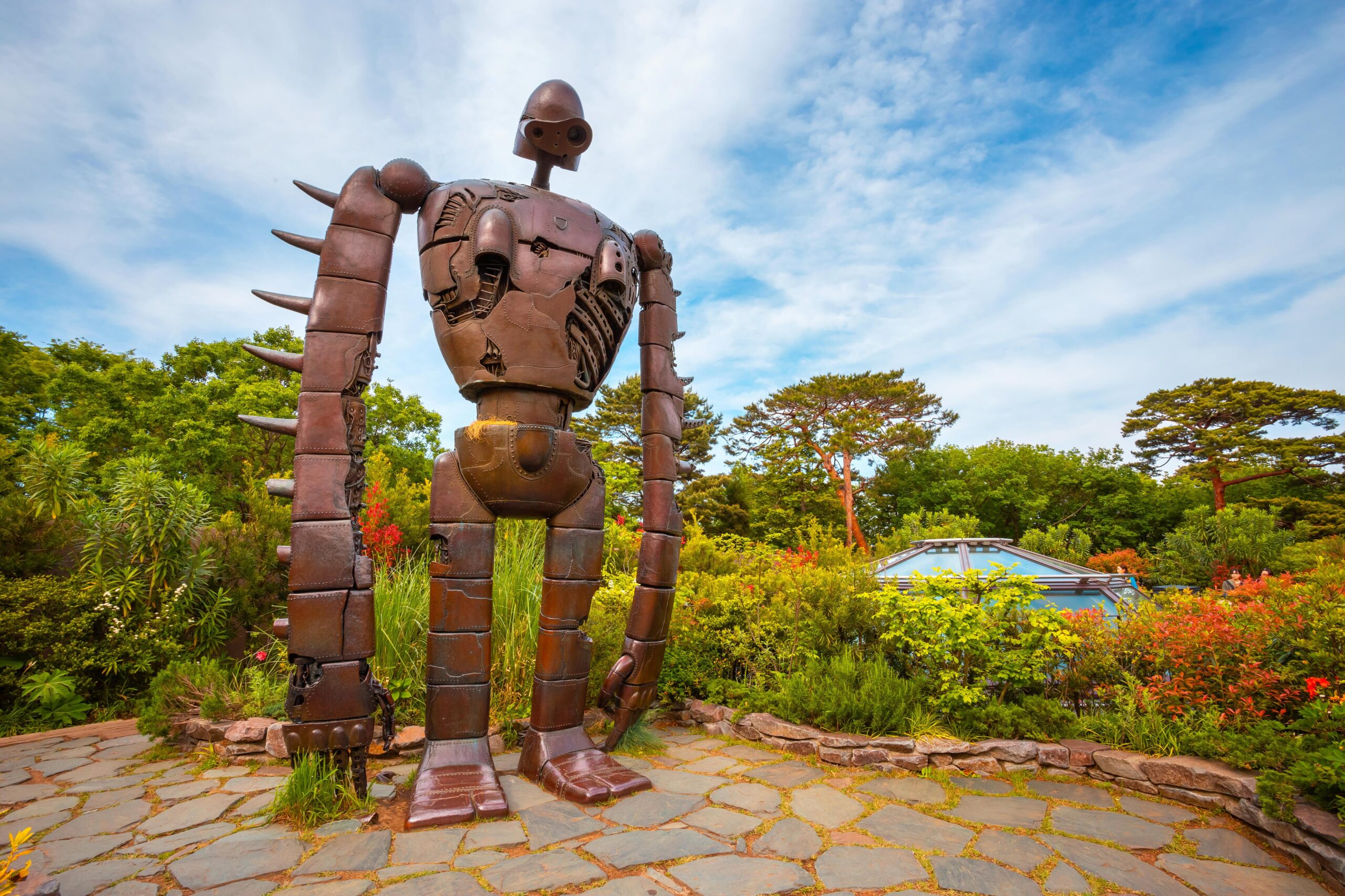
The experience prioritizes intuition over academic rigidity: there is no mandatory predetermined route, but rather a constant invitation to get lost, to discover original animation sketches, giant zoetropes, and a rooftop guarded by the imposing robot from Laputa. It is a living tribute to the capacity of storytelling through the artisanal technique of drawing on paper.
Samurai tradition and the aesthetics of the blade in Shinjuku
The Japanese Sword Museum, managed by the Society for the Preservation of Japanese Art Swords, is located in the quiet district of Ryogoku to demystify the violence associated with traditional steel and elevate it to the category of supreme aesthetic achievement. The exhibited blades, forged with millimeter folds and clay-tempered, reflect a spiritual pursuit of formal perfection.
The explanatory labels detail the technical differences between various historical smithing schools, demonstrating that the Japanese sword was not merely a lethal weapon, but a symbol of moral authority, spiritual purity, and supreme technical skill.
Understanding Japan through its museums is accepting that the humblest detail holds as many truths as the masterpiece consecrated by the centuries.
Practical guide
Planning a visit to Tokyo’s museums requires understanding the administrative operation of the capital and its particular cultural access rules.
- Advance reservations: High-demand spaces like the Ghibli Museum require purchasing tickets months in advance through official platforms, as daily capacity is strictly limited.
- Closing schedules: The vast majority of centers close on Mondays or Tuesdays. It is essential to verify seasonal hours on their official websites before setting out.
- Urban transport: The subway and urban rail network efficiently connects all mentioned points. Acquiring a rechargeable card like Suica or Pasmo facilitates transfers.
- Etiquette rules: In many museums, photographic equipment is prohibited in main galleries, and visitors are asked to leave umbrellas and bulky backpacks in free lockers.
The silent echo of ancient stones
When evening falls over the Sumida River and the skyscrapers of Shinjuku ignite their constellations of artificial light, Tokyo’s museums close their physical doors to yield to the city’s true essence: the collective memory that survives in the gloom of its streets. Visiting these ten centers is not a mere exercise in accumulating historical data, but a way to tune into the intimate pulse of a civilization that has known how to converse with its past to build the future without missing a beat.
Source in EN: El País – El Viajero