
The Geometry of Dawn in the Heart of the Marshland
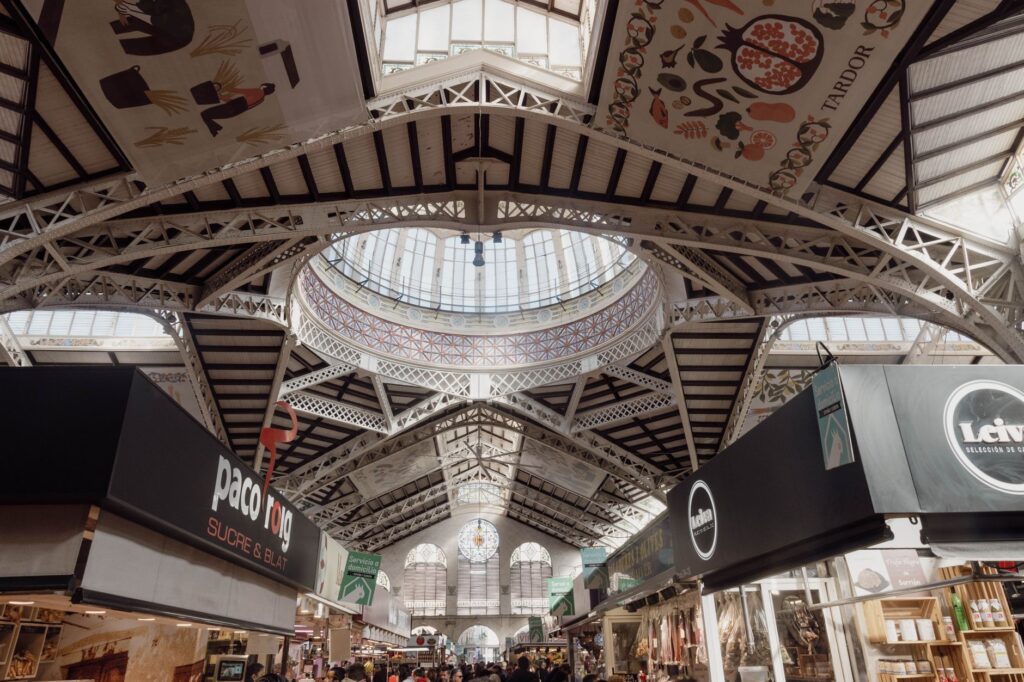
Daybreak in Huelva does not begin with the first ray of sunlight striking the city rooftops, but rather with the creak of fishmongers’ stalls and the muffled pulse of the tides surging up the Odiel and Tinto estuaries. At the beating heart of the capital, the Central Market stands not merely as a commercial trading space, but as the secular sanctuary where the daily liturgy of fresh produce is performed. Here, the wrought-iron and exposed-brick architecture—a testament to the city’s British and seafaring legacy—houses a human ecosystem where fishmongers, farmers, and regular patrons maintain a centuries-old dialogue between the clayey soil and the Atlantic expanse.
Crossing the aisles of the market is an immersion into a territory where ingredients rule with unquestionable authority. The stalls unfold a zoological and botanical catalog that encapsulates the biodiversity of a unique geographical corner in Europe. In this setting, local gastronomy cannot be understood without the physical context that sustains it: a shifting interface between wetlands, salt marshes, and pine forests that nurtures a pantry of international prestige. Each morning, the corridors become a showcase where the rigor of origin commands respect far above global standardization.
The Geography of Flavor: Between Estuary and Pine Forest
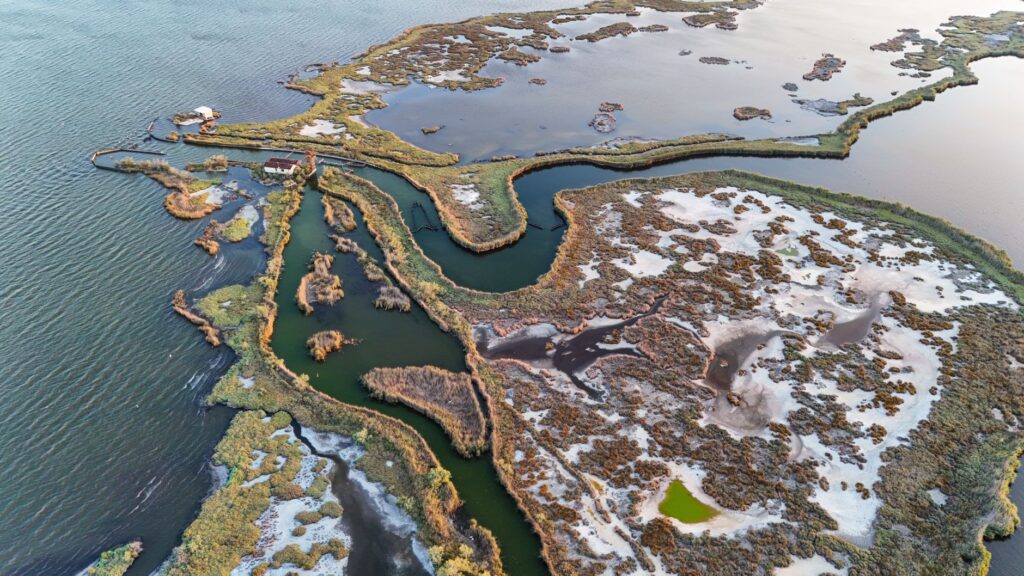
To grasp Huelva’s culinary magnitude, one must look beyond its coastline and delve into the duality of its terrain. On one hand, the marshland acts as a natural filter and an inexhaustible biological nursery where crustaceans and estuary fish thrive under unique nutrient conditions. On the other hand, the interior highlands and clay soils provide the terrestrial counterpoint, shaping a larder crossed by salinity and acorn-fed heritage. This combination explains why Onubense cuisine oscillates naturally between marine delicacy and the robust character of holm oak and Iberian pork.
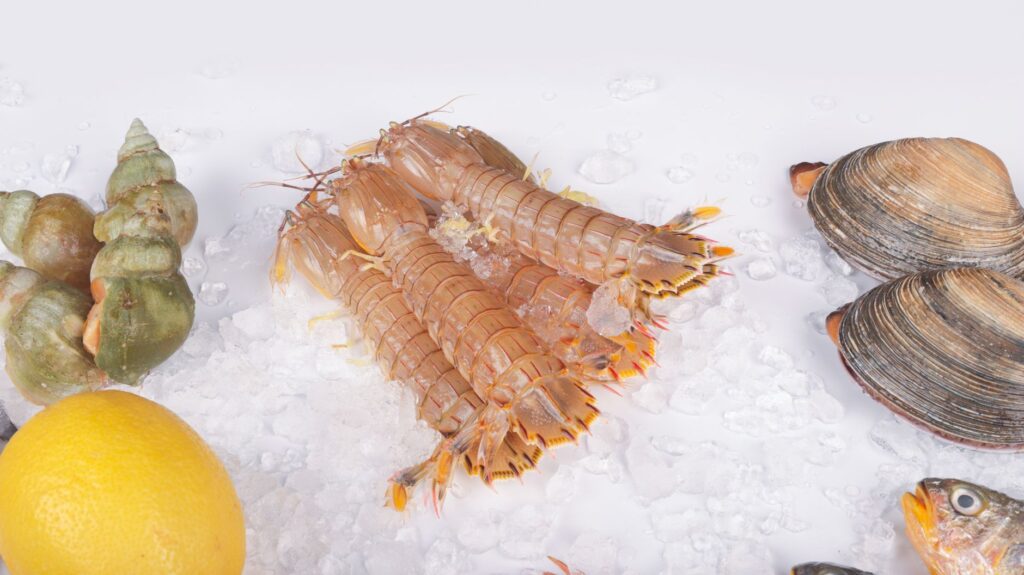
The market stalls reflect this cartography with millimeter precision. Clams harvested in Punta Umbría sit alongside pearl-toned white prawns caught in the deep waters of the Gulf of Cadiz. This is not a capricious offering, but the result of specific marine currents and artisanal inshore fishing traditions that have resisted industrial pressures. Here, knowledge of the environment is passed down through generations, ensuring that every specimen retains the organoleptic properties that set it apart from any other peninsular product.
The Cathedral of Produce: Historic Stalls
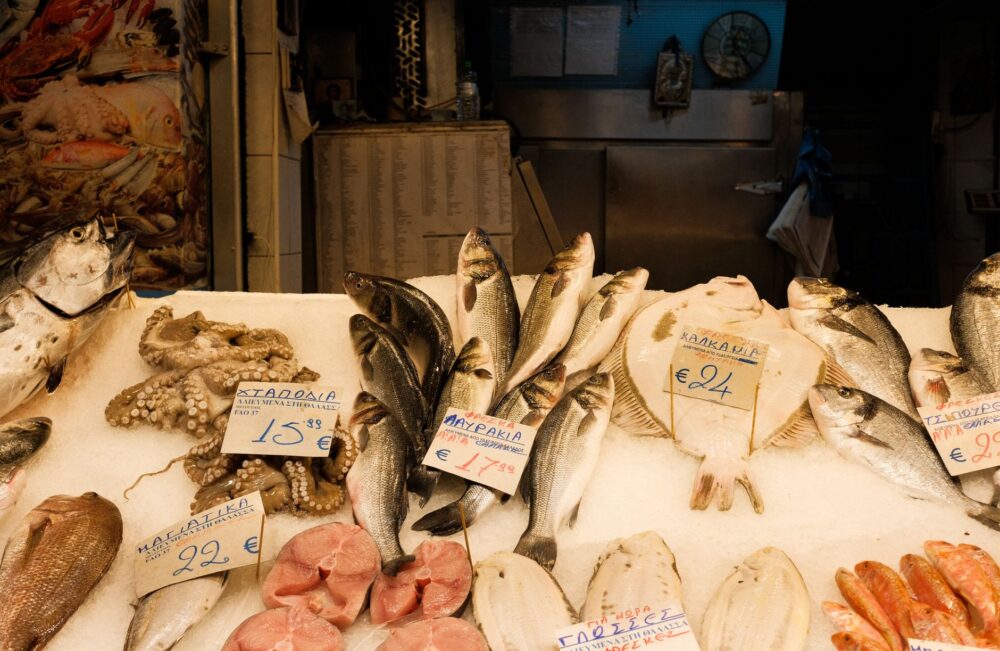
Wandering through the halls of the Central Market is an exercise in sensory archaeology. The marble countertops display items that look as though they were sculpted by the tide itself. Flounder, sole, and various white fish follow one another in a palette of silvery grays that exude absolute freshness. Behind each counter, professionals ply their trade with the precision of surgeons and the encyclopedic memory of old-school sailors. They are the true guardians of a gastronomic culture that shuns artifice and bets entirely on the naked excellence of the raw material.
The market is not a showcase for clueless tourists, but the living archive where Huelva’s memory is weighed, cut, and wrapped in butcher’s paper with the reverence of a sacred ritual.
In this space, time seems governed by the lunar cycle. Regular shoppers know that the best moment to acquire certain species coincides with high tide, when boats complete their unloads and transporters deposit wooden crates freshly arrived from Ayamonte or Isla Cristina. Conversations among vendors revolve around water temperature, the direction of the western wind, and the state of the fishing grounds, weaving a network of neighborhood complicity that turns the weekly grocery run into an act of social communion.
The Science of Fire and Salt: The Prawn and the Estuary
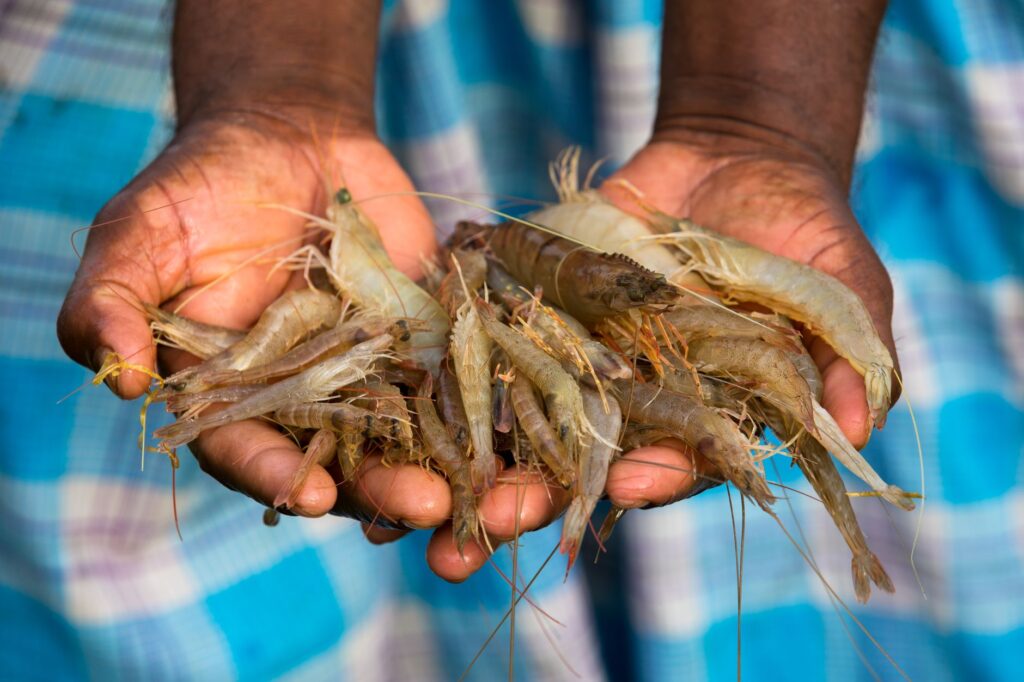
Contemporary haute cuisine often seeks complexity through avant-garde techniques, but in Huelva, gastronomic summit is achieved through subtraction. The golden rule in local kitchens is as simple as it is unforgiving: the better the ingredient, the less manipulation it requires. The white prawn, that undisputed icon of provincial gastronomy, barely needs a quick boil in seawater followed by a thermal shock in cold brine to attain the textural and iodine-rich perfection that has propelled it to global fame.
Meanwhile, estuary fish—gilthead bream, sea bass, and mullet grown in former salt pans transformed into natural ponds—offer a unique fat marbling, a consequence of their diet rich in small shrimp and plankton. Cooked simply in salt crust or butterflied over vine-shoot and olive-wood embers, these fish prove that sustainability and gastronomic luxury can walk hand in hand. The clean fat of the estuary melts on the palate with mineral notes that evoke the clayey muds of the ria.
The Resilience of Traditional Trades
The dynamism of the local market contrasts with the fragility of the trades that feed it. Sailors, salt workers, shellfish gatherers, and artisanal canners form part of a value chain facing the challenges of climate change and the economic pressure of big-box retailers. Nevertheless, Huelva maintains a fierce will for identity-based resistance. Small producers champion extractive methods respectful of the seabed, well aware that overexploiting the marshland would mean destroying the very source of their survival.
This tension between modernity and tradition is also palpable in the bars and taverns surrounding the market, where clientele shares counter space with the vendors themselves. In these establishments, market cuisine is not a marketing concept, but an everyday reality: whatever fails to sell in the morning is transformed into midday stews—chickpeas with cuttlefish, skate with pimentón, or croaker meatballs—closing a perfect circle of resourcefulness and circular economy that has operated seamlessly for centuries.
The Invisible Pulse of the Estuary and Sunset
When activity in the market slows down toward noon and the metal shutters begin to roll down, Huelva’s gastronomic life shifts toward the docks and the terraces facing the Odiel estuary. This is the moment when the afternoon light takes on a golden, ash-toned hue, reflecting off the salt marshes like an antique silver mirror. In this waiting beat, the city seems to breathe in unison with the rhythm of the waters flowing toward the Atlantic, preparing the ground for dinner.
Produce-driven restaurants and maritime taverns pick up the baton from the food halls, offering a cuisine devoid of vanity yet rich in geographic nuances. Sitting at a table facing the port at sunset makes one realize that Onubense identity is not found in pharaonic monuments, but in fidelity to a primary flavor: the precise touch of sea salt, the crunch of a well-executed fry, and the unmistakable aroma of a land permanently turned toward the sea.
Practical guide
How to get there: Huelva features excellent rail connections via Medium Distance and Alvia trains linking it to Seville and Madrid. The nearest airport is Seville (SVQ), located about 90 kilometers away via the A-49 highway.
When to go: Spring months (April through June) and early autumn (September and October) offer optimal temperatures and the peak season for tasting exceptional seafood without massive tourist crowds.
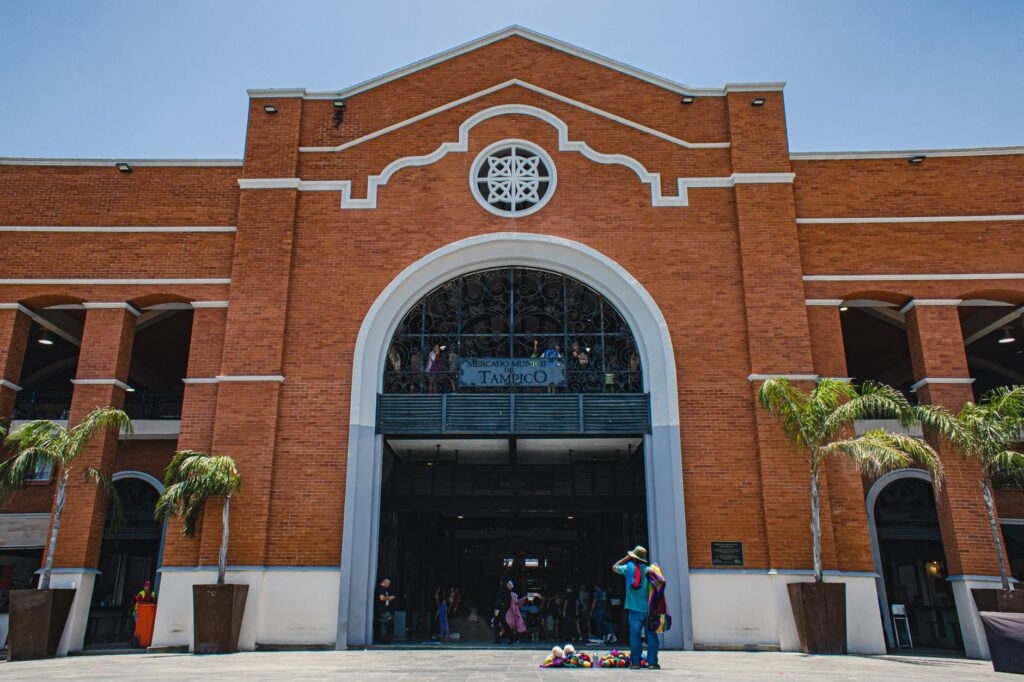
Where to shop and eat: The Central Market (Calle Concepción) is open Monday through Saturday mornings. To taste produce on-site, the surrounding area hosts historic taverns such as Bar El Portichuelo and restaurants specializing in zero-kilometer seafood like Alonso.
Local etiquette recommendations: Respect traditional market trading hours and avoid interfering in the busy morning workflow of the high-volume stalls. Always opt for seasonal produce with certified local origins.
The Eternal Echo of the Marshland in Memory
There are places in the world where cooking becomes a direct extension of the landscape, an edible cartography explaining where we come from and what sustains us. Huelva is undoubtedly one of those exceptional enclaves. In every bite of its seafood, in every saline nuance of its estuary fish, and in the relentless bustle of its market halls beats the history of a community that has learned to negotiate with the tide and extract an unalterable gastronomic heritage from clay and salt water.
At the end of the journey, when the traveler leaves the city with the distant echo of seagulls and the subtle aroma of the Atlantic clinging to their clothes, they realize that the true wealth of this territory lies not in ostentatious luxury, but in the radical authenticity of its roots. The market liturgy and the mystery of the marshland continue their unalterable course, reminding us that as long as there are men and women willing to wake up early to seek the sea’s finest bounty, the Onubense table will remain one of European gastronomy’s great altars.