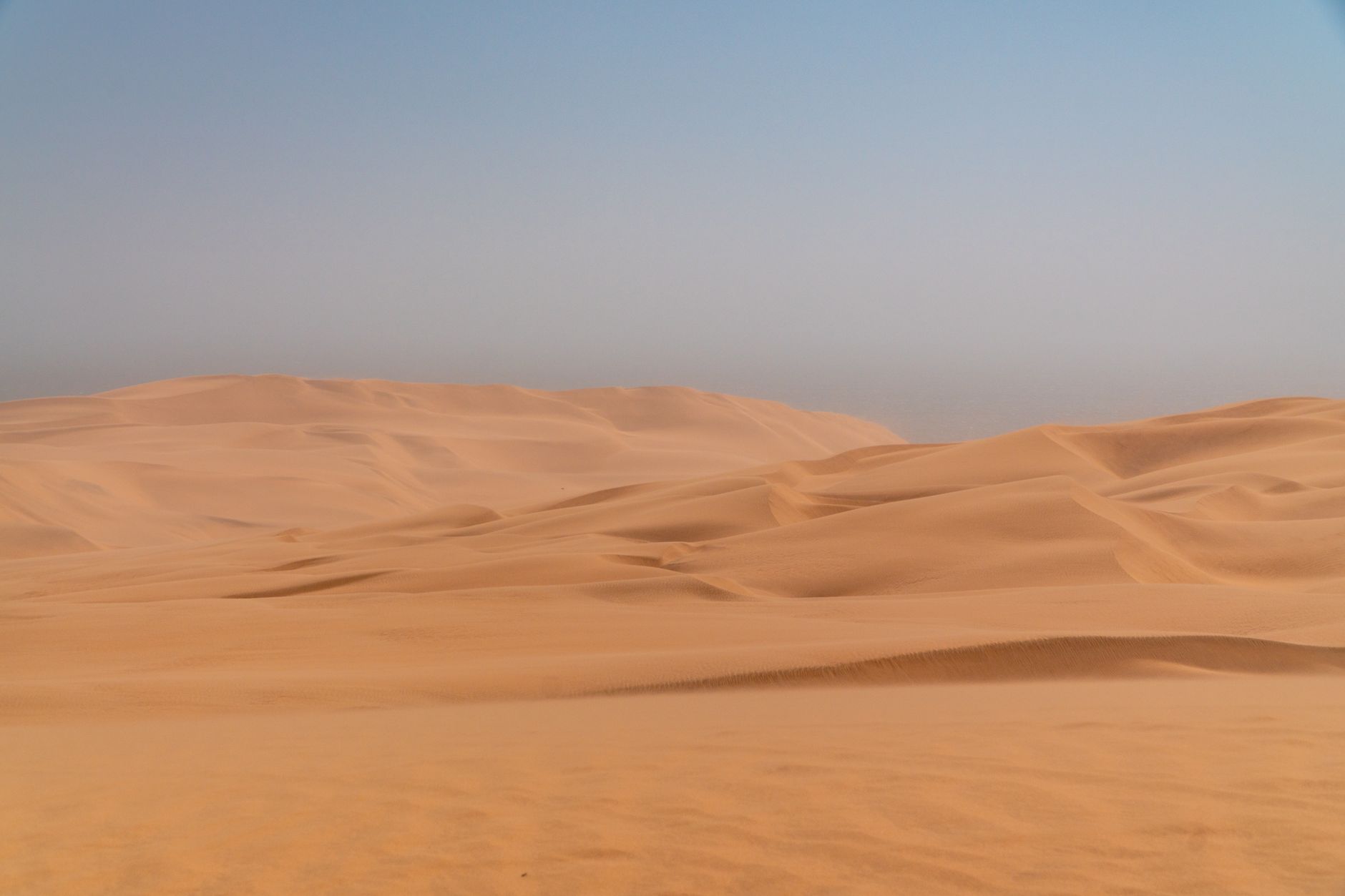

At the precise meridian where the apricot-hued dunes of the Namib Desert plunge into the frigid Atlantic currents, a line of steel defies the laws of geology. This is not merely a mode of transport; it is a feat of mechanical endurance traversing one of the most hostile environments on Earth. Namibia’s railway system, a product of colonial ambition turned into a cornerstone of modern mining and tourism logistics, serves as a unique case study in African civil engineering. Here, the primary adversary is not gradient or load, but the relentless encroachment of silica, driven by southwestern winds that can bury tracks under meters of sand in a matter of hours.
To travel the route connecting the port of Walvis Bay with the capital, Windhoek, is to witness a radical climatic and topographic transition. From the salt-laden fogs of the coast, which corrode metal with unusual voracity, to the central plateaus rising over 1,600 meters above sea level, the train must overcome more than just elevation. It requires a logistical maintenance operation involving permanent crews dedicated to the manual and mechanical removal of sand. This report unravels the complexity of a network that, far from being a relic of the past, is projected as the commercial lung for landlocked Southern African nations.
Colonial Blueprints and the Arid Frontier
The genesis of this network dates back to the late 19th century, when the German colonial administration of then-German South West Africa identified the need to connect the interior with the coast to facilitate the transport of supplies and mineral extraction. The construction of the initial line between Swakopmund and Windhoek, begun in 1897, faced chronic water shortages and terrain that decimated the machinery of the era. Engineers initially opted for a 600 mm narrow gauge, which allowed for tighter curves and faster installation in the rugged mountainous regions of the central escarpment.
However, following World War I and the transition of the territory to South African administration, the network was converted to Cape gauge (1,067 mm), the regional standard of the SADC (Southern African Development Community). This technical unification was a logistical milestone, theoretically allowing Namibian wagons to reach the copper mines of Zambia or the ports of Mozambique. The current infrastructure still retains masonry bridges and riveted steel structures that have withstood over a century of extreme thermal oscillations, proving the quality of the original engineering adapted to the desert’s rigor.
«Railway construction in Namibia is not an act of war against the desert, but a constant, sometimes violent dialogue with its dunes; if you stop listening to the wind for a day, the tracks vanish beneath a mountain of sand.»
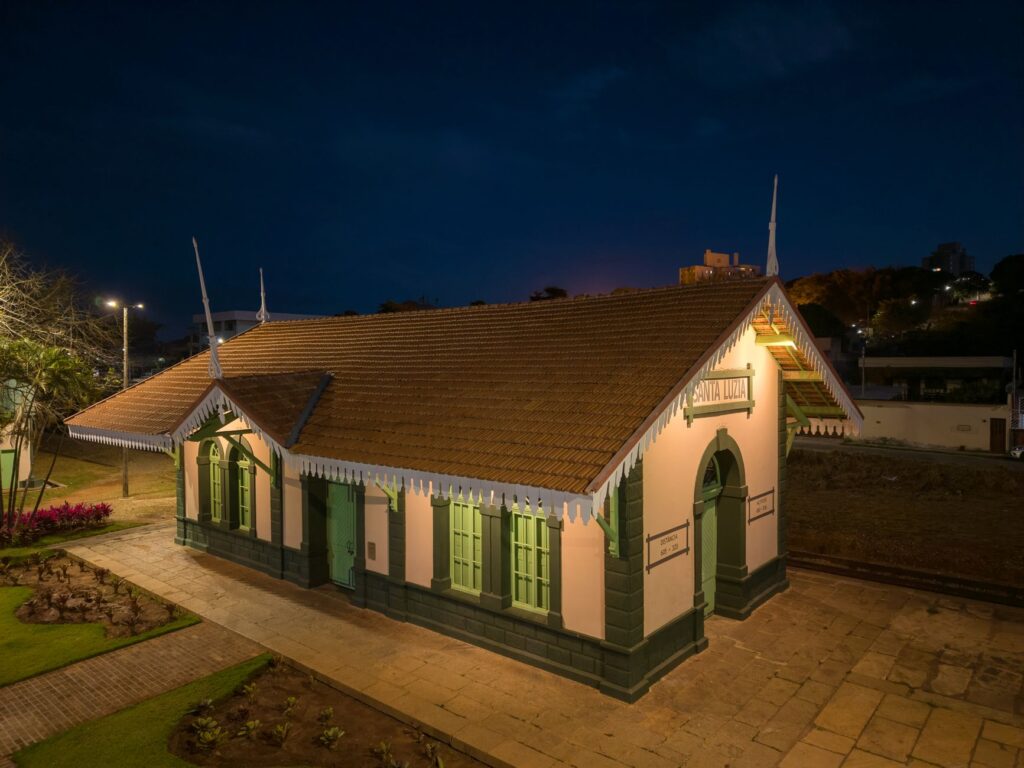
The transition between different construction eras is visible in station designs. While older stops reflect a German neo-Gothic or Jugendstil style, modern expansions in Walvis Bay showcase an industrial functionality designed for mass container handling. This aesthetic duality underscores the line’s dual nature: a historical monument and a vital economic artery.

The Dune Encroachment: Engineering Against the Namib
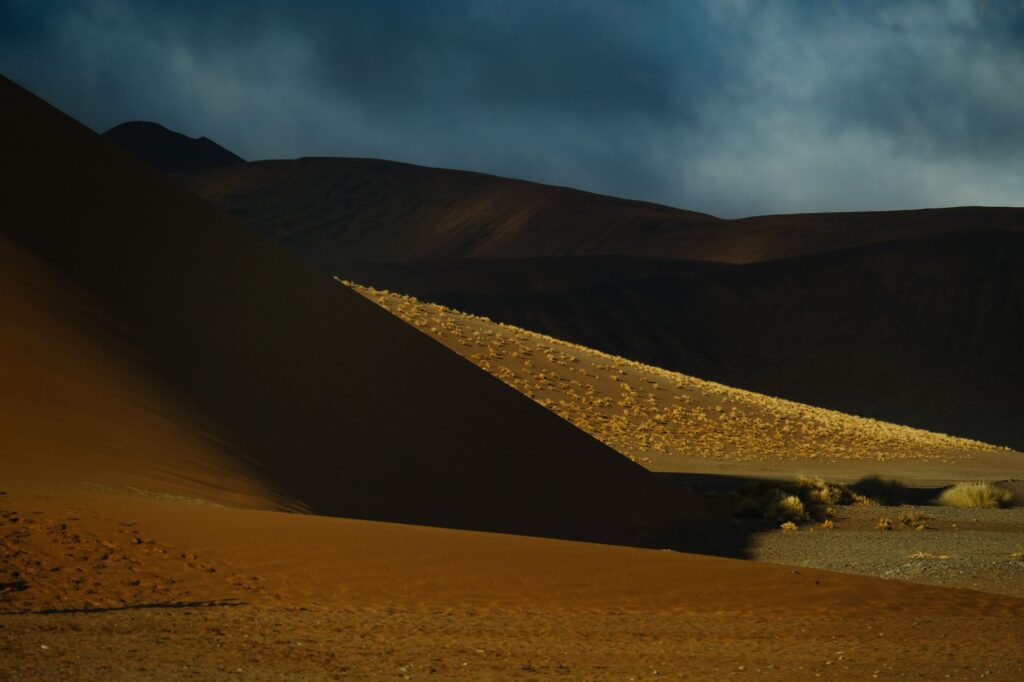
The most critical section of the network lies in the vicinity of Walvis Bay and Swakopmund. Here, the Namib Desert is not static. Barchan dunes, characterized by their crescent shape, migrate several meters per year. For a railway engineer, this represents a logistical nightmare. Sand does not just obstruct the path; it acts as a potent abrasive, wearing down wheel flanges and the internal components of diesel-electric locomotives.
To combat this phenomenon, TransNamib (the national operator) employs a combination of slope stabilization techniques and physical barriers. In certain areas, salt-resistant plant species have been planted to fix the substrate, though the most common solution remains the use of heavy machinery to clear the ballast. The accumulation of fine sand in the ballast is particularly dangerous, as it prevents proper drainage and reduces track elasticity, which can lead to derailments as the steel deforms under the midday sun.
Furthermore, the famous «Namib fog,» which penetrates up to 50 kilometers inland, introduces a saline moisture factor that accelerates oxidation. Locomotives must be equipped with high-efficiency air filtration systems to prevent silica dust from entering the combustion engines—a technical challenge that has necessitated the adaptation of international models to Namibia’s specific conditions.
Walvis Bay: The Gateway to the SADC
From a macroeconomic perspective, the railway is the centerpiece of the Walvis Bay Corridor. This multimodal system aims to position the Namibian port as the preferred gateway for Botswana, Zimbabwe, and South Africa’s Gauteng province. The train’s efficiency in transporting bulk cargo—especially uranium, copper, and fuel—is unbeatable compared to road transport across the vast distances of the Kalahari.

- Mining Logistics: Transporting uranium concentrate from the Rössing and Husab mines to the port requires strict security protocols and impeccable track stability.
- Regional Connectivity: The Trans-Kalahari line project aims to link the Namibian network with Botswana’s, reducing transit times for coal and mineral exports to the Atlantic.
- Fuel Supply: Much of the diesel consumed in the interior arrives via tanker trains from maritime terminals, ensuring supply in remote areas.
The modernization of the locomotive fleet, with the recent acquisition of more powerful and efficient units, seeks to increase the frequency of freight convoys. However, the single-track infrastructure remains a bottleneck that requires extremely precise traffic management to avoid delays at crossing loops located in the middle of nowhere.
Ghostly Platforms: The Architecture of Solitude
Railway stations in Namibia are far more than stopping points; they are architectural landmarks that narrate the country’s history. Windhoek Station, completed in 1912, is a superb example of colonial architecture, with its steeply pitched roofs and a small railway museum housing the «Hope,» one of the first locomotives to traverse these lands. Its location in the heart of the capital makes it a nerve center where Germanic order blends with contemporary African bustle.
To the west, Swakopmund Station is perhaps the most iconic. Now converted into a luxury hotel and casino, its facade retains the elegance of the turn of the century, recalling the era when passengers disembarked from European steamers to begin their journey into the continent’s interior. In contrast, stations in small inland towns like Usakos or Karibib display a functional sobriety, with local stone structures designed to maintain coolness during hours of extreme heat.
These buildings act as social oases. In many rural communities, the train’s arrival remains the event that sets the week’s rhythm. Railway architecture here did not just serve a technical function; it sought to project an image of permanence and civilization in a territory perceived as untamable.
Diesel Power in the Dust: Maintaining the Fleet
Traction in Namibia is exclusively diesel-electric. Electrifying the network is unfeasible due to the enormous distances and low population density, which would require astronomical investment in substations and overhead lines. The dominant locomotives are models of American and Chinese origin, adapted with reinforced cooling systems to operate in temperatures exceeding 45 degrees Celsius (113°F).
Maintaining these machines is a labor of precision. Desert dust is so fine it penetrates even the tightest seals. At the Windhoek workshops, technicians perform constant checks on fuel and air filtration systems. A breakdown in the middle of the desert is not just a logistical problem; it can be an emergency situation due to isolation and weather conditions.
«Railway engineering in Southern Africa is a struggle of endurance; it is not the fastest who wins, but the one who best understands material fatigue under a vertical sun.»
In addition to freight, the rolling stock includes passenger wagons that, while modest by European standards, offer the necessary robustness for long hauls. Sleeper cars and dining wagons on regular services maintain an air of nostalgia, with wooden interiors and brass fittings that have survived decades of service.
The Desert Express: A Slow Journey Through Time
For the traveler, the Desert Express represents the most sophisticated side of this system. This luxury tourist train connects Windhoek with Swakopmund on a journey that prioritizes landscape contemplation over speed. Through its wide windows, one observes the transition from the thorny scrub hills of the highlands to the infinite plains that precede the dunes.
The service is designed to highlight local gastronomy, featuring game meats (oryx, kudu) and South African wines, served as the train winds through ravines of desolating beauty. However, even in this luxury setting, the reality of the desert is ever-present. The train makes technical stops so passengers can walk on the dunes at sunset, an experience that underscores the fragility of the tracks against the immensity of the Namib.

This service is not just a tourist attraction; it is a public relations tool for TransNamib, proving that its infrastructure can offer international standards of comfort. It is the polished face of a network that, in its day-to-day operations, is dedicated to the hard work of moving thousands of tons of ore under an unforgiving sun.
Sand Shifting: The Human Labor of Rail Clearance
Behind every train that reaches its destination is an invisible army of workers. Track maintenance in Namibia is a Herculean task. Permanent way crews patrol assigned sections, detecting hot spots (where heat may have expanded the rail to the point of buckling) and, above all, monitoring dune movement.
In areas of high accumulation, clearance trains equipped with mechanical shovels remove sand and deposit it far from the track bed. However, in many sections, the work remains manual. Men equipped with shovels work under the sun to clear the ballast, a task reminiscent of the line’s original builders. This dependence on the human factor is one of the defining characteristics of African railways: a symbiosis between technology and direct physical effort.
Safety is also a constant concern. Wildlife, from warthogs to elephants in the northern regions, frequently crosses the tracks. Drivers must be trained to react to these contingencies in an environment where the braking distance of a heavy freight train can exceed one kilometer.
Vision 2030: Expanding the Iron Backbone
Namibia stands on the threshold of an energy revolution that could transform its railway. The country possesses some of the world’s best solar and wind resources, positioning it as a future hub for green hydrogen production. Preliminary plans exist to convert part of the locomotive fleet to hydrogen fuel cells, which would eliminate dependence on imported diesel and reduce the carbon footprint of mining transport.
Furthermore, expansion northward, connecting with Angola’s network, and consolidating the route to Botswana are projects on the national development agenda. The railway is not seen as a relic, but as the necessary infrastructure for Namibia to transition from an enclave economy to a regional logistical node. Engineering, once again, will have to find solutions to cross new deserts and overcome new escarpments, keeping alive the flame of a network born of ambition and surviving through tenacity.
The challenge remains the same as it was a century ago: keeping the steel free of sand. As long as the wind continues to blow from the Atlantic, Namibia’s railway will remain a testament to the human will to connect what geography seems determined to keep apart.
Practical guide
When planning a rail journey in Namibia, it is essential to understand that the network prioritizes freight over passengers, requiring flexibility and an expeditionary mindset.
- Passenger Services: TransNamib’s regular service, known as StarLine, offers affordable transport with sleeper cars between Windhoek and major cities (Walvis Bay, Keetmanshoop). This is not a high-speed service; journeys are often overnight and subject to delays.
- Desert Express: This is the luxury option. It operates on specific dates, usually once or twice a week. It is recommended to book at least three months in advance, especially during the peak season (May to September).
- Climate and Packing: Temperatures fluctuate drastically. On the train, nights can be very cold due to the desert air and air conditioning. Lightweight warm clothing is recommended even in summer.
- Documentation: If you plan to cross borders (though most passenger services are currently domestic), ensure you check visa requirements for Namibia. Most European and American tourists do not require one for short stays.
- Safety: Main stations have private security. However, it is advised not to wander through freight areas or workshops without prior authorization, as these are active industrial zones.
- Connections: From Hosea Kutako International Airport (WDH), there are shuttle services to central Windhoek, where the main station is located.
Traveling by train through Namibia is one of the last great railway adventures. It is an opportunity to see the desert from a perspective that no 4×4 vehicle can offer: a straight stroke of civilization cutting through the immensity of a landscape that seems to have no end.