
Introduction to Atlantic Isolation and the Need for the Air Bridge
Across the vast and often untamable chessboard of the North Atlantic Ocean, the nine islands comprising the Azorean archipelago drift as submerged peaks more than fifteen hundred kilometers from the Iberian Peninsula. For centuries, isolation was the sole constant for communities separated by deep-water channels, unpredictable currents, and furious storms. Today, overcoming this distance no longer depends exclusively on fishing schooners or cargo ferries, but rather on a minutely choreographed network of air transport defying the laws of oceanic meteorology.
The air connectivity system in the Azores is neither a commercial luxury nor an ancillary tourist service; it is the primary artery guaranteeing medical supplies, social cohesion, and the economic continuity of local inhabitants. Daily, a fleet of short-range turboprop aircraft takes off and lands on runways where the margin of error is dictated by wind force and the capricious formation of fog banks. This report examines the complex human and technical machinery that keeps disparate islands like Flores, São Miguel, and Santa Maria bound together, uncovering the operational challenges of one of the most unique airport networks on the planet.
Volcanic Topography and the Engineering Challenge of Runways
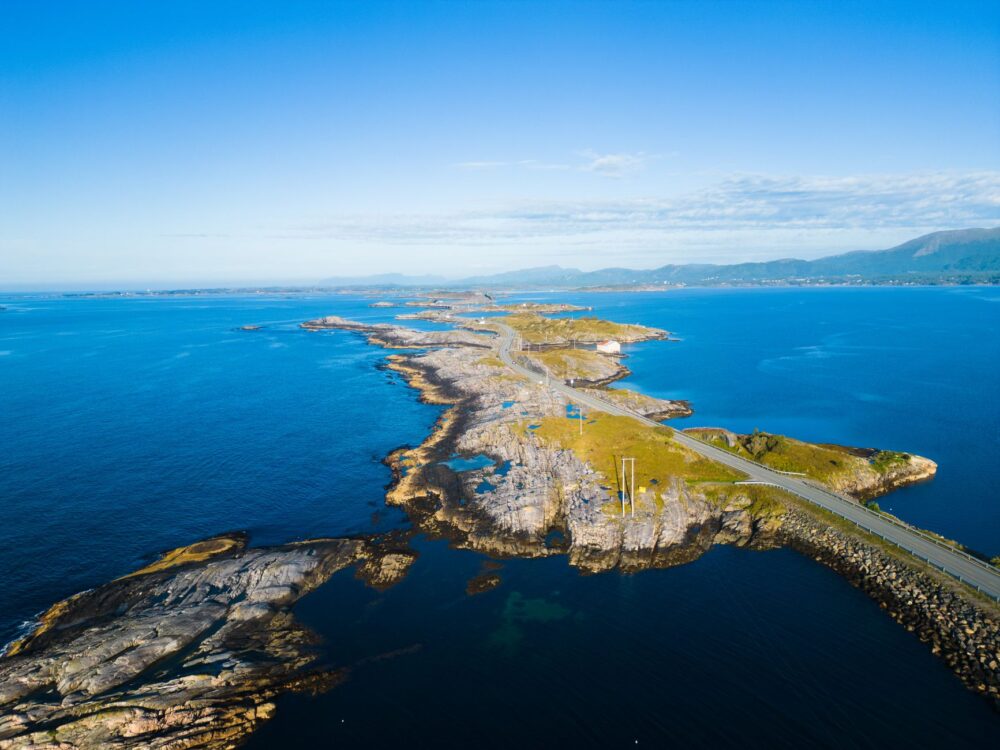
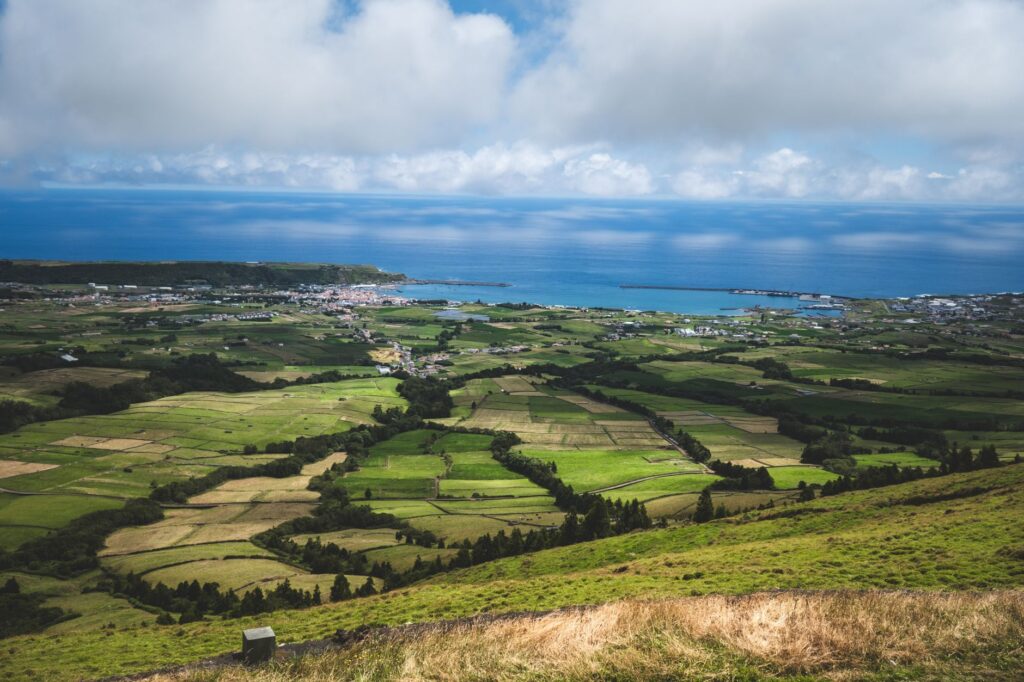
Building and maintaining airport infrastructure in a topography of recent volcanic origin represents a colossal challenge for civil engineering. The Azores lack natural plateaus or broad plains suitable for conventional commercial aviation. Consequently, the vast majority of landing strips have been sculpted along coastal cliffs, artificial platforms reclaimed from the sea, or narrow valleys wedged between extinct calderas.
Flores Airport, situated on the western edge of the archipelago, exemplifies this architectural audacity. Its runway stretches across a narrow strip of land bounded by the roaring ocean, where pilots must confront wind shear and downdrafts generated by nearby mountain ridges. The length of these runways is frequently constrained, necessitating specialized aircraft capable of braking within remarkably short distances. Local engineers have had to design advanced drainage systems to prevent intense monsoon-like precipitation from flooding the asphalt—a phenomenon that for decades completely isolated the westernmost islands during the harshest weeks of the Atlantic winter.
The Turboprop Fleet and the Backbone of SATA Air Açores
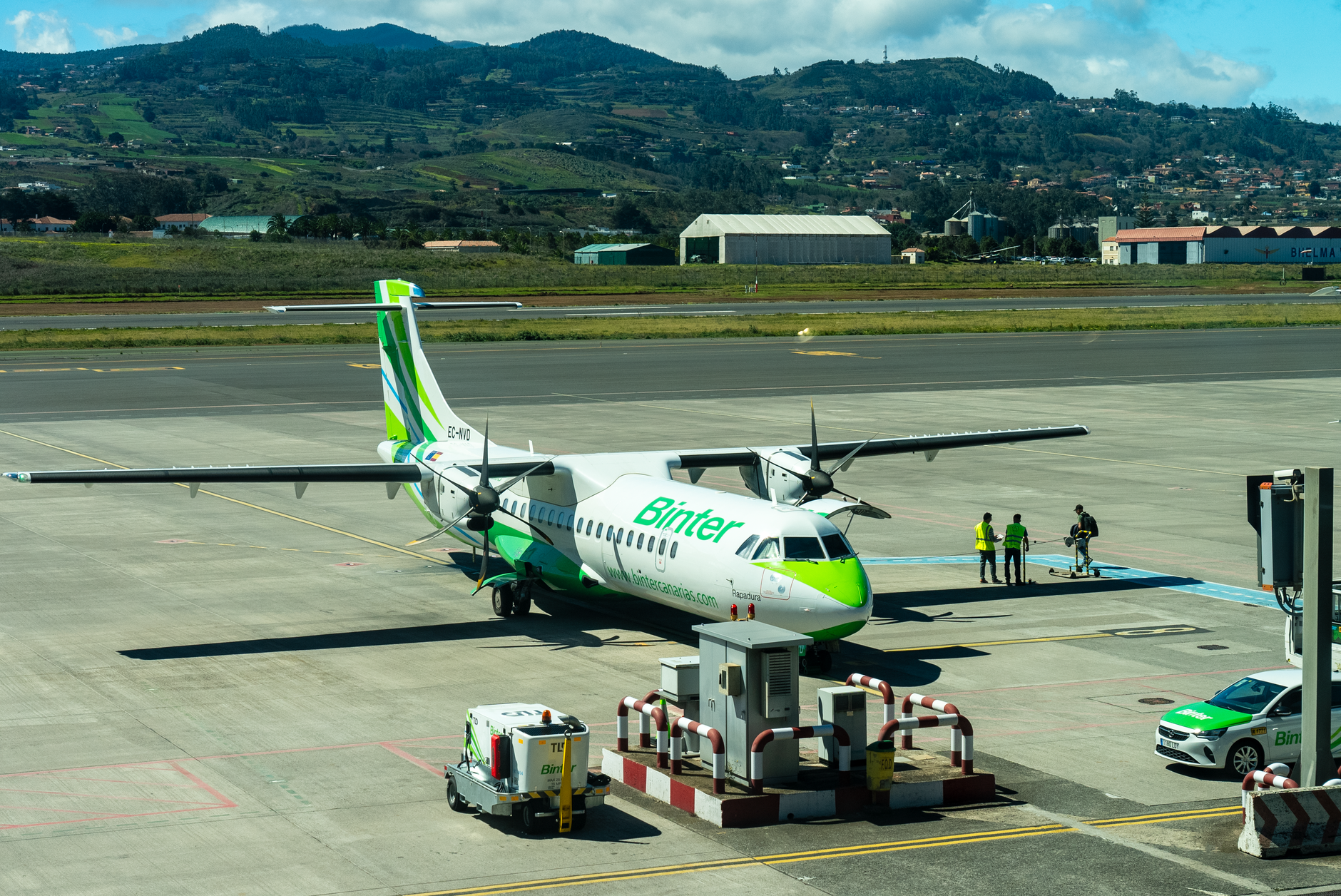
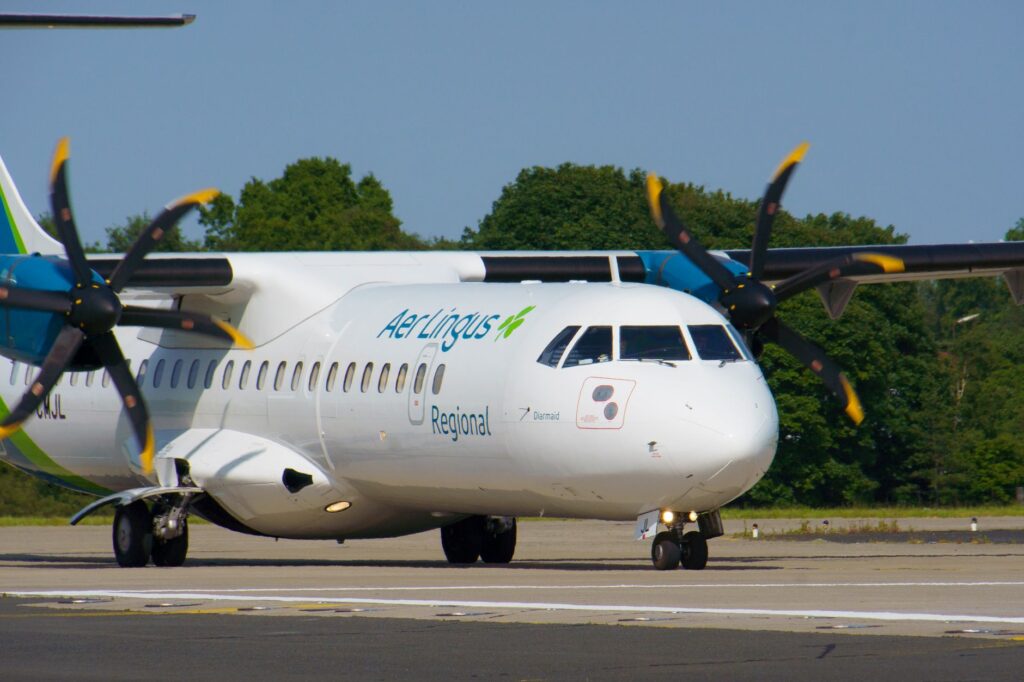
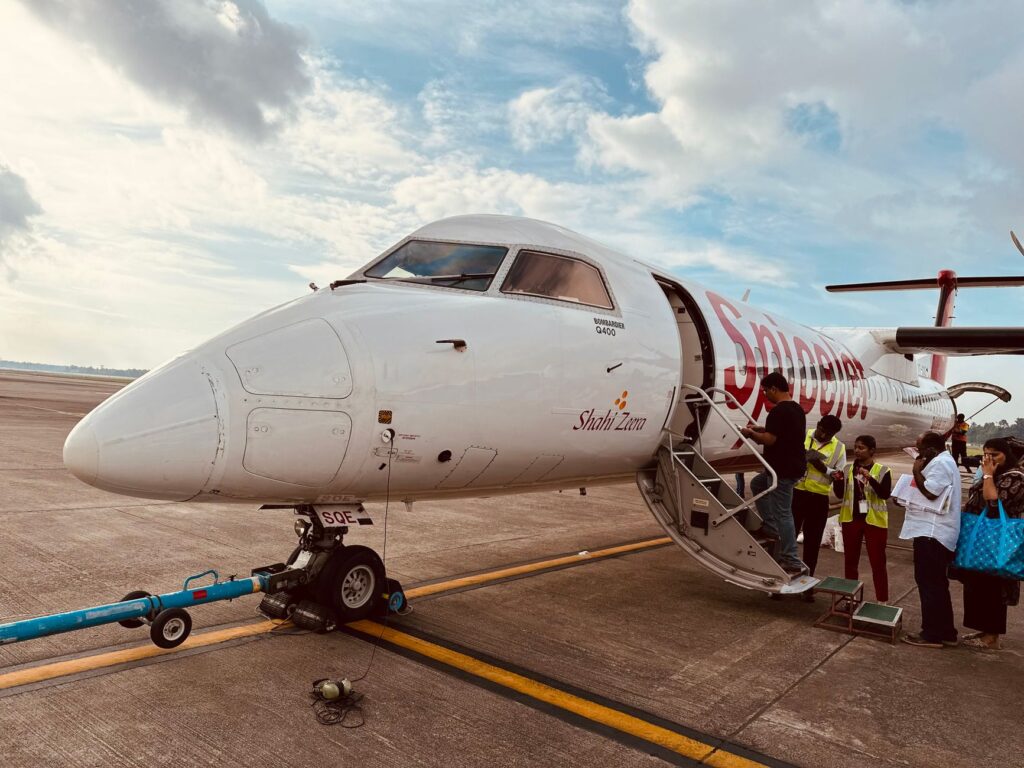
To operate within this highly restrictive geographical environment, the regional airline SATA Air Açores maintains a fleet composed fundamentally of turboprop aircraft. Unlike large commercial jets, these planes offer the operational versatility indispensable for maneuvering in short airfields and enduring the structural fatigue resulting from constant landings on runways exposed to marine salinity.
The choice of turboprops responds to strict criteria of aerodynamic performance and efficiency on short-haul routes. With flight times that often do not exceed thirty or forty minutes between islands, flight crews must execute extremely precise instrument approach operations. Commanders operating in the Azores require specific certification and comprehensive knowledge of local topography, as visibility can drop to zero within seconds due to the rapid collision of humid fronts against volcanic slopes.

Aviation in the Azores understands no mechanical routines; every approach is a continuous dialogue between human expertise and the uncontrollable fury of the Atlantic.
This regional transport model also fulfills an irreplaceable social function. For residents needing specialized medical consultations at the reference hospital in Ponta Delgada on São Miguel, the airplane is the only viable medium under critical deadlines. Inter-island airfares are heavily subsidized for residents, ensuring that the cost of insularity does not become an insurmountable barrier to exercising fundamental rights such as healthcare and education.
Adverse Weather: The Limiting Factor of Fog and Wind
No analysis of Azorean aviation would be complete without addressing the meteorological factor. The archipelago’s climate is governed by the Azores High, yet this high-pressure system constantly interacts with polar fronts and decaying tropical storms, generating hyper-variable weather that locals summarize by saying one can experience all four seasons in a single day.
Crosswinds are the silent enemy of landings on islands like São Jorge or Corvo, where air currents crash against vertical cliffs and swirl over runway thresholds. Navigation aids, such as high-intensity lighting and state-of-the-art meteorological radar, have significantly reduced cancellations, but nature still imposes its authority. When sea fog descends suddenly and engulfs the runway at Corvo—the smallest inhabited island in the archipelago—air traffic halts entirely, isolating its slightly more than three hundred residents until the air mass dissipates.
The Logistical Management of Fuel and Spare Parts
Behind every commercial flight crossing the Azorean sky lies a complex logistical chain invisible to the passenger. Situated in the middle of the ocean, the archipelago must import all aviation fuel (Jet A-1) and mechanical components necessary for fleet maintenance. Cargo vessels arrive periodically at the main ports to unload tanks that will subsequently supply airport fuel depots.
This external dependence turns inventory management into an exact science. A delay in the arrival of a cargo ship due to a maritime storm can compromise fuel reserves on secondary islands, forcing airport authorities to ration supplies or modify aircraft flight routes so they take off with greater autonomy from primary bases like Terceira or São Miguel. Similarly, the permanent presence of local aeronautical technicians is crucial for resolving unexpected breakdowns without relying on urgent parts shipments from mainland Europe.
The Impact of Mass Tourism on Airport Capacity
Over the past decade, the Azores’ connectivity model has experienced unprecedented pressure due to the rise of international tourism. The arrival of low-cost airlines directly connecting the islands of São Miguel and Terceira with European and North American capitals has transformed the regional economy, but it has also tested existing airport infrastructure.

The expansion of passenger terminals and the modernization of aircraft parking platforms have become priority investment goals for the regional government and the managing company ANA Aeroportos de Portugal. However, this growth must be managed with extreme caution so as not to overwhelm the carrying capacity of small, fragile islands. Balancing economic development driven by massive traveler arrivals with the preservation of natural resources and local tranquility constitutes the central debate of current transport policy in the archipelago.
Practical guide
How to get there: The main access to the archipelago is through Juan Paulo II International Airport (PDL) on São Miguel Island and Lajes Airport (TER) on Terceira, with regular flights from Lisbon, Porto, and various cities in North America and Europe. Inter-island flights are operated exclusively by the regional carrier SATA Air Açores.
Flight planning: Given the high meteorological volatility of the mid-Atlantic, it is essential to book a margin of at least twenty-four hours between inter-island flights and the return flight to the European continent. Cancellations and delays due to fog or wind are common, especially during the autumn and winter months.
Baggage and restrictions: The turboprop aircraft operating secondary routes feature strict weight and dimension restrictions on cabin baggage due to limited cabin space. Passengers should check the airline’s current limits before checking in.
Passenger assistance: Residents benefit from preferential fares regulated through the mobility subsidy service, managed via authorized agencies and digital platforms of the regional administration. Non-resident visitors must purchase standard commercial fares well in advance during the peak summer season.
Final reflection on the fragile thread of the sky
When the traveler catches a final glimpse of the volcanic cliffs from the airplane window during the definitive ascent over the Atlantic waters, the true magnitude of this daily miracle becomes clear. The metal wings traversing the Azorean skies are not mere transport vehicles; they are the invisible threads weaving the unity of a dispersed and defiant people. In this oceanic outpost, where nature dictates its own rules with relentless severity, regional aviation represents the highest expression of human engineering in the service of survival and freedom of movement—a fragile bridge of air defying the immensity of the sea.