
The Foundations of Iron and Memory Along the Estuary
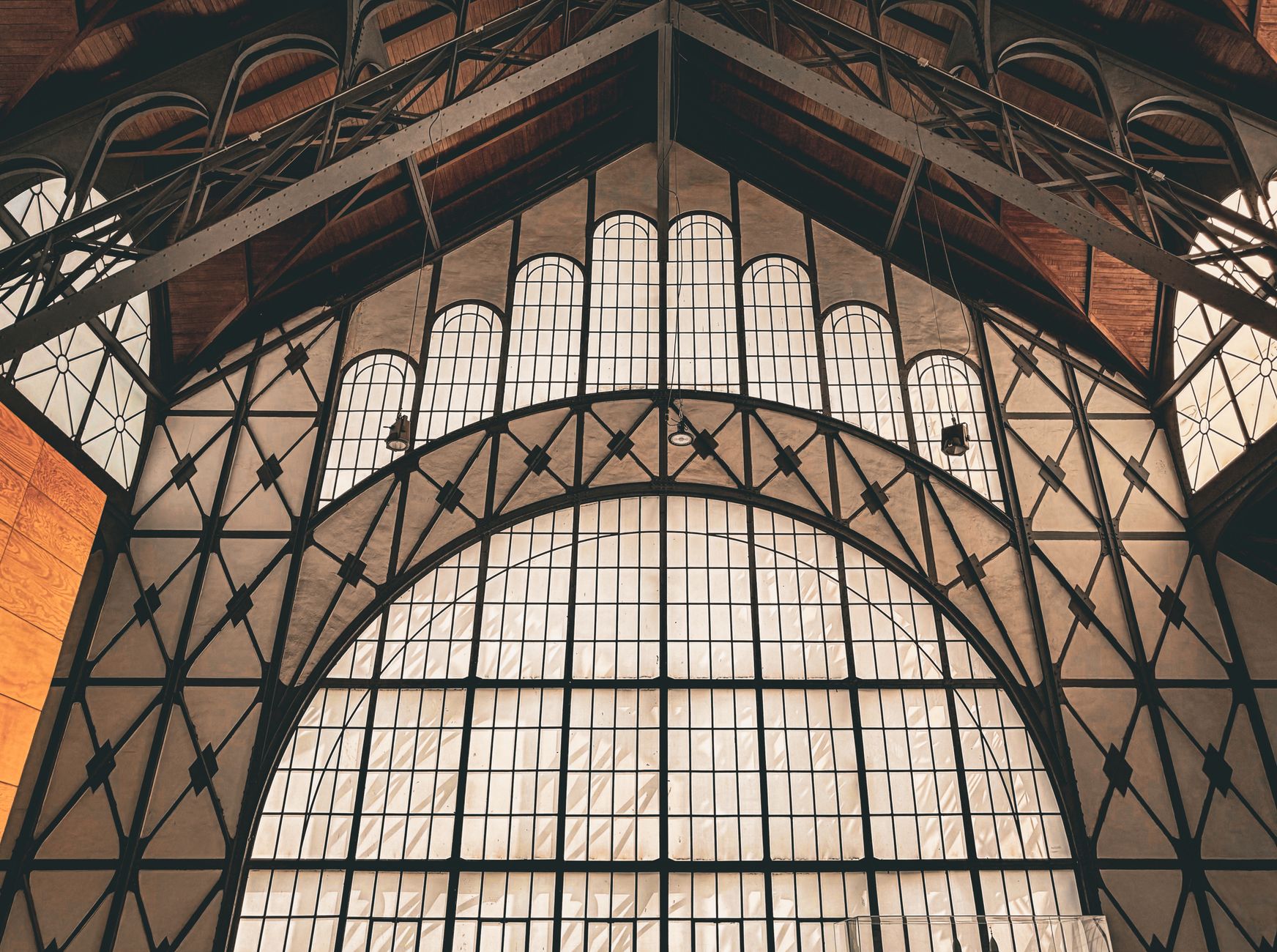
Bilbao’s history is incomprehensible without the water that bisects it, a brackish and tenacious channel that for centuries connected mineral furnaces and shipyards with Europe’s primary ports. A few meters from this current, upon the site once occupied by the ancient Franciscan convent, stands La Ribera Market—a rationalist colossus of reinforced concrete, geometric glass panels, and wrought-iron filigree that proudly holds the recognition of having been the largest covered municipal food market in Europe upon its inauguration. This is not merely a grocery emporium; it is architecture transformed into a civic sanctuary where the working-class memory of the Nervión estuary merges with the culinary demands of a society that has turned eating into an exercise of high anthropological philosophy.
Crossing the threshold at dawn is to step into a living organism where the dull murmur of fishmongers’ stalls mingles with the metallic clink of scales and the reverberating echo of vendors’ voices. Here, every exposed concrete pillar and polychrome stained-glass window letting in the gray light of the Bilbao sky guards an ecosystem of stalls passed down from parents to children across generations. The weight of tradition is not a museum burden, but a rigorous working tool ensuring that produce reaches the counter with its freshness intact, respecting the biological cycles of tides and surrounding fields.
The Pantry of the Sea: The Miracle of the Bay of Biscay
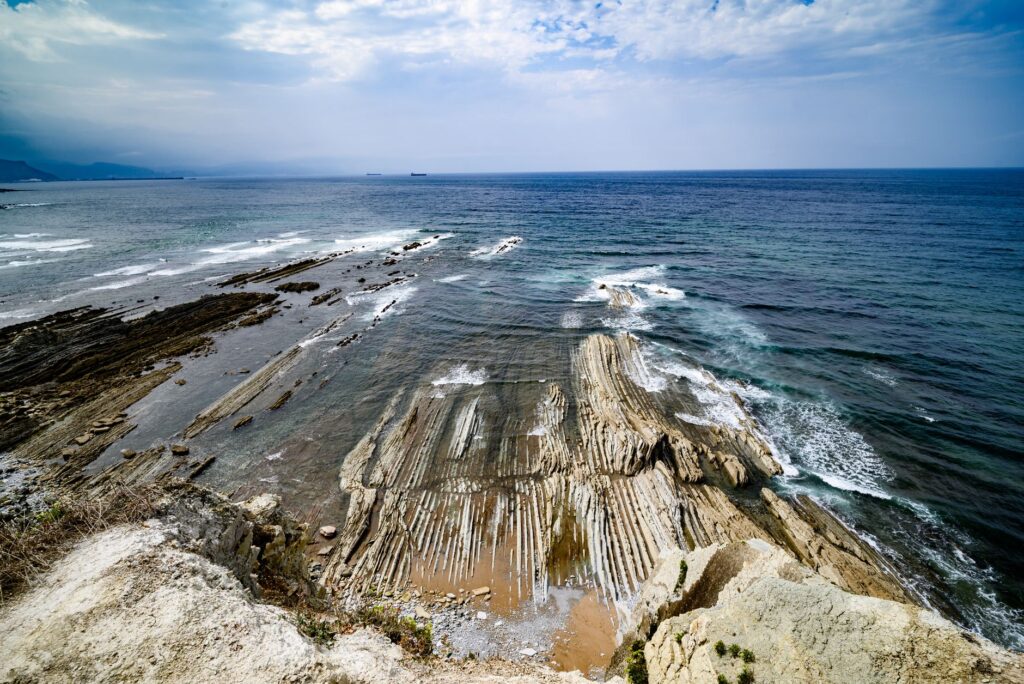
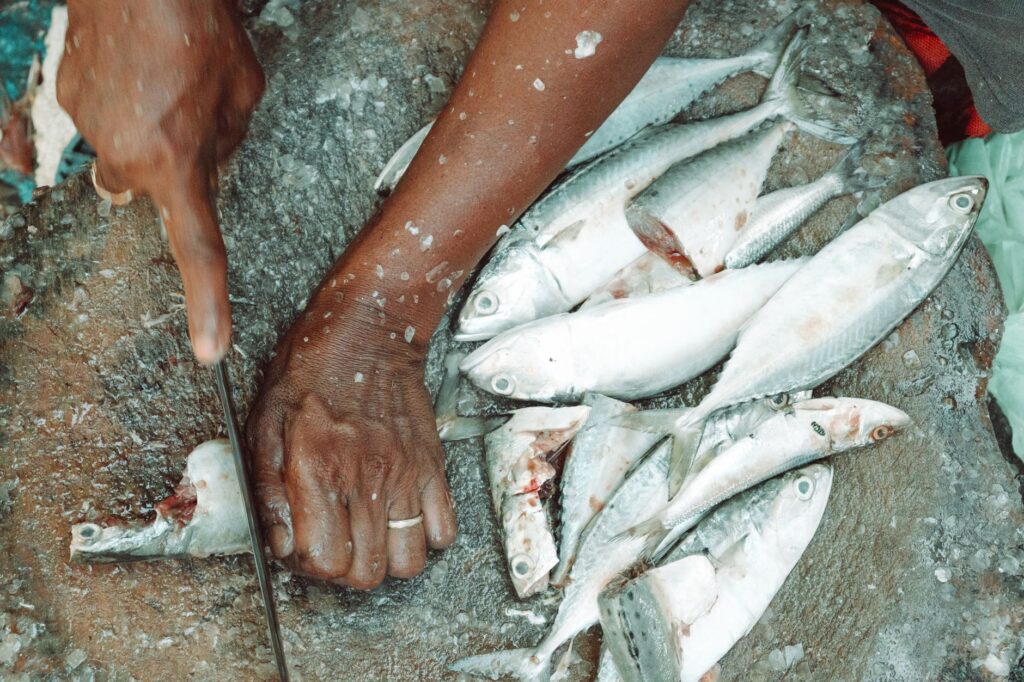
On the ground floor, dedicated almost exclusively to seafood, the air becomes saturated with a clean aroma of salt spray, iodine, and fresh seaweed. Hook-and-line caught hake—extracted individually to prevent the fish from struggling and losing firmness—rests on beds of crushed ice alongside dark-skinned, sleek anglerfish. Basque fishermen have maintained a relationship of nearly reverential respect for centuries with the Bay of Biscay, a fierce and capricious sea demanding skill and bravery. Each dawn, vessels operating out of nearby ports such as Bermeo, Ondarroa, or Lekeitio unload their holds so the most select catch reaches La Ribera’s cold rooms before the city fully awakens.
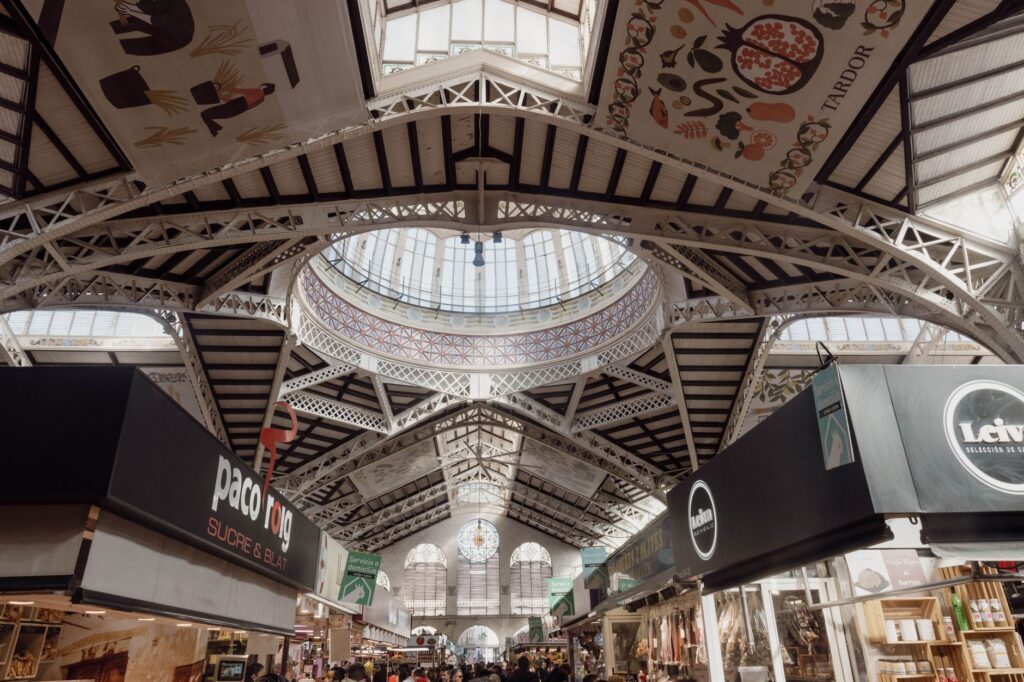
Among the busiest stalls are those specializing in seasonal tunas, especially northern albacore during the summer months, sliced with surgical precision into thick steaks displaying the species’ characteristic crimson red. No less important are river elvers—a delicacy of delicate texture that once formed part of the subsistence diet of riverside families before becoming the coveted gastronomic luxury it is today. Vendors patiently and didactically explain to novice buyers how to distinguish the true origin of shellfish, detailing the differences between barnacles clinging to the most inaccessible cliffs of San Juan de Gaztelugatxe and those raised in calmer waters.
The Vegetable Garden and the Farmhouse: The Interior Territory
While the ground floor rightfully belongs to the ocean, the upper levels and adjacent galleries of the food market open an indispensable window toward the interior of Biscay—a landscape of humid green valleys, steep mountains, and centuries-old farmhouses where small-scale agriculture resists the onslaught of globalized agribusiness. Vegetables do not arrive here in long-distance refrigerated trucks, but in vans that have traveled only a few short miles from the garden plots of Mungia, the floodplains of the Ibaizabal River, or the slopes of Mount Gorbea. It is the undisputed kingdom of Tolosa beans, boasting a brilliant, intense black that requires hours of patient simmering to melt on the palate with a buttery texture and zero trace of skin.
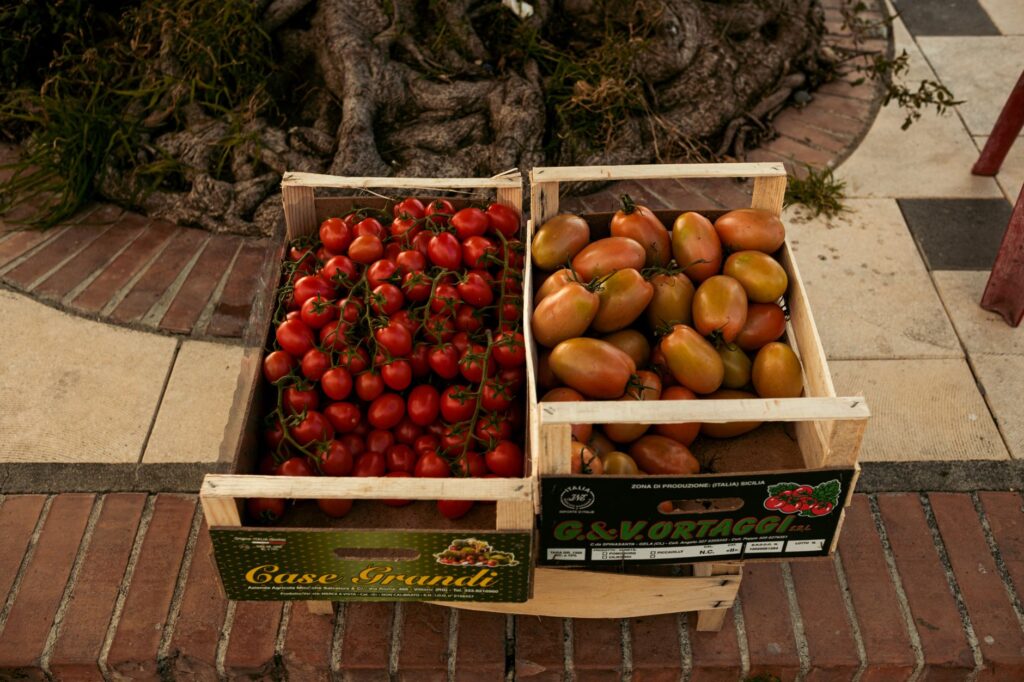
Local female farmers proudly display their small seasonal treasures: Ibarra peppers—popularly known as piparras—harvested before reaching full maturity to guarantee that crunchy fleshiness and characteristic mild heat that never aggressively assaults the sense of taste; farmhouse tomatoes, irregular in shape, with thin skins and a perfect balance between acidity and sweetness that betrays outdoor cultivation free from forced agricultural timelines. The Basque farmhouse is not merely a dwelling and farming unit, but the mother cell of a culinary culture that understands produce as a living being deserving absolute veneration and respect.
The Liturgy of the Bar and the Counter
The market’s pulse is not limited to commercial exchange between producer and domestic consumer; it finds its natural extension in the culture of pintxos and the camaraderie established across the counter. Chefs from Bilbao’s most prestigious restaurants and neighbors from the historic quarters share the morning space seeking the exact ingredient that will star in the daily menu. Here, shortcuts and excuses hold no sway: if the *hongo beltza*—the *boletus edulis* harvested in nearby beech forests following the first autumn rains—does not feature a firm, closed cap, no respectable restaurateur will risk including it on their menu.
This daily demand has shaped a highly educated collective palate. The Bilbao shopper does not buy on visual impulse, but inquires about the exact origin of the piece, the fishing technique employed, or the altitude at which the tuber was cultivated. The stallholders, true librarians of local gastronomy, respond with precise data, anecdotes about suppliers, and recommendations regarding the ideal cooking time. It is a relationship founded on mutual trust that has weathered the onslaught of large supermarkets and mass distribution platforms, proving that neighborhood commerce possesses irreplaceable social value.
The market is not merely the place where provisions are acquired, but the honest mirror where a community gazes upon itself every morning to recognize its deepest flavors and affections.
The Art of Butchery and the Secrets of Meat
Leaving the vegetables behind and stepping into the wing dedicated to butcher shops, the atmosphere shifts subtly to acquire an almost artisanal solemnity. Large livestock cuts, sourced from mid-mountain pastures of the Cantabrian mountain range, hang in cold rooms with controlled aging that guarantees optimal infiltration of intramuscular fat. Local butchers master a vocabulary of traditional cuts differing notably from industrial standards: the *txuleta* is understood here as a cultural and identitary totem, a massive block of red beef on the bone requiring an extreme-temperature cast-iron griddle and a pinch of coarse sea salt, devoid of artifices masking the power of the raw material.
Alongside beef, the stalls proudly display Basque pork derivatives and small game products sourced from Biscayan mountains during the authorized season. Cured pancettas, smoked paprika chorizos, and vegetable blood sausages—characterized by their lightness and the sweetness contributed by slow-cooked onions sweated over low heat for hours—complete a meaty map speaking of endurance, preservation, and integral utilization. Each cut responds to inherited wisdom optimizing the resources of a demanding geographical environment where adverse weather historically compelled the perfection of salting and drying techniques.
Culinary Transformation: From Plaza to Plate
The journey through La Ribera Market concludes by understanding how that torrent of fresh produce transforms, a few meters away, into the haute cuisine and popular cooking defining Bilbao’s identity. The taverns of the Old Town and the dining rooms of gastronomic societies—authentic social temples where the men and women of the territory practice the priesthood of good eating—process the ingredients acquired that very morning with techniques oscillating between absolute minimalism and traditional slow-simmered stews. Cooking in Euskadi is an act of restraint: the objective is for the ingredient to speak for itself, avoiding the masking of its flavor with heavy sauces or unnecessary baroque embellishments.
Cod *al pil-pil* or *a la vizcaína*, squid in its ink, hake in green sauce with clams, or battered hake *kokotxas* are the direct result of the abundance unloaded every dawn in the market halls. Basque culinary mastery does not reside in the invention of complex artifices, but in the liturgical patience of emulsifying the fish’s natural gelatin with olive oil and garlic, or knowing the exact moment when caramelized onion must join choricero pepper paste to create a deep, velvety sauce overflowing with history in every spoonful.
Practical guide
How to get there: La Ribera Market is located at number 22 Ribera Street, a short walking distance from Bilbao’s Old Town. The nearest metro station is Zazpikaleak/Casco Viejo, connected to all major urban transport lines. There are also tram stops in the immediate vicinity (Atxuri or Arriaga).
Opening hours: Commercial halls and traditional stalls are open Monday through Saturday, continuously from 08:00 to 02:30 PM. The hospitality and gastrobar areas integrated into the building operate extended hours lasting into the evening.
Shopping tips: Visitors are advised to arrive during the early morning hours (between 08:30 and 10:30 AM) to find the freshest produce and converse with vendors without crowds. Bringing a thermal bag or traditional shopping cart is recommended, as many stalls prioritize single-use plastic-free sales.
Seasonal specialties: During spring, look for hake kokotxas and tear peas; in summer, northern albacore and farmhouse tomatoes; in autumn, wild mushrooms and game; and in winter, Tolosa beans and butchery meats.
The Invisible Pulse Sustaining the City
As dusk falls and the metal shutters of the stalls close with a dull roar while the concrete corridors sink into twilight, La Ribera Market does not truly sleep; it continues to exhale the dense aroma of aged wood, rested seafood, and damp stone that has witnessed the passage of centuries. Outside, the dark waters of the estuary continue their relentless course toward the Abra bay, carrying the flickering reflections of a Bilbao that has successfully reinvented itself without betraying its deepest roots. This secular temple is neither merely an economic engine nor a postcard tourist attraction; it is the beating heart where the ultimate truth of a people pulses—a people who understand food as the highest form of shared memory, an invisible pact between earth, water, and the hands that rise every dawn to sustain life.