The Suspended Gaze: Anastasia Ferreiro’s Intimate and Analog Autumn
Argentine photographer Anastasia Ferreiro documents the melancholy cadence of seasonal transition through a sensory journey where chemical film, golden light, and silence rescue the poetry of movement.
There is a fleeting fraction of a second, precisely as the sun dips toward the southern horizon and the temperature drops sharply, when the landscape ceases to be a mere physical backdrop and transforms into an emotional state. For Argentine photographer Anastasia Ferreiro, that exact threshold marks the onset of autumn—a season defined not by harsh extremes or the clamor of high summer, but by a quiet summons toward contemplation. In her visual essay featured by Condé Nast Traveler, Ferreiro bypasses the immediate spectacle of grand monuments and the hyper-saturated hues of standard postcards, pursuing instead the subtle vibration of shortening days, the tactile weight of wool, and the intimate resonance of temporal departures.
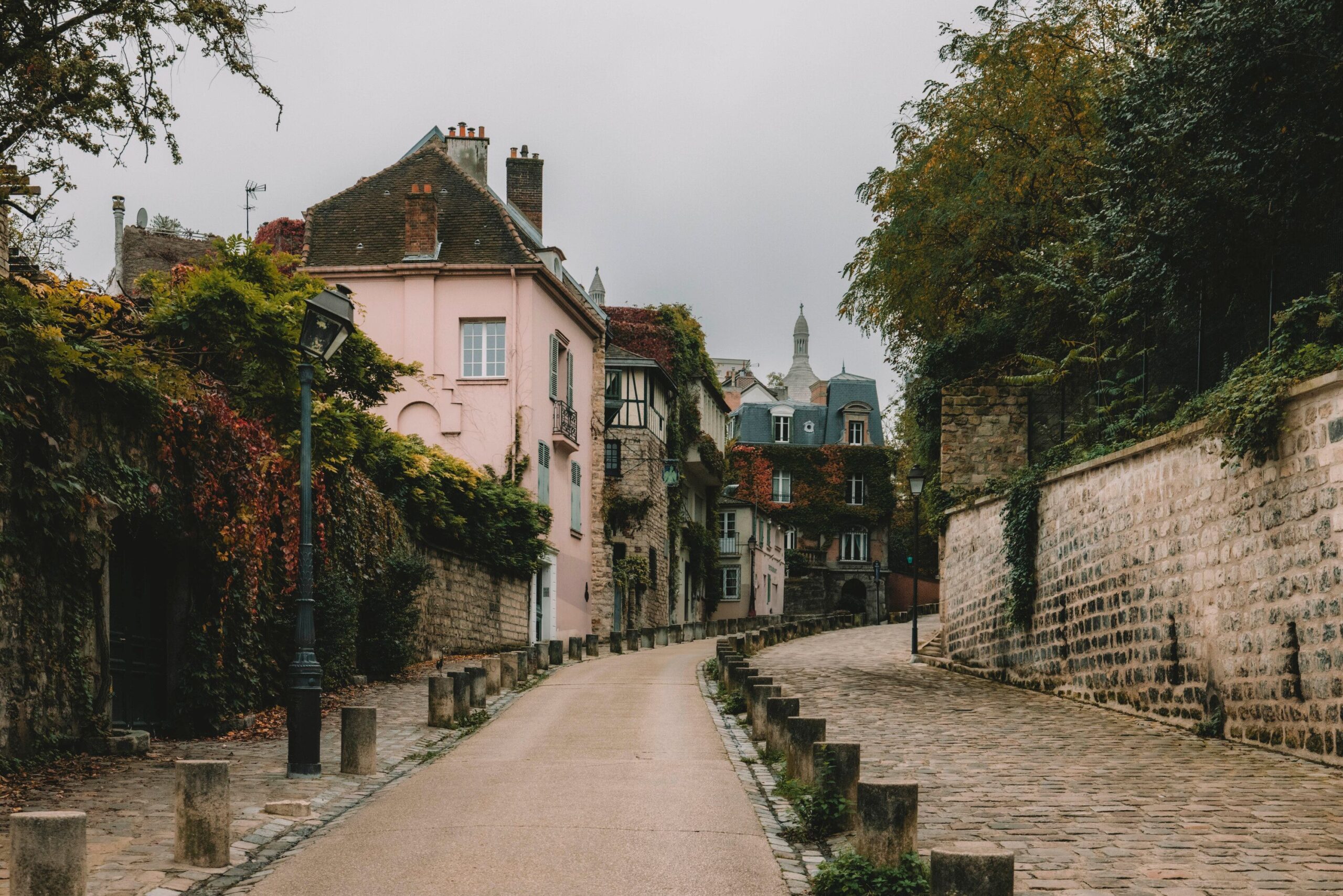
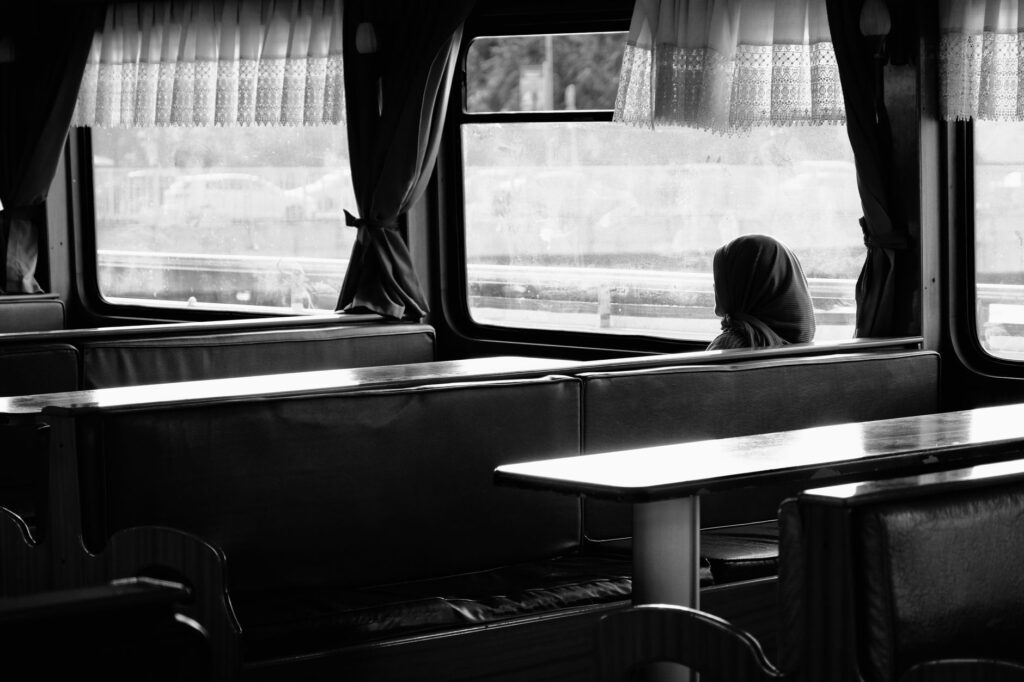
Using rolls of analog film where grain drapes the scene in a tender veil of complicity, Ferreiro’s photography challenges the frantic immediacy of digital visual culture. Her images form a fragmented, deeply sensory travelogue that navigates between the geographic gravity of her southern roots and nomadic wanderings across intermediate latitudes. Throughout this photographic series, the voyage is measured neither by highway miles nor by passport stamps, but by the patience required to wait until the right shadow glides across a peeling wall, a train seat worn soft by time, or the lost profile of a commuter watching the last light dissolve.
The unhurried eye and the return to silver grain
In Ferreiro’s work, the choice of chemical film is far from an aesthetic whim or a decorative vintage affectation tailored for digital platforms. It represents, at its core, an ethical stance toward the practice of travel and the documentation of reality. Film rolls enforce an economy of attention: every frame carries a tangible cost, demanding manual calibration of aperture and shutter speed, and requiring absolute trust in the latent chemical process long before darkroom development. This deliberate constraint dismantles the impulse for voracious consumption that typifies modern tourism, obliging the photographer to coexist patiently with the surroundings.
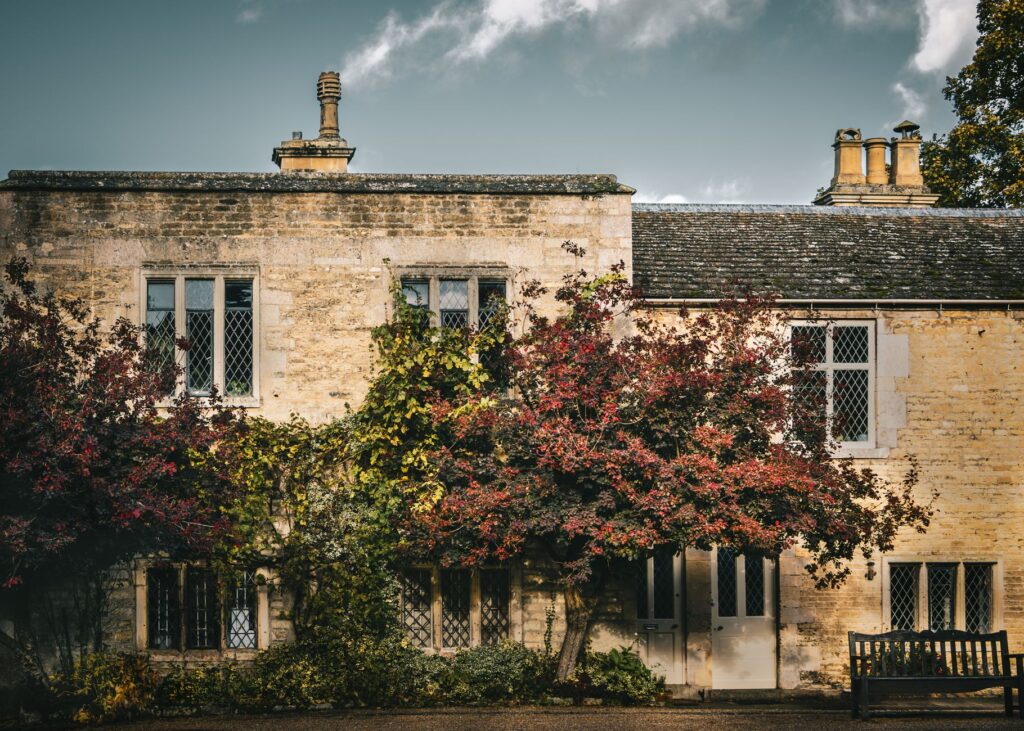
Throughout this autumn chronicle, the ochre, terracotta, and copper tones do not originate from prefabricated digital filters, but from classic emulsions that translate evening reflections into organic densities. Contrasts remain gentle, deep shadows breathe without turning into opaque voids, and highlights preserve a creamy texture that caresses everyday surfaces. By committing to natural ambient light and compositions reminiscent of a private travel diary, Ferreiro transforms each scene into a shared memory where viewers feel summoned not merely to inspect an unfamiliar territory, but to inhabit their own remembrance of changing seasons.
Analog film enforces a quiet truce: it compels the traveler to look twice before releasing the shutter and to place their trust in the shadows.
This deliberate conceptual approach honors the legacy of classic documentarians and wanderers who recognized slowness as the ultimate instrument of precision. By retarding technical gestures, Ferreiro grants physical environments the space to reveal their most vulnerable aspects. Autumn thus operates as an illuminating filter: it strips deciduous trees of their protective canopies, empties urban sidewalk terraces, and returns country roads to a quietude bordering on monastic calm after summer’s peak.
An emotional cartography across two hemispheres
Born and raised in Argentina, Anastasia Ferreiro carries the unique temporal duality of the Southern Hemisphere etched into her visual instincts. Growing up below the equator means understanding that while northern cultures celebrate springtime renewal or summer departures, the southern cone witnesses the slow retreat of light through May and June. This bifurcated rhythm enriches her aesthetic palette with a double layer of longing: the quiet sorrow of departure and the perpetual search for shelter in distant lands.
When capturing autumn along her international itineraries, Ferreiro’s framing resists strictly regional conventions. One detects a pampa-like patience in her contemplation of open, silent plains, intertwined with the sharp urban perception of someone who has wandered Buenos Aires, discovering quiet poetry in wood-paneled cafes and dim street corners. This interior geography projects outward onto diverse landscapes, weaving an invisible network where political borders dissolve before the unbroken continuity of atmospheric moods.
The journey ceases to be a linear trajectory from departure point to arrival hall, resolving instead into a sequence of quiet pauses. A lone filling station beside a provincial two-lane highway, a lakeside jetty where water seems to hold its breath, or the interior of a regional train carriage emerge as equal vessels of meaning. What binds these far-flung locations is a transversal eye that recognizes within each of them the exact same melancholy pulse—that brief moment when the traveler grasps that everything around them is quietly shedding its skin.
Slanted light: deciphering the palette of the seasonal shift
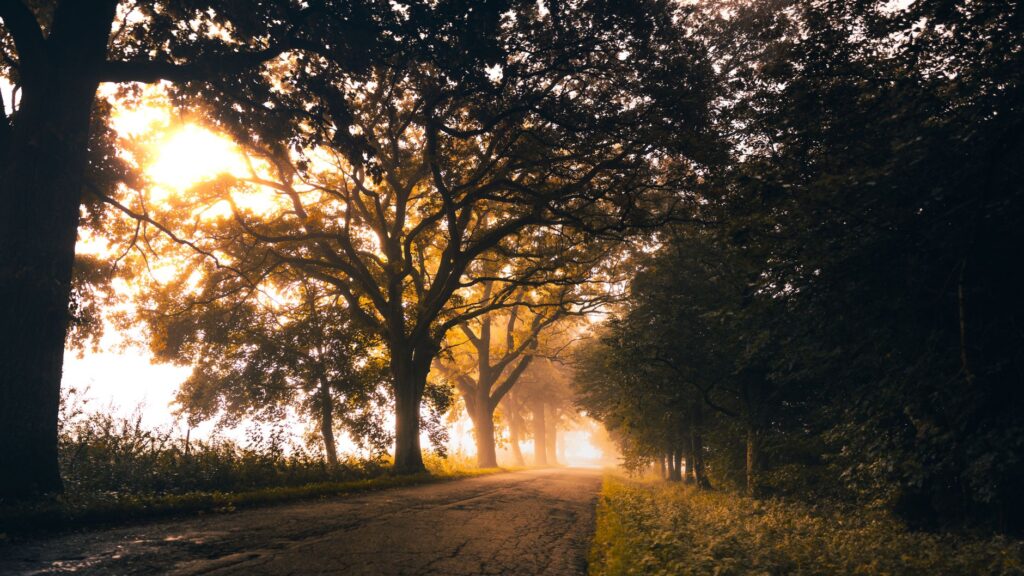
Few astronomical phenomena exert so profound an effect on travel psychology as the shifting angle of solar rays following the equinox. During autumn, the sun traces a much lower path across the sky for extended hours each day, casting elongated shadows and producing sculptural modeling that no other season can match. In Ferreiro’s compositions, this warm, raking light functions almost as a physical presence, touching street furniture and human silhouettes alike.
Far removed from summer’s harsh midday glare, which flattens textures and bleaches nuances, autumn light skims gently across surfaces. Stone masonry, windblown leaves gathered in street gutters, and glass fogged by the chill outside take on an almost three-dimensional tactility beneath this softened illumination. Ferreiro masterfully harnesses the early morning and late afternoon golden windows, when suspended dust and atmospheric moisture serve as a natural diffusion filter.
The chemistry of warm tones
To produce this enveloping atmosphere, an intuitive command of color balance is essential. Balanced daylight film stocks react to these seasonal environments with a characteristic chromatic gradation, marked by:
Amber and saffron gradients: Washing across late skies and glancing off asphalt dampened by passing rain showers.
Muted olive and lichen tones: Revealing the gradual fading of vegetation before winter dormancy takes hold.
Burnished coppers and warm browns: Imparting home-like security to domestic and interior frames, offering protection against outdoor chills.
The poetry of ordinary objects and unhurried journeys
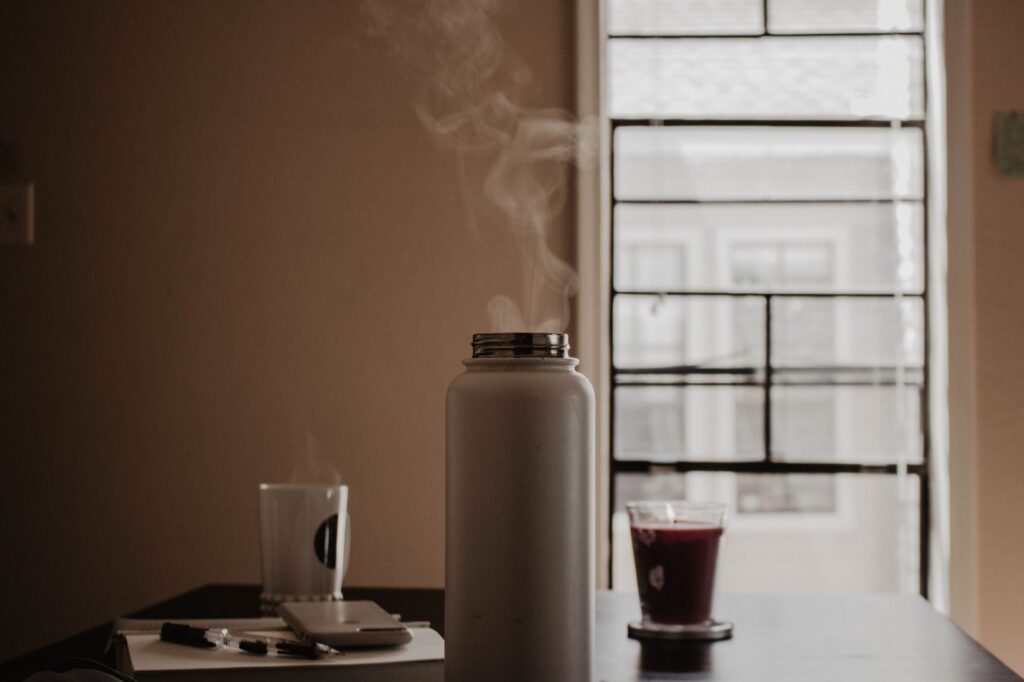
Much of Ferreiro’s visual strength stems from her ability to elevate what might otherwise seem unremarkable. Rather than chasing monumental architectural icons or grand vistas that dominate travel guidebooks, her lens frequently settles upon small artifacts of daily movement: a steaming ceramic cup upon a weathered wooden table, a damp umbrella leaning against a plaster wall, or curtains stirred by the crisp air of an open sash window.
This method connects deeply with the philosophy of the minor voyage, an ethos that prizes the quiet dignity of routine transit and unnoticed margins. The romance suffusing her film reels is born not of theatrical exaggeration, but of the tenderness with which she regards the marks of time. The objects Ferreiro captures carry history; they show visible signs of wear and weariness, evoking the countless anonymous lives that have crossed their paths.
Intimate travel does not rely on exotic coordinates, but on the capacity of a steaming mug or a worn armchair to reclaim lost time.
This deliberate focus on quiet detail turns her photographic reporting into a multisensory passage. Looking at the frames, one can almost smell burning hearth wood, hear the dry crunch of fallen leaves underfoot, or feel the cool, supple texture of an antique leather satchel. It is a visual language that operates without spoken prose, invoking universal sentiments of comfort, impermanence, and the simple desire to linger a moment longer in a safe refuge before moving on.
Shadowed figures and the solitary traveler
The human presence in Ferreiro’s frames is handled with remarkable restraint. The subjects who step into her field of view rarely confront the lens directly or strike deliberate poses; they appear from behind, outlined against bright windowpanes, or immersed in private tasks that claim their full attention. This absence of pretense preserves the subjects’ autonomy, allowing observers to project their own inner lives onto the frame.
The solitary traveler emerges as a recognizable archetype. It is the reader engrossed in a paperback within a swaying train compartment while the blurred countryside rolls past, or the silhouette huddled under an awning awaiting an evening tram. A gentle vulnerability surrounds these figures: far from familiar comforts, they meet seasonal decline with quiet grace, wrapped in thick coats and woolen scarves that serve as armor against cold gusts.
This portraiture approach aligns with a humanist documentary lineage that values atmospheric mystery over overt explanation. There is no need to uncover the name or destination of the person in the frame; it is enough to sense their quiet weight within that precise moment, their attunement to the melancholy air, and their gentle harmony with the silence of the scene.
Threshold routes: landscapes where time suspends
While Ferreiro’s images possess an unmistakable timelessness, her pathways hint at specific topographies where autumn achieves exceptional emotional weight. These are not merely the northern hardwood forests conventionally linked to vibrant foliage, but rural farming districts where harvest cycles govern the calendar, and provincial towns where life slows down once summer tourists depart.
Country lanes bordered by sycamores and poplars, quiet secondary roads free of highway traffic, and coastal shores emptied of summer crowds offer exceptional ground for this quiet exploration. In these threshold zones, nature appears to take a long, measured breath before winter settles in, offering a brief window of deep calm. Traveling through these regions during late autumn allows the traveler to partake in an unhurried rhythm, well outside the pressures of high-season tourism.
Lakeside stillness and restful structures
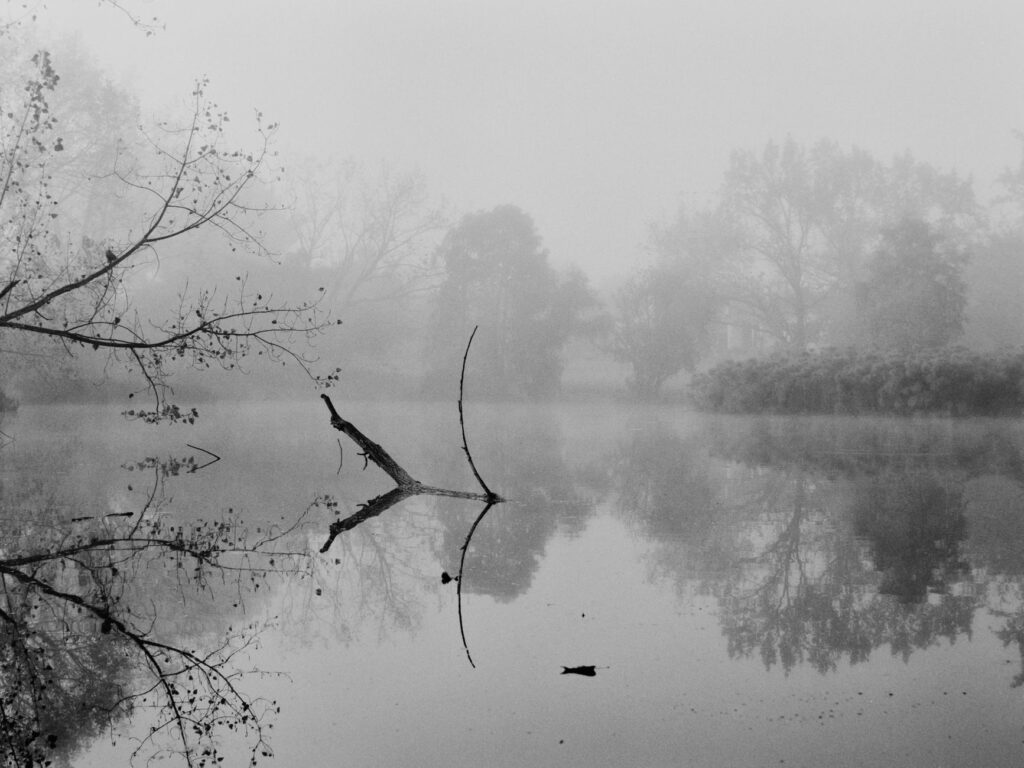
Inland bodies of water recur frequently throughout this visual narrative. Morning mist over quiet lakes, canals scattered with drifting leaves, and lazy rivers function as mirrors doubling the seasonal palette and deepening the impression of stillness. Around them, vernacular structures—stone cottages with smoking chimneys, timber boat sheds, and weathered piers—provide grounding points where the eye finds peaceful familiarity.
Tactile memory versus ephemeral visual consumption
In an era overwhelmed by disposable digital snapshots designed to vanish within hours down algorithmic feeds, Anastasia Ferreiro’s analog approach represents a vital defense of the physical artifact. Chemical film does not merely record light; it possesses physical body. It is loaded, exposed to photons, immersed in chemical baths, dried, and preserved as negatives that can be held up to the light decades later with the exact fidelity of the day they were exposed.
This materiality of film photography communes organically with the seasonal nature of autumn itself. Both realms share an acute awareness of organic lifecycles: nothing endures indefinitely, yet the authentic residue of lived experience survives if handled with patience and care. Ferreiro’s prints encourage a slower perceptual heartbeat, proposing a contemplative viewing experience closer to reading a reflective novel than skimming a smartphone glass.
The romance coursing through her imagery is no superficial escape, but an act of quiet poetic resistance. By rescuing the delicate beauty of seasonal decline, the artist reminds us that journeying is never purely a matter of crossing borders to exotic lands; it is an exercise in cultivating the sensitivity to discover the extraordinary within quiet departures, lengthening shadows, and the stillness of an autumn dusk.
Practical guide
Approaching autumn travel through an analog, contemplative perspective calls for intentional planning—ranging from the selection of destinations and timing to the equipment and mindset required to record the environment without disrupting its rhythm.
Timing and daylight management
Ideal seasonal windows: In the Northern Hemisphere, mid-October through the third week of November typically yields the finest mix of deciduous foliage and low-angle golden light. For Southern Hemisphere destinations, the prime window spans mid-April through late May.
Working with shorter days: Because daylight diminishes swiftly, plan walks starting at dawn to witness low-hanging mist, and reserve mid-afternoon for golden hour tones, which can fade rapidly by late afternoon depending on latitude.
Photographic equipment for analog shooting
Mechanical 35mm or medium format cameras: Sturdy, straightforward manual bodies paired with fast prime lenses (35mm or 50mm at f/1.8 or f/2) facilitate shooting in low ambient light without the constant need for tripods.
Film stock selection: Moderate-speed color negative films (ISO 200 to 400) featuring warm, balanced response and visible grain work best for autumnal moods. Store exposed and unexposed rolls in moisture-resistant cases to guard against cold dampness.
Exposure practices: When exposing color negative film, metering for the shadows preserves crucial detail in dark garments and foliage while letting highlights roll off smoothly.
Lodging and mindful travel
Atmospheric retreats: Seek out rural inns, historic guesthouses, or stone cottages with operational fireplaces and reading rooms to support digital disconnection and quiet evening reflection.
Pacing the itinerary: Limit transit legs and plan longer stays in a single valley or town to allow your senses to synchronize with local seasonal rhythms and ambient light patterns.
The final gleam along the horizon
When dusk finally gathers over Anastasia Ferreiro’s landscapes, what lingers in the mind is not darkness, but the warm memory of an ember that has just settled into rest. Across the final frame of a film roll exposed to autumn chill, an unspoken promise persists: that winter can be navigated gracefully so long as the light of memory is kept gently alight. The Argentine photographer’s lens reminds us that the journey inward remains, above all else, the only voyage that truly endures as the year quietly takes its leave.