
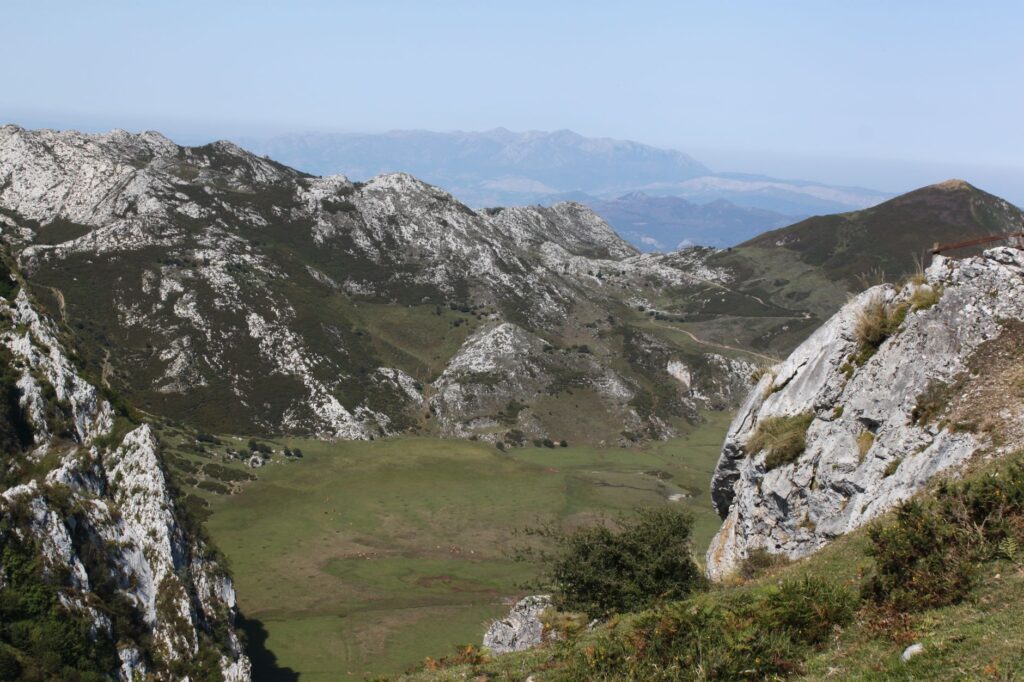
In the westernmost edge of Asturias, where the mountains fold into deep, humid valleys cut by singing streams, time seems to be measured by the steady cadence of hammer upon anvil. Taramundi is not merely a place name associated with artisan cutlery; it is a territory where traditional metallurgy has survived mass industrialization thanks to the tenacious drive of a community that views iron not as an inert resource, but as a malleable canvas endowed with its own memory. Here, deep within the Oscos-Eo region, every folding knife and agricultural tool encapsulates centuries of oral transmission, empirical knowledge, and an intimate connection with the local geological resources.
Entering this rural landscape requires understanding that forging is not a mere economic survival activity, but a complex cultural language where the physics of heat and the chemistry of carbon ally under the artisan’s baton. Far from mass-market tourism circuits, local workshops preserve the authenticity of ancient hydraulic trip hammers powered by water force, a living testimony of industrial archaeology still operational in the 21st century. This report offers a deep immersion into the hearths and anvils of Taramundi, examining the challenges of generational handover and the value of intangible heritage in contemporary Europe.
The Geography of Fire and Water
The location of traditional blacksmith shops in Taramundi is no coincidence, but rather the result of rigorous ancestral planning that leveraged the convergence of two indispensable elements: chestnut and oak wood for charcoal production, and constant river flows to operate heavy machinery. The Turía and Cabreira rivers act as hydraulic arteries feeding the paddle wheels, transforming the kinetic energy of water into the mechanical impulse that lifts heavy wooden hammers sheathed in steel. This symbiosis between nature and technique defines a unique cultural landscape where the flow of water dictates the rhythm of daily labor.
Historically, local blacksmiths operated under self-sufficiency, extracting iron ore from low-grade local deposits before the opening of commercial routes facilitated the arrival of higher-purity laminated steels. Today, although raw material comes from specialized foundries, masters keep ignition rituals intact, maintaining wooden water channels and sustainable communal forest management. Each workshop functions as a closed ecosystem where nothing is waste: slag is reused in agricultural terraces and hearth ashes find a home in neighboring vegetable plots.
Anatomy of a Century-Old Workshop
Crossing the threshold of a traditional blacksmith shop in villages like Pousada or Esquíos is crossing a temporal border. The air, dense and laden with the unmistakable aroma of wood charcoal and quenching oil, contrasts with the crisp outdoor freshness. At the center of the room stands the forge, a masonry hearth equipped with a tuyere through which a manual or electric bellows injects air. Nearby, the steel anvil perched upon a thick oak trunk awaits hammer impacts, polished by the continuous friction of thousands of pieces over decades.
The tooling impresses with its apparent simplicity and absolute functional efficiency. Tongs of diverse shapes, swages, stakes, and custom gauges coexist with unique pieces that each artisan has adapted to personal ergonomics. The walls accumulate cardboard and wooden templates worn by use, true tangible archives of blade typologies that have evolved by fractions of a millimeter to meet the changing demands of farmers, hunters, and, more recently, international collectors seeking unadulterated authenticity.
The Steel Ritual: Tempering and Annealing
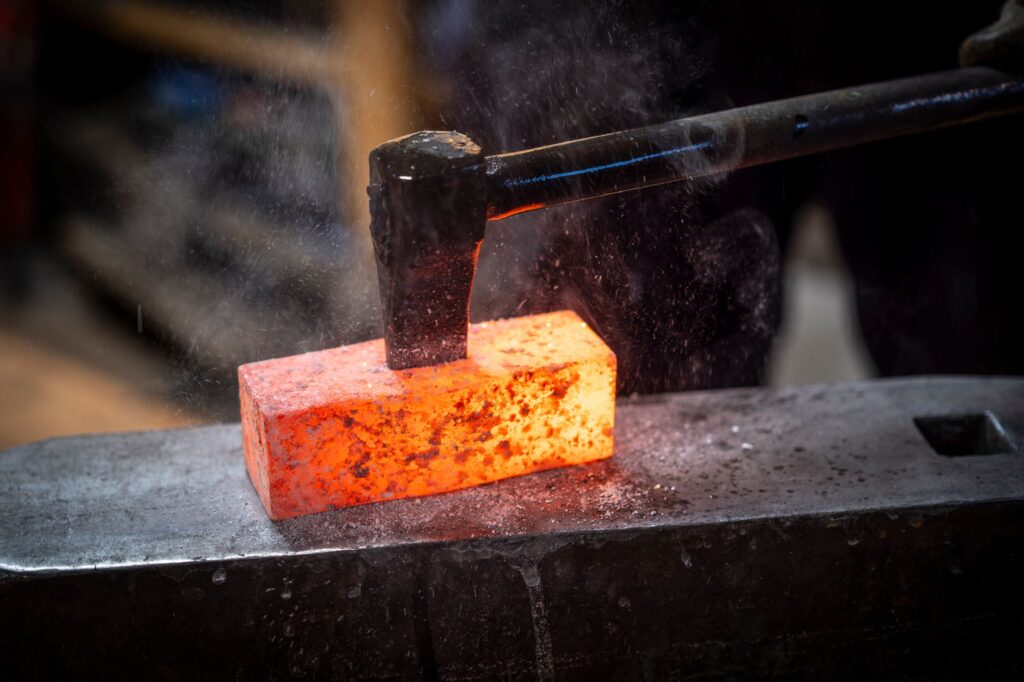
The culminating moment of artisan labor lies in the thermal treatment, a phase where empirical science turns into pure alchemy. The master blacksmith introduces the steel piece into the incandescent core of the forge, observing with millimeter attention the subtle color changes in the metal as temperature rises. From dark cherry red to bright yellow, each hue indicates a critical threshold determining carbon solubility and crystal transformation.
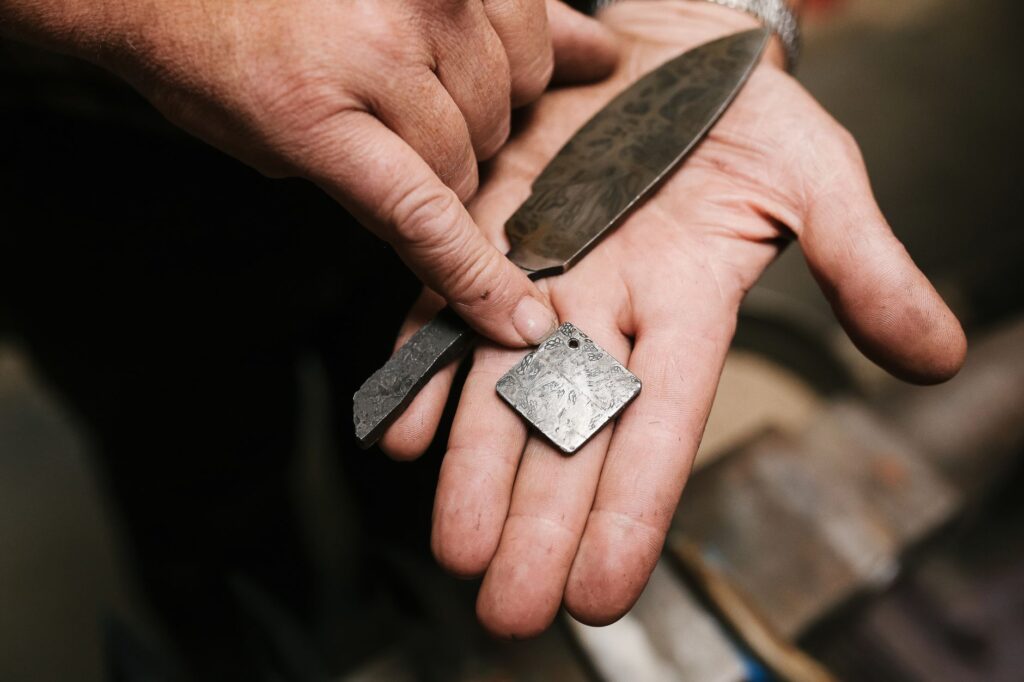
Once the exact heat point is reached, quenching is executed via rapid immersion in water or oil, an acoustic and visual process releasing dense vapors and the characteristic hissing sound of thermal shock. This abrupt cooling confers extreme hardness to the blade, yet also renders it brittle; hence the immediate necessity of annealing, a controlled heating that relieves internal stresses and equips the steel with the flexibility and toughness essential to resist daily use without fracturing.
Tempering is not a mechanical act; it is a silent dialogue between the artisan’s accumulated experience and the capricious resistance of metal to fire.
This absolute mastery of fire and temperature distinguishes authentic Taramundi cutlery from mass-produced industrial output. While large factories standardize processes via computerized ovens, the local artisan entrusts reputation to the sensitivity of sight and trained touch developed over decades before the hearth.
Tradition and Contemporary Design
In recent years, Taramundi workshops have undergone notable transformation driven by the incorporation of new generations of artisans. Far from fossilizing in the repetition of secular models, these young creators engage in dialogue with contemporary design, advanced ergonomics, and haute cuisine. Chef knives, precision sommelier tools, and signature pieces featuring native noble wood handles—such as boxwood decorated with traditional pyrography techniques—redefine the aesthetic value of Asturian cutlery.
This generational handover has not been without difficulties. The scarcity of apprentices willing to endure the physical hardship of the trade, coupled with unfair competition from low-cost industrial imitations originating in Asian markets, raises questions about the long-term sustainability of the sector. However, institutional recognition through protected designations of origin and the appreciation of cultural tourism have breathed renewed optimism, attracting visitors who purchase directly in the workshop and understand price premiums as survival insurance for local heritage.
Practical guide
Planning a visit to the blacksmith shops and workshops of Taramundi requires factoring in the particularities of the rural Asturian environment. Below are essential logistical and heritage-respect keys:
- How to get there: The main access is via the AS-11 road from Vegadeo or Luarca. A private vehicle is strongly recommended due to village dispersion and limited interurban public transport.
- Best time to visit: Spring and autumn offer optimal weather conditions and lower visitor density, allowing closer interaction with master artisans in their workshops.
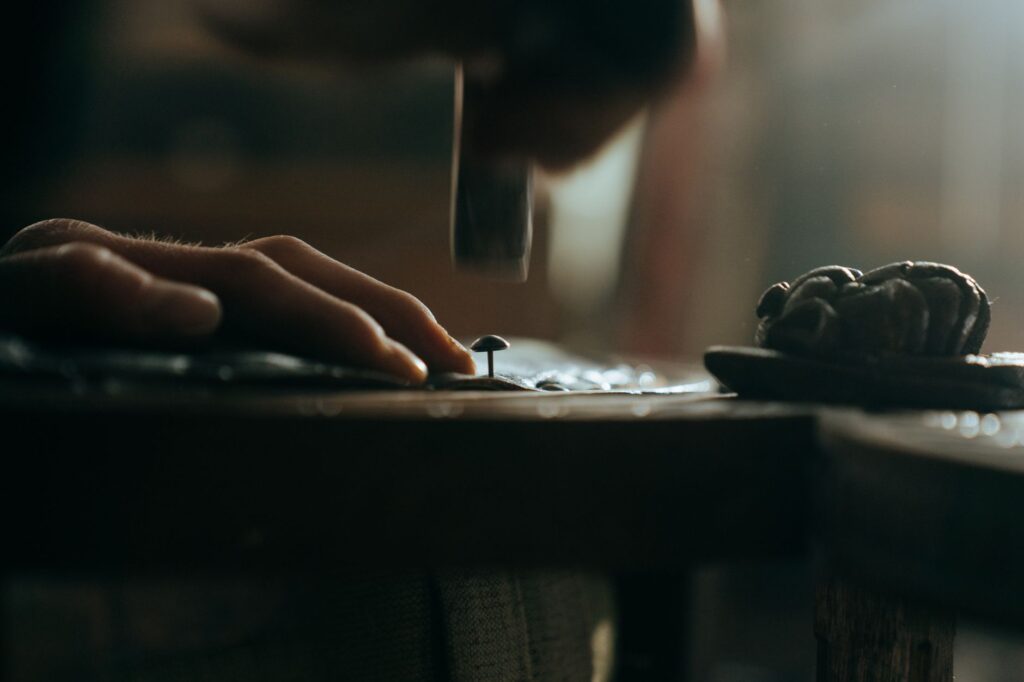
- Workshop etiquette: Most blacksmith shops are active workspaces. It is essential to ask permission before photographing, avoid touching hot tools, and refrain from interrupting the artisan during critical forging or tempering processes.
- Accommodation and gastronomy: Village guesthouses and small rural hotels run by local families abound. Gastronomy highlights include Asturian pote, game charcuterie, and cheeses with protected designation of origin from the Oscos region.
- Complementary points of interest: Beyond workshops open to the public, visiting the Taramundi Cutlery Museum in Esquíos and the ethnographic complex of the Mazonovo hammer mill is unavoidable.
Living Memory in the Hands of the Future
At dusk, as golden light slides over slate roofs and river murmurs claim prominence in the valley’s silence, the blacksmith chimneys lower their draft. In these redoubts of material resistance, the future is written with the exact patience used to stretch a glowing steel bar. It is not merely about manufacturing utilitarian objects, but about preserving a way of being in the world where human effort and respect for nature’s cycles continue to shape a people’s identity.
Taramundi’s future will depend on collective capacity to transmit this legacy without diluting its artisan essence. As long as hands willing to endure the forge’s heat exist, and conscious travelers capable of valuing the time invested in each unique piece endure, the beat of iron will continue to echo in the Asturian mountains as an indelible reminder of what we were and what we can still become.