Introduction to the Great East and Southern African Artery
The African continent possesses a vast geography defined by immense distances, extreme terrain features, and a historical infrastructure framework rooted primarily in the colonial era. Unlike European or North American rail networks, conceived to densely weave an integrated territory, many African corridors were originally designed as unidirectional extraction routes running from interior mining centers to coastal export ports. However, in the post-colonial era, several bold projects redefined this paradigm to foster regional integration, economic sovereignty, and human connectivity. Among them, the Tazara Railway stands out as a monumental infrastructure linking the Tanzanian coast of Dar es Salaam with Kapiri Mposhi in Zambia.
Formally known as the Tanzania-Zambia Railway Authority, this transnational corridor is far more than a mere freight and passenger transport medium; it represents a geopolitical milestone, an engineering feat of titanic proportions, and the logistical backbone binding East Africa to Southern Africa. In a global context where terrestrial supply chains hold critical relevance for socio-economic development, understanding the operations, operational challenges, and current reality of Tazara is essential to unraveling the dynamics of contemporary transportation across the African continent.
Geopolitical Genesis and the Engineering of South-South Cooperation
The history of the Tazara Railway is intrinsically tied to the geopolitical tensions of the Cold War and the liberation struggle against white-minority regimes in Southern Africa during the 1960s. Zambia, a landlocked country rich in copper, historically depended on export routes running through Southern Rhodesia, Mozambique, and South Africa to ship its mineral wealth and receive imported goods. Following Rhodesia’s unilateral declaration of independence and the imposition of international sanctions, Zambian President Kenneth Kaunda, alongside Tanzanian leader Julius Nyerere, sought a sovereign alternative that would connect their economy to the Indian Ocean without relying on hostile regimes.
When Western powers and international financial institutions declined to fund a project deemed economically risky, the People’s Republic of China stepped in. In 1970, Beijing signed a tripartite cooperation agreement to finance and construct the railway through an interest-free loan and the deployment of tens of thousands of Chinese engineers and workers. Completed in 1975, the project involved laying over 1,860 kilometers of track across highly complex terrain, including the escarpment of the Great Rift Valley, wildlife-infested savannahs, dense jungles, and numerous rushing rivers. Hundreds of bridges and tunnels were built, establishing the project as one of the most ambitious foreign aid undertakings of the 20th century.
Technical Specifications and Layout of a Monumental Route
The Tazara route spans exactly 1,860 kilometers, with 975 kilometers running through Tanzanian territory and the remaining 885 kilometers situated in Zambia. Designers adopted the 1,067-millimeter gauge (known as the Cape gauge), which is standard across Southern Africa. This technical choice facilitated future physical interconnection with the rail networks of Zambia, Zimbabwe, Botswana, and South Africa, although Tanzania’s main domestic network primarily utilized the meter gauge. The eastern terminus is located at the port of Dar es Salaam, specifically within port terminal facilities adapted for direct freight transfer from cargo vessels to railway wagons.
Along its course, the track ascends from sea level to the Central African plateau, reaching its maximum altitude in the Mbeya region of southern Tanzania before descending into the Luangwa Valley depression and connecting with the Zambia Railways network at Kapiri Mposhi. Infrastructure includes high-capacity passenger stations, passing loops for train crossings on a single-track line, maintenance workshops in Dar es Salaam and Mpika (Zambia), and signaling systems that, although partially modernized across various phases, have required continuous technological upgrades to ensure operational safety and traffic fluidity.

Operational Pulse: Passengers, Freight, and the Logistics Chain
The functionality of the Tazara Railway is divided into two primary pillars: commercial freight transport and long-distance passenger services. Logistically, the corridor is vital for hauling minerals (primarily copper and cobalt from Zambia’s Copperbelt and neighboring Democratic Republic of Congo), agricultural produce, fertilizers, fuel, and general consumer goods. For Zambia, accessing the port of Dar es Salaam via Tazara represents a strategic alternative to the Lobito Corridor in Angola and the overland routes terminating at the South African ports of Durban or Richards Bay, significantly reducing transit times and supply chain logistics costs.
Nevertheless, operational efficiency has historically been challenged by limitations in rolling stock availability. The operational pool of reliable locomotives and functional freight cars has fluctuated over the decades due to budgetary constraints and the ongoing need for deep capital renewal of fixed and mobile assets. The governments of Tanzania and Zambia, working alongside international partners and development agencies, have periodically launched rehabilitation programs to boost annual freight capacity—which has peaked at over one million metric tonnes in optimal periods, albeit holding a considerably higher theoretical potential.
The Human Experience: Traveling on the Transnational Express
Beyond its purely economic value, Tazara serves as an indispensable social lifeline for the rural communities inhabiting the corridor between both nations. For thousands of small-scale farmers, traders, and families, the train is the sole reliable and affordable transport medium connecting isolated settlements with urban hubs such as Mbeya, Kasama, or Mpika. Passenger services operate several times weekly, linking Dar es Salaam with Kapiri Mposhi in a journey that, under optimal conditions, takes between 40 and 48 hours.
A journey aboard Tazara offers a unique ethnographic and scenic window into the heart of East and Southern Africa. First, second, and third-class carriages bring together a fascinating human microcosm where local vendors sell regional foods at every stop, families share stories within compartments, and travelers observe the visual transition from tropical coastlines and tea plantations to mountainous highlands and miombo woodlands. Despite occasional delays stemming from track infrastructure incidents, the train maintains deep cultural and emotional resonance among local populations.

Maintenance Challenges, Obsolescence, and Modernization
Maintaining a nearly two-thousand-kilometer railway infrastructure within rigorous tropical climatic environments represents an ongoing financial and technical challenge. Heavy rainfall during wet seasons regularly triggers washouts, floods, and structural damage to bridges and embankments, necessitating rapid emergency interventions by Tazara engineering teams. Likewise, the natural wear and tear on rails, sleepers, and communication systems demands steady capital investments that frequently outpace the operating budgets generated by the railway authority itself.
To mitigate these pressures, Tazara’s joint management has explored various public-private partnership (PPP) frameworks and revitalization agreements with foreign firms and institutions. Investments targeted toward acquiring high-power locomotives, renewing tracks across critical sections, and upgrading logistical digitalization are viewed by transport planners as indispensable steps to prevent infrastructure degradation and maintain competitiveness against road transport, which currently captures a significant share of regional freight traffic.

Regional Integration and the Future of Intermodal Transport
Within the framework of the Southern African Development Community (SADC) and the East African Community (EAC), the Tazara Railway stands as a core component of continental integration and trade liberalization efforts. The establishment of the African Continental Free Trade Area (AfCFTA) heightens the urgency for efficient cross-border transport networks that lower logistical expenses and facilitate the smooth transit of commodities across diverse regional economic blocs.
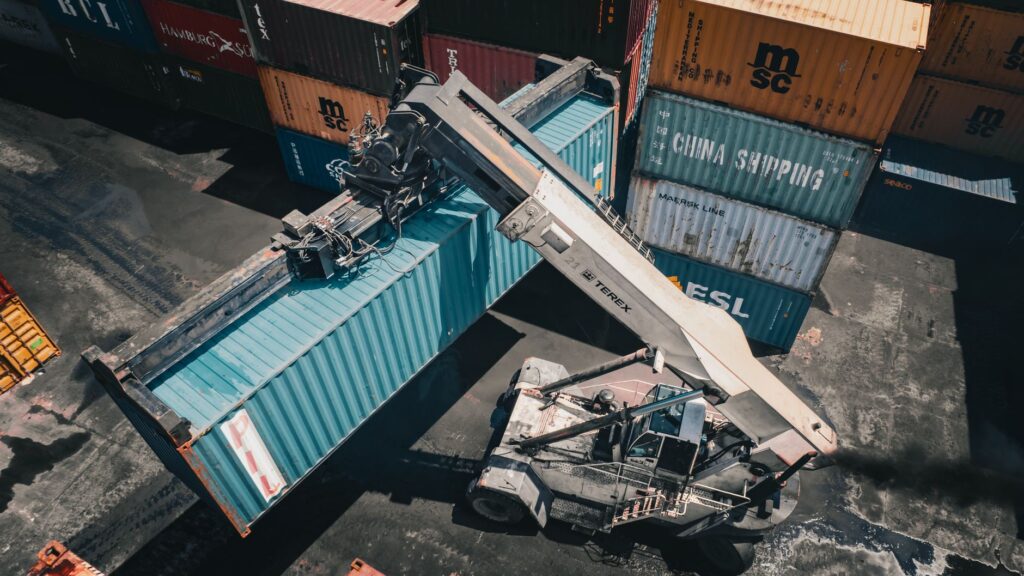
The forward-looking vision for Tazara envisions not only the modernization of its physical track alignment but also its integration into broader multimodal networks, linking dry ports, agricultural aggregation hubs, and strategic road links. Intermodality—the capacity to seamlessly transfer containers between trucks, trains, and ships—is the defining criterion for the corridor’s long-term viability. By streamlining border customs clearance procedures and improving coordination between Dar es Salaam port operators and railway enterprises, Tazara retains the potential to double its throughput and establish itself as a premier global logistics corridor.
Practical Information for Transport Planners and Specialized Travelers

For transport logisticians, researchers, or specialized travelers seeking to analyze or utilize the Tazara rail corridor, several operational guidelines based on current service realities must be considered:
-
Mainline Route: Connects Dar es Salaam Central Station in Tanzania with Kapiri Mposhi in Zambia, spanning 1,860 kilometers through major stations including Ifakara, Makambako, Mbeya, Tunduma (border), Nakonde, Kasama, and Mpika.
Frequency and Schedules: Passenger services generally operate with scheduled departures twice weekly from both terminal stations (typically Tuesdays and Fridays, subject to seasonal adjustments). Published schedules should be viewed as indicative due to potential technical line disruptions.
Travel Classes: Trains feature 1st class sleeper compartments (typically four bunks), 2nd class (six bunks), and 3rd class seating. Advance booking at official terminal station ticket offices is strongly advised.
Freight Logistics: Commercial shippers wishing to move freight must coordinate wagon or container charter agreements directly with Tazara headquarters in Dar es Salaam or via accredited freight forwarders operating within the port.
Border Formalities: Immigration and customs controls for train passengers are normally conducted at the respective border station (Tunduma or Nakonde), making it mandatory to carry proper travel documentation and valid visas for both nations.
Conclusion: The Enduring Relevance of an Iron Bridge Between Nations
The Tazara Railway remains an eloquent testament that transport infrastructure is not merely a matter of engineering and financial return, but an indispensable human and political bridge supporting the sovereignty and territorial cohesion of African nations.
Despite financial hurdles, maintenance demands, and fierce competition from road haulage, the railway corridor connecting Tanzania and Zambia retains irreplaceable strategic relevance. Its capacity to unify isolated regions, guarantee a sovereign ocean outlet for a landlocked economy, and facilitate cross-border commercial exchange demonstrates that major transport assets transcend their immediate accounting value.
Ultimately, the future of socio-economic development across this vast African region depends heavily on the commitment of national governments to revitalize, finance, and modernize vital arteries like Tazara. Adapting to modern logistical demands, incorporating efficient management technologies, and upholding a commitment to public regional connectivity will ensure this historic railway continues roaring across the Great Rift Valley for decades to come.