
Geological Origins and Phreatic Flows on the Threshold of Anatolia
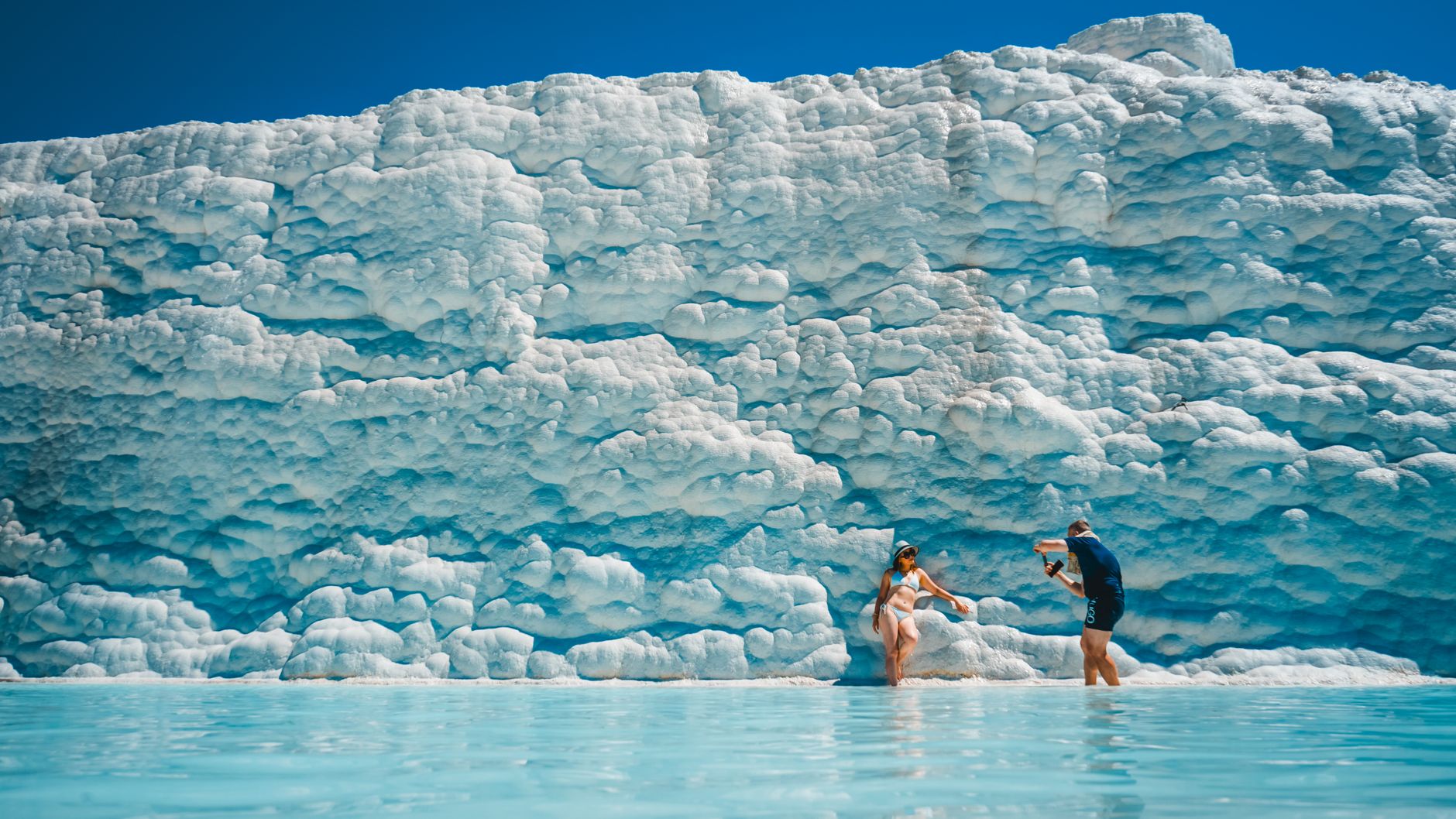
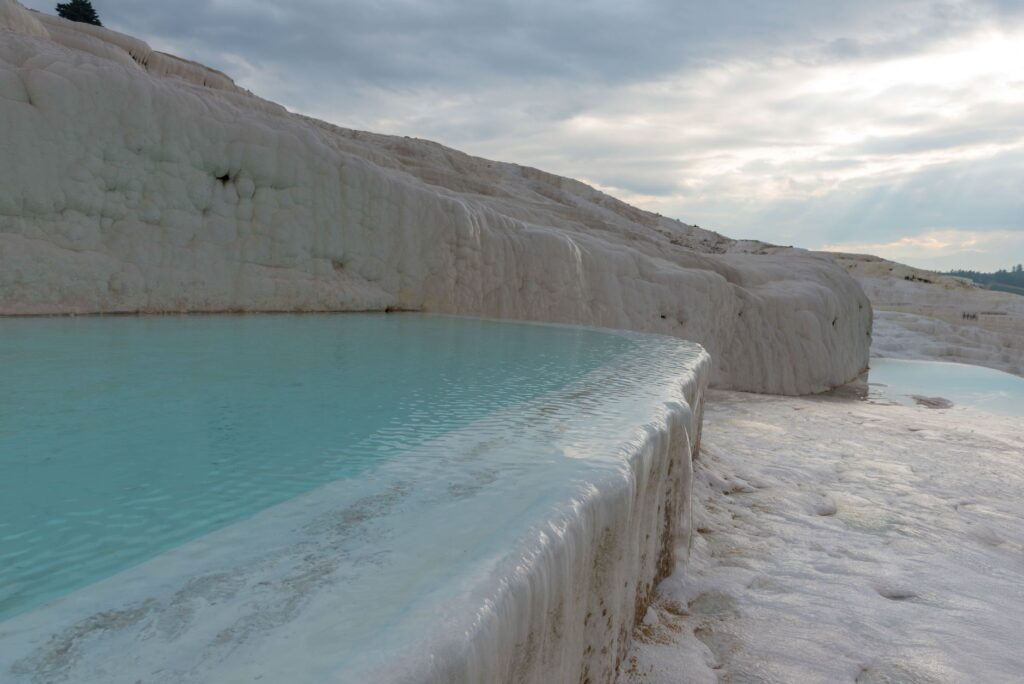
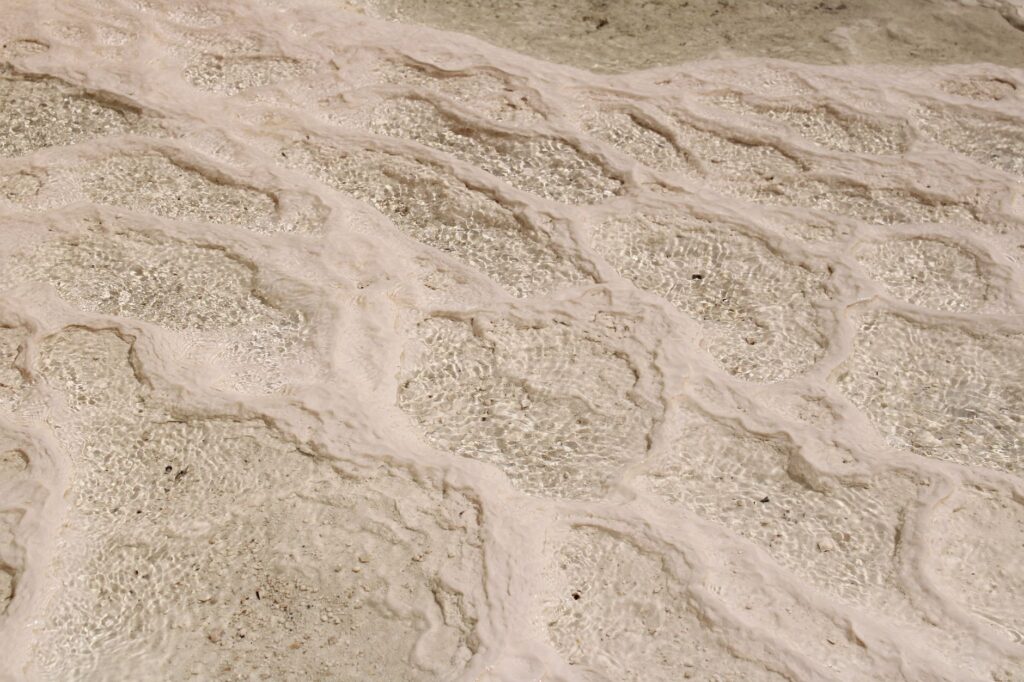
The territory of Pamukkale, situated in the inner Aegean region of Turkey, represents one of the most complex hydrogeological phenomena on the planet. The thermal waters springing from the tectonic fault line of the Menderes River valley emerge at a constant temperature of approximately 35 to 36 degrees Celsius, laden with dissolved mineral salts. This continuous flow, driven by deep underground pressure, transports calcium bicarbonate which, upon contact with atmospheric air, undergoes a rapid release of carbon dioxide. The physical result of this chemical reaction is the precipitation of calcium carbonate, a mineral that initially settles in a gelatinous state and, over the centuries, hardens to form the colossal white travertine terraces that characterize the landscape.
Understanding the dynamics of this aquatic ecosystem requires analyzing the delicate balance between natural extraction and heritage conservation. For decades, mass tourism and uncontrolled hotel construction atop the formations caused the obstruction of natural channels and the pollution of the pools. Subsequent government intervention, endorsed by international cultural and environmental protection bodies, involved the demolition of invasive hotel infrastructure and the implementation of a rotational irrigation system. Today, water is controlledly diverted toward different sectors of the terraces, allowing the travertine mantles to recover their pristine coloration and sedimentation capacity without constant anthropogenic abrasion.
Ancient Hydraulic Engineering and the Legacy of Hierapolis
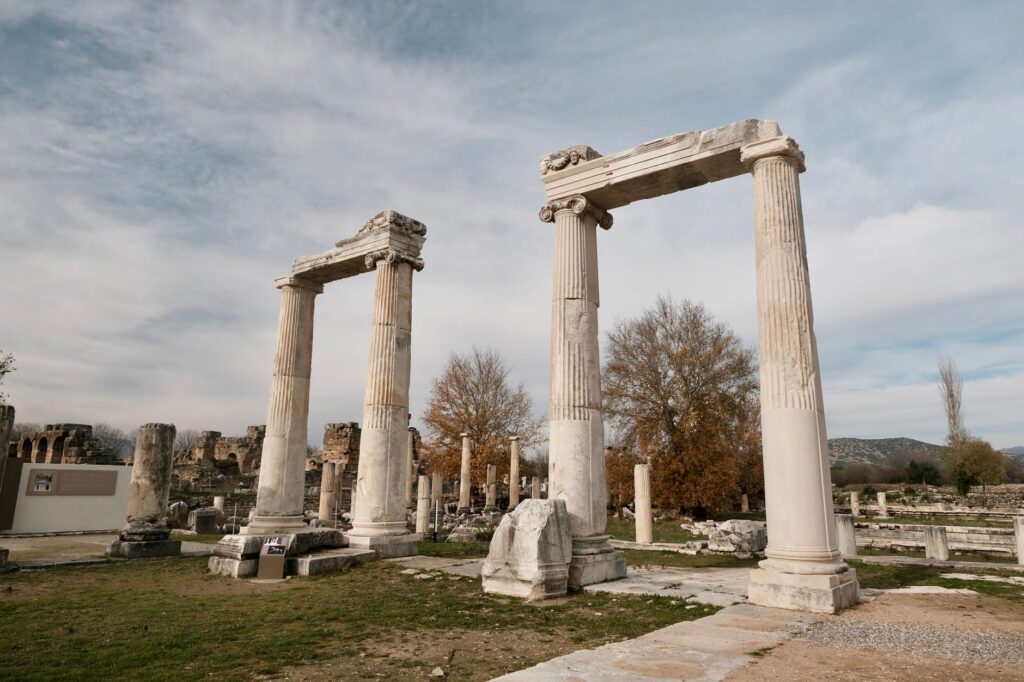
The presence of warm water did not go unnoticed by the civilizations of classical antiquity. In the 2nd century BCE, the Attalid dynasty of Pergamon founded the city of Hierapolis on the plateau adjacent to the limestone formations, originally conceived as a center of rest and healing linked to the cult of Apollo and Pluto. The urban planning of Hierapolis masterfully utilized the natural slope of the terrain to design a network of aqueducts and underground channels that distributed thermal water both to public bath establishments and to elite residences and artisan workshops.
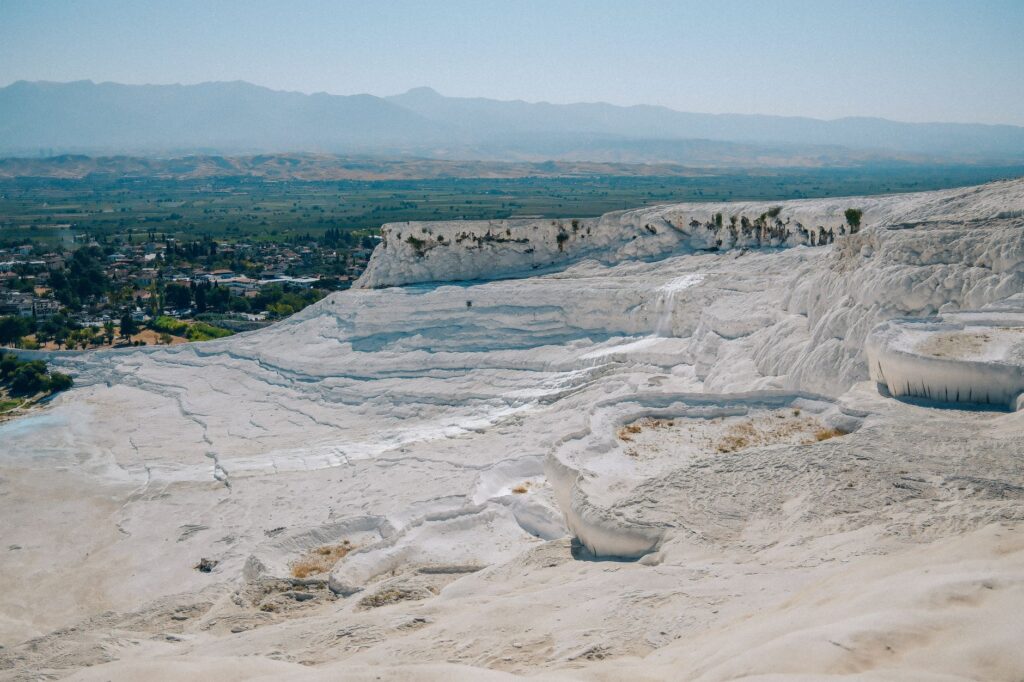
The surviving archaeological vestiges allow researchers to study the conduit systems using terracotta pipes fitted and sealed with hydraulic mortar, designed to withstand high mineralization without collapsing due to premature calcareous encrustations. Frontinus, the grand colonnaded avenue crossing the site from north to south, acts as the backbone of civil architecture where monumental thermal baths, an ornamented nymphaeum, and an extensive necropolis housing over twelve hundred tombs converge. Each of these monuments reflects the importance that thermal water held not only as a therapeutic resource, but as a central element of Greco-Roman economy and spirituality in Asia Minor.
Contemporary Hydrotherapy and Protocols of Mindful Immersion
Within the context of contemporary wellness tourism, the immersion experience in Pamukkale has transformed radically. Far from the disorderly mass tourism of the past, current offerings prioritize environmental preservation and the quality of the sensory experience. Visitors have limited access to certain zones of the natural terraces, where going barefoot is mandatory to prevent the abrasion and compaction of forming carbonate crystals, while primary swimming is concentrated in the so-called Antique Pool or Cleopatra’s Pool.
The true wealth of a millennial thermal landscape does not lie in the volume of visitors it attracts, but in its capacity to preserve geological silence beneath the constant flow of water.
This historic pool, located next to the Temple of Apollo, contains submerged fragments of marble columns toppled by earthquakes that shook the region over the centuries. The water temperature, dissolved minerals, and contemplation of archaeological vestiges beneath the surface generate a hydrotherapy experience that transcends mere leisure. Integrative medicine specialists recommend brief immersions of fifteen to twenty minutes, followed by periods of rest in the shade, to allow the body to assimilate the vasodilating effects of bicarbonate and calcium on the circulatory system and skeletal musculature.
Funerary Architecture and the Testimony of the Necropolis
The relationship between life, health, and death finds one of the most eloquent testimonies in the Mediterranean world within the Necropolis of Hierapolis. Situated along the northern access roads of the ancient city, this necropolis is one of the best preserved in Anatolia and offers an exhaustive panorama of funerary architectural typologies from the Hellenistic, Roman, and Early Christian periods. Earth tumuli, marble sarcophagi carved with garlands, and monumental house-shaped tombs reflect both the social status of the deceased and the cosmopolitan origins of those who traveled to the city seeking healing.
The study of these structures reveals the systematic use of local stone and travertine, materials that visually dialogue with the geological formations of the valley. Many ailing individuals who arrived in Hierapolis seeking relief from chronic ailments failed to overcome their conditions and passed away in the city’s guesthouses, turning the necropolis into a demographic archive of Antiquity’s pathologies. Walking among these funerary monuments at dusk, when golden light strikes the marble headstones and white terraces gleam in the distance, provides a deep historical dimension that enriches the traveler’s stay beyond mere landscape contemplation.
The Roman Theater and the Acoustics of the Landscape
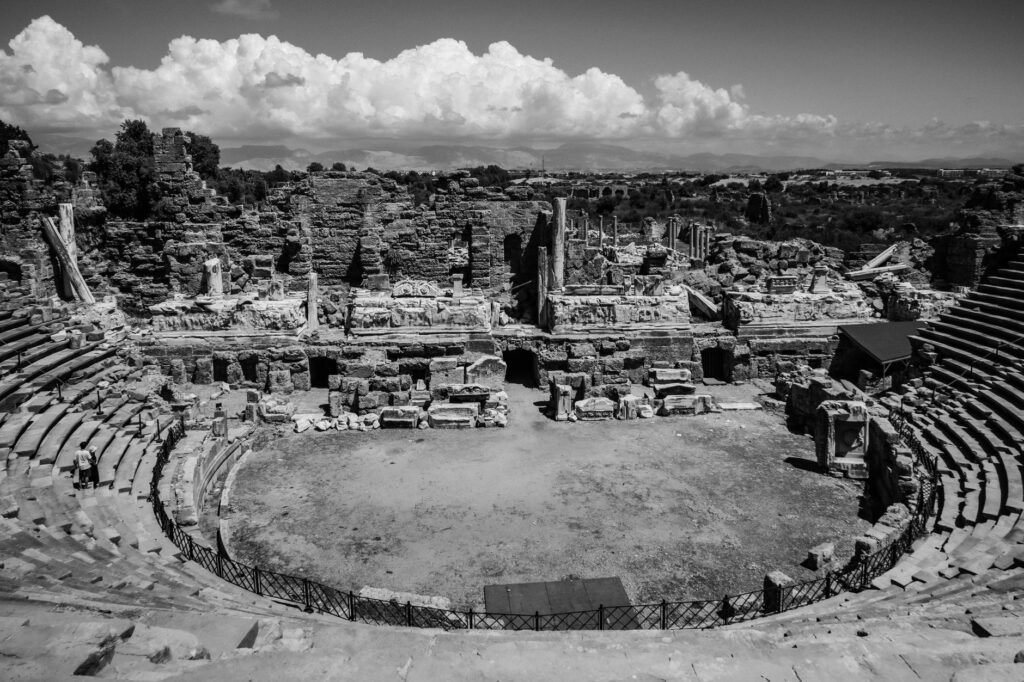
Dominating the plain from the hill crowning ancient Hierapolis rises the grand Roman theater, built during the reigns of emperors Septimius Severus and Caracalla. This architectural structure, partially excavated into the natural slope of the hill, constitutes a paradigmatic example of the integration between civil engineering and land topography. With an estimated capacity of over twelve thousand spectators, the theater features a scenae frons richly decorated with marble reliefs depicting myths associated with Apollo, Artemis, and Dionysus, tutelary deities of the region and its thermal springs.
The enclosure’s acoustics remain exceptionally intact due to the semicircular design of the cavea and the preservation of vomitoria and access corridors. For travelers interested in cultural heritage, walking the upper tiers of the theater at dawn, when the valley wakes covered in morning mist and the first sunrays illuminate the Pamukkale terraces, allows one to grasp the monumental scale of antiquity’s thermal cities. This space functioned not only as a civic entertainment center, but as a meeting point where religious festivals and athletic competitions linked to the healing properties of water were celebrated.
Biodiversity and Microclimate in the Menderes Valley
The ecological environment of Pamukkale is not limited to its geological and historical condition; the constant flow of thermal water and the inner Mediterranean climate of the Menderes Valley foster a unique microclimate that sustains a rich biodiversity adapted to conditions of high salinity and constant temperature. Halophytic plant communities and endemic aquatic species grow along the margins of drainage channels and surrounding wetlands, having developed specific physiological mechanisms to tolerate water mineralization.
Likewise, avifauna finds in this natural corridor a strategic refuge during seasonal migratory routes between Europe and Africa. Species of waterbirds and raptors take advantage of the thermal updrafts generated over the limestone plateau to glide effortlessly over the landscape. Environmental authorities of the natural reserve strictly control public access to peripheral nesting areas to ensure that tourist pressure does not alter the local fauna’s reproductive cycles, consolidating a management model where scientific conservation and sustainable tourism harmoniously coexist.
Practical guide
How to get there: The nearest airport is Denizli-Çardak Airport (DNZ), located about 65 kilometers from Pamukkale, with regular daily flights from Istanbul. Shuttle buses and private taxis operate from the terminal to the archaeological site. It is also possible to access via long-distance train or bus from Izmir or Antalya.
Best time to visit: The spring months (April to June) and autumn (September to November) offer moderate temperatures ideal for exploring the archaeological site and outdoor terraces, avoiding the extreme heat of the Anatolian summer.
Terrace access rules: Walking barefoot on the white travertines is mandatory to prevent the destruction of limestone formations. Footwear of any kind is prohibited, as is introducing detergents or body lotions into the natural pools designated for bathing.
Tickets and hours: The complex opens every day of the year from 6:30 AM to 8:00 PM during the summer season, with reduced hours during winter. Purchasing the combined ticket that includes access to the Hierapolis archaeological zone and the local museum is recommended.
Recommended accommodation: Hotels located in the village of Pamukkale and the nearby thermal town of Karahayıt offer facilities with red and white thermal water pools, ideal for complementing the cultural visit with wellness treatments backed by medical staff.
Mineral Silence and Crepuscular Contemplation
When the sun descends over the horizon of the Menderes Valley and the last rays of light pierce the warm vapors rising from the thermal springs, Pamukkale recovers the stillness that has characterized it for millennia. In that instant suspended between geology and history, the traveler understands that the white terraces are not mere tourist accidents, but living monuments sculpted by time and water. The experience of walking these limestone paths, listening to the constant murmur of underground streams, and contemplating the fallen columns of Hierapolis under the clear Anatolian sky invites a profound inner pause, reminding us of the irreplaceable value of places where nature and human memory converge in perfect harmony.