
The Granitic Spine That Challenges the Wanderer in the Heart of the Mediterranean
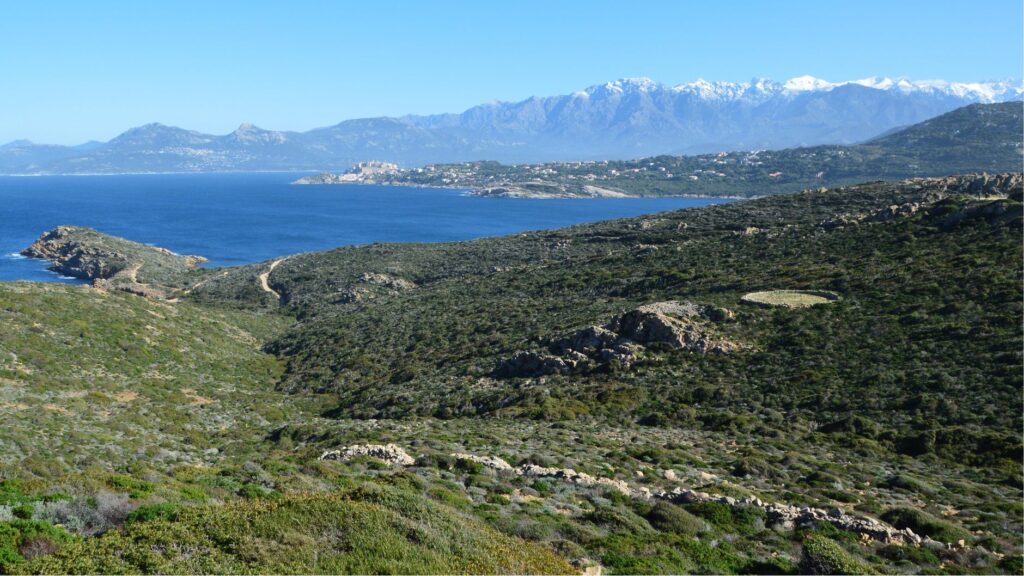
Corsica rises from the warm waters of the Tyrrhenian Sea like an alpine mountain range drifting adrift, a territory where the deep blue sea and the harshness of stone share a single horizon. Traversing it on foot via the Grande Randonnée 20, universally known as the GR 20, is not a simple vacation stroll, but a test of physical and mental endurance that demands rigorous preparation, absolute respect for the elements, and a profound understanding of island geography. Spanning roughly one hundred and eighty kilometers from Calenzana in the northwest to Conca in the southeast, the route cuts the island into two nearly symmetrical halves through a rosary of sharp ridges, vertiginous elevation changes, and valleys sculpted by ancient glacial action.
The appeal of this itinerary lies in its radical duality: while the French and Italian coasts bustle under summer beach tourism, Corsica’s heights preserve a rugged solitude, interrupted only by the whistle of the wind and the steady tread of mouflons. Facing this challenge means accepting that the terrain never yields; every day demands constant attention to unstable rocks, exposed ridges, and sections where the use of hands is just as essential as the traction of boots. This guide analyzes the anatomy of this monumental traverse, offering the expeditioner the technical, logistical, and human keys necessary to understand a territory as beautiful as it is relentless.
Geography and Terrain Morphology: The Corsican Stone Labyrinth
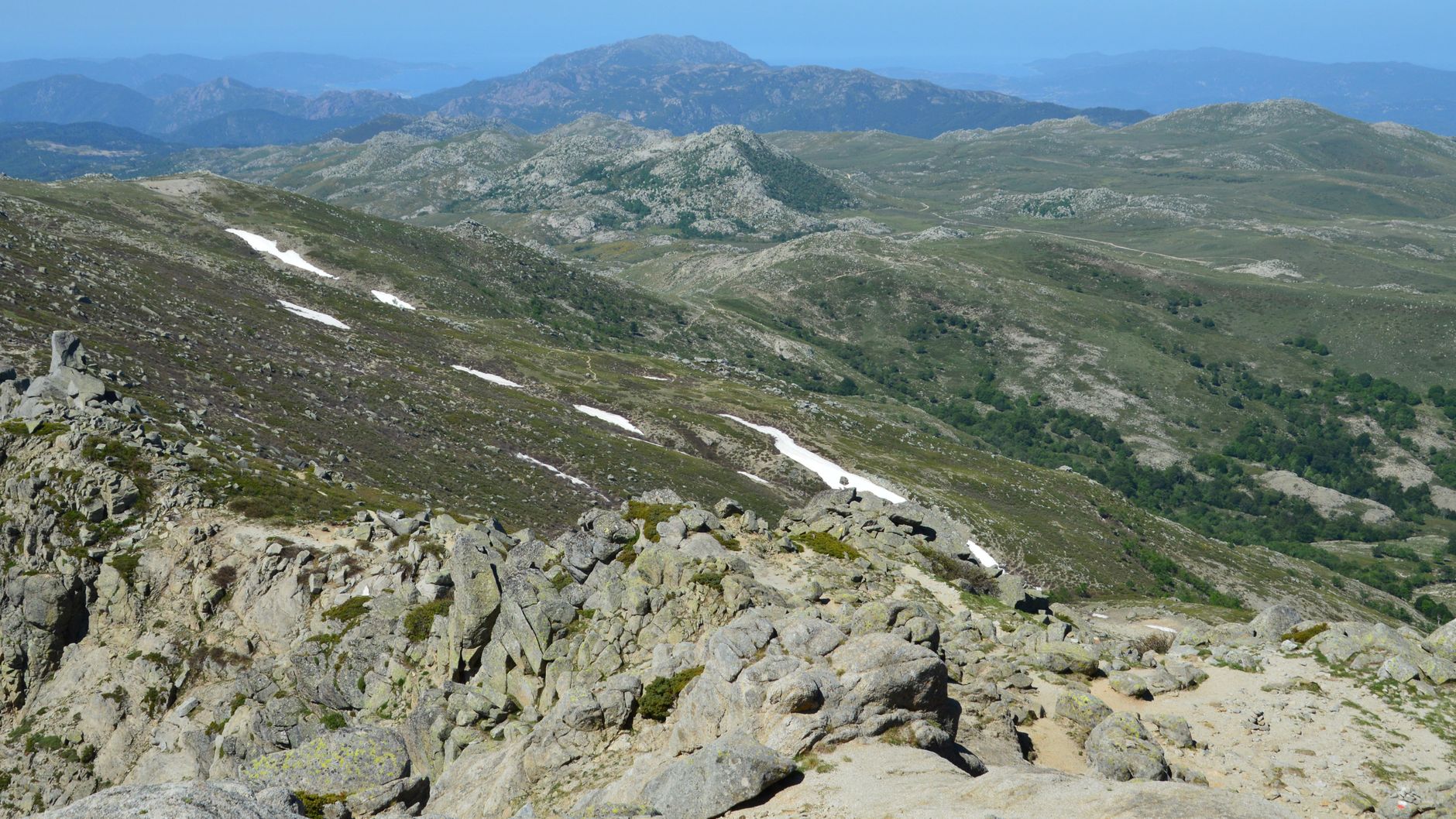
To understand the magnitude of the GR 20, one must break down its topography into two distinct universes that set the traveler’s pace. The northern sector, extending from Calenzana to Vizzavona, concentrates the greatest technical difficulty of the entire route. Here, granite adopts capricious, sharp shapes, forming needles and glacial cirques where progression requires constant scrambling, the use of chains, and a meticulous reading of the red and white markers guiding the hiker. Passages like the famous Cirque de la Solitude—whose accessibility has shifted due to historical rockfalls, yet whose technical essence persists in equally demanding variants—test balance on surfaces polished by wind and the millenary passage of water.
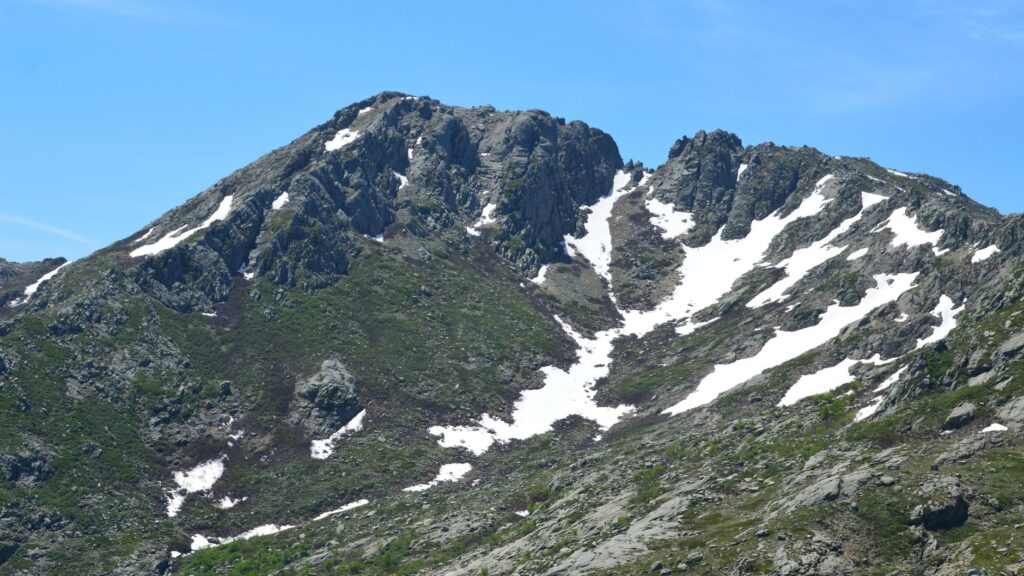
Conversely, the southern sector, running between Vizzavona and Conca, offers a gentler profile in terms of verticality, though it compensates for the lower technical difficulty with greater exposure to heat and long-mileage stages. In this southern section, the landscape gradually transitions from high-mountain beech and pine forests to the Mediterranean maquis, where the aromas of cistus and myrtle accompany the hiker in the final stretches. However, underestimating the south is a frequent miscalculation; the scarcity of reliable natural water sources during the summer months and direct solar radiation make water management and marching schedules critical factors to prevent dehydration.
Temporal Planning and Seasonality: When and How to Undertake the Route
The ideal time window to tackle the GR 20 safely narrows drastically due to the extreme weather conditions dominating the high Corsican mountains. Officially, the season runs from early June to late September, coinciding with the period when most staffed refuges remain open and operational. Outside these months, a blanket of snow and ice covers the high passes, transforming an advanced hiking itinerary into a winter mountaineering traverse requiring specific technical equipment, experience in snowy terrain, and absolute mastery of self-rescue techniques.
Even within the summer season, the Corsican atmosphere is highly volatile. Mornings usually dawn clear and bright, inviting early starts to progress with moderate temperatures, but violent thunderstorms accompanied by hail and intense atmospheric discharges frequently develop on the ridges around midday. These sudden storms make it essential to plan each stage under the unwritten rule of completing the main journey before two in the afternoon, seeking shelter or safe zones far from high points and metal ridges where the risk of lightning increases exponentially.
Refuge Logistics and Self-Sufficiency in the Regional Natural Park
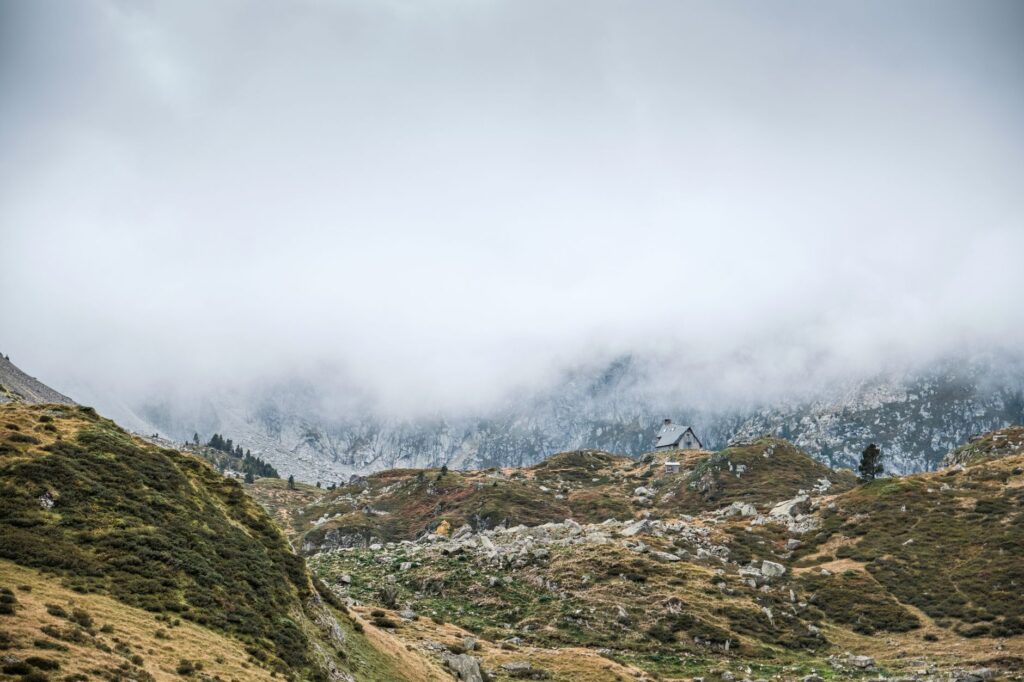
Along the GR 20 route operates a network of mountain refuges managed by the Parc Naturel Régional de Corse (PNRC). These generally modest facilities offer bunk beds, basic mattresses, and an outdoor communal kitchen, alongside the presence of a warden during the core summer months. However, it is essential to understand that the capacity of these refuges is limited, and prior booking through official platforms is indispensable. Relying on finding an open bed without prior planning is a risky gamble that may force unplanned bivouacking in adverse weather conditions.
The Corsican mountain does not negotiate with improvisation; every extra gram in the backpack multiplies with the elevation changes, and every liter of water calculated lightly is paid for on exposed ridge sections under the July sun.
Next to each refuge lies a designated tent-camping area, although park regulations strictly prohibit camping outside these designated spaces to protect fragile endemic flora. Many hikers choose to carry their own lightweight tent to ensure rest in case refuges reach maximum capacity. Regarding food, wardens offer basic packaged products and some prepared hot meals, but variety is scarce, and prices reflect the logistical complexity of transporting goods by helicopter or mule. Therefore, packing dehydrated, high-calorie foods from the starting point remains the standard for autonomous hikers.
Technical Equipment: The Golden Rule of Minimal Weight and Durability
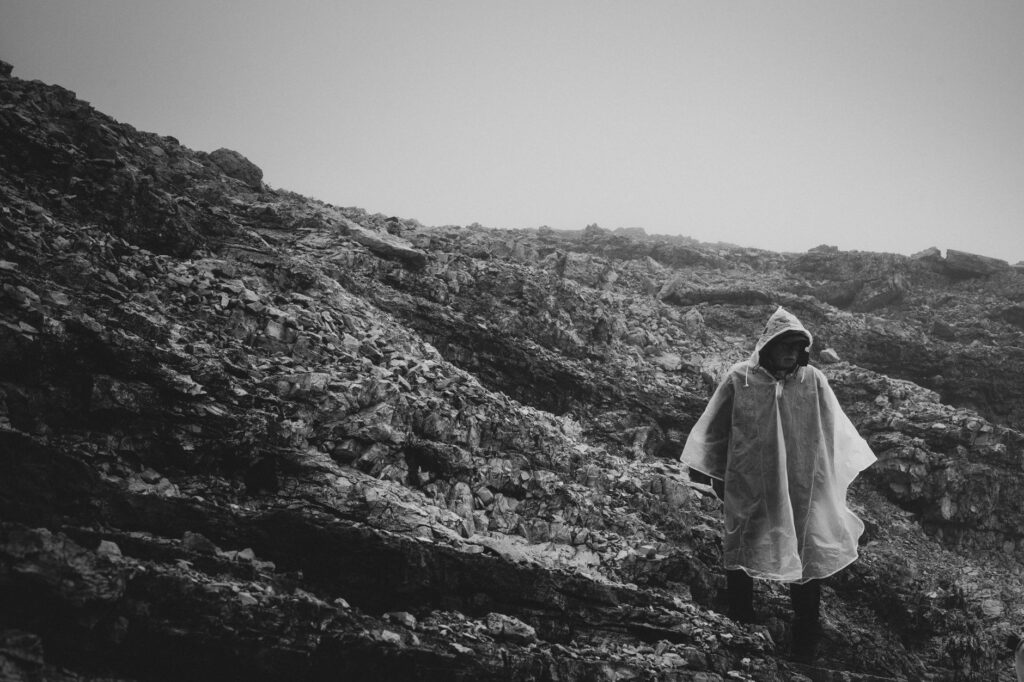
Carrying a backpack on the GR 20 is an exercise in absolute material streamlining. The terrain punishes both joints and luggage seams, so every item must justify its presence through real utility. The ideal weight of equipment loaded with water for a day should not exceed twenty percent of the walker’s body weight. Trekking boots must offer excellent ankle support and a high-friction grip sole, preferably with rubber compounds optimized for wet rock and dry granite, given that worn soles easily slip on inclined slabs.
- Anatomical backpack between 45 and 60 liters with a firm lumbar adjustment system.
- Hydration system composed of rigid flasks with a total capacity of three liters.
- Layered technical apparel: breathable base, lightweight fleece, and waterproof membrane jacket with a water column exceeding 20,000 mm.
- Telescopic trekking poles with widia tips and summer baskets to protect knees during prolonged descents.
- Advanced first-aid kit, heavy-duty thermal blanket, and chemical or rapid-filtration water purifiers.
Human and Cultural Aspects: The Rugged Hospitality of Corsican Shepherds
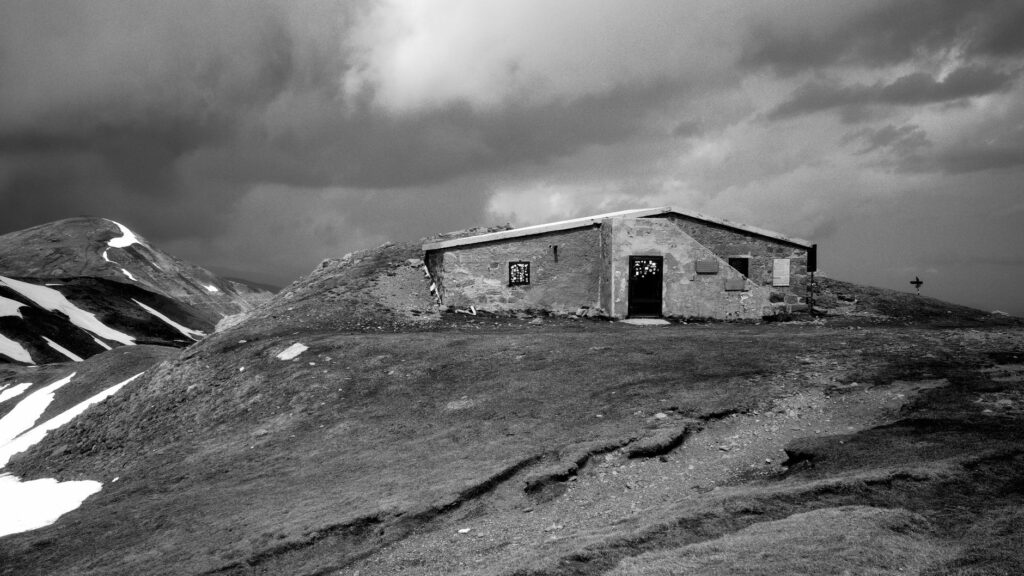
Beyond geology and physical effort, the GR 20 is a deep immersion into Corsican identity. Across the valleys and sheepfolds dotting the route, the traveler encounters vestiges of a millenary pastoral culture based on seasonal transhumance. Ancient stone shelters, known as jauli, bear witness to the harshness of a life dedicated to goat farming in near-total isolation. Conversing with locals and refuge wardens reveals the insular character: a discreet pride, a frankness devoid of commercial artifice, and a profound attachment to the land.
Local gastronomy, though difficult to pack, manifests in the refuges through emblematic products such as brocciu cheese, made from goat and sheep milk, and characteristic cured Corsican pork sausages like coppa or prisuttu. These foods, rich in fats and mineral salts, represent an excellent traditional fuel to recover energy spent after crossing mountain passes exceeding two thousand meters in altitude. Understanding and respecting this enriching culture transforms the traverse from a mere athletic challenge into a top-tier anthropological experience.
Practical guide
How to get there: Corsica’s main airports are Ajaccio (AJA) and Bastia (BIA), connected by regular flights from Paris and Nice. From Calvi or Bastia airport, access is available via the narrow-gauge railway—the famous U Trinichellu—to the town of Ponte Leccia, and from there via bus connections to Calenzana, the northern starting point.
Permits and bookings: No special Regional Natural Park entry permit is required to hike the trail, but overnight stays in refuges and official campsites must be booked well in advance through the official park web portal (pnr.corsica).
Recommended season: From June 15 to September 15. Outside this window, refuges are unmanned, running water is usually shut off due to freezing, and alpine passes require crampons and an ice axe.
Estimated budget: A self-managed traverse utilizing refuge campsites and purchasing occasional provisions ranges between 350 and 500 euros per person for the two-week journey.
Upon reaching the final landmark in Conca, when the sea reappears on the horizon after days of stone and silence, the hiker understands that the true summit was not the conquered rock, but the composure forged along the trail.
The definitive silence of the trail does not impose itself as a void, but as a dense, calm presence that accompanies the traveler long after leaving the peaks. Aching knees and hands scarred by rough granite become mute witnesses to a journey that tolerates no shortcuts or concessions to superficiality. Contemplating for the last time the jagged silhouette of the Corsican mountains melting into the deep blue of the Mediterranean, there remains the absolute certainty of having walked through one of the last bastions of wild authenticity on the European continent, a sanctuary of stone where nature preserves its oldest and severest rules intact.