
There is an invisible line drawn across the freezing waters of the Norwegian Sea where time is measured not by clocks, but by the precise port calls made by the coastal mail steamers. Since 1893, the route known as Hurtigruten—the fast route—has functioned as the backbone of a country fragmented by granite abysses and rugged channels. Beyond its contemporary tourist profile, this service was born out of an imperative necessity: ensuring that the most isolated fishing communities within the Arctic Circle received vital supplies, correspondence, and medical care during the long, dark polar winters. Today, examining the operations of this fleet offers a clear understanding of how naval engineering and human tenacity adapt to one of the harshest environments on the planet.
The geography of the Norwegian coastline defies conventional transport logic. With over twenty-five thousand kilometers of shore carved by deep fjords and indomitable archipelagos, overland transport has historically been a chimera in these northern latitudes. Before the advent of commercial aviation and the complex network of modern tunnels and bridges, the sea was the only viable pathway twelve months a year. The original steamships were not leisure liners, but robust iron hulls capable of withstanding hurricane-force gales, laden with coal, barrels of herring, and passengers wrapped in thick wool who shared the deck with live cargo.
The Origins of a Vital Route for the North
The genesis of this service dates back to the efforts of Captain Richard With and the Norwegian government to break the winter isolation of the Finnmark region. Until the late nineteenth century, towns situated north of Trondheim were virtually cut off by sea during the months when ice and storms blocked traditional routes. With’s proposal was to establish a regular line operating uninterruptedly, defying the polar darkness and the violent currents of the Norwegian Sea. The first official voyage, carried out by the steamship SS Vesterålen in November 1893, demonstrated that navigating with millimeter precision through a water labyrinth previously considered impassable was indeed possible.
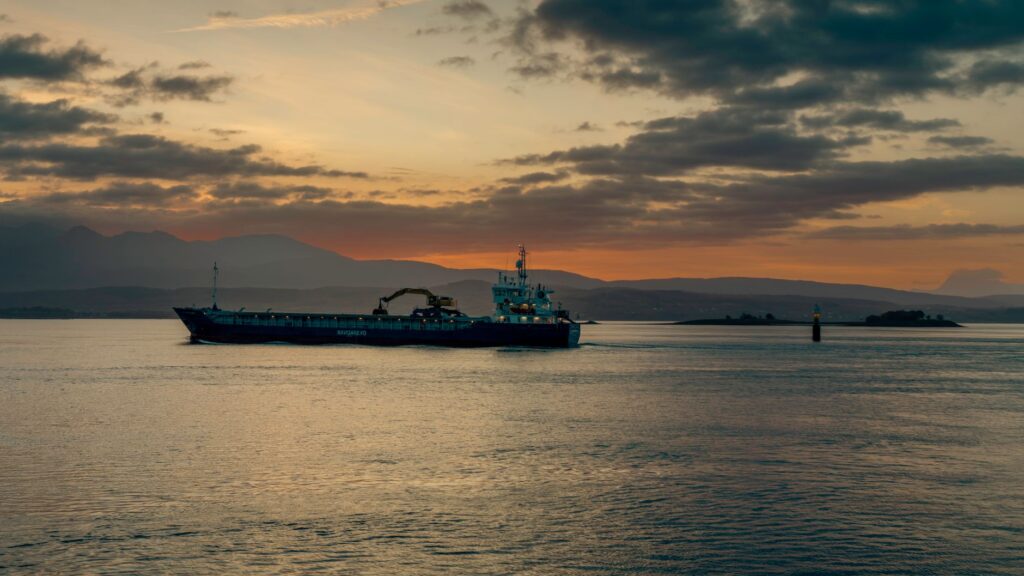
This milestone radically transformed the regional economy. Northern fishermen were able to commercialize their fresh catch in southern markets before deterioration set in, while families received news from the outside world and manufactured goods with unprecedented regularity. The mail boat became a symbol of civic reliability. Coastal communities synchronized their clocks and daily routines with the deep sound of the approaching foghorn, an acoustic signal announcing the delivery of provisions and the opportunity to connect with the rest of the country.
The Technical Evolution of the Fleet
Over more than a century, the vessels plying the route have undergone a profound technological transformation, reflecting advancements in naval architecture and environmental sustainability regulations. The old coal-fired steam engines gave way to powerful diesel propulsion units in the mid-twentieth century and, more recently, to the integration of hybrid liquefied natural gas and battery systems designed to minimize the carbon footprint in fragile Arctic ecosystems. However, one design principle has remained unaltered: the need for ice-reinforced hulls and high maneuverability to dock at tiny wharves where space is a scarce luxury.
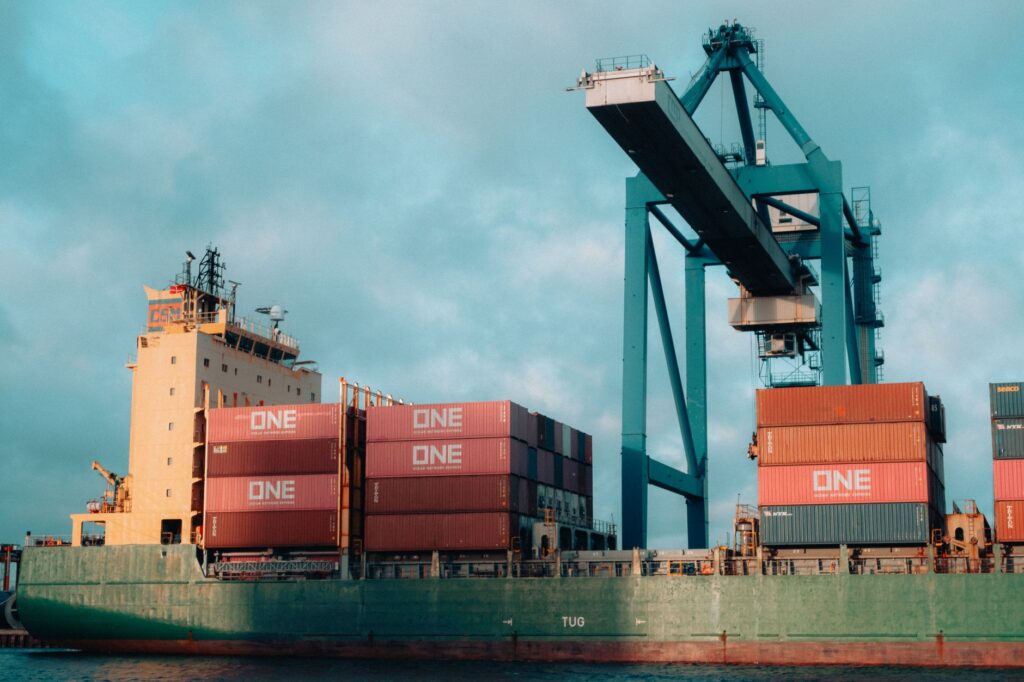
Modern vessels combine the traditional function of cargo and local passenger transport with the amenities demanded by contemporary travelers. They feature high-capacity deck cranes capable of unloading everything from pallets of food to all-terrain vehicles, essential for communities lacking permanent road connections. This operational duality requires exceptional technical skill from the crews. Captains must maneuver through narrow fjords under conditions of reduced visibility, strong crosswinds, and unpredictable tides, relying equally on satellite navigation technology and an encyclopedic knowledge of local currents accumulated over generations.
Life on Board: Between Cargo and Contemplation
The experience of sailing on Hurtigruten differs substantially from that of a conventional cruise. There are no flashy shows or itineraries designed solely for hedonistic leisure; the true protagonist is the journey itself and the daily pulse of the coastline. At every port of call, which can last anywhere from a few meager minutes to several hours, a silent yet efficient choreography unfolds: dockworkers unload freight, local passengers board for short trips between neighboring villages, and scientists embark marine samples or research equipment.
This constant flow of people endows the voyage with a unique anthropological dimension. In the panoramic lounges, marine researchers, university professors, local fishermen, and international travelers drawn by the promise of witnessing the northern lights in winter or the midnight sun in summer share space. Conversations flow naturally around weather conditions, the history of coastal lighthouses, or the scarcity of cod. The atmosphere reflects the sober, respectful, and functional character of Norwegian society, where efficiency and safety outweigh ostentation.
Passing Through the Geographic Landmarks of the Route
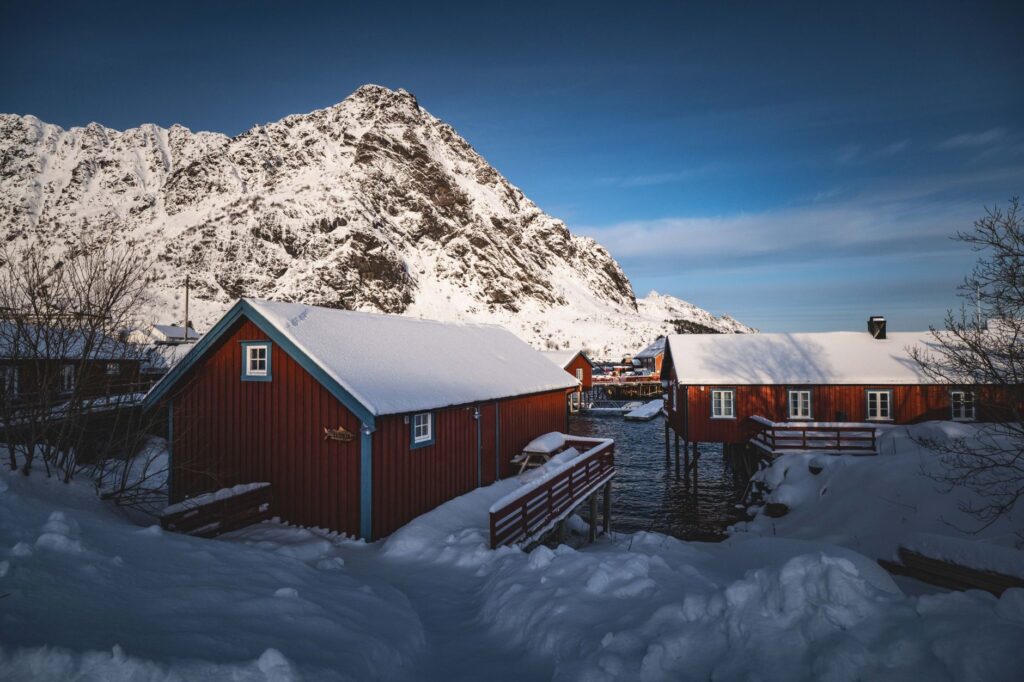
The classic itinerary, stretching approximately two thousand five hundred kilometers between Bergen and Kirkenes, traverses some of the most breathtaking and geologically complex landscapes on Earth. Each section of the route presents unique challenges for navigation and offers a display of landforms sculpted by glacial erosion. One of the most critical points is the passage through the Lofoten archipelago, where sharp granite peaks emerge directly from the sea like defensive walls, creating a treacherous water corridor known as the Vestfjorden.
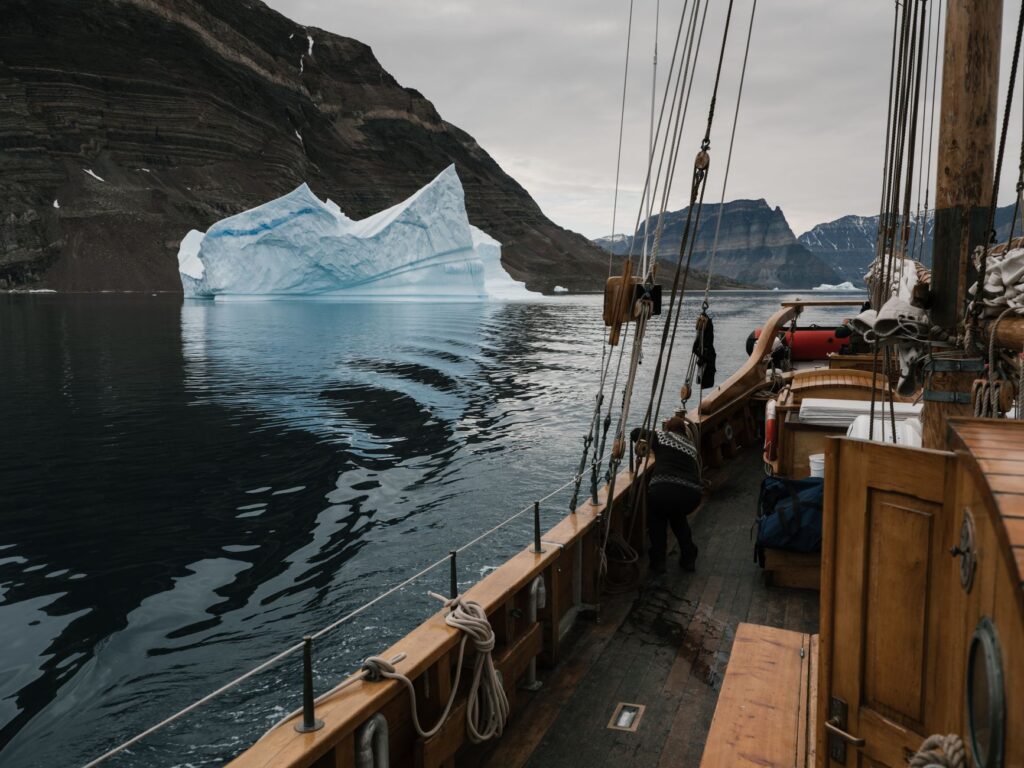
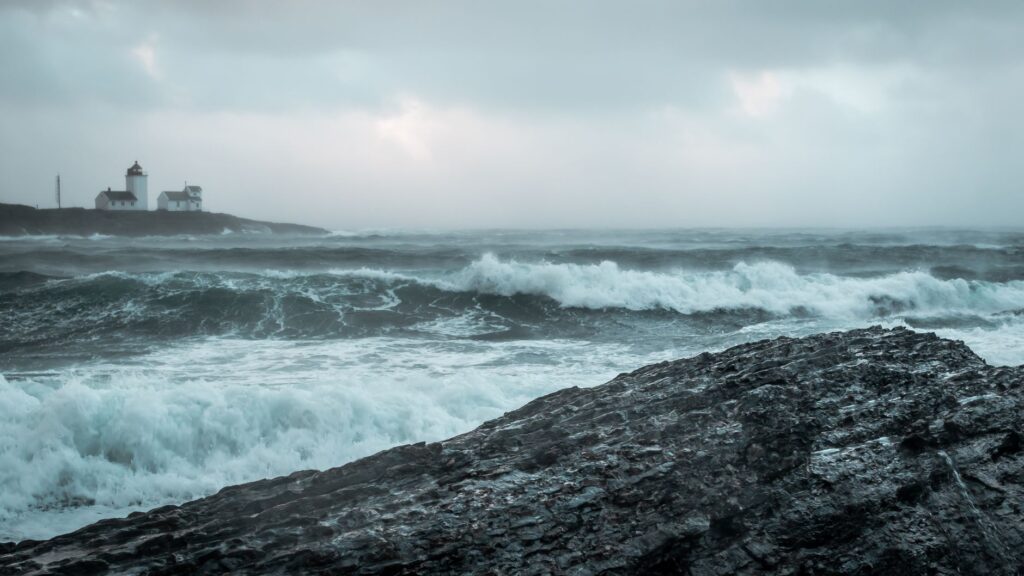
Further north, the vessel rounds the Nordkyn Peninsula and enters the open waters of the Barents Sea, where the influence of the Gulf Stream collides with polar air masses. It is in these latitudes that crew expertise is most rigorously tested. Passengers watch from the large windows as waves crash against isolated lighthouses perched on bare rock islets, while the ship advances steadily toward its terminal near the Russian border, strictly adhering to a schedule that defies the laws of Arctic meteorology.
The mail boat is not an ordinary means of transport; it is the silver thread stitching together the seams of a geography fragmented by ice and sea.
Logistical Challenges and Arctic Sustainability
In recent decades, the pressure of global tourism has forced operators of the route to rethink their management model to prevent overcrowding from altering the balance of coastal communities and fragile marine ecosystems. The simultaneous arrival of hundreds of visitors in tiny fishing hamlets with barely a few hundred residents poses complex logistical dilemmas requiring close planning with local authorities and fishing cooperatives.
Likewise, the energy transition has become an inescapable priority. The use of heavy fossil fuels in protected natural areas and biosphere reserves has faced stringent government regulations. Investments in cleaner propulsion technologies, the use of shore power in major ports to shut down auxiliary engines during extended stays, and the reduction of single-use plastics in ship galleys form part of a comprehensive effort to ensure that fleet operations remain compatible with the long-term preservation of the natural environment that justifies them.
Practical guide
Planning a journey aboard the historic Norwegian coastal postal route requires understanding its operational nature, which differs entirely from the conventional cruise industry.
How to get there: The traditional starting point for the northbound route is the city of Bergen, connected via regular flights with major European hubs such as Oslo or Copenhagen. Bergen port features a main maritime terminal located a short distance from the historic city center.
When to travel: The choice of season depends strictly on the traveler’s objectives. Between October and March, the focus centers on observing the polar night and the northern lights, featuring sub-zero temperatures and demanding navigation conditions. Between May and July, the midnight sun phenomenon allows travelers to contemplate coastal landscapes twenty-four hours a day under a constant golden glow.
Travel modalities: It is possible to book the full round-trip journey (from Bergen to Kirkenes and back, lasting approximately twelve days) or opt for partial segments between specific ports, using the ship as a long-distance ferry to explore the coast overland.
Luggage and regulations: The weather along the Norwegian coast is extremely variable, even in summer. Layered technical clothing, high-quality waterproof windbreakers, footwear with non-slip soles for walking on wet decks or icy docks, and binoculars for wildlife and landscape observation are strongly recommended.
Epilogue on the Aft Deck
When the sun slowly descends behind the stone horizon and the chill of the Arctic night freezes breath against steel bulkheads, the aft deck of the mail boat becomes a space for deep introspection. Far from the noise of large cities, the steady rhythm of the engine and the murmur of waves parted by the bow remind us that civilization in these latitudes depends on a delicate and constant pact with the ocean. Travelers who remain in silence, gazing toward the white wake, discover that the true magic of the journey lies not in the luxury of its amenities, but in the recognition of a collective work of survival and connection that continues to beat, relentless and punctual, at the northernmost edge of Europe.