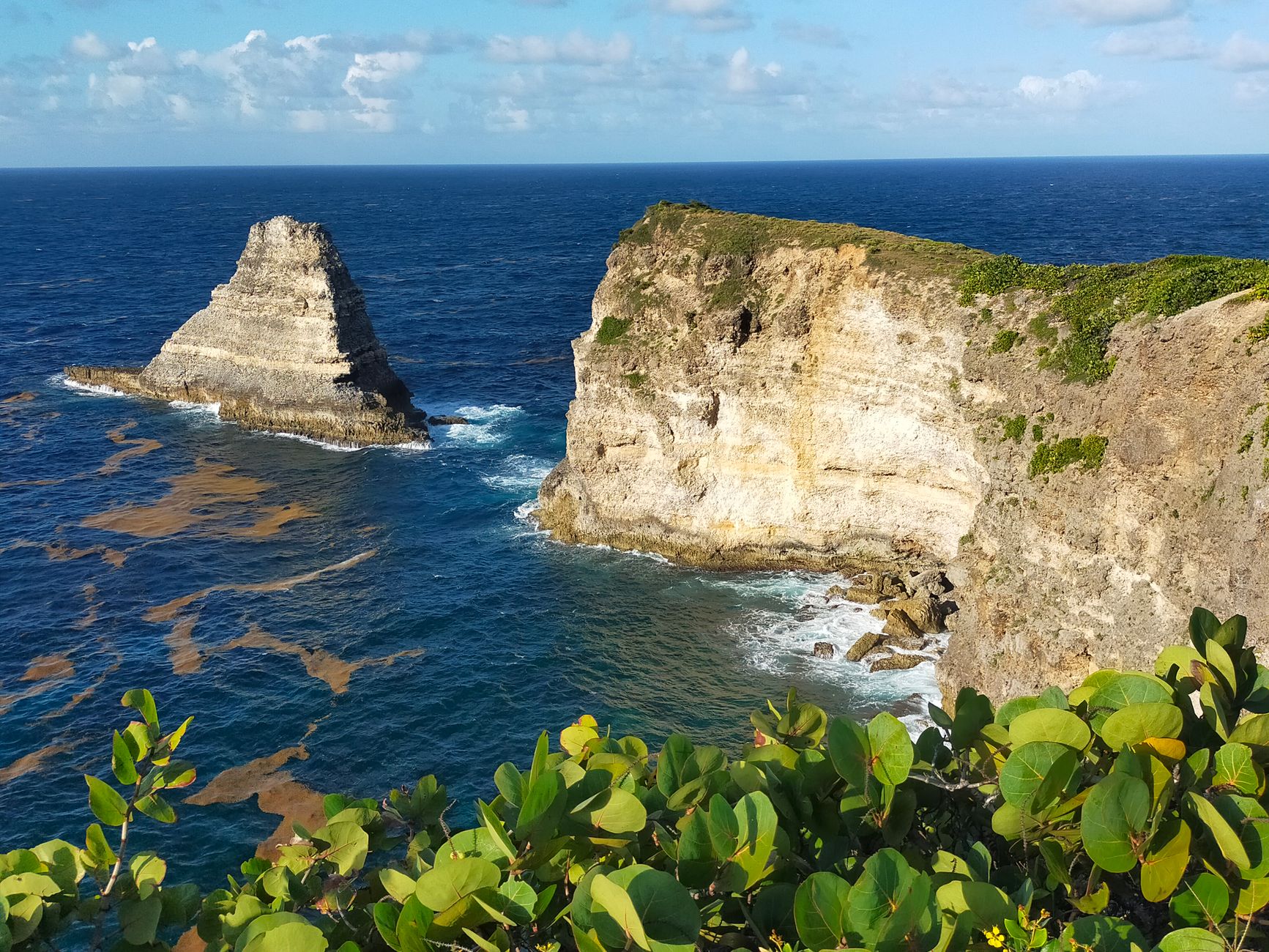

At the southernmost extreme of the American geography, where continental ice sheets submerge into the depths of the Pacific Ocean and the currents of the austral channels impose their unrelenting law, human connectivity ceases to be a logistical convenience and becomes a daily exercise in survival and endurance. The Magdalena Islands, an outpost beaten by katabatic winds and furrowed by dark-water channels, represent one of the greatest intermodal engineering challenges in the Southern Hemisphere. Here, the lack of paved highways and the absence of continental bridges force a rethinking of the movement of people, goods, and knowledge through a delicate network of tidal ferries, minor cargo barges, and small watercraft operating to a rhythm dictated by the moon and barometers.
This report examines the complex transport machinery that sustains daily life in this remote archipelago. Through the voices of cabotage captains, port operators, and local inhabitants, we unravel how transport infrastructure does more than just move passengers; it maintains territorial sovereignty and social cohesion in communities entirely dependent on the precision of tides and the sturdiness of metal hulls designed to withstand the onslaught of the southern sea.
The Geography of Isolation and the Tyranny of the Austral Channels
Understanding mobility in the Magdalena Islands requires, first of all, accepting the rules imposed by a territory shaped by glaciation. Deep fjords and narrow channels act as wind tunnels where blind navigation is a constant during the austral winter months. Traditional shipping routes do not follow straight lines; instead, they meander among shallow waters, submerged rocks, and giant kelp beds that can entangle propellers in a matter of seconds.

The region’s main ports, small reinforced concrete docks and coigüe wood pilings, have witnessed decades of evolution in transport vessels. While canoes belonging to indigenous peoples and sailing cutters once dominated these waters, the system now relies on double-ended ferries capable of carrying off-road vehicles and refrigerated containers. However, terrestrial infrastructure is practically nonexistent beyond the docks; compacted gravel roads connect landing points with dispersed settlements, making every journey by car or truck strictly dependent on the prior success of the nautical crossing.
The Cabotage Fleet: Naval Engineering Adapted to Southern Fury
The core operating system of connectivity in the islands rests upon a heterogeneous fleet of cabotage vessels. These ships are not luxury ocean liners, but true workhorses designed with reinforced naval steel hulls to withstand impacts from floating timber and ice chunks calved from nearby glaciers. High-power diesel engines, equipped with closed-circuit cooling systems to prevent clogging by algae and sediment, roar tirelessly during the early mornings when ships set sail for ports of call.

The crews of these vessels operate under strict safety margins. Captains must hold specialized Patagonian navigation licenses, a deep understanding of local nautical cartography, and an almost visceral intuition for reading subtle changes in atmospheric pressure. Each voyage requires a millimetric calculation of ballast and heavy cargo distribution, since an imbalance in the holds can prove fatal when crossing the crosscurrents of the main channels, where waves rebound against vertical granite rock walls.
The Meteorological Factor: When the Barometer Dictates the Region’s Pulse
In the Magdalena Islands, weather forecasts are not mere suggestions for organizing leisure time, but unappealable sentences that paralyze or activate the local economy. Cold fronts advancing from Cape Horn collide head-on with the Andes mountain range, generating winds known locally as squall gusts that easily exceed eighty knots. Under these conditions, port captaincies issue temporary navigation closures that completely isolate island communities for days or even weeks.
This climatic vulnerability has forced transport operators to develop high-redundancy satellite communication systems and port shelters equipped with energy autonomy. Nevertheless, the economic impact of a week of port inactivity is immediately felt on local store shelves, where perishable goods become scarce and heating fuel is rationed with strict rigor. The population’s resilience is tested every time nature suspends the movement of ships.

The stability of an island village is not measured by the amount of asphalt crossing its valleys, but by the reliability of the invisible thread of steel and salt uniting it with the mainland.
Cargo Logistics: Supply and Survival in the Outpost
The transport of freight to the Magdalena Islands constitutes a complex intermodal supply chain combining heavy-duty trucks on the mainland, tidal port cranes, and open-deck barge holds. Everything the archipelago consumes—from flour and medicine to outboard motor parts and solar panels—must pass through this logistical bottleneck. Maritime freight rates directly impact the cost of living, turning efficient transport management into a matter of territorial equity.
Logistical operators also face the challenge of offloading during spring tides, when water levels can fluctuate by up to eight meters in just a few hours. Ferry access ramps must be manually adjusted using pulley and counterweight systems to allow the safe passage of heavy cargo trucks. A miscalculation in the ramp’s gradient can leave a truck stuck or cause structural damage to the barge’s bow, paralyzing the only available supply route for an entire community.

Community Mobility: The Daily Transport of Students, Patients, and Neighbors
Beyond industrial cargo and specialized tourism, the transport system of the Magdalena Islands is the vehicle for its inhabitants’ social lives. Rural teachers, medical staff on health rounds, and high school students rely on fast passenger motorboats, locally known as water buses, to travel between various islets and population centers. These daily journeys, often undertaken under persistent drizzle and sub-zero temperatures, demand great emotional fortitude from travelers.
Passenger vessels are equipped with reclining seats, convection heating systems, and high-visibility life jackets, but true comfort is provided by the camaraderie among passengers. During these hours of navigation, cabins transform into improvised sitting rooms where local news is exchanged, the price of edible kelp is debated, and community seasonal chores are planned, weaving a solidarity network that mitigates the hardships of geographic isolation.
Public transport in these latitudes is not an impersonal service with rigid schedules, but a floating extension of the community itself where every face is known and every need shared.

Practical guide
Planning a trip or understanding transport logistics in the Magdalena Islands archipelago requires following a strict set of guidelines to avoid setbacks arising from its complex geography.
- Route Planning: Always consult official weather bulletins from the Port Captaincy at least 48 hours before any maritime displacement.
- Ticket Booking: Vehicle spaces on main ferries must be secured weeks in advance during the austral summer months due to high logistical demand.
- Luggage and Weight: Limit luggage to manageable, waterproof bags; weight restrictions on smaller passenger boats are strict for stability reasons.
- Medical Autonomy: Carry a personal supply of essential medications, as local pharmacies have limited stock and bad weather evacuations may be delayed.
- Digital Connectivity: Do not rely on standard mobile phone signal; purchase or rent satellite communication devices for remote areas before embarking on the channels.
Horizons of Salt and Metal: The Final Beat of the Southern Outpost
When the last ferry of the day docks at the sheltered pier and the hemp mooring lines are secured with firm maritime knots, the Magdalena Islands archipelago seems to sink into a deep silence, broken only by the steady lap of waves against the wooden pilings. In that twilight moment, the light of the distant lighthouse sweeps across the dark surface of the channel, reminding us that life in this southern outpost is a delicate daily pact between human will and the untamed fury of the ocean. The vessels rest, but the invisible machinery of connectivity continues to operate in the minds of captains and planners who are already eyeing the barometer, ready to challenge once more, at dawn, the capricious currents of the end of the world.