
The Iron Artery That Defied the Gulf of Guinea
The territory of Benin, historically framed between the Atlantic Ocean and the vast Sudanese savanna, has depended for over a century on a linear infrastructure as fragile as it is decisive: its metric-gauge railway system. Initially conceived by the French colonial administration as a logistical tentacle to extract raw materials from the agrarian interior to the ports of Cotonou and Ouidah, this network has transformed into the material testimony of a geography in constant tension between isolation and connectivity. Along its rusted traces, which meander between cotton plantations and regional markets, lies the preserved memory of a transport model that defied tropical topography.
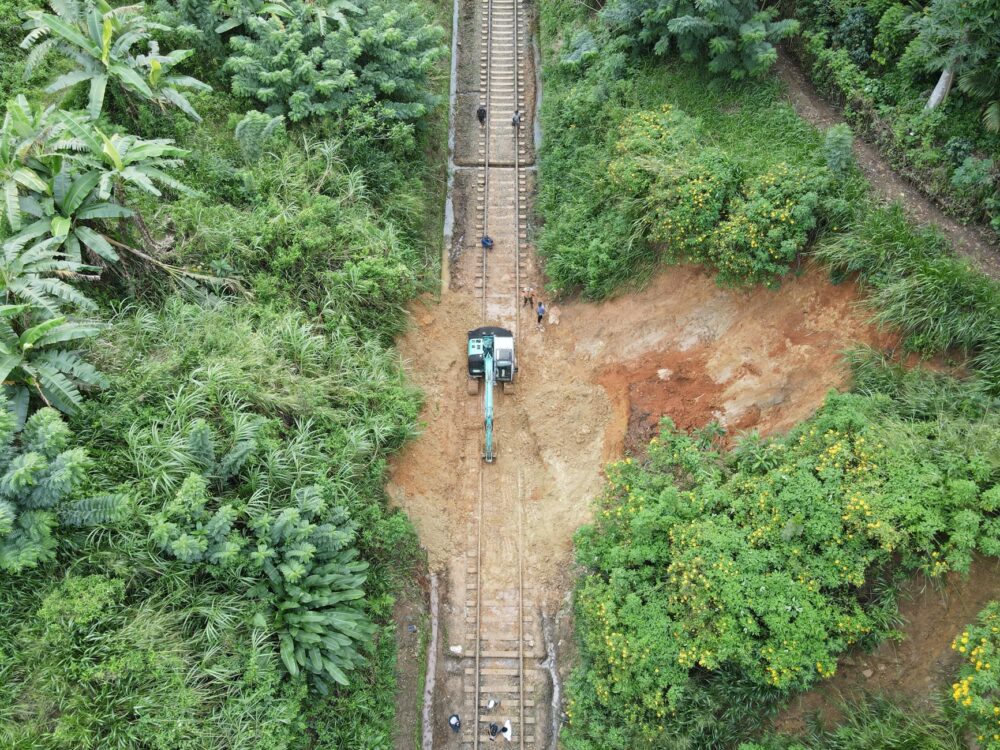
Understanding the magnitude of this railway corridor requires delving into the logistical complexities that affected West Africa at the beginning of the twentieth century. The dense southern jungles, prone to flooding during the monsoon regime, and the subsequent transition toward the arid northern plains demanded bold engineering solutions. Metal lattice bridges, embankments raised entirely by local manual labor, and limestone stations mark a route where every kilometer of track represented a fleeting victory against corrosion and the relentless advance of vegetation.
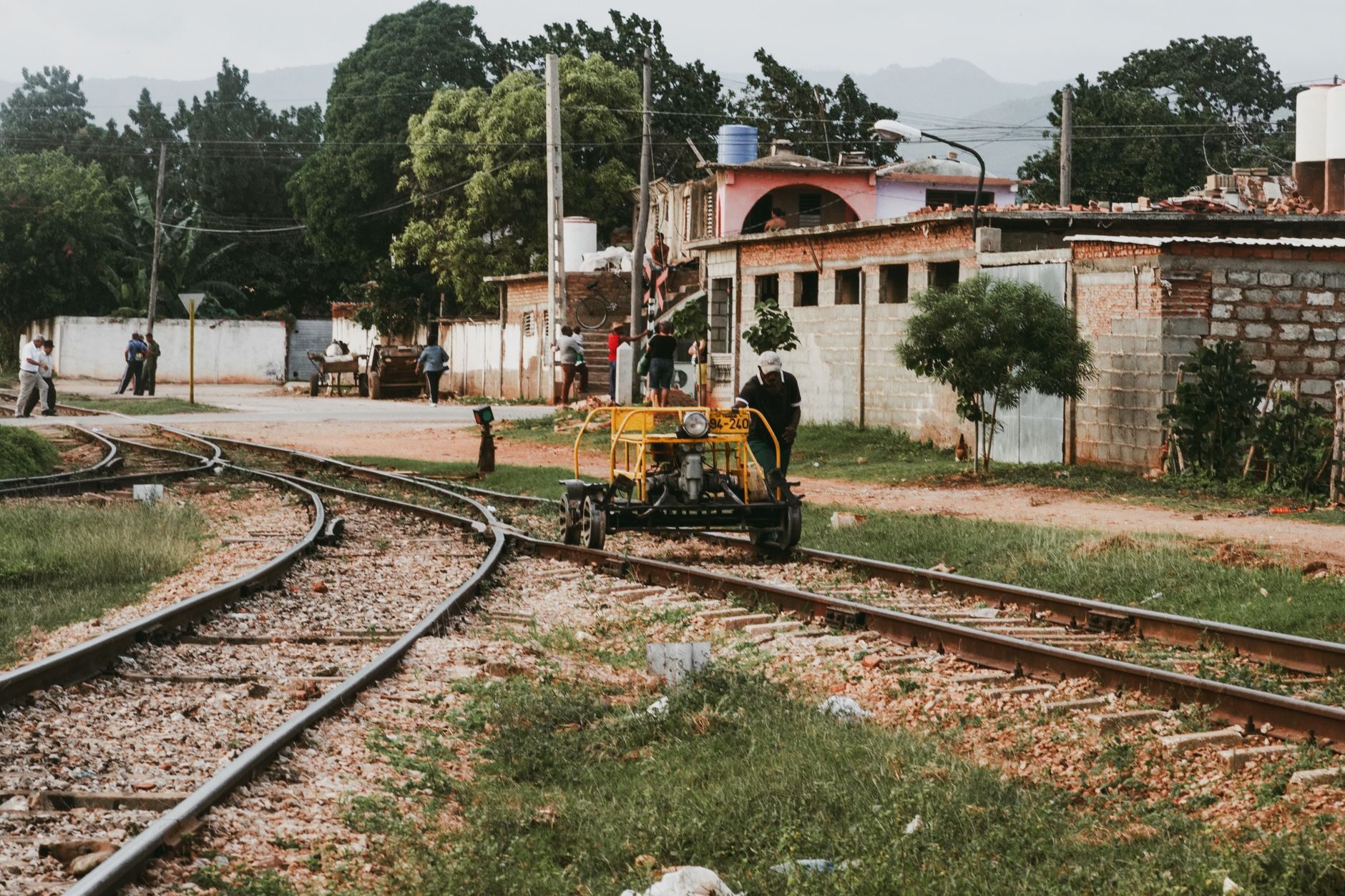
Today, while economic revitalization plans attempt to breathe new life into abandoned sections, Benin’s metric tracks operate as an organism in metamorphosis. They no longer carry solely the heavy cargo dictated by international markets; instead, they act as the invisible backbone upon which the subsistence economy of entire communities gravitates, where the occasional freight train coexists with the daily transit of pedestrians using the wooden ties as safe pathways across muddy terrain.
The Geography of the Rail: Between the Lacustrine Coast and the Sahelian North
The historical layout is conceptually divided into two major axes reflecting the country’s climatic and cultural duality. The eastern branch, connecting Cotonou with the historic city of Porto-Novo and continuing toward the Nigerian border, exploits the coastal depression, skirting brackish lagoons and mangroves where humidity accelerates steel degradation. In this sector, railway engineering had to ally with fluvial transport, establishing transfer hubs where cabotage barges unloaded palm oil and grain directly onto flatbed railcars.

Conversely, the northern corridor, ascending inexorably toward Parakou and the gates of the Alibori region, leaves the wetlands behind to enter the wooded savanna. Here, the challenge was not water, but the dry immensity and thermal amplitude that deforms steel rails under the scorching sun. In these intermediate, time-stopped stations, railway architecture exhibits gabled roofs and eaves designed to mitigate extreme heat, turning platforms into public agoras where yam merchants and Fulani herders converge.
The coexistence between this nineteenth-century infrastructure and contemporary road transport paints a landscape of contrasts. While new asphalted routes absorb the fast traffic of articulated trucks, the railway preserves a geological cadence. Its slowness is not synonymous with obsolescence, but with a radical adaptation to the region’s energy and budgetary limitations, demonstrating that the survival of interior connectivity often depends on mechanical simplicity over the fragility of global supply chains.
Transit Stations: Platform Architecture and Oral Memory
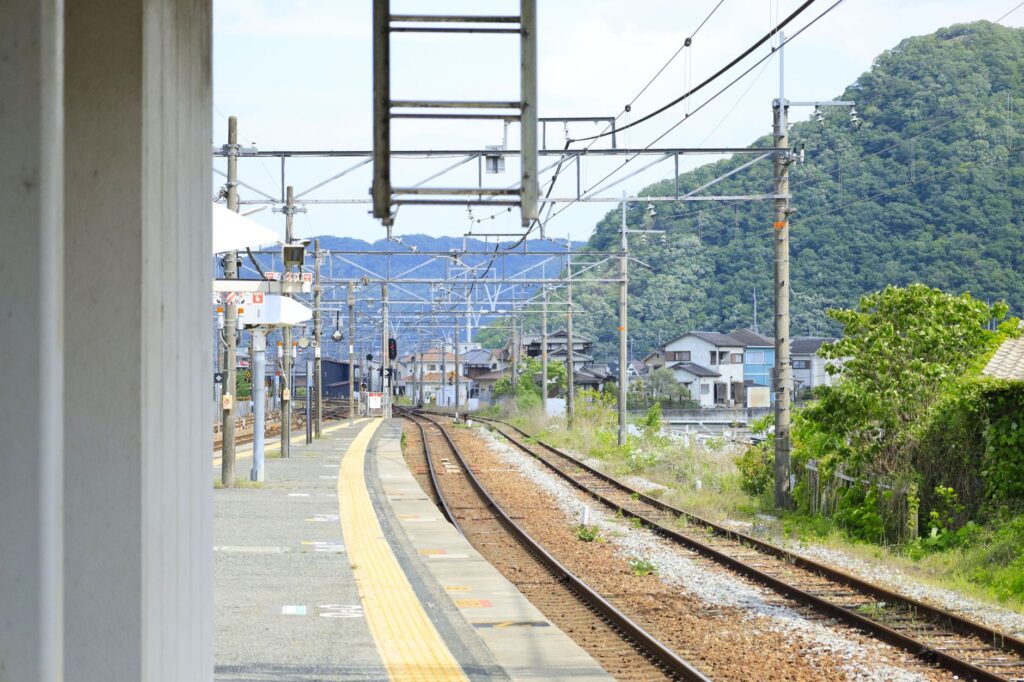
Pausing at Benin’s railway outposts is akin to examining an open-air anthropological archive. Buildings such as Cotonou’s central station or the stops in Savalou retain the functional elements of the colonial era reinterpreted by local use. Hardwood ticket windows, water tanks with forged iron rivets, and articulated mechanical signals remain standing, though many have been repurposed into improvised housing or grain warehouses.
Around these architectural vestiges, a complex network of informal commerce unfolds. The passage days of maintenance convoys or technical trials act as the metronome governing the local economy. Street vendors of akassa and nuts occupy platforms with millimetric precision, synchronizing their sales times with the locomotives’ technical stops. This economic symbiosis turns the train, even in its current state of intermittent operativity, into the backbone of community social life.
Oral sources gathered from retired train drivers and station masters reveal the harshness of the trade during the central decades of the twentieth century. Keeping lines open demanded constant battles against rising river levels during the rainy season and natural sabotage perpetrated by local fauna. This working-class memory, transmitted across generations, constitutes the true intangible heritage sustaining the dignity of tracks historically condemned to budgetary precariousness.
The Intermodal Pulse: When the Train Meets the Pirogue
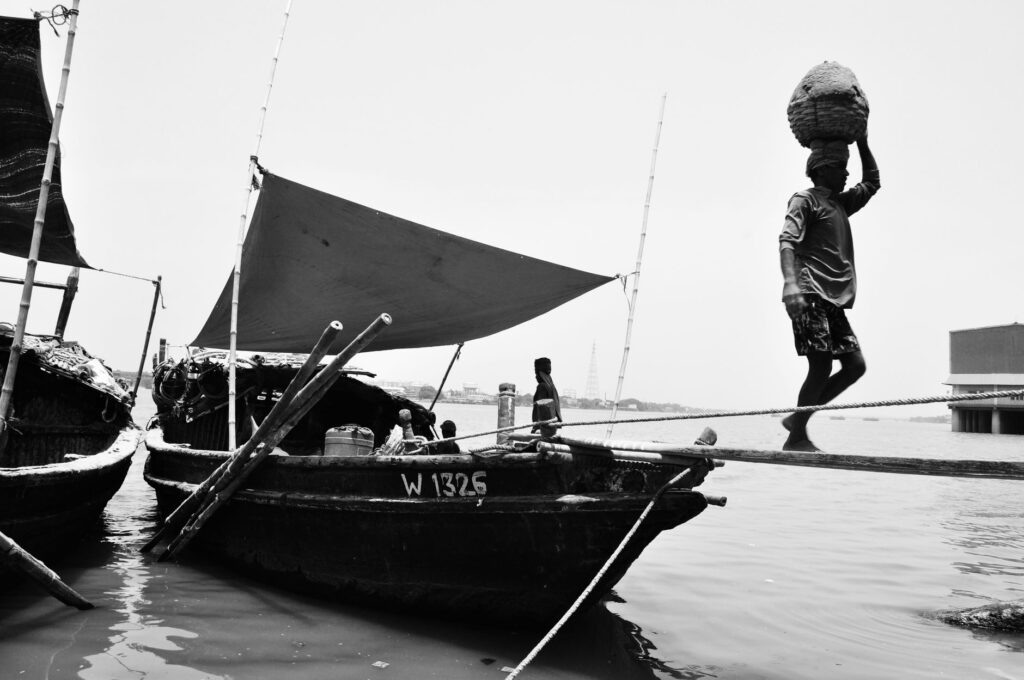
Connectivity in Benin is not understood as an isolated system, but as an interdependent mesh where the railway permanently dialogues with river navigation and short-range road transport. At points where the tracks approach the Ouémé and Mono rivers, or Lake Nokoué and Lake Ahémé, an intricate intermodal system unfolds. Here, cotton and maize cargo leave the railcars to be transferred to motorized pirogues navigating upstream into areas inaccessible to motor vehicles.
This transshipment of goods highlights the adaptive efficiency of local populations in the face of state infrastructure deficiencies. While international macro-transport projects often ignore local micro-dynamics, cabotage operators and small traders have successfully integrated the train into commercial routes rooted in the pre-colonial kingdoms of Dahomey. The result is a flexible logistical ecosystem capable of absorbing seasonal interruptions of rail traffic through river detours.
However, this mutual dependency also exposes the system’s extreme vulnerability. Variations in river discharge due to climate change and deforestation in upper basins alter transfer points, forcing transporters to reconfigure centuries-old routes within weeks. The survival of this intermodal framework demonstrates that true resilience in West Africa does not lie in concrete monumentality, but in the versatility of its local actors.
The metric track in Benin is not merely a vestige of rusted iron, but the geographical pulse connecting the agrarian memory of the savanna with the commercial urgency of the Gulf of Guinea.
Contemporary Challenges: Foreign Investment and Logistical Sovereignty
In the current landscape, the future of the Beninese railway system is debated between corporate modernization and the preservation of its public character. Ambitious transnational projects, such as the proposed railway corridor linking Cotonou to Niamey in Niger, promise to radically transform the country’s cargo capacity, introducing high-power locomotives and international track standards. Nonetheless, these mega-projects often generate tensions surrounding territorial sovereignty and the displacement of local subsistence economies.
Communities living alongside the embankments view these initiatives with a mixture of hope and suspicion. On one hand, the promise of fast and reliable connectivity alleviates the secular isolation of northern regions; on the other, they fear the imposition of inaccessible tariffs for local agricultural transport and the definitive fragmentation of their communal lands. The major challenge for contemporary planners consists of balancing the economic profitability of large mining and agricultural multinationals with the protection of this traditional logistical fabric.
Likewise, integrating ecological criteria into network rehabilitation is inescapable. New interventions must mitigate impacts on savanna biological corridors and southern lagoon ecosystems. Experience demonstrates that any attempt to impose a purely technocratic modernization, disconnected from socio-environmental realities on the ground, is doomed to medium-term operational failure.

Practical guide
Getting there: Cadjehoun International Airport in Cotonou (COO) is the main entry point to the country, with regular flight connections from major West African and European capitals.
Internal transport: To travel across the country and follow the vestiges of the railway network, the most reliable option is renting all-terrain vehicles with a local driver, complemented by shared bush taxis for short journeys between villages.
Accommodation: Cotonou and Porto-Novo offer a wide range of international-standard hotels and local guesthouses. In the north (Parakou and Natitingou), options are limited to small locally managed hotels and eco-camps.
When to go: The dry season, spanning from November to April, is the most favorable period to explore interior routes without interruptions caused by monsoon flooding.

Health requirements: Presenting a yellow fever vaccination certificate is mandatory. Malaria prophylaxis and consuming exclusively bottled or treated water are strongly recommended.
Cultural dynamics: Respect for local hierarchies and vodou-rooted traditions is essential when transiting through rural communities near ancient railway stations.
Dusk Over the Sleepers: The Human Value of Slowness
As the sun sets over the Beninese savanna, dyeing the northern line’s embankments in deep ochres, the railway landscape acquires an almost liturgical dimension. Far from the frenetic bustle of global logistical terminals, the abandoned sections of the metric track become the stage where daily life unfolds without artifice. Shepherd children guide their livestock, crossing with measured cadence over the iron bridges, while elders gather in the shade of shea trees growing beside the sidings, sharing stories of when the smoking train was the sole link to the vast outside world.
This persistence of humanity in the face of institutional abandonment defines the true essence of Beninese infrastructure. It is not merely a collection of rails and ties deteriorated by an unforgiving climate, but a living monument to community resilience. In an era obsessed with speed and digital hyper-connectivity, the slow pulse of these tracks reminds us that true development lies in the capacity to keep people connected, respecting the rhythms of the earth and the collective memory of those who, day after day, continue walking upon the steel.