Origins and Resistance in the Valleys of the Adriatic
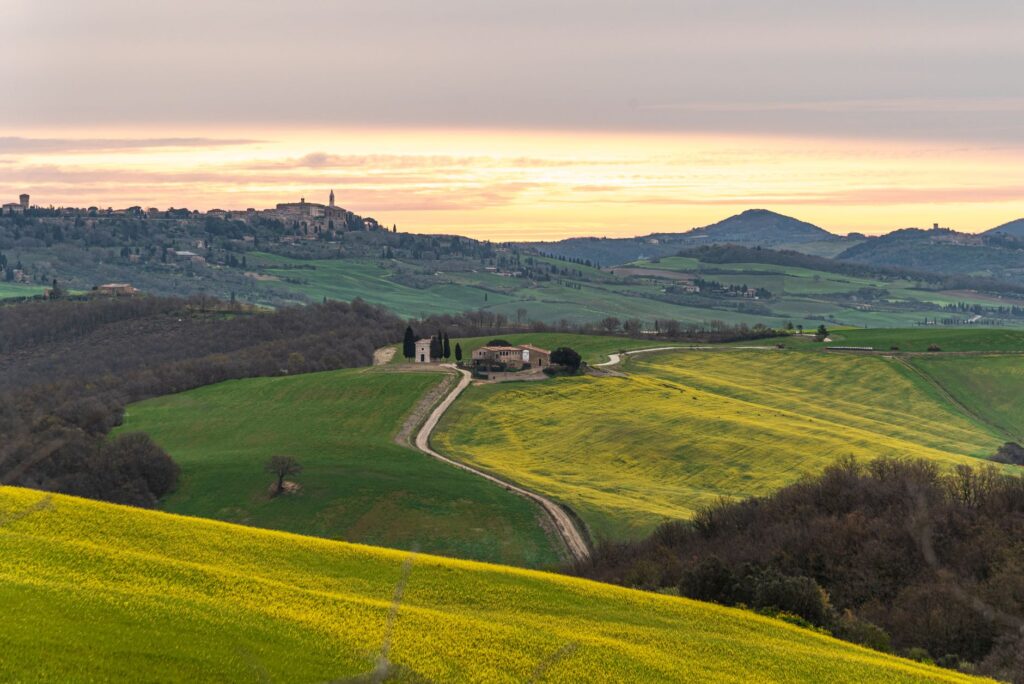
The Marche region, nestled discreetly between the Apennine Mountains and the Adriatic Sea, cherishes a secret in its historic centers of pale stone and reddish brick that defies the dizzying acceleration of the twenty-first century. In towns like Fabriano—the historic epicenter of Western papermaking—and in the silent alleys of Urbino, time seems measured by the slow compass of a half-moon knife and the patient drying of hides. Here, the tradition of working with parchment is not a mere museum curiosity, but a living craft that sustains the invisible architecture of ancient books and new creations for international bibliophiles.
The visitor who crosses the threshold of these workshops immediately perceives an unrepeatable sensory landscape: the dense aroma of linseed oil, the rough texture of leather stretched over wooden frames, and the metallic clink of spindle presses that have been operating since the Renaissance. In this territory where humanism found its printing press and intellectual refuge, contemporary artisans continue to process goat and sheep skins following the manuals of ancient guild corporations, adapting traditional formulas to the modern demands of historic archive conservation and high-end bibliophily.
The Alchemy of Parchment: From Animal to Eternal Support
Unlike cellulose paper or industrial polymers, authentic parchment is a living organism that breathes and reacts to ambient humidity. On the outskirts of Tolentino, small family-run workshops keep alive the most complex phase of this value chain: the tanning and manual polishing of skins without aggressive chemical agents. The process demands weeks of immersion in lime, meticulous scraping with curved blades to remove any epidermal residue, and millimetric drying under constant tension in circular wooden frames.
This absolute respect for the raw material determines the unrepeatable character of every spine and cover. Each piece of parchment preserves the animal’s natural veins, small scars from its life in the open air, and subtle chromatic variations ranging from translucent ivory to golden amber. The master artisans of the Marches insist that a well-bound parchment book is not designed on a digital drawing board, but through a direct dialogue with the skin, intuiting its thickness and strength before applying the first stitch of raw linen.

The Workshop as a Territory of Patience
Entering the studio of a master bookbinder in Urbino is stepping into a sanctuary where haste is considered a technical heresy. The workbenches are carpeted with scraps of pulp paper, spools of waxed thread, jars of artisan-made starch paste, and brass plates intended for dry stamping. Here there are no assembly lines or touchscreens; each volume is sewn by hand, signature by signature, using leather or cord cords that will guarantee the structure supports centuries of opening and closing without fracturing the spine.
Complexity increases when tackling the restoration of incunabula from the region’s monastic libraries. The specialist must analyze with a binocular magnifier the degree of oxidation of the support, the acidity of the original iron-gall inks, and the deformations suffered by the parchment due to centuries of humidity and partial fires. In such cases, intervention requires extreme delicacy: microscopic grafts of ancient parchment, reversible adhesives based on fish gelatin, and chromatic reintegration that never disguises the material history of the object, but rather protects and celebrates it.
“Parchment is not a simple wrapper to protect printed pages; it is the second skin of human thought, an archive of memory that resists fire and oblivion when technology shuts down.”
Geography of the Tool: Anvil and Triangle
The survival of this artisanal ecosystem depends on an almost invisible network of auxiliary workshops scattered across the territory. While some artisans master the art of paring the edges of the skin so that the cover closes with millimetric precision, others specialize in forging gilding tools—small bronze stamps mounted on noble wood handles heated over fire to impress sterling gold onto the spine. In Macerata, a veteran turner continues to handcraft bone folders and smoothing tools used to flatten paper and adjust corner angles.
This extreme specialization turns the Marches into a unique cluster in Europe. This is not mass manufacturing, but an archipelago of interconnected knowledge where the transmission of wisdom occurs exclusively through direct observation and years of continuous practice. Young apprentices arriving from Florence, Milan, or even Japan must spend months performing auxiliary tasks before they are allowed to sew a single signature or apply gold leaf to a goatskin surface.
The Aesthetics of Silence and Natural Light
The architecture of these workshops responds to a secular functional logic: large north-facing windows providing diffuse, constant light free of direct glare. This overhead illumination is indispensable for detecting microscopic imperfections in parchment sanding or for aligning typographic characters with exact precision prior to stamping. In the silence of these rooms, interrupted only by the rhythmic friction of the bone folder against paper, an aesthetic radically opposed to the transience of contemporary cultural consumption is forged.
The parchment-bound book in the Marches is conceived as an object of secular worship. Private libraries of international collectors, as well as cultural foundations commissioning special editions to commemorate scientific or literary anniversaries, seek precisely this patina of eternity. They know that a copy emerging from these workbenches does not look out of place next to the medieval codices resting in the great Vatican or Florentine libraries, perpetuating a chain of material excellence that dates back to early medieval monasteries.
Economic Challenges and Generational Turnover
Despite the international prestige of their pieces, the parchment workshops of the Marches face complex structural challenges. The rising cost of superior-quality raw materials, the scarcity of local slaughterhouses preparing skins with suitable thicknesses for high-end binding, and the lack of tax incentives for micro-artisanal businesses threaten the survival of smaller workshops. Many masters face the dilemma of retirement without finding local successors willing to shoulder the physical hardship and economic slowness of the craft.
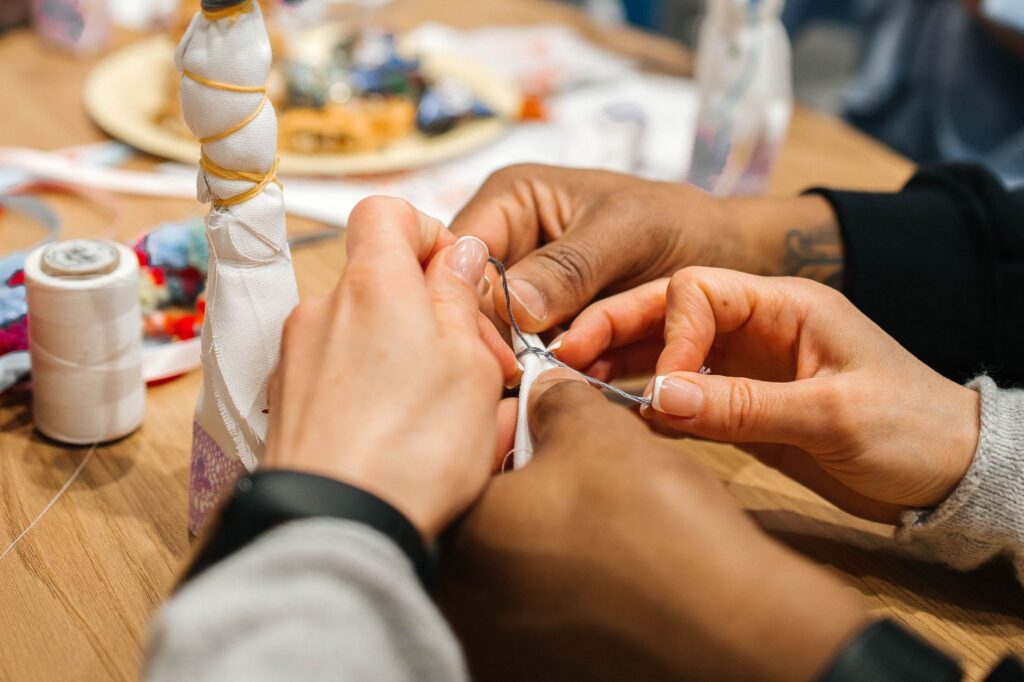
To counteract this vulnerability, regional artisan associations have promoted residency programs and international scholarships in collaboration with European art schools and universities. These initiatives attract young creators seeking to escape digital dematerialization and learn direct handling of materials. Yet the balance remains fragile: the economic profitability of a year’s work on a large-format binding barely compensates for the hundreds of hours of absolute dedication required for its execution.
Conservation Practices in the Digital Era
Paradoxically, the proliferation of digital archives and the mass digitization of library holdings have revalued the role of parchment and traditional binding. While public libraries upload their collections to virtual servers, researchers and bibliophiles realize that digital support lacks physicality, material context, and resistance to technological shifts. The original parchment-bound book consolidates itself as the sole unbribable witness to the history of its own reading, displaying in its margins handwritten annotations, bookplates, and marks of use by its former owners.
In this scenario, the workshops of the Marches also act as technical consultancy centers for museums and private collections worldwide. Master parchment makers and binders frequently travel to lecture on microclimatic control in display cases, non-invasive manuscript cleaning methods, and the formulation of stable adhesives that do not degrade cellulosic supports over decades.

“True luxury in our time is not the ostentation of easy gold, but owning an object whose creation required more reflection than consumption.”
Practical guide
How to Get There: Access to the main parchment and binding workshops in the Marche region is convenient from Ancona-Falconara airport or via regional trains connecting Bologna to Pescara, stopping at Fabriano and Ancona. Renting a car is strongly recommended to explore the walled interior villages.
When to Visit: Spring (April to June) and early autumn (September to November) offer mild temperatures ideal for exploring historic centers. It is advisable to avoid August, when many family workshops close for summer holiday breaks.
Recommended Itinerary: A four-day journey should begin in Fabriano, visiting the Paper and Watermark Museum, continue toward Tolentino to discover artisanal tanning workshops, ascend to Urbino to explore artistic binding studios, and finish in Ascoli Piceno.
Workshop Visits: The vast majority of studios are active, compact workspaces rather than tourist retail shops. Advance booking by email or phone at least two weeks prior is mandatory, along with a genuine interest in technical processes.

Accommodation and Dining: Opt for small boutique hotels in restored historic palazzos in Urbino or rural guesthouses (*agriturismo*) in the hills of Macerata. At the table, local produce rules: traditional *vincisgrassi* pasta and Verdicchio dei Castelli di Jesi white wine.
Etiquette and Purchases: When commissioning a notebook or binding, bear in mind that delivery times may range from several weeks to months due to the complexity of hand-sewing and skin drying. Never touch displayed works without the master artisan’s explicit permission.
Epilogue: The Indelible Trace of Skin
As evening falls over the Marche hills and the lights in the binding workshops go out one by one, a silent certainty lingers in the air: this craft will continue to defy the laws of obsolescence. In a world obsessed with speed and data immateriality, the weathered hands of the parchment makers of Fabriano and Urbino keep reminding us that human knowledge, to endure with dignity, needs to rely on a tangible, warm, and resilient structure. Every volume leaving these workbenches is a victory against oblivion, a tangible reminder that beauty and patience remain the strongest foundations of our shared culture.