
Across a continent where high-speed transit and automated punctuality have become standard, Ukraine’s railway system operates under an entirely different logic: that of humanitarian urgency and logistical persistence. While skies remain closed to commercial aviation, passenger trains serve as the vital arteries connecting a nation fragmented by the Russian invasion. Boarding a convoy bound for Lviv, located in the country’s far western reaches, is not a mere tourist excursion, but an immersion in a transportation system transformed into the backbone of national resilience. Stations are not merely transit points, but temporary shelters and logistical hubs where punctuality—maintained against all odds by railway workers considered civilian heroes—symbolizes the refusal to stop the country’s pulse.
Lviv, historically known as Ukraine’s cultural bastion and a geographical and intellectual bridge to Central Europe, has managed to keep its celebrated coffee tradition alive even beneath air-raid sirens. Far from being an exercise in banality or escapism, the consumption and celebration of coffee in this city have transformed into an act of identity affirmation. The Lviv Coffee Festival, documented by international chroniclers as an unmissable encounter with local heritage, transcends mere gastronomic tasting to become a space for intergenerational dialogue, collective memory, and support for the local economy. Here, every cup served in vaulted cellars or terraces protected by sandbags stands as a declaration of historical continuity.
The railway renaissance in times of conflict
Ukraine’s state railway network, known as Ukrzaliznytsia, has proven to be one of the most solid strategic and institutional assets during the military conflict. What was once a conventional passenger and freight transport system has been reconfigured to manage mass evacuations, transport humanitarian aid, and facilitate the constant arrival of international observers, journalists, and diplomats. Traveling by train to western Ukraine involves submitting to a rigorous logistical choreography where schedules adapt dynamically to security alerts, yet where the dignity of service is never negotiated.
The railcars, maintained in admirable conditions of cleanliness and functionality despite resource shortages and operational wear, function as floating communities. In the sleeping compartments, known as *platskart*, or in private first-class cabins, a unique social fabric is woven. Soldiers on leave, international volunteers, displaced families, and local residents share hot tea served in traditional metal holders (*podstakanniki*), conversing in subdued tones about the state of routes, family, and the future. The train is not just a means of shortening geographical distances; it is a space where time suspends and the emotional burden of resistance is shared.
Architecture on rails and arrival in the west
The physical approach to Lviv by rail exposes a fascinating visual transition. As the convoy leaves the central plains and winds toward the foothills of the Eastern Carpathians, the urban landscape gives way to railway architecture from the Austro-Hungarian era. Secondary stations with gabled roofs, masonry overpasses, and carefully preserved switchman huts recall the region’s imperial past, when Lviv—then Lemberg—formed part of the Western periphery of the Habsburg Empire.
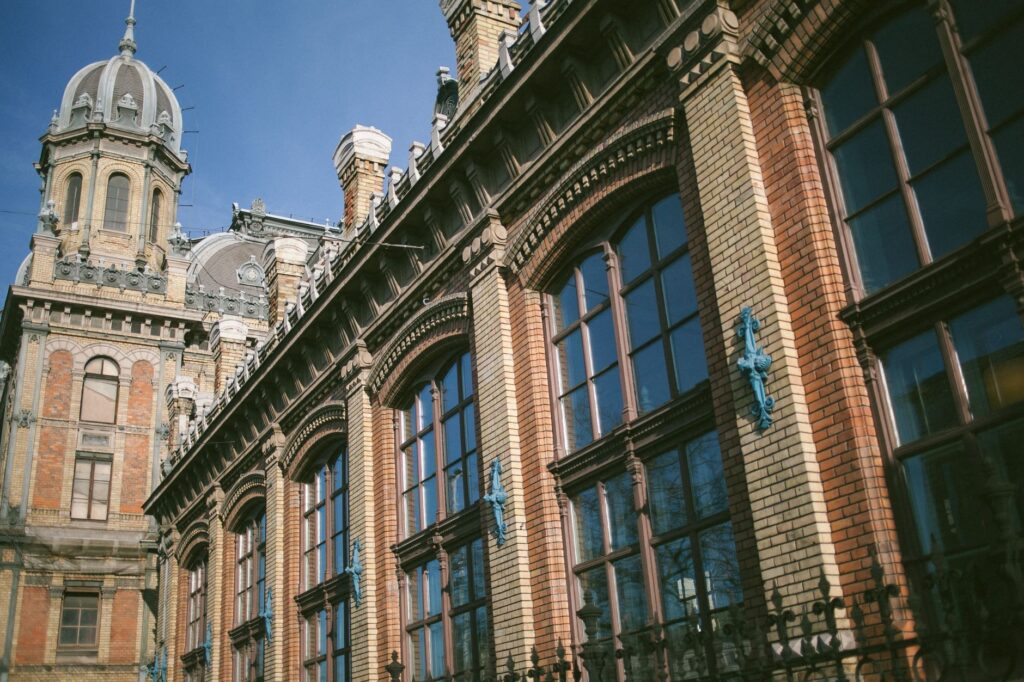
Lviv’s central station, inaugurated at the beginning of the 20th century, welcomes travelers with its imposing neo-Renaissance facade and wrought-iron structure covering the main platforms. Despite the steady flow of passengers and operational pressure, the compound maintains an atmosphere of order and solemnity. It is the point of convergence where nineteenth-century transport engineering meets contemporary security protocols—a tangible reminder that urban infrastructure remains standing and operational despite geopolitical challenges.
The coffee heritage as a bastion of identity
The relationship between Lviv and coffee is not a modern commercial phenomenon, but a historical legacy rooted in the era when noble Ukrainian-Pole Jerzy Franciszek Kulczycki supposedly opened one of the first coffeehouses in Vienna following the Ottoman siege of 1683, or when Armenian and Austrian merchants established stable trade routes toward western Ukraine. In Lviv, coffee quickly became the beverage of intellectuals, poets, and revolutionaries who frequented the Viennese-style cafés of the Old Town.
Today, this heritage manifests in a dense network of unique venues ranging from subterranean cafés simulating coffee mines to elegant piano salons where literature and politics are debated. During the annual festival gathering artisanal roasters from across the country, the cobblestone streets of the historic center—a designated UNESCO World Heritage Site—fill with intense aromas and stalls awarding the best bean, the best barista, and the café with the strongest cultural commitment. This event does not seek superficial mass tourism, but rather aims to consolidate Lviv as the undisputed capital of coffee culture in Eastern Europe.
The geography of aromas: from underground mine to surface
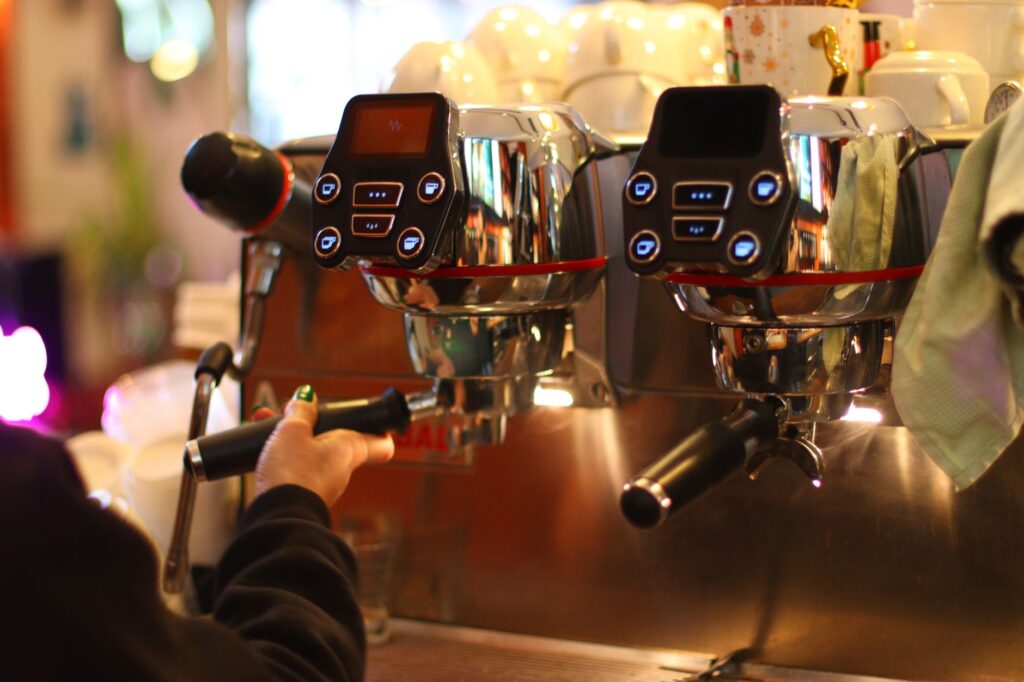
Exploring Lviv’s coffee scene requires literally descending underground. One of the city’s most emblematic establishments is the «Lviv Coffee Mine,» a venue where customers can watch as coffee beans are symbolically extracted from the depths of the earth before being roasted and ground on-site. This playful, theatrical narrative reflects the inventiveness of local entrepreneurs in transforming the gastronomic experience into a multi-sensory encounter.
On the surface, the offerings range from minimalist spots specializing in slow-extraction methods—such as V60, Chemex, and Aeropress—to traditional cafés where the brew is prepared in a Turkish cezve over hot sand. Local baristas have trained in international competitions, raising the quality of specialty beans imported from Ethiopia, Colombia, or Kenya, while supporting small independent producers operating in secure areas of the country.
Coffee in Lviv is not a simple imported commodity; it is a social anchor and a space for intellectual resistance where conversation continues to defy the silence imposed by war.
The invisible economy of roasted beans
Behind every cup served in Lviv lies a complex supply chain adapted to a wartime economy. The importation of green coffee faces logistical bottlenecks due to the closure of Black Sea maritime ports, forcing distributors to reroute through land border crossings in Poland, Slovakia, and Romania. This increases operational costs and demands meticulous financial planning by independent café owners.
Despite these difficulties, the sector continues to innovate. Many local brands allocate a fixed percentage of daily profits to charitable foundations supplying medical equipment to frontlines or supporting families of fallen railway workers. Thus, the coffee economy aligns closely with community survival economics, demonstrating that responsible consumption can become a direct tool for solidarity.
Urban dialogues and memory in public space
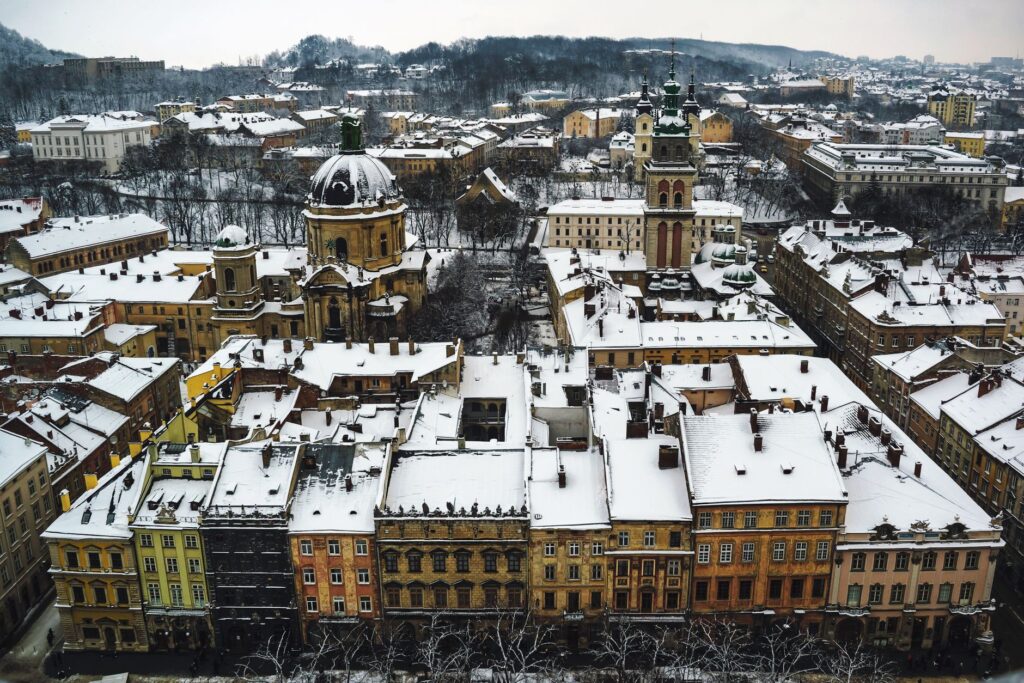
Lviv’s Old Town, with its cobblestone squares and Renaissance and Baroque buildings, acts as an open-air museum where past and present constantly converse. Historic monuments are protected with wooden structures and sandbags to mitigate potential blast wave damage, but urban life flows around them with admirable tenacity. Café terraces fill with customers reading printed newspapers, discussing contemporary art exhibitions, or simply observing pedestrian traffic.
This cultural dynamism is inseparable from the wartime context; conversely, it feeds on it as a form of psychological defense and intangible heritage preservation. Festivals and cultural gatherings held under strict security measures serve as a reminder that Ukrainian identity cannot be erased by violence. The organizers of the Coffee Festival have adapted the traditional format to decentralized events, reducing crowds while maintaining cupping workshops, historical lectures, and graphic art exhibitions.
The role of press and international documentation
The constant presence of international media, human rights observers, and cultural analysts in Lviv has transformed the city into a crucial informational hub. Coverage of local initiatives like the coffee festival or the continuous management of state railways offers the world a perspective extending beyond purely military chronicles, focusing on human dignity and the continuity of civil life.
Chroniclers from specialized publications have noted how Lviv’s cafés act as improvised offices for foreign journalists and coordination centers for civil humanitarian aid networks. These tables cross-reference information regarding power outages, train routes, and editorial projects, consolidating the city as a privileged observatory of contemporary Europe under tension.
Civil resistance in Ukraine is sustained both by the railway tracks crossing the country and by coffee tables where civil society preserves its right to gather and debate.
Practical guide
How to arrive by train: The most efficient and safe way to access Lviv from abroad is flying to nearby European airports such as Warsaw, Kraków (Poland), or Rzeszów, and connecting via direct international rail services or long-distance buses to the main station in Przemyśl (Poland), the primary rail gateway to Ukraine. Daily direct trains to Lviv operated by Ukrzaliznytsia depart from Przemyśl.
Tickets and reservations: Tickets for Ukrainian trains must be purchased exclusively through the official Ukrzaliznytsia app or its verified website. Booking well in advance is highly recommended, as demand is extremely high and seats sell out quickly. For international journeys to or from Poland, reservations open according to specific quota regulations.
Station security protocols: Railway stations in Ukraine feature strict security controls, including metal detectors and baggage screening. Arriving at the station at least 60 to 90 minutes prior to departure is mandatory to complete procedures smoothly.

Accommodation and connectivity: Lviv offers a wide range of hotels and serviced apartments in the historic center. Most establishments have private backup generators (*inverters*) to ensure heating, hot water, and internet via Starlink or fiber optic during scheduled or attack-induced power outages.
Etiquette and local currency: The official currency is the Ukrainian hryvnia (UAH). Carrying international credit cards is recommended, as contactless electronic payment acceptance is nearly universal, even at small street stalls and coffee shops. Maintaining a respectful attitude, understanding local logistical constraints, and avoiding photographing critical infrastructure, border crossings, or military installations is advised.
Cultural awareness: Engage with local service workers and residents with empathy, recognizing the psychological weight of the ongoing conflict while appreciating their dedication to keeping cultural institutions and businesses running.
Epilogue: the steam defying the cold
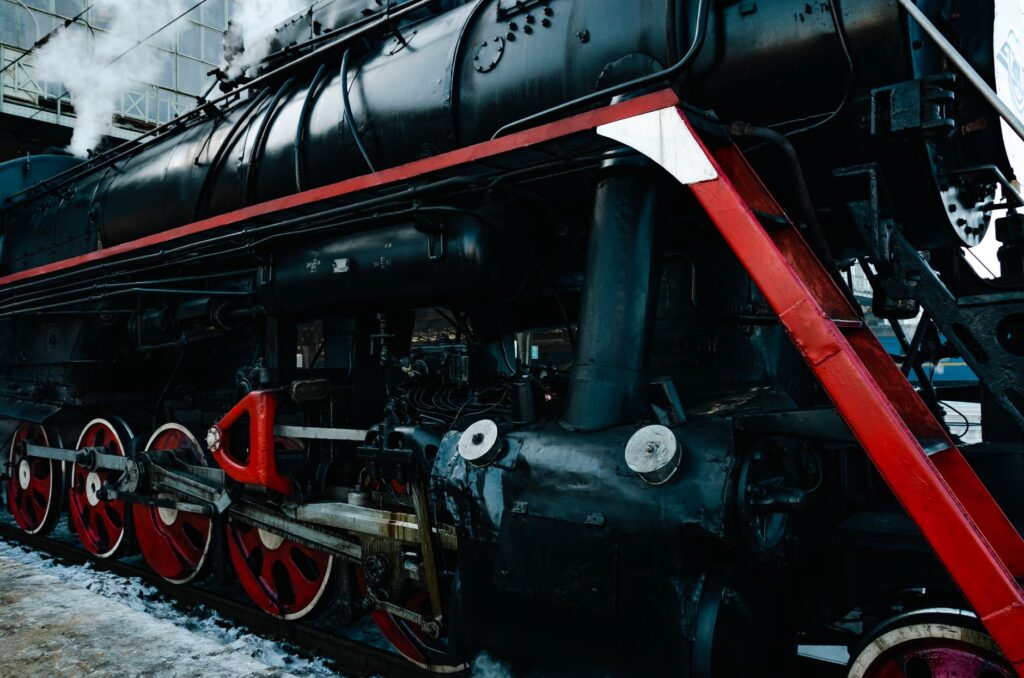
As evening falls over Lviv and street lamps cast long shadows over the dormant cobblestones of Market Square, the aroma of roasted coffee blends with the freezing air of the Carpathians. On the platforms of the central station, an overnight train bound for Kyiv flashes its headlights before pulling away into absolute external darkness. Passengers, settled behind frosted windows, hold steaming paper cups as the convoy glides smoothly over steel rails. In that suspended moment, machine and grain converge in a single narrative of survival: the undeniable proof that, even in the darkest hours, culture, memory, and movement cannot be halted by the force of arms.