
Lake Saimaa, a massive freshwater labyrinth stretching across southeastern Finland, faces one of the greatest logistical and ecological challenges in Northern Europe. With over fourteen thousand islands and a shoreline exceeding thirteen thousand kilometers, the physical connectivity of its small communities has historically relied on heavy asphalt infrastructure or noisy internal combustion ferries. This traditional transport model not only fragmented the forested landscape but also critically disrupted the habitat of the Saimaa ringed seal (Pusa hispida saimensis), one of the rarest and most endangered marine mammals on Earth, whose survival depends on the acoustic tranquility and purity of these inland waters.
In recent years, a quiet alliance between naval engineers, spatial planners, and local administrations in cities such as Lappeenranta, Savonlinna, and Mikkeli has begun to reverse this momentum. Through the introduction of electric cable ferries, solar-powered passenger vessels, and the consolidation of the Saimaan saaristoreitti (the archipelago trail), the region is proving that it is possible to articulate a highly efficient transport network without altering the delicate balance of an ecosystem dating back to the last ice age. This report analyzes the transition toward zero-impact mobility in the freshwater veins of Finland.
The fragmented sanctuary of southeastern Finland
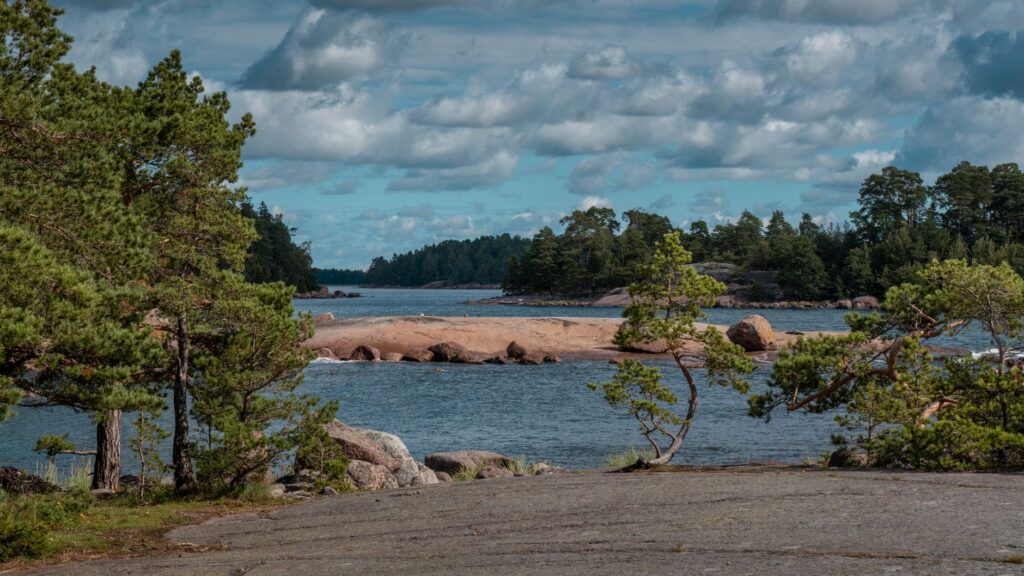
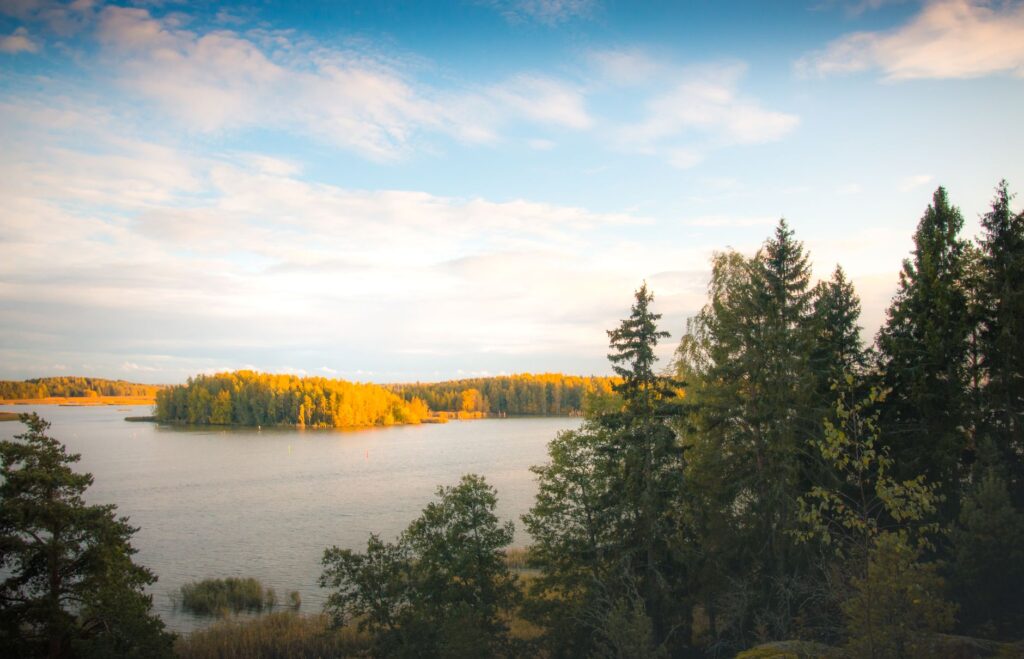
To understand the complexity of this transformation, one must observe Saimaa’s unique geography. Born from the retreat of glaciers some ten thousand years ago, the lake does not present itself as a single open body of water, but rather as a highly connected network of basins, canals, straits, and granitic rock islands covered with dense pine and birch forests. For centuries, the communities living on these shores existed in relative winter isolation or relied exclusively on wooden boats during the summer months.
The arrival of modernity brought the construction of bridges and secondary roads which, while facilitating timber trade and tourism, irreversibly altered subaquatic ecological corridors. The roar of diesel engines from traditional ferries became a constant disturbance that drove away local wildlife. Scientists from the Natural Resources Institute Finland (Luke) warned that underwater noise pollution interfered with the communication and diving patterns of the ringed seals, which use echolocation to navigate under winter ice and find food in the dark depths of the lake.
The dilemma of connectivity in the blue labyrinth
The great challenge of sustainable mobility in Saimaa lies in balancing the needs of a dispersed population requiring reliable public services with the preservation of a pristine natural environment. Traditional land transport options, such as building concrete bridges over every narrow strait, are economically unfeasible and ecologically devastating to the landscape’s character. Therefore, the solution had to be found on the water itself, by transforming the vessels that cross it.
The transition began with the redesign of daily transit routes. Commuter traffic between inhabited islands and urban centers required an alternative that would completely eliminate carbon emissions and reduce low-frequency noise in the aquatic environment. The answer was not a retreat from technology, but a refinement of it, focusing on the electrification of propulsion systems and the optimization of vessel hulls to minimize erosive wake on the lake’s clay-heavy shores.
«True innovation in Saimaa does not consist of erecting new concrete barriers, but in making water transport as invisible and silent as the forest that surrounds it.»
Hybrid ferries: building invisible bridges
The backbone of this new transport network consists of electric cable ferries, locally known as lossi. Unlike free-navigating vessels, these ferries move along a steel cable stretched between the two shores of a strait, which maximizes safety in dense fog or winter ice and optimizes energy consumption by requiring less maneuvering power.
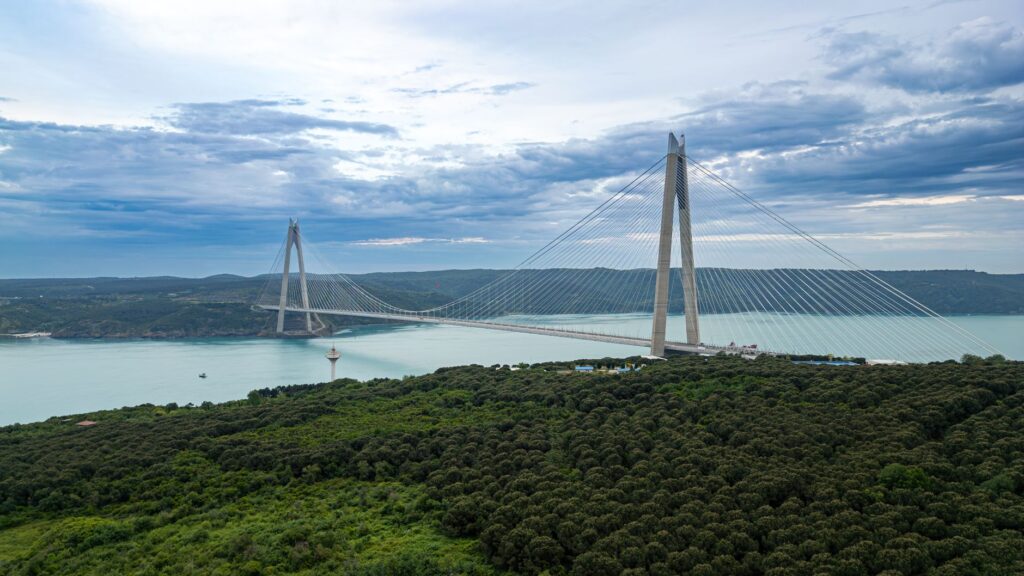
At key bottlenecks such as the Hätinvirta strait, units equipped with state-of-the-art batteries have been introduced, recharging ultra-fast at the docks during the brief minutes it takes to unload passengers and vehicles. These hybrid and electric systems reduce greenhouse gas emissions by more than ninety percent compared to their diesel predecessors. Furthermore, by eliminating traditional internal combustion engines, the level of noise transmitted into the water is reduced to an almost imperceptible fraction, restoring acoustic calm to the breeding channels of the lake’s fauna.
The electric whisper respecting the oldest inhabitant
The Saimaa ringed seal, with a population barely exceeding four hundred and fifty individuals, is the undisputed barometer of the lake’s health. During spring, pups are particularly vulnerable to stress caused by recreational and commercial vessel traffic. It is in this context that electric passenger navigation proves its distinct value.
Locally designed vessels, powered by electric motors fed by solar panels installed on their decks, now operate tourist and scheduled transport routes in the Linnansaari and Kolovesi national parks. These vessels travel at moderate speeds, generating an underwater noise level that blends with the natural murmur of water and wind. Local tour operators, trained under strict conservation protocols, use these boats to bring travelers close to the environment without disturbing the resting rocks where seals molt their fur during the months of May and June.
The Saimaan saaristoreitti: pedaling on water
For active travelers, the transformation of mobility in Saimaa has a specific name: the Saimaan saaristoreitti. This approximately 154-kilometer cycling route connects the municipalities of Lappeenranta, Taipalsaari, Ruokolahti, Imatra, and Puumala, offering a low-impact travel alternative that combines physical effort with public water transport infrastructure.
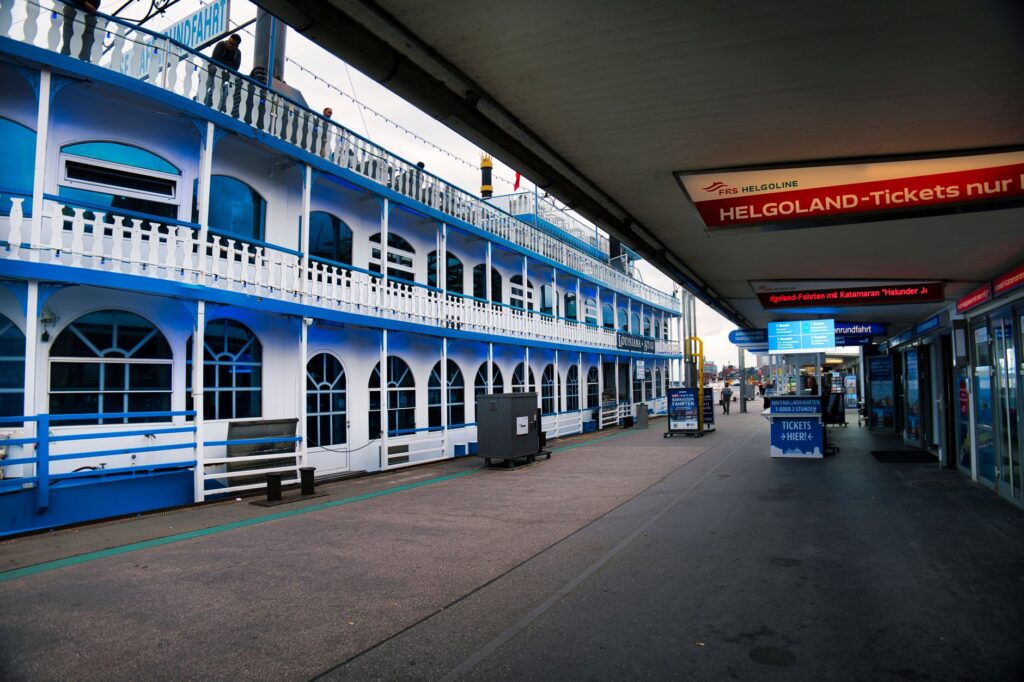
The true milestone of this route is the integration of dedicated bicycle ferries, such as the M/S Norppa II and the M/S Raste, which bridge the widest stretches of water where no bridges exist. These boats are designed to comfortably transport cyclists and their bikes between remote harbors, allowing the circuit to be completed without the need for motorized support vehicles. Sychronizing these ferry schedules with national train networks arriving in Lappeenranta and Imatra makes it easy for a traveler to leave Helsinki in the morning and be pedaling through the Saimaa forests before noon.
- Multimodal connectivity: Direct combination of high-speed trains from the capital with local bicycle docks.
- Dedicated infrastructure: Paths segregated from motorized traffic that take advantage of old forestry roads and glacial ridges.
- Green charging points: Solar-powered charging stations for electric bicycles at the main docks along the route.
Micro-mobility and the rebirth of wooden harbors
The impact of this mobility strategy is not limited to emission reductions; it is also revitalizing the economy of the lake’s small historic harbors. Towns like Puumala, with its characteristic high bridge and wooden harbor, have become testing grounds for electric micro-mobility. Here, visitors and residents can access shared bicycle systems and small electric boats for hourly rental to travel to local farms and lakeside markets.
This model fosters a dispersion-based tourism that relieves pressure on the most crowded spots and distributes economic benefits evenly across the archipelago. The historic wooden warehouses of the harbors, which in the 19th century served the trade of tar and resinous timber, now house sustainable tourism offices, bicycle repair shops, and cafes catering to travelers exploring the lake at a human pace.
«Bicycles and solar ferries have returned Saimaa’s communities to their original scale, one where travel time is not an obstacle to overcome, but a fundamental part of experiencing the landscape.»
Conscious planning: the art of slow travel
Traveling sustainably through Lake Saimaa requires a shift in travel planning mindsets. Unlike urban highways, the rhythm of the archipelago is dictated by ferry schedules, wind conditions, and daylight. This forced slowdown is viewed by the initiative’s promoters as an opportunity to promote the concept of slow, conscious travel.
Local navigation apps now integrate real-time data on space availability on bicycle ferries, the condition of forest trails, and temporary restriction zones designed to protect the ringed seal. In this way, the traveler becomes an active agent of conservation, adapting their route to avoid the most sensitive areas during the breeding season and supporting local businesses that carry the Sustainable Travel Finland certification.
Practical guide
For those wishing to explore the Saimaa lake system using exclusively low-impact transport, it is essential to consider seasonality and the logistics of land and water connections.
How to get there and move around sustainably: The natural gateway to the southern part of the lake is the city of Lappeenranta, connected to Helsinki by high-speed trains operated by the state company VR, with a journey of approximately two hours. From the train station, you can directly access the archipelago cycling trail or take regional buses equipped with bicycle racks.
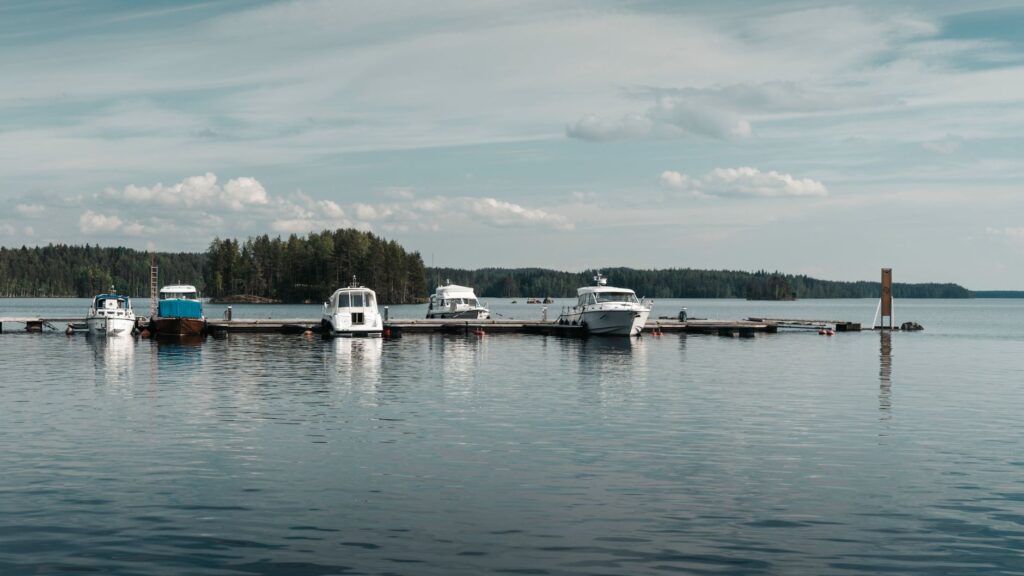
Booking bicycle ferries: Key ferries connecting the cycling route (such as the crossing between Sarviniemi and Lintusalo) operate mainly from late May to early September. It is essential to book tickets in advance through the official platforms of the local operators, as bicycle spaces are limited to ensure safety on board.
Recommended gear: To ride the Saimaan saaristoreitti, a touring or gravel bike is recommended, as some sections run along beautifully compact gravel forestry tracks with moderate slopes. Waterproof panniers are essential due to the variability of the region’s Atlantic-continental climate.
The midnight sun’s reflection on still waters
When the Arctic summer sun refuses to dip below the horizon, the waters of Lake Saimaa take on the texture of a liquid mirror, blurring the boundary between sky and earth. It is in this moment of absolute calm, aboard a silent electric boat gliding without leaving a trace of fuel or noise, that the true value of sustainable mobility is understood. This is not merely about reducing emission figures on an administrative balance sheet, but about preserving the visual poetry and acoustic integrity of a landscape that has remained almost unchanged since prehistory. Turning off the motor and drifting with the current, the silence is broken only by the distant splash of a waterfowl or, with luck, by the subtle breath of a ringed seal surfacing a few meters away, confirming that humans and nature can share the same path without destroying each other.