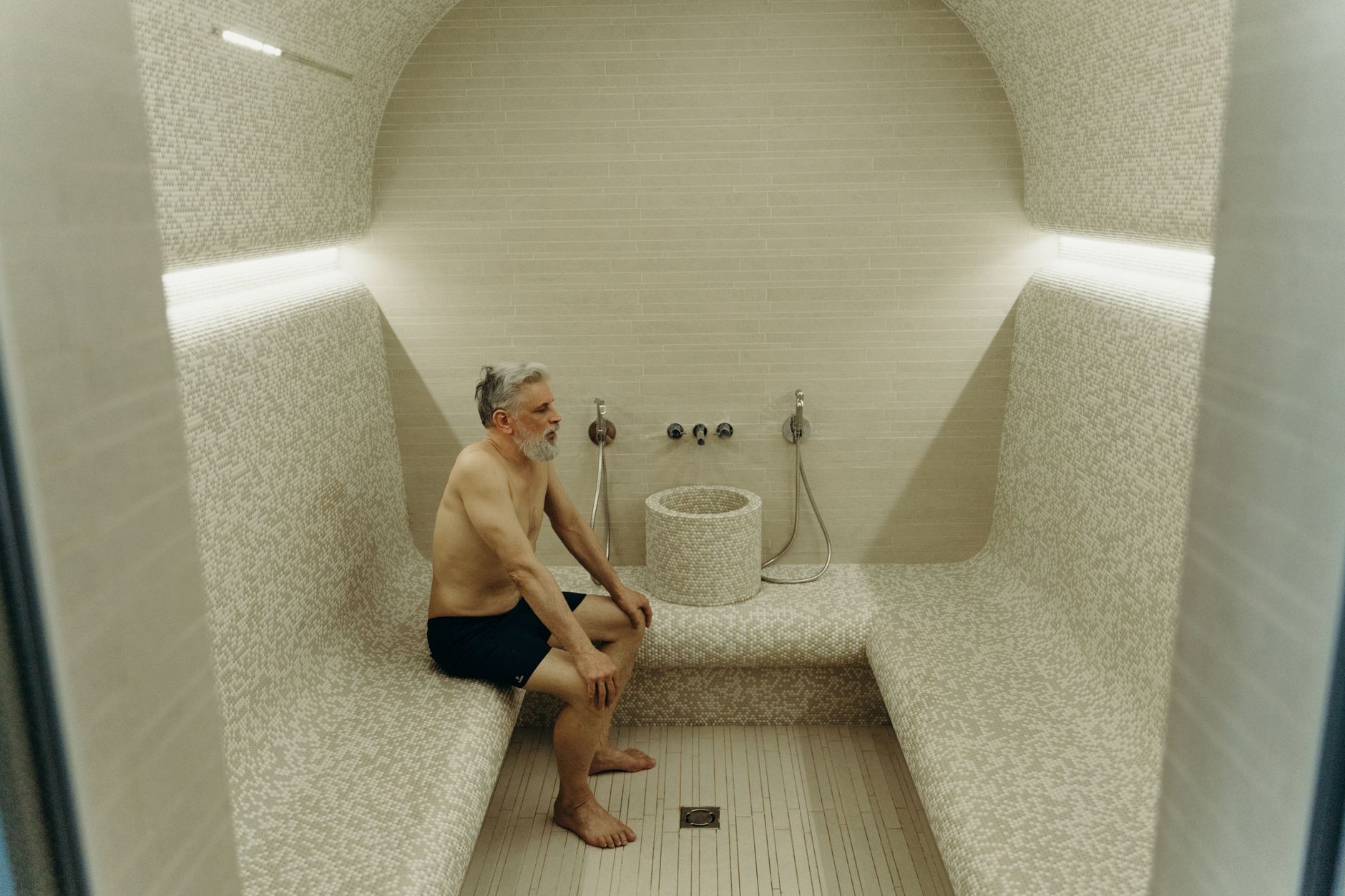

Imagine a room heated to ninety degrees Celsius where the air subtly burns as it enters your lungs. In the dim light, illuminated only by an amber glow reminiscent of a perpetual sunset, fifty people sit together on tiered cedar benches. There is none of the deathly silence traditionally demanded in luxury hotel spas; instead, an analog synthesizer begins to vibrate in the corners of the room, followed by the deep voice of a guide inviting those present to synchronize their breathing. A steam master, or Aufgussmeister, pours water infused with Siberian pine and eucalyptus essential oils onto the glowing stones of the central heater, sending up a dense cloud of humid heat which they then direct toward the audience using choreographed towel movements, perfectly timed to the music. What is happening here is not a session of passive relaxation, but an immersive concert and an experience of collective catharsis.
This scenario, which only a decade ago would have seemed like an avant-garde eccentricity, is today the epicenter of a quiet but fiery revolution in the global wellness industry. Saunas are moving away from being spaces of individual isolation or whispered conversations to become the new social hubs, in many cases replacing traditional nightclubs and bars. In major metropolises across North America and Northern Europe, a new generation of urbanites is desperately seeking ways of human connection devoid of alcohol and screens, finding in extreme heat and icy cold the perfect catalyst for vulnerability and community.
The rebirth of collective sweating
The practice of steam bathing and saunas is by no means a contemporary invention. From the bathhouses of ancient Rome and Turkish hammams to traditional Finnish saunas and Russian banyas, collective sweating has historically been a fundamental pillar of social cohesion, politics, and community hygiene. However, during the twentieth century, the Westernization and commercialization of wellness transformed these spaces into individualistic zones, often sterile and associated with extreme privacy or the quiet luxury of private health clubs.
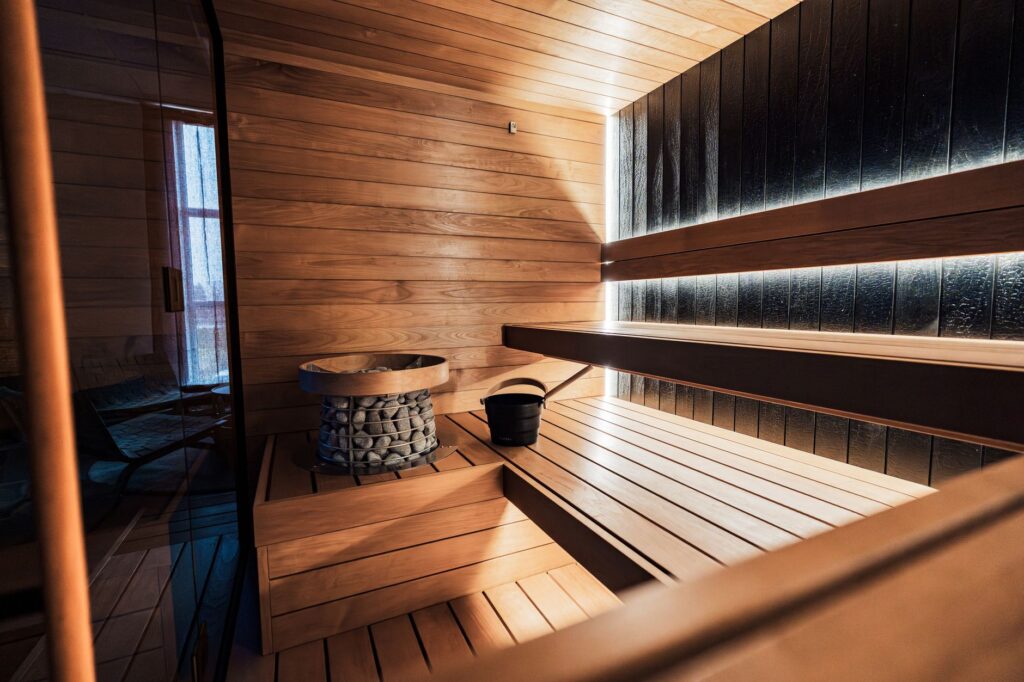
The current shift represents a conscious return to those ancestral roots, but adapted to the needs of a society that is hyper-connected yet, paradoxically, lonelier than ever. The need to disconnect from constant digital stimulation has led wellness designers and entrepreneurs to rethink the sauna space. It is no longer about sitting and watching an hourglass in absolute silence while tolerating heat as a necessary punishment; now, the sauna is a theater, a sanctuary for breath, and a stage for artistic expression where heat is shared and celebrated.
The Othership phenomenon: from introspection to shared euphoria
At the heart of this movement is Othership, an innovative social spa concept born in Toronto that has recently landed in New York with overwhelming success. Far removed from the clinical aesthetic of traditional spas, Othership proposes an emotional journey through extreme thermal contrast, guided breathwork, and high-fidelity music. Its founders understood that true wellness is not just physical, but deeply relational.
«People are looking for real connections, and saunas build that community naturally. When you share a physical experience as intense as extreme heat or an ice bath, social barriers break down immediately,» explains Amanda Laine, co-founder of Othership.
Laine notes that their sessions are designed to guide participants through different emotional states. In a world where loneliness has become a public health epidemic, sharing a giant sauna space with strangers while listening to a carefully curated musical set offers a sense of belonging hard to replicate in other urban settings. Heat acts as a social equalizer: stripped of their street clothes, mobile phones, and social status, all participants are equal in the face of the steam’s intensity.
The Aufguss ritual: theater, steam, and essential oils
To understand how a sauna can host a concert, it is essential to understand the art of the Aufguss. Originating in Germany and Austria, this traditional ritual has undergone unprecedented sophistication in recent years, with world championships now held where steam masters compete in choreography, music selection, aroma usage, and heat control.

During a modern Aufguss, the steam master does not simply pour water onto the stones; they use ice balls mixed with high-quality, pure essential oils to release the scent gradually. With towel-waving techniques ranging from gentle sweeps to complex aerial figures, the hot air is distributed evenly throughout the room, creating rushes of heat that hit the skin of the participants at specific moments in the music. The selection of aromas is not random: citrus notes are used to elevate energy, woods and resins to ground the mind, and fresh herbs to facilitate deep breathing, creating a complete sensory narrative to accompany the acoustic journey.
Concerts in the steam: the acoustics of heat
Bringing live music inside a sauna presents monumental technical and physical challenges. Temperatures exceeding 85 degrees and extreme humidity levels are lethal to most traditional musical instruments and standard sound equipment. However, the quest for the perfect experience has led to the development of audio systems specifically engineered to withstand these extreme conditions, as well as the adaptation of the musicians themselves.
Sauna concerts typically rely on highly resilient instruments, such as quartz bowls, gongs, protected analog synthesizers, or the human voice itself. Singers and choirs experiment with the resonance of the cedar wood walls, which absorb and reflect sound in a warm, organic way. For attendees, the sound does not just enter through the ears; the vibration of low frequencies is transmitted through the wooden benches directly to the body, intensifying the physiological response to heat and facilitating a state of deep meditation or, conversely, collective euphoria.
The science of social thermoregulation
The appeal of these experiences is not purely esoteric; it is backed by a solid scientific foundation on how our bodies react to controlled thermal stress. When subjected to high temperatures, the body releases endorphins and dynorphins, neurotransmitters associated with pain relief and a general sense of well-being. Similarly, exposure to extreme cold immediately after the sauna—via ice baths below five degrees—triggers a massive release of dopamine and norepinephrine, elevating mood and mental clarity for hours.
When this physiological process is experienced in a group setting, a phenomenon known as social synchrony occurs. Just as in music concerts or tribal rituals, the heart rates and breathing patterns of sauna participants tend to align. This shared experience of overcoming a physical challenge (extreme heat and ice cold) releases oxytocin, the hormone of trust and social bonding, explaining why conversations after these sessions are often unusually deep, honest, and free of the usual superficiality of traditional networking events.
Architectural design of the new bathhouses
The transformation of the sauna from a secondary amenity to the main attraction has also revolutionized the architecture of these spaces. The new temples of social sweat are designed with the scale and drama of a theater or auditorium. Cabins are no longer small, dark cubicles in basements; they now feature huge panoramic windows connecting the interior with the natural world outside, high ceilings that allow for proper steam circulation, and dynamic lighting systems that shift in color depending on the phase of the ritual.
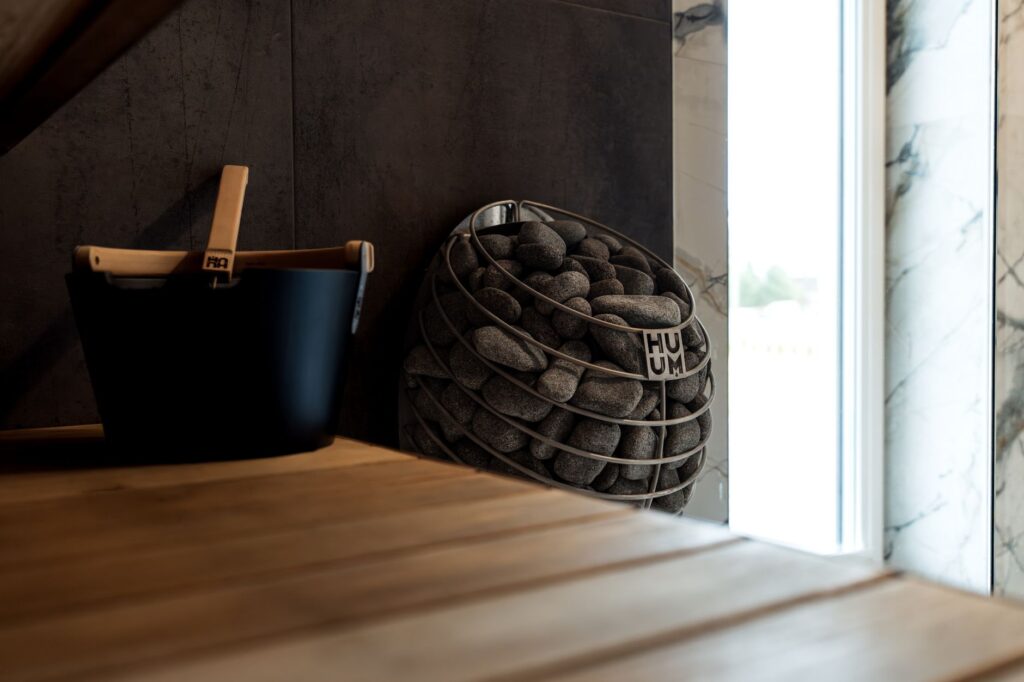
The materials chosen also reflect this evolution. Priority is given to high-quality thermally modified woods, such as aspen, heat-treated pine, and Canadian red cedar, which not only stand the test of time but also release comforting natural aromas when heated. The semi-circular amphitheater seating arrangement encourages visibility of the master of ceremonies or musician, while ensuring that all participants feel part of a single, cohesive group.
The end of the silent spa era
The emergence of these spaces marks a significant cultural shift in how we understand self-care. For decades, wellness was marketed as an individualistic pursuit, an escape from the outside world to lock oneself in a bubble of silence and personalized treatments. The rise of the social sauna proposes the exact opposite: that mental and emotional health is strengthened when we open up to others and share our vulnerabilities.
«Silence has its place, but social disconnection is making us sick. We need spaces where we can laugh, cry, breathe heavily, and celebrate being alive alongside other people, without the pressure of drinking alcohol or projecting a perfect image,» reflects Amanda Laine.
This new paradigm does not seek to replace silent meditation entirely, but to complement it. It offers a necessary alternative for those who find it difficult to quiet the mind in the stillness of a meditation cushion, but who discover a profound peace when their attention is entirely focused on physical heat, the rhythm of their breath, and the beauty of a shared melody.
Practical guide
For those interested in diving into this new trend of social wellness and thermal performances, there are several key global destinations leading the movement:

- Othership (Toronto and New York): Pioneers of the social bathhouse concept in North America. They offer 75-minute guided sessions combining high-capacity saunas, ice baths, conscious breathwork, and music sets curated by local artists. Booking in advance is essential, especially for their weekend evening sessions, which operate as a healthy alternative to nightlife.
- Löyly (Helsinki, Finland): A landmark of modern wooden architecture on the shores of the Baltic Sea. It combines traditional smoke saunas with a spectacular social terrace and restaurant. While more traditional in its approach, the atmosphere is deeply social and allows visitors to alternate the heat with direct dips in the freezing Baltic waters.
- Bathhouse (Brooklyn and Manhattan, New York): Located in restored former factories, this space combines industrial aesthetics with high-end treatments, hot saunas, neon-lit steam rooms, and plunge pools, all set to a contemporary soundtrack with a top-tier restaurant on site.
- Farris Bad (Larvik, Norway): One of Scandinavia’s largest spa hotels, famous for hosting special Aufguss events with international steam masters who transform the sauna into a true theater of light, sound, and heat.
To fully enjoy the experience, it is recommended to arrive well-hydrated, wear a comfortable swimsuit, and maintain an open attitude toward thermal contrast. The transition from the hot sauna to the ice bath is key to experiencing the mental clarity and endorphin rush that define this ritual.
The image of a community gathering around fire and warmth is not new; it is, in fact, one of the oldest human activities on earth. By incorporating music, contemporary design, and the science of thermoregulation, modern saunas are not inventing anything new, but rather reminding us of something we had forgotten: that the warmth of community is the ultimate antidote to the coldness of modern life.
Source: Condé Nast Traveler Spain