

The Fractured Pulse of the Asian Sky
Contemporary commercial aviation relies on a delicate balance of pinpoint precision, where timetable synchronization, airspace management, and crew availability operate as an invisible machinery. However, when this system encounters unforeseen structural bottlenecks, collapse ceases to be a remote hypothesis and becomes a paralyzing reality. Recently, a monumental crisis reflected in an accumulated volume of 3,900 flight delays shook three of the region’s most vital transportation nodes: Jakarta, Tokyo, and Delhi. This phenomenon does not represent a simple seasonal inconvenience, but a severe wake-up call regarding the physical and operational limits experienced by global mobility on the Asian continent.
Far from being limited to the mere nuisance of stranded passengers in terminals, this systemic disruption exposes the seams of airports that systematically operate at the limit of their installed capacity. The simultaneity of the collapse in three metropolises with radically different geographical, meteorological, and administrative realities demonstrates that the problem transcends local incidents. It is a structural failure that questions the resilience of international transport networks and raises urgent questions about the future planning of air traffic in rapidly growing economies.
Jakarta and the Insular Challenge of Air Transport
In the Indonesian archipelago, Jakarta’s Soekarno-Hatta International Airport functions as the main bottleneck for national and international air traffic, connecting thousands of islands through a dense network of routes. The country’s insular geography drastically increases dependence on air transport, turning every chained delay into a critical obstacle for territorial and economic cohesion. Operations in Jakarta were severely compromised due to the confluence of ground saturation, air traffic control limitations, and regional tropical weather factors.
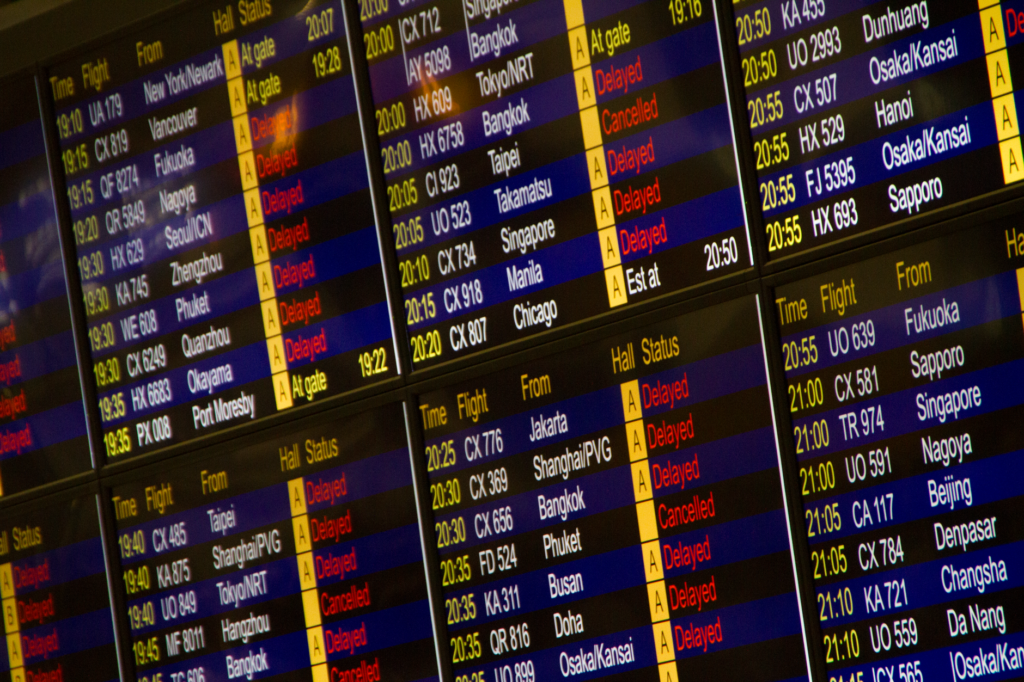
Indonesian airport infrastructure has historically struggled with passenger demand growth that far exceeds the pace of physical facility expansion. During the recent wave of massive delays, aircraft parking apron areas became completely gridlocked, forcing planes to wait for hours both on the ground and in the air. This congestion generates a ripple effect that affects secondary airports across Sumatra, Bali, and Sulawesi, demonstrating that Jakarta’s vulnerability directly impacts the stability of the entire Southeast Asian transportation network.
Tokyo and the Implacable Discipline of Japanese Precision
At the opposite end of the continent, the airports serving the Japanese capital —Narita and Haneda— traditionally represent the global paradigm of punctuality, efficiency, and operational rigor. For this reason, any significant disruption in Japanese airspace transcends the purely technical realm to become an event of international economic relevance. Tokyo’s control centers manage an extraordinarily dense daily volume of operations, where operating margins are minimal and any unforeseen alteration triggers a rigorous containment protocol.

The crisis affecting Tokyo’s airports demonstrated how even the best-calibrated systems can falter in the face of accumulated external factors and congestion in approach corridors. Unlike other chaotic hubs, Tokyo’s response was characterized by orderly queue management and constant communication with passengers, though prolonged delays altered international connecting schedules toward North America and Europe. Japanese airport authorities emphasized the need to reassess peak capacity management protocols to prevent the repetition of these extreme congestion episodes.
Delhi and the Colossal Challenge of the Indian Subcontinent
Indira Gandhi International Airport in New Delhi operates as India’s primary gateway and a crucial nexus for connections between Europe, Central Asia, and Southeast Asia. With constantly expanding traffic volume driven by the boom of low-cost airlines and the country’s economic modernization, Delhi’s facilities frequently experience extreme operational pressure. Recurrent atmospheric conditions, combined with unprecedented air traffic density, create a high-vulnerability scenario in the face of any unforeseen event.
During the wave of delays, Delhi experienced severe congestion affecting both domestic and long-haul international flights. Runways operated at maximum capacity during the few available operational windows, generating aircraft accumulations on taxiways. Transport experts point out that the situation in Delhi reflects the urgent need to accelerate complementary infrastructure projects, including the development of satellite airports and the technological upgrading of air navigation systems throughout Indian territory.

The Human Factor: Passengers Trapped in the Global Machinery
Punctuality in modern aviation is not merely an indicator of technical efficiency, but the invisible pact of trust that sustains the global mobility of millions of people.
Behind the cold statistic of 3,900 delays lies the human factor: separated families, canceled business meetings, exhausted crews, and travelers stranded for days in international terminals that are not always designed to absorb contingencies of this magnitude. In Jakarta, Tokyo, and Delhi, transit zones turned into improvised dormitories where thousands of people awaited contradictory information regarding their flight status. The lack of a coordinated response by some airlines accentuated passenger frustration.
International regulations on passenger compensation and assistance were tested in scenarios where saturation exceeded airlines’ immediate response capacity. While customer service in Tokyo maintained standards of courtesy and basic assistance, other hubs suffered critical terminal crowding that highlighted the need to tighten emergency protocols for travelers’ rights protection during widespread crises.

Infrastructure and Technology Before the Abyss of Growth
The simultaneous collapse in Jakarta, Tokyo, and Delhi shows that global aeronautical infrastructure is on the verge of operational capacity in numerous key regions. The exponential increase in post-pandemic air transport demand has collided head-on with the time required to build new runways, expand terminals, and update air traffic management systems based on advanced artificial intelligence and automation.
Industry analysts agree that the solution does not solely lie in building more concrete, but in radically optimizing operational flows through the comprehensive digitization of airspaces. The implementation of virtual corridors, improved weather prediction using advanced models, and cross-border coordination among civil aviation authorities are essential steps to prevent the sky from becoming a permanent bottleneck.
Practical guide
- Real-time monitoring: Use specialized flight-tracking applications and official airport platforms before heading to the terminal to identify disruptions ahead of time.
- Connection margins: When planning international itineraries involving complex Asian hubs, ensure layovers with a minimum duration of three hours to absorb potential delays on feeder flights.
- Passenger rights: Familiarize yourself with local and international compensation regulations applicable in Jakarta, Tokyo, and Delhi to demand assistance in case of cancellations or prolonged delays.
- Digital documentation: Keep accessible digital copies of tickets, hotel reservations, and travel insurance on mobile devices with external batteries to avoid setbacks if physical counters collapse.
The Silence After the Turbine Echo
When the information screens finally stop flashing red and aircraft resume flight toward their destinations, the reflective stillness of empty terminals lingers in the atmosphere. Commercial aviation remains the great artery of the modern world, a daily miracle that shortens unfathomable distances while revealing our absolute dependence on highly fragile systems. Observing the hazy horizon from the windows of an Asian airport after a crisis of this magnitude invites us to understand that flying is not an effortlessly acquired right, but the result of a complex and constant negotiation between human ambition and the planet’s physical limits.
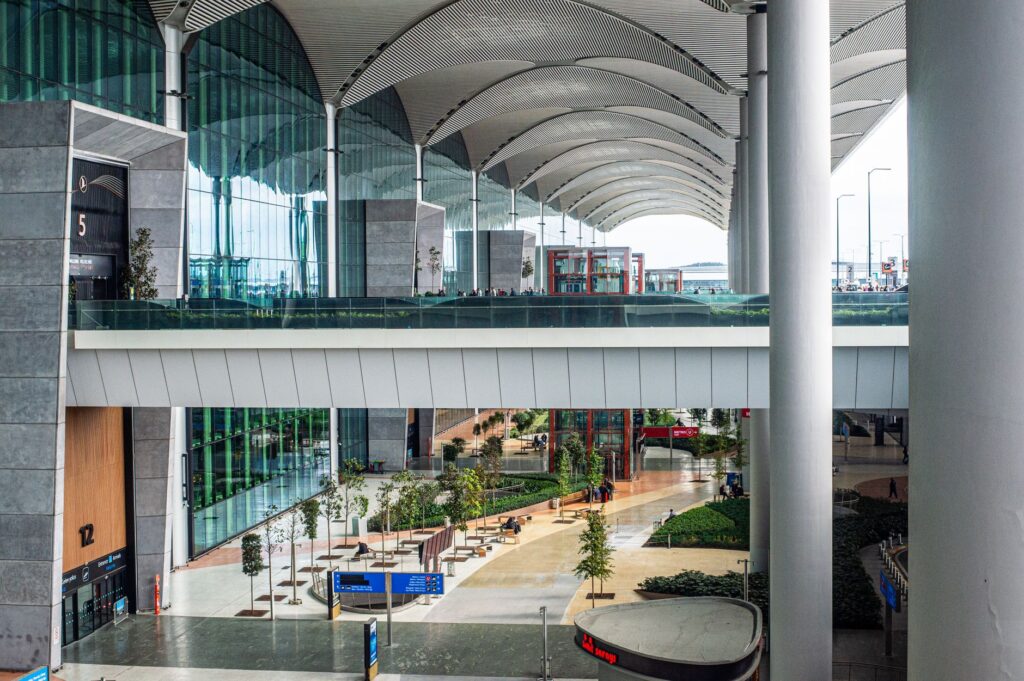
Ultimately, the experience lived in Jakarta, Tokyo, and Delhi leaves an urgent lesson for the global transport industry: the future of mobility is measured not only by the speed at which we travel, but by our ability to maintain course and human dignity when the machinery of the sky comes to a complete halt.
Source in EN: Nomad Lawyer – Gridlock Above the Clouds: Navigating Asia’s 3,900-Flight Delay Surge Across Jakarta, Tokyo, and Delhi (https://news.google.com/rss/articles/CBMikgFBVV95cUxPWWlZMjdsRl9Ib0NrXzFSek9paE9FNWxVaU9qTmZLd2QwdWZtQklYMjM3X3p3eTRhMF9FRTctTkY4VFprcjlBUGxhNHFDUklnVV81RVNnT0Y3a2YtQzE2cWtTU0hUd3RWLWQ0SWNmREhrb2V5anJQN28ydU1sYjdkZG5jVER1OG5ENXkyLWlNSTBTQQ?oc=5)