Introduction to the Mediterranean Woodland and the Most Sought-After Feline
The Mediterranean woodland in the southern Iberian Peninsula conceals one of the most remarkable conservation success stories of the 21st century. Across the dehesas and thickets of Sierra Morena, the Iberian lynx (Lynx pardinus) has transitioned from the brink of biological extinction at the dawn of the year 2000 to establishing stable populations. This endemic feline, distinguished by its unmistakable silhouette marked by tufted ears and a short tail with a black tip, serves as the ecological thermometer of a complex ecosystem where every holm oak, seasonal stream, and square meter of rockrose and mastic fulfills a vital function. Understanding its biology requires delving into the unhurried rhythms of an ancient habitat.
The survival of this species is not the result of chance, but of decades of scientific research, habitat management, and captive breeding programs that have rewritten the manuals of conservation biology. Far from the glamour of the African savanna, the Mediterranean scrubland demands millimeter precision from the lynx in its survival strategy. The populations of Sierra Morena act as the fundamental genetic core from which individuals have radiated outward into new territories across Spain and Portugal, demonstrating that coexistence between megafauna and human activity is viable under strict criteria of ecological rigor.
The Biology and Trophic Niche of Lynx pardinus
Unlike other generalist large carnivores, the Iberian lynx is a strict specialist whose diet depends on more than ninety percent of a single species: the European rabbit (Oryctolagus cuniculus). This extreme dependency turns the feline’s demography into a direct reflection of lagomorph population health. When outbreaks of myxomatosis or rabbit hemorrhagic disease decimate the rabbit populations, the lynx’s reproduction and survival rates suffer an immediate impact. Field biologists monitor this relationship through continuous transects and coprological analyses to anticipate any imbalance within the trophic chain.
Morphologically, the Iberian lynx is engineered for stalk hunting in rugged terrain and dense underbrush. Its hind legs, noticeably longer than its front legs, provide an explosive jumping capacity, ideal for surprising prey over short distances. Its highly sensitive vibrissae detect minimal air currents and ground vibrations, while its night vision, enhanced by the tapetum lucidum, enables efficient hunting in the dim light of dusk. Each adult individual requires an exclusive territory, defended through olfactory markings using urine and scat at strategic points along its regular routes.
The Invisible Cartography of Ecological Corridors
A lynx’s territory is not a static surface, but a complex network of optimal habitat patches connected by ecological corridors. In Sierra Morena, landscape fragmentation caused by roads, energy infrastructure, and intensive agriculture represents the greatest threat to the dispersal of young individuals. When a male or female reaches sexual maturity, it must leave its maternal territory in search of new home domains. If these natural corridors are interrupted, genetic isolation inevitably leads to inbreeding and a subsequent loss of genetic diversity, a lethal risk for a population recovered from a diminished number of founders.
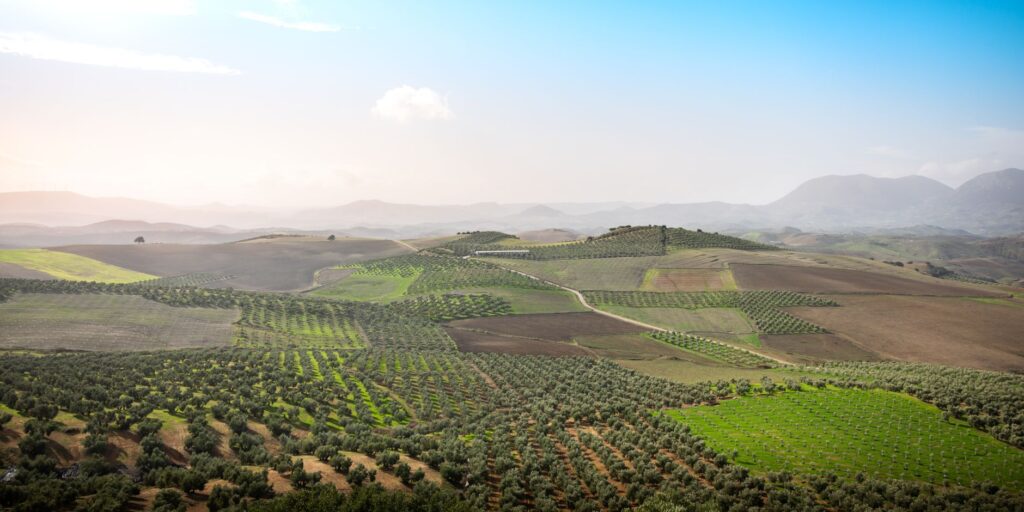
To mitigate this risk, conservation projects have driven the environmental restoration of private estates, the signing of land stewardship agreements with forest owners, and the installation of specific wildlife crossings on high-capacity roads. These green corridors allow lynxes to flow freely between the core populations of Guarrizas, Cardeña-Andújar, and newly reintroduced enclaves in Extremadura and the Portuguese Alentejo. Territorial connectivity is, in essence, the keystone guaranteeing the long-term viability of the species against stochastic disturbances such as forest fires or epidemics.
The Role of the European Rabbit as a Cornerstone
Analyzing lynx ecology without studying the status of the European rabbit is a sterile exercise. The lagomorph is not merely the feline’s dietary foundation, but also an ecosystem engineer whose burrows aerate the soil and provide shelter for dozens of invertebrate, reptile, and small bird species. In Sierra Morena, the restoration of rabbit populations has become a primary priority. This includes constructing artificial warrens—structures of stone and branches offering protection from aerial predators—and setting up acclimatization enclosures where wild rabbits can breed without direct predation pressure before being released.
Likewise, sustainable game management programs have evolved to reconcile traditional small-game hunting with the ecological needs of the lynx. Local hunters, once skeptical of the arrival of a protected predator, have transformed into strategic allies upon understanding that an ecosystem rich in small game and top carnivores is synonymous with environmental health. The recovery of natural pastures and the reduction of chemical herbicides on partner estates have exponentially increased the density of tender grasses, the staple food that stimulates doe fecundity.

The Historical Interaction Between the Feline and Rural Communities
The relationship between the human populations of Sierra Morena and the Iberian lynx has evolved from relentless historical persecution to contemporary regional pride. Throughout much of the 20th century, the lynx was regarded as a harmful pest detrimental to livestock and commercial game, motivating its systematic hunting with traps, snares, and firearms. The prohibition of these practices in the 1970s and the subsequent classification of the species as critically endangered marked a legal turning point, although the true cultural shift has required decades of environmental education and direct economic return for rural municipalities.
Today, respectful nature tourism and the certification of local products—such as extra virgin olive oil from lynx-friendly estates—demonstrate that conservation generates wealth in traditionally depressed regions. Rural accommodations, specialized guides, and interpretation centers attract naturalists from around the world seeking to spot the feline’s tracks or hear the red deer bugle in autumn. This economic synergy deters poaching and fosters a collective perception where the lynx is no longer a burden, but a symbol of environmental identity and excellence.
Population Genetics and the Triumph of Captive Breeding
The rescue of the Iberian lynx will go down in biology textbooks as one of the most complex cases of ex situ and in situ genetic management. At the turn of the century, the total population barely exceeded ninety individuals divided into two isolated nuclei in Doñana and Andújar, with alarming levels of inbreeding manifested in cardiac malformations and low sperm fertility. The launch of the captive breeding program, coordinated through a network of specialized centers such as El Acebuche and La Olivilla, allowed the multiplication of specimens under rigorous genealogical control that maximized the genetic variability preserved in each mating.

Cubs born in captivity are not domesticated animals; on the contrary, they grow up in isolated facilities with minimal human presence and constant environmental enrichment simulating the stimuli of the real woodland. They are trained to hunt live prey, avoid human hazards, and develop evasive behavioral patterns regarding vehicles and dogs. Before release into the wild, individuals undergo an acclimatization period in large pre-release enclosures where they consolidate their hierarchy and physical capacity. This methodical protocol has raised post-release survival rates above seventy percent, an unprecedented figure in large carnivore reintroductions.
Contemporary Challenges Amid Global Change and Disease
Despite extraordinary progress, the Iberian lynx continues to face formidable threats under the scenario of global change. Climate projections for the southern Iberian Peninsula indicate a sustained increase in temperatures and a drastic decrease in precipitation, aggravating periods of prolonged drought. These extreme weather conditions reduce water availability in seasonal streams, diminish the vegetative cover protecting the scrub, and weaken rabbit populations against new pathogenic strains. Water management, through the creation of artificial ponds and solar drinkers, has become indispensable in roaming areas.

Furthermore, the emergence of novel pathogens and the persistence of illegal poison use—despite harsher penal penalties—continue to cause painful losses among wild populations. Roadkill on county highways remains one of the most frequent causes of non-natural mortality, demanding continuous investment in smart signage, permeable game fences, and reduced speed limits in critical stretches. Lynx conservation is not a goal achieved once and for all, but a dynamic process requiring permanent vigilance and constant scientific adaptation.
The conservation of the Iberian lynx is not measured solely by the census of adult individuals, but by the ability to keep intact the invisible complexity of a Mediterranean woodland capable of sustaining life in all its forms.
Practical guide
Planning a respectful and rigorous approach to Iberian lynx territories in Sierra Morena requires understanding the ecological and legal limitations protecting the species. Direct sightings are extremely rare due to the feline’s elusive nature and the strict prohibition of disturbing its tranquility during the breeding season, but the naturalist experience offers multiple incentives throughout the year.
- Best time to visit: Autumn and winter months (October to February) coincide with lower vegetative cover and the mating period, a time when individuals display greater territorial mobility and higher indices of activity are recorded.
- How to get there: The main access to the Andújar and Cardeña enclaves is from the A-4 highway, taking exits toward Marmolejo or Villanueva de la Reina. A four-wheel-drive or high-clearance vehicle is recommended for navigating authorized forest tracks.
- Observation regulations: The use of call-emitting devices, leaving marked trails, approaching on foot outside approved paths, or flying drones in critical nesting and breeding areas is strictly prohibited.
- Accommodation and guides: It is advisable to hire local ecotourism services equipped with accredited guides and long-range optics, directly supporting the local economy while minimizing environmental impact.
- Essential equipment: High-luminosity binoculars (8×42 or 10×42), spotting scope with a stable tripod, technical mountain footwear, neutral-toned clothing to avoid contrasts, and adequate hydration systems for long hours of static observation.
The unhurried contemplation of the Mediterranean woodland from a hillside at dawn, with frost vapor rising over the rockroses and the silent silhouette of a centuries-old holm oak etched against the horizon, encapsulates the essence of this Iberian refuge. It is not about seeking the cheap thrill of a fortuitous encounter, but about tuning into the deep rhythms of an ecosystem that has resisted the edge of the abyss and today teaches us that wildlife recovery is possible when science, patience, and respect walk hand in hand.