
The Route of Green Abysses and Centenarian Locomotives
The railway ascent from Sri Lanka’s tropical lowlands into the island’s mountainous heart stands as one of the most daring engineering feats of the British colonial legacy in Asia. Inaugurated in the late 19th century, the main line connecting Colombo with Badulla, passing through the iconic station of Ella, was conceived not merely as a passenger transit medium, but as the vital artery to evacuate massive harvests of coffee and, subsequently, coveted Ceylon tea to the capital’s port. Today, this route survives not only as a historical relic, but as an active transportation system defying impossible gradients and chasms blanketed in perennial, misty vegetation.
spanning nearly three hundred kilometers, broad-gauge convoys overcome elevation gains exceeding two thousand meters, winding through deep gorges, roaring waterfalls, and emerald-green carpeted slopes. The technical complexity of laying stable railway tracks over clayey soils prone to landslides required the mastery of British engineers who coordinated the labor of thousands of local and imported workers. The result is a transport corridor where every cut-stone viaduct and hand-excavated tunnel tells a story of human endeavor, imperial ambition, and profound economic transformation within the South Asian subcontinent.
The Colonial Genesis: From Coffee Failure to Tea Fever
To understand the magnitude of Sri Lanka’s Highlands railway infrastructure, one must look back to the 1860s, when the colonial British economy depended almost exclusively on coffee plantations. However, an epidemic of the fungus Hemileia vastatrix devastated island coffee estates, forcing planters to convert their lands to tea cultivation. This productive shift brought an unsustainable logistical crisis: transporting leaves via oxcarts over muddy bridle paths was slow, costly, and incapable of absorbing the volumes required by London markets. The British Crown then authorized the construction of the Highlands Railway, a titanic project requiring the transport of tons of steel and coal through virgin jungles.
The original route faced its first major natural obstacle in the Kadugannawa mountain barrier, where the terrain drops precipitously. Engineers designed a system of continuous ramps and tight-radius curves that forced innovations in steam locomotive design. These machines had to develop tremendous power without derailing on sharp superelevations, a challenge that gave rise to the legendary Class S locomotive fleet and, later, the diesel units dominating current services. The railway instantly became the island’s backbone, allowing fresh Ceylon tea to reach steamships docked in Colombo within hours.
Mountain Engineering: Bridges, Tunnels, and the Demodara Prodigy
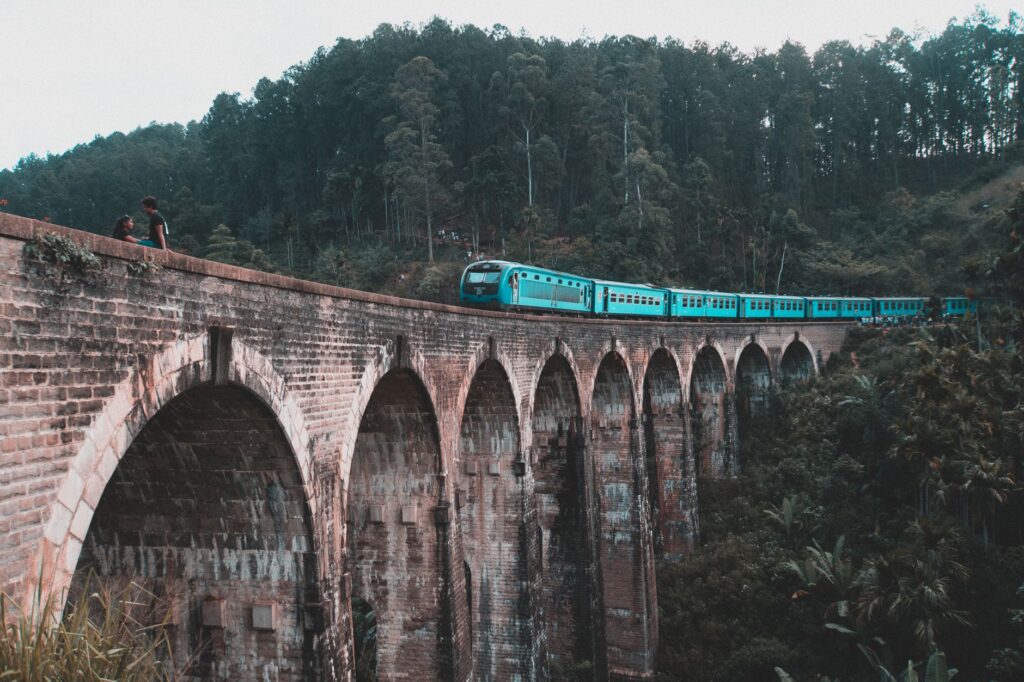
The topographical profile of the Highlands demanded civil engineering solutions of exceptional complexity that continue to dazzle specialists today. The most eloquent example of this ingenuity is the famous Nine Arch Bridge, situated between Demodara and Ella stations. Built entirely of brick, stone, and mortar during the steel shortages of the First World War, this monumental structure rises over a jungle ravine without using a single iron beam in its frame. Local builders leveraged the natural curvature of the terrain and the solidity of surrounding rock to erect symmetrical arches capable of supporting freight and passenger convoys without structural fatigue.
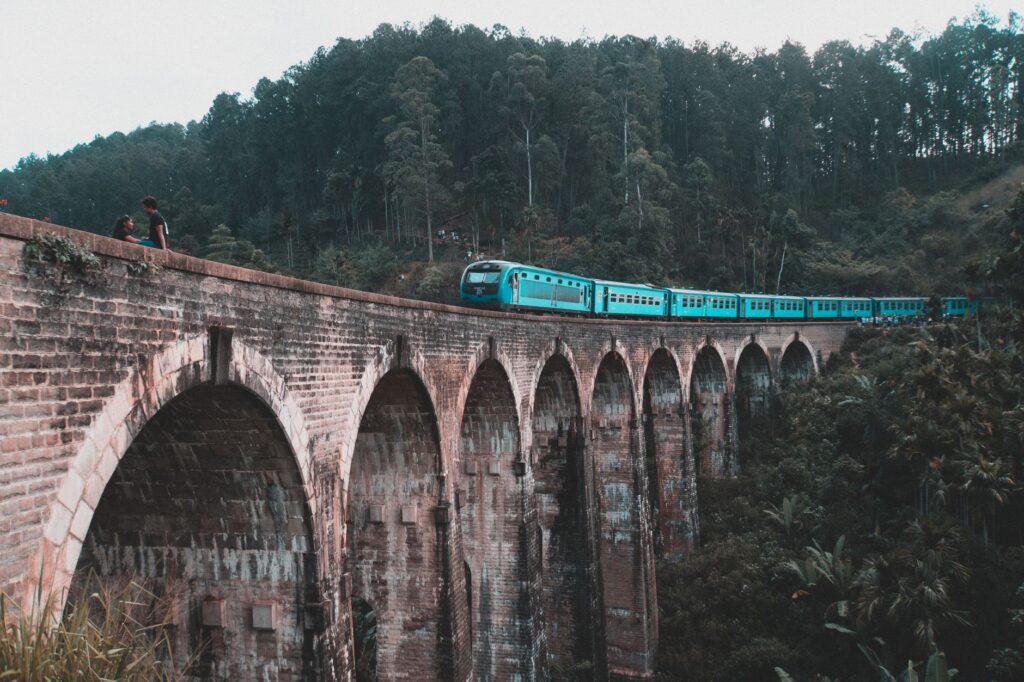
A few kilometers away lies another milestone of global railway engineering: the Demodara loop. Due to extremely steep topography, engineers needed to descend the track in a spiral so the train could make a scheduled stop at a station located in a narrow valley. The solution involved driving a tunnel passing beneath the station itself, describing a complete circle, and emerging on a lower level. This masterpiece of applied geometry resolved an insurmountable gradient problem and continues operating with the millimeter precision designed over a century ago.
Operational Logistics: The Daily Pulse of Passenger and Freight Convoys
Far from being an exclusive attraction for international tourism, the Highlands Express fulfills an irreplaceable socioeconomic role for Sri Lanka’s rural communities. Daily frequencies connect Colombo with Kandy, Hatton, Nanu Oya, and Badulla, transporting local travelers, tea pluckers, and students alike. The logistics of this rail system operate under strict protocols inherited from British tradition, where mechanical signaling systems and manual telegraph communication in secondary stations continue ensuring safety across single-track sections.
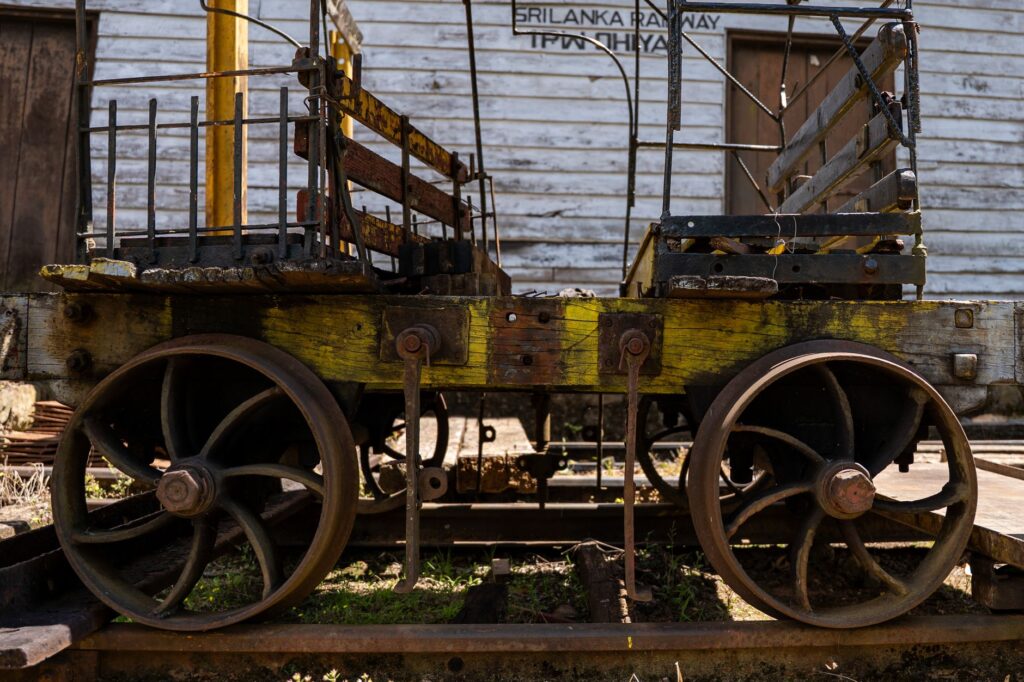
Infrastructure maintenance presents a constant challenge for Sri Lanka Railways. Heavy monsoon rains lashing the island between May and August, and again from October to August, trigger frequent landslides and water saturation along track embankments. Local maintenance crews conduct routine walking inspections and clear lines with specialized machinery to prevent interruptions in this vital corridor. Despite budgetary constraints and aging rolling stock, the relative punctuality and reliability of uphill trains remain a testament to technical resilience under harsh environmental conditions.
The Social and Economic Transformation of the Cingalese Landscape
The arrival of the railway not only reshaped Ceylon’s agrarian economy but fundamentally transformed the demography and social structure of mountainous regions. For the construction and subsequent upkeep of tea plantations, the British colonial administration imported hundreds of thousands of Tamil laborers from southern India. These workers permanently settled in barrack colonies known as line rooms, establishing a unique cultural identity in the heart of the highlands that endures to this day.
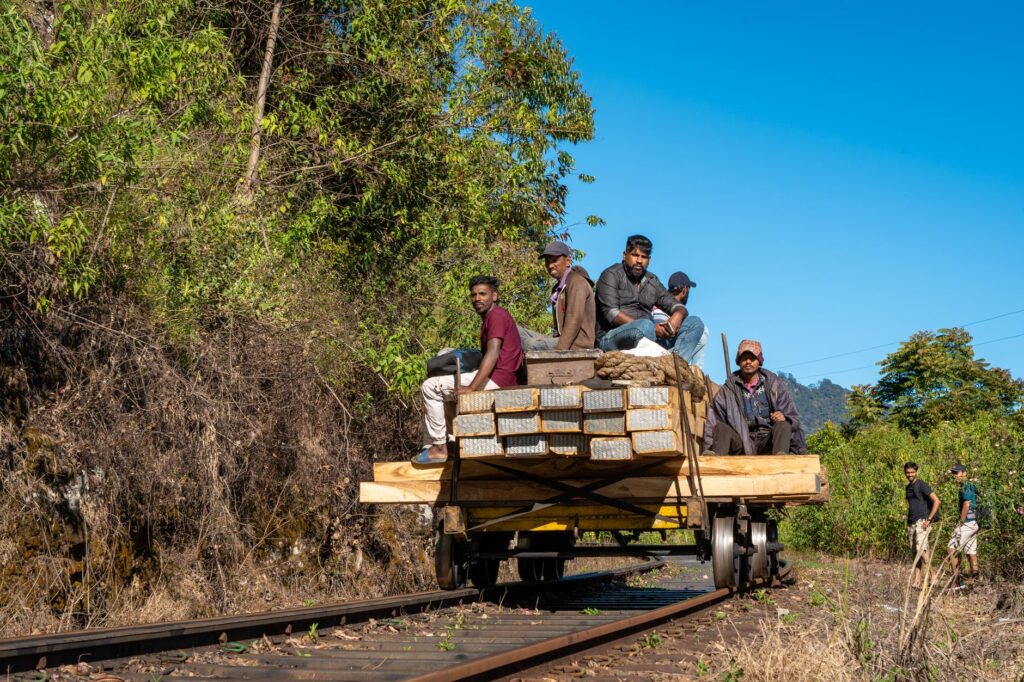
The train became the sole link connecting these isolated communities with coastal urban centers. Through its carriages flowed not only basic food and medicine supplies, but also news, families, and migratory currents that would shape contemporary Sri Lanka’s multicultural mosaic. Railway stations evolved from mere logistical platforms into local agoras, where merchants exchanged agricultural produce and travelers paused long journeys amidst a cool, misty climate contrasting sharply with the suffocating humidity of the lowlands.
The mountain railway is not merely a communication route; it is the physical archive where Ceylon’s brutal geography and human industrial ambition fused forever.
Contemporary Rail Tourism: Between Massification and Authenticity
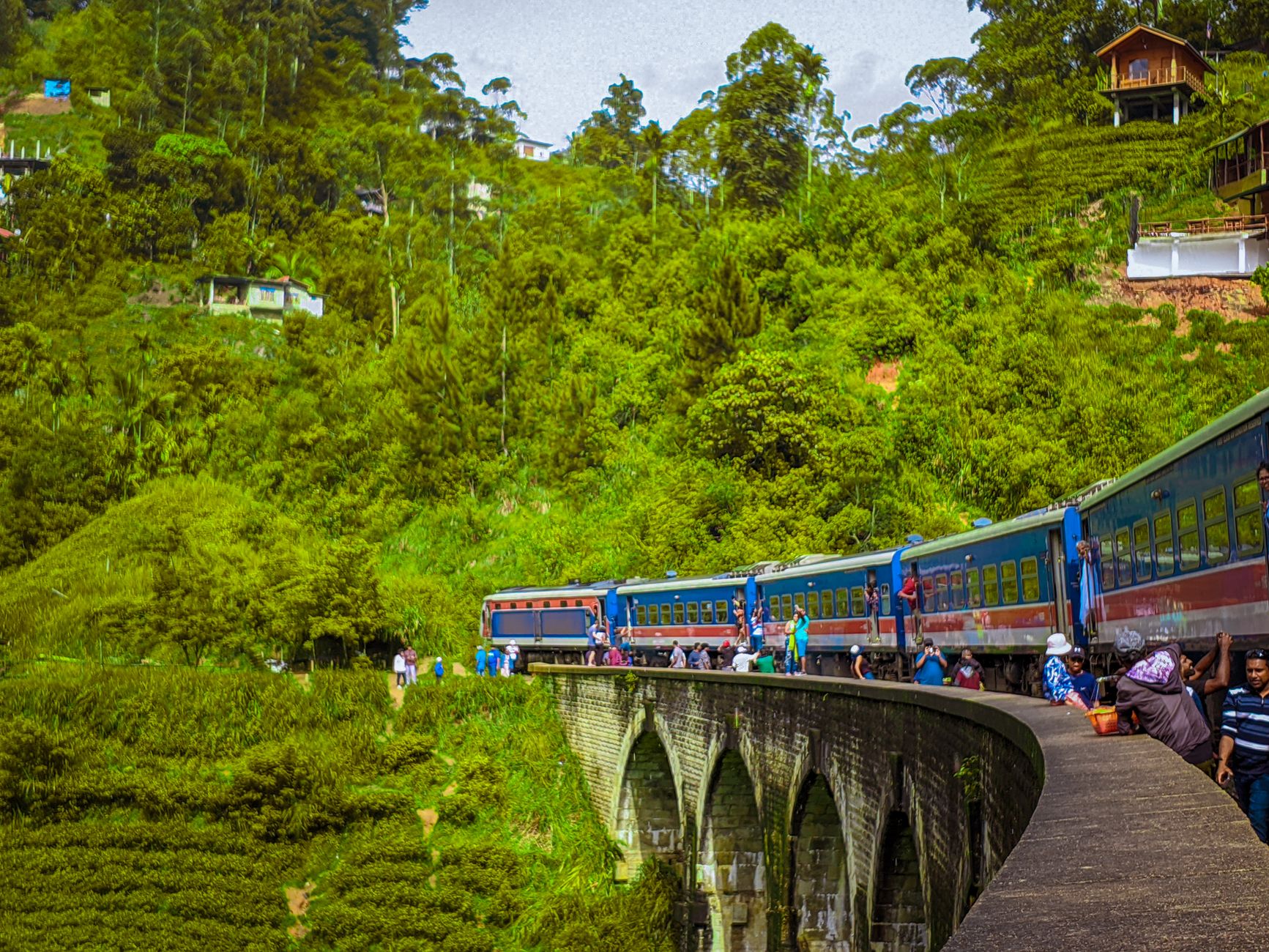
In recent decades, the rail section between Kandy and Ella has undergone a radical metamorphosis, shifting from a public service infrastructure to one of the most celebrated and photographed train journeys on the planet. Images of travelers leaning out of diesel carriage doors with their feet dangling over tea-carpeted abysses flood global social networks, attracting thousands of visitors eager for romantic, nostalgic aesthetics.
This tourism boom has generated both economic benefits and significant operational challenges. High demand for first-class carriage seats, equipped with large panoramic windows, overwhelms reservation systems months in advance and occasionally sidelines local users depending on the train for daily commuting. Nevertheless, railway authorities have introduced specific quotas and additional carriages to balance tourism revenue with the service’s unalienable social function, preserving the democratic character of a transport medium that rightfully belongs to the people of Sri Lanka.
Practical guide
Planning a journey aboard the Highlands Express requires understanding the operational particularities of Sri Lanka’s rail network to avoid logistical setbacks and fully enjoy the experience.
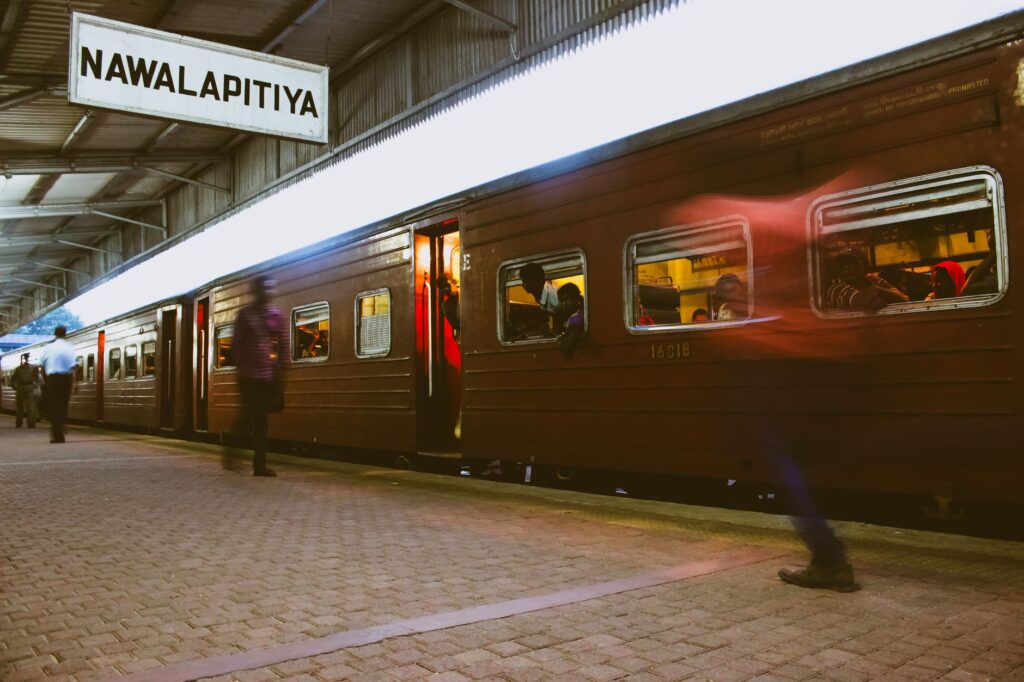
- Main Routes: The trunk route departs from Colombo Fort station and ascends progressively toward Kandy, Hatton, Nanu Oya (gateway to Nuwara Eliya), Haputale, Ella, and Badulla.
- Journey Duration: The complete trip between Colombo and Badulla takes between nine and ten hours due to complex topography and low operating speeds on mountain sections. The most popular tourist stretch is concentrated between Kandy and Ella (approximately six to seven hours).
- Ticket Classes: Three categories exist. First class offers air-conditioned carriages with reserved seating (typically at the rear of express convoys). Second and third classes offer unreserved or limited reservation seating, with second class providing the most balanced option for interacting with local passengers and enjoying open, windowless views.
- Seat Reservations: Tickets for reserved seating (first class and specific second-class sections) go on sale thirty days in advance through official ticket offices or authorized platforms. Securing them on the earliest possible day is strongly advised given overwhelming international demand.
- Luggage and Safety: Moderate-sized luggage is permitted, which must be stowed in overhead racks or under seats. Exercising caution near open carriage doors while the train is in motion is vital, as speed and sudden tunnels present real risks.
Epilogue in the Mist: The Eternal Beat on Ceylon’s Rails
As evening begins to settle over the hills of Ella and thick mist descends from the summits to swallow the contours of tea estates, the metallic clatter of the Highlands Express acquires an almost mystical resonance. In small dark-wood stations where time seems arrested in the late 19th century, lit lanterns cast a golden glow upon the weary yet serene faces of workers waiting for the day’s final convoy. This railway is not merely a gear of iron and steam defying gravity; it is the very respiration of a mountainous territory that successfully integrated Western technical audacity into its green, ancestral soul, offering contemporary travelers the opportunity to touch, at the slow rhythm of wheels over rail joints, the intact memory of a time suspended between abysses and clouds.