
Introduction to the Sea of Cortez
The Gulf of California, baptized by Jacques Cousteau as the aquarium of the world, harbors one of the most complex and rich marine biomass concentrations on the planet. At its southern tip, the Bay of La Paz acts as a natural retention basin where nutrient-rich currents from oceanic depths converge with warm waters from the Pacific. This dynamic environment, characterized by seasonal thermal fluctuations and intense solar radiation, fosters massive blooms of phytoplankton and zooplankton. It is within this microscopic nutrient broth that the ocean’s most gentle giant is sustained: the whale shark (Rhincodon typus).
The seasonal presence of these cartilaginous fish in the shallow waters off the boardwalk of La Paz is not a fortuitous event, but the result of a delicate oceanographic balance. During the months when northwesterly winds dominate the region, upwelling currents are generated, dragging organic matter toward the surface. Comprehending the ecology of this species in the southern peninsular environment requires examining not only its filtering anatomy but also the fragility of a marine ecosystem subjected to mounting anthropogenic pressure. The Bay of La Paz has transformed into a living laboratory where citizen science, governmental regulation, and historical artisanal fishing converge to define the future of marine conservation in Mexico.
Oceanography and Coastal Upwellings in Baja California Sur
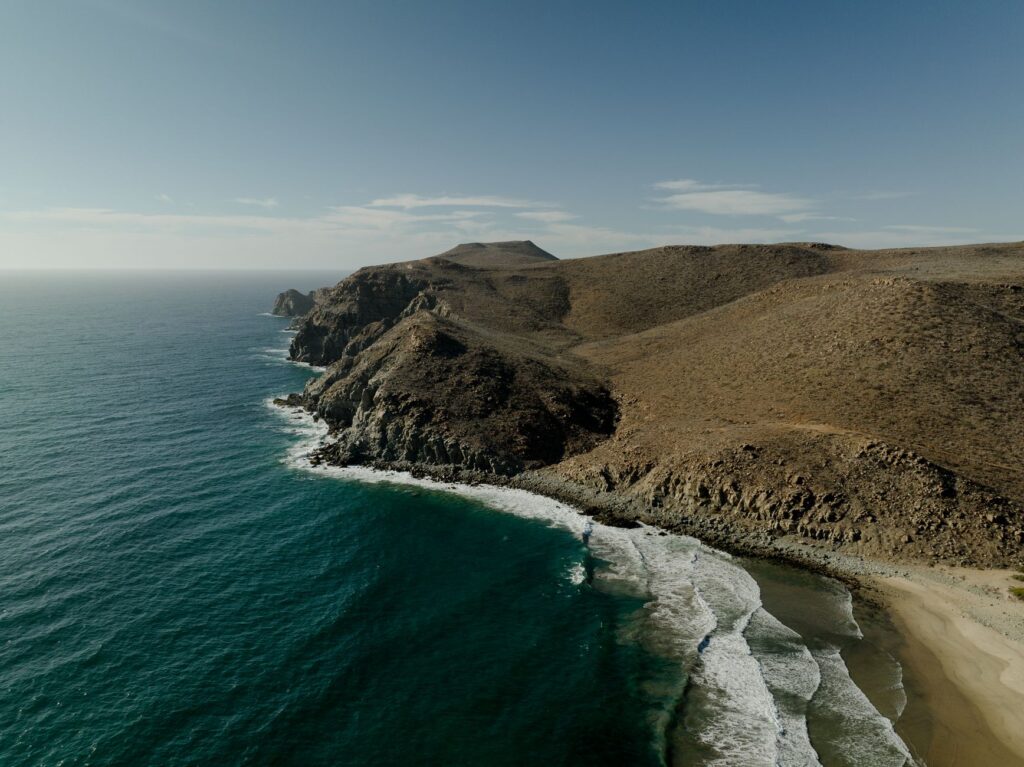
The underwater geography of the Bay of La Paz is defined by shallow channels, mudflats, and the direct influence of the California Current and equatorial inflow. The bay’s waters exhibit high primary productivity thanks to the vertical mixing phenomenon driven by seasonal winds. When winds blow strongly from the mainland toward the gulf, they displace warm surface waters, allowing deep, cold waters rich in phosphates and nitrates to rise into the photic zone. This chemical process triggers the foundational link of the trophic chain.
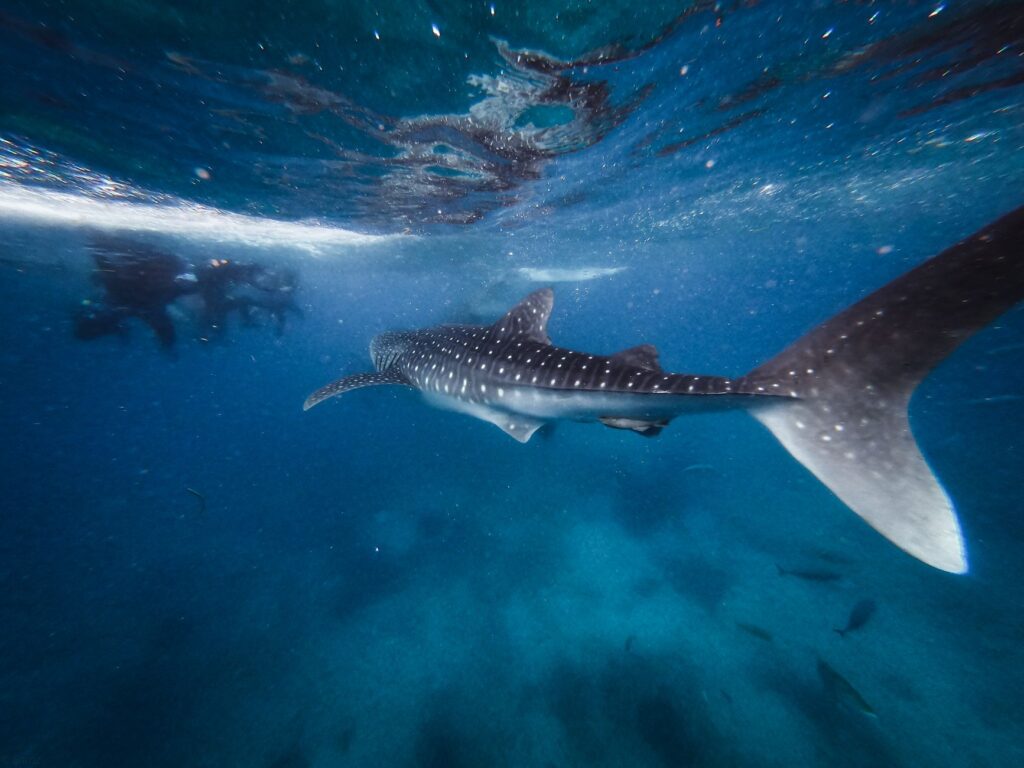
Phytoplankton proliferates exponentially, serving as immediate sustenance for copepods, crustacean larvae, and other organisms comprising zooplankton. Rhincodon typus, despite its status as the largest fish in the world, relies entirely on this microscopic biomass. Through a specialized filtration mechanism involving modified gill rakers, the whale shark ingests large volumes of water, retaining organisms merely millimeters in length. The stability of these upwelling currents directly dictates the residence time of the animals within the bay; if nutrients wane due to thermal anomalies such as El Niño, the individuals prematurely abandon the area in search of sustenance in the open sea.
Biology and Feeding Behavior of Rhincodon typus
The morphological and behavioral study of the whale shark reveals fascinating evolutionary adaptations for life in the water column. With lengths frequently exceeding ten meters, these animals possess a unique livery of white spots and yellowish stripes over a grayish or dark blue background—a natural pigmentation pattern employed by marine biologists for photo-identification and population census.
Unlike predatory sharks, the whale shark displays a passive docility during its surface feeding hours. It moves at a slow speed, rhythmically oscillating its body from side to side while keeping its enormous mouth wide open. In the Bay of La Paz, the vertical feeding behavior is commonly observed, wherein the animal adopts a posture nearly perpendicular to the water surface, actively suctioning dense patches of red crabs (Pleuroncodes planipes) or copepods concentrated by tidal currents. This method demands considerable energy expenditure, which explains why individuals select areas with high prey densities where capture rates compensate for physical effort.
Population Dynamics: Age and Sex Structure
Research conducted by local academic institutions has determined that the whale shark population visiting the Bay of La Paz exhibits highly specific demographic characteristics. Far from hosting adult breeding populations of both sexes in equal proportions, the bay functions primarily as an aggregation and nursery area for juvenile specimens, with a clear predominance of immature individuals whose lengths range between four and eight meters.
This demographic skew raises fundamental questions regarding the species’ life cycle. Where do these juveniles come from, and where do they go upon reaching sexual maturity? Satellite telemetry programs and acoustic tagging have begun to shed light on these unknowns, suggesting that the Bay of La Paz acts as a safe refuge with warm waters protected from major pelagic predators such as orcas or great white sharks. In this sheltered environment, juveniles can maximize their metabolic growth rate before undertaking long-range oceanic migrations toward the open waters of the tropical Pacific.
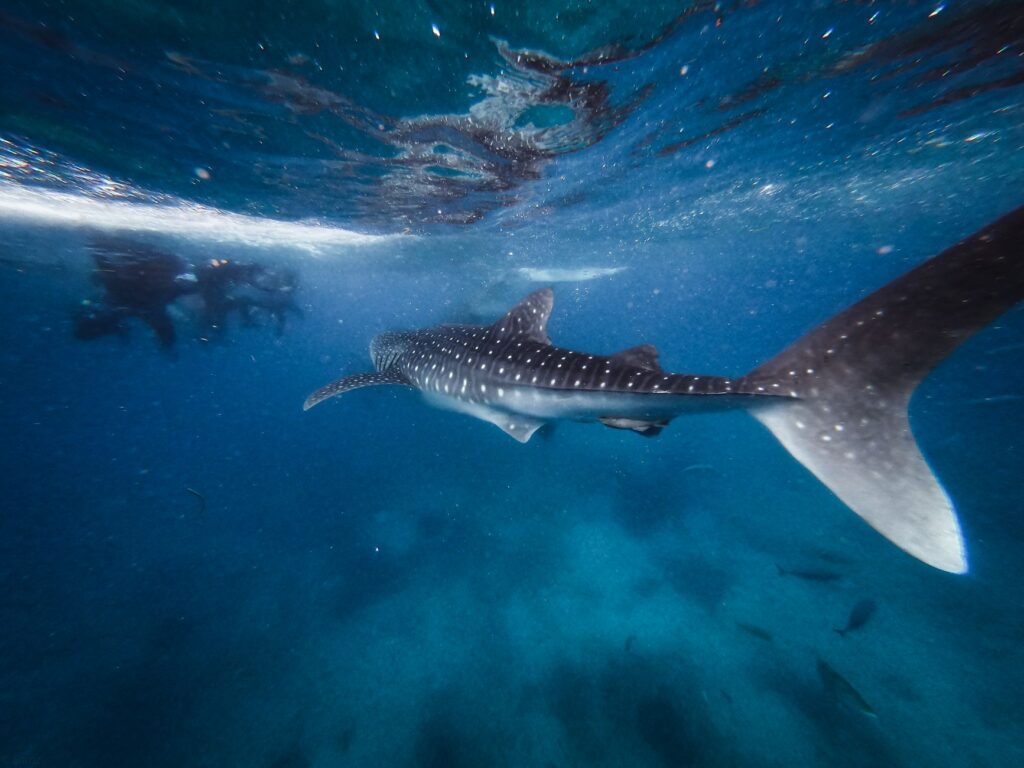
The Bay of La Paz is not a mere tourist viewing stage, but a critical marine nursery whose demographic balance depends on the strict protection of its nutrients and the limitation of acoustic and physical stress generated by commercial navigation.
The Impact of Nautical Tourism and Regulatory Challenges
The irresistible allure of swimming alongside the world’s largest fish has turned La Paz into one of Latin America’s most frequented marine ecotourism destinations. However, this massive popularity entails negative ecological externalities if not managed with scientific rigor. The simultaneous presence of dozens of tourist boats, known locally as lanchas, generates an exponential increase in underwater acoustic pollution, alters the swimming patterns of the sharks, and critically raises the risk of collisions with motor propellers—accidents that often leave severe scars or cause specimen mortality.

To mitigate these threats, Mexican environmental authorities, in collaboration with local tourist service cooperatives and scientists, implemented a strict management plan. This regulatory framework limits the number of boats permitted simultaneously within the delimited whale shark observation area, establishes a minimum approach distance for swimmers, and mandates the use of certified guides. Despite regulatory progress, effective enforcement of the law continues to face operational challenges stemming from oversight across an expansive marine area and the economic pressure of informal operators.
Citizen Science and Acoustic Monitoring in the Gulf
Given the logistical complexity of constantly monitoring a highly mobile population, the scientific community has found an invaluable ally in citizen science. Through global digital photo-identification platforms, tourists, local fishermen, and amateur divers directly contribute to sighting catalogs by photographing the unique dot patterns located behind each shark’s gill slits.
Concurrently, hydrophone arrays and acoustic receivers submerged at strategic points in the bay record the passage of individuals carrying transmitter tags. These continuous data streams reveal direct correlations between variations in sea surface temperature, chlorophyll concentration, and the residency time of sharks within the protected area. Thanks to this interdisciplinary methodological approach, environmental management has evolved from a reactive stance toward a predictive model capable of anticipating moments of peak biological vulnerability.

Practical guide
Planning a responsible journey to observe whale sharks in the Bay of La Paz requires logistical rigor, absolute respect for environmental regulations, and a clear understanding of biological seasonality.
- Best time to visit: The official regulated viewing season generally spans from November to April, coinciding with the highest concentration of zooplankton in the bay. Attempting the activity outside this period is discouraged due to legal restrictions and specimen scarcity.
- Access and transportation: The starting point is the city of La Paz, accessible via domestic flights to La Paz International Airport (LAP) or by road from Los Cabos (SJD), a journey taking approximately two and a half hours by bus or rental car.
- Nautical interaction rules: Hire exclusively services authorized by the National Commission of Protected Natural Areas (CONANP). It is strictly forbidden to touch the sharks, use flash during underwater photography, block their swimming trajectory, or maintain a distance closer than two meters from their body and four meters from their tail.
- Recommended gear: Swimwear, a light wetsuit (water temperatures drop down to 20°C in winter), mask, snorkel, diving fins, and biodegradable sunscreen or preferably UV-protective rash guards to avoid introducing harmful chemicals into the water.
- Accommodation and sustainability: Opt for local lodgings committed to sustainable tourism practices that reduce single-use plastic consumption and actively support marine conservation programs in the Gulf of California.
Visual Epilogue on the Malecón of La Paz
When the sun sets over the calm waters of the Bay of La Paz, the boardwalk is painted in ochre and violet tones that reflect the distant silhouette of Espíritu Santo and Partida islands. In this confine where the Sonoran Desert abruptly merges with the depths of the gulf, the invisible yet latent presence of the whale shark serves as a reminder of the grandeur and extreme vulnerability of global marine ecosystems. Observing the maritime horizon at dusk invites deep reflection on our responsibility as a species: protecting the fragile biological corridors that enable the survival of large oceanic filter feeders is not merely a scientific obligation, but a moral imperative to ensure that the vital pulse of the Sea of Cortez continues to beat strongly for future generations.