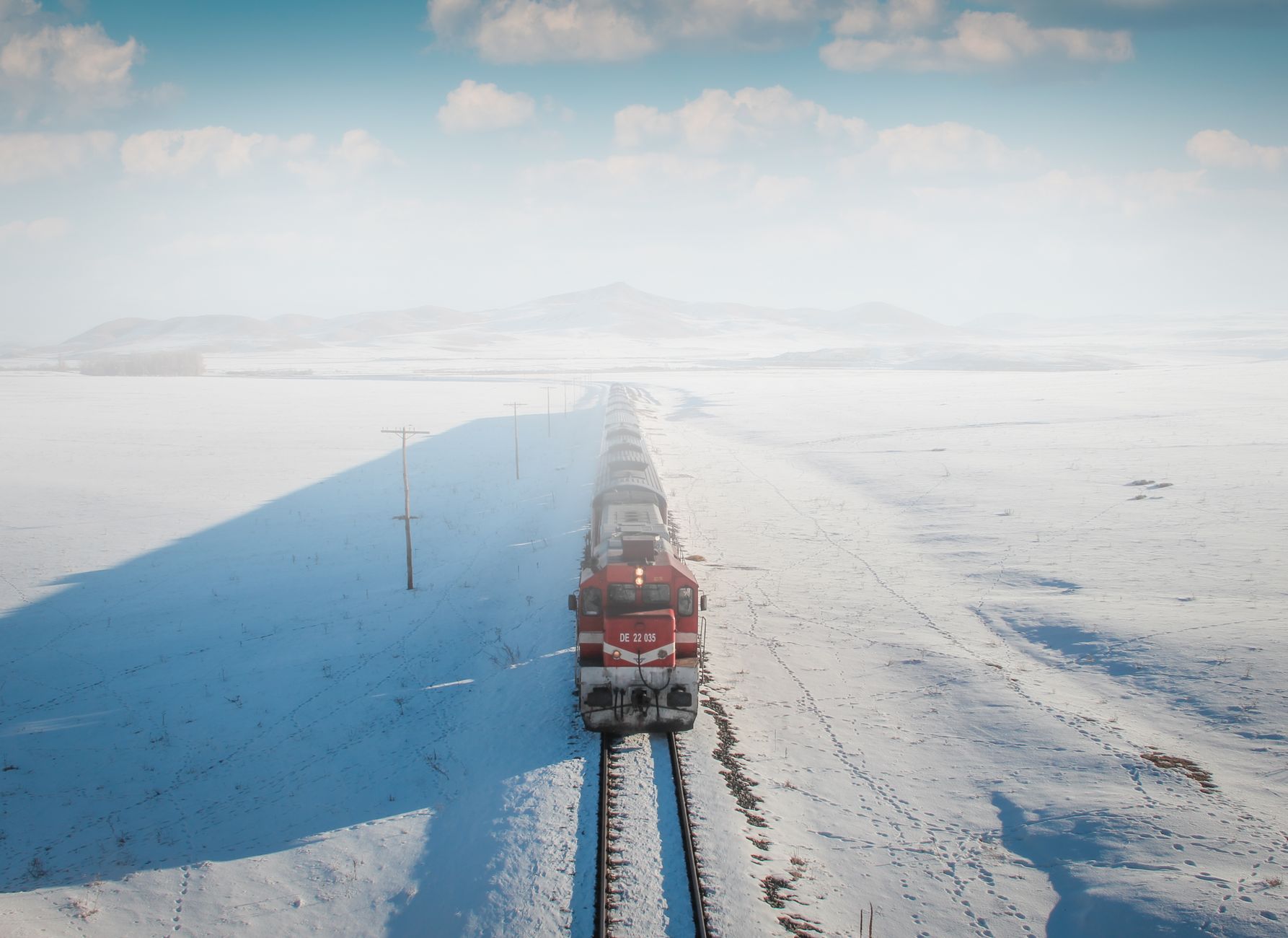

Introduction to the Great Transcontinental Corridor
The overland transportation system traversing the heart of Central Asia represents one of the most challenging civil engineering feats of the twentieth century. The Trans-Mongolian Railway, deployed as the southern branch of the historic Trans-Siberian network, connects the vast Russian rail infrastructure with Chinese terminals across more than a thousand kilometers of endless steppes, rugged mountain ranges, and the arid expanse of the Gobi Desert. This infrastructure is not merely a passenger transit medium, but rather the logistical backbone that sustains international trade and territorial sovereignty in Mongolia.
Analyzing the viability and operation of this route requires understanding the complex logistical variables involved in its daily operation. From fossil fuel management to the maintenance of embankments over frozen soils, every kilometer of track reflects decades of technological adaptation to an environment where summer temperatures approach forty degrees Celsius above zero and winter readings plunge to fifty below. This report examines with technical rigor and anthropological perspective the machinery keeping this iron bridge operational between two superpowers.
Historical Origins and Geopolitical Layout
The genesis of the Trans-Mongolian response to strategic and economic imperatives from the mid-twentieth century. Although preliminary surveys connecting Ulan-Ude to Beijing date back to the 1920s, it was not until the early 1950s that the governments of the Soviet Union, the People’s Republic China, and the Mongolian People’s Republic signed the necessary bilateral agreements to execute massive construction. The civil engineering effort mobilized tens of thousands of workers under extreme weather conditions, overcoming orographic barriers imposed by the Yablonovy Mountains and the southern desert plateaus.

The definitive route, formally inaugurated for commercial service in 1956, drastically reduced distances and freight transit times between Moscow and Beijing compared to the eastern route through Manchuria. The infrastructure consolidated stable trade routes and facilitated the transport of strategic minerals, agricultural commodities, and industrial raw materials. Mongolia’s geopolitical location transformed this route into an indispensable neutral corridor, requiring close trilateral technical cooperation despite ideological fluctuations within the communist bloc.
Engineering Challenges in Extreme Climates
Railway operations across the high Mongolian plateaus and Siberian steppes impose severe demands on civil infrastructure. Seasonal thermal fluctuations generate intense freeze-thaw cycles in the ground, compromising embankment stability and causing track misalignment. Railway engineers have implemented advanced subsurface drainage systems and geotextile-reinforced ballast layers to mitigate the impact of soil expansion and contraction.
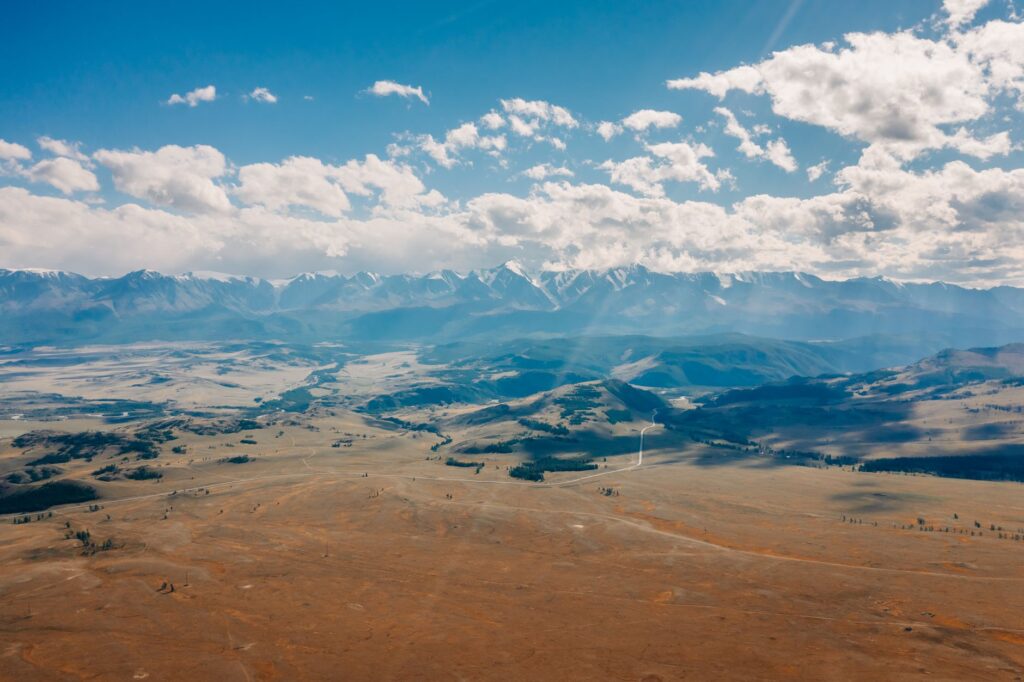
Furthermore, rolling stock must withstand severe operating conditions. High-power diesel locomotives incorporate auxiliary heating systems to prevent fuel line and pneumatic circuit freezing during deep winter months. The steel alloys used in rails and bogies undergo rigorous heat treatments to guarantee fracture toughness under cryogenic temperatures, preventing catastrophic accidents stemming from metal brittleness.
Customs Logistics and the Track Gauge Challenge
One of the greatest technical and operational obstacles of the Trans-Mongolian is the discontinuity of track gauge. While the Russian and Mongolian railway networks utilize the traditional 1,520-millimeter Russian broad gauge, the railway system of the People’s Republic of China employs the 1,435-millimeter international standard gauge. This technical divergence requires every passenger and freight convoy to undergo complex transfer operations at the border, specifically at the Naushki-Sükhbaatar frontier station and, more critically, at the Erenhot terminal.
For passenger trains, bogie-exchange procedures rely on simultaneous hydraulic lifting facilities where each carriage is suspended while wheelsets are replaced. This logistical maneuver, executed with micrometric precision by specialized crews, takes several hours per composition. For bulk freight transport, transfers typically occur via high-performance cranes handling containers or through direct material transshipment in customs logistics terminals equipped with large-capacity warehouses.

Economic Connectivity and Impact on Local Communities
Beyond its function as an international transit corridor, the Trans-Mongolian acts as the vital supply artery for rural populations across Mongolia. Secondary stations located amidst the desert steppe function as essential logistical hubs where medical supplies, heating coal, non-perishable foods, and building materials are unloaded. For nomadic herders inhabiting areas adjacent to the track, the daily passage of the convoy provides a temporal reference and an irreplaceable communication channel with urban centers.
The economic dependence of these communities on the railway has evolved with the modernization of mining regions near Erdenet and Tavan Tolgoi. Industrial branch lines connect coal and copper deposits directly with the main line, optimizing the supply chain toward Chinese export ports and Russian processing markets. However, this intensification of heavy freight traffic poses regulatory challenges concerning preventive maintenance and single-track capacity management.
The railway track is not merely steel upon ties; it is the guiding thread securing the economic sovereignty of an interior nation and the sole mechanical certainty facing the immensity of the desert.
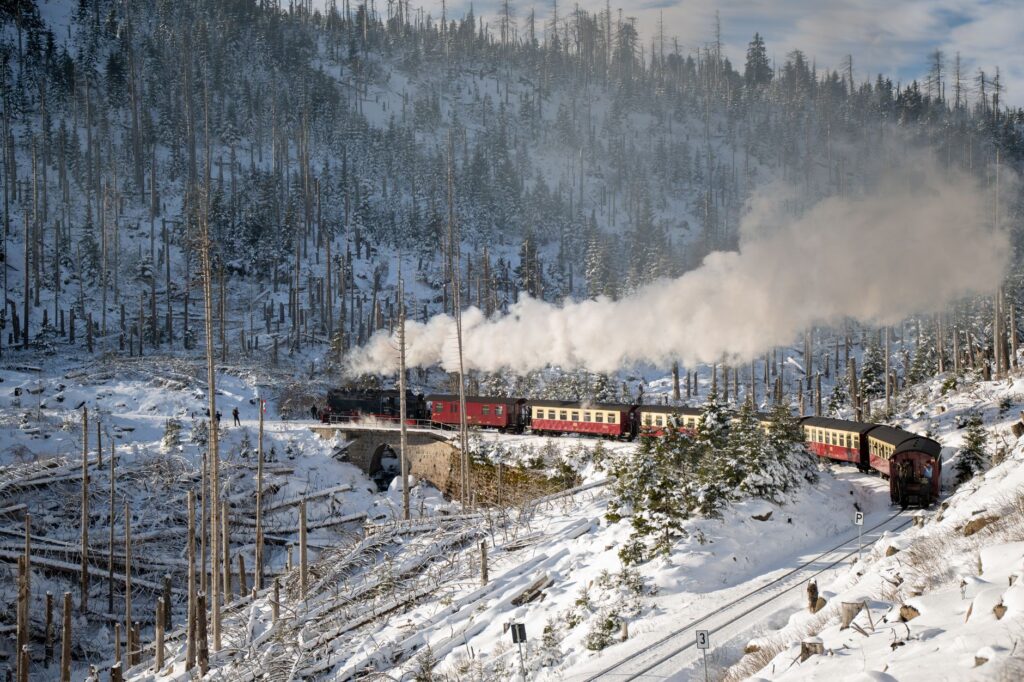
Railway Architecture and Iconic Stations
Trans-Mongolian stations constitute architectural milestones reflecting the diverse political and aesthetic periods of the twentieth century. From imposing neoclassical Soviet buildings featuring monumental facades and columns in regional capitals to functional structures built during subsequent decades, railway architecture pays tribute to the monumental scale of the steppe. Ulaanbaatar features a central terminal combining traditional Mongolian decorative elements with the constructive solidity of socialist realism.
Along the route, complex maintenance workshops, locomotive depots, and century-old water towers bear witness to technological evolution from steam to diesel. These industrial facilities, many still actively operating, house heavy machinery of Soviet manufacture maintained through the expertise of local mechanics specializing in the artisanal repair of mechanical components phased out by modern industry.
Practical guide
Planning a journey or logistical analysis along the Trans-Mongolian corridor requires understanding fundamental operational guidelines:
- Documentation and Visas: Securing advance visas for Russia, Mongolia, and China is mandatory, ensuring multi-entry permissions precisely align with scheduled rail transit dates.
- Seasonal Planning: Summer months (June to August) offer moderate temperatures ideal for travel, while deep winter (November to February) exposes travelers to extreme climatic conditions while guaranteeing unique steppe landscapes.
- Ticket Classes: International trains offer first-class compartments (Spalny Vagon or SV with two berths) and second-class compartments (Kupe with four berths). Advance booking months ahead is strongly recommended due to high seasonal demand.
- Onboard Provisioning: Dining cars change national operators at borders, offering local Russian, Mongolian, or Chinese gastronomy depending on the section. Carrying bottled water and complementary snacks is advisable.
- Connectivity and Communications: Mobile network coverage is nonexistent across vast stretches of the Mongolian steppe and Gobi Desert; satellite connections are necessary for professional logistics.
- Customs Regulations: Border inspections at Naushki and Erenhot are rigorous and may extend for several hours; photographing military installations and border personnel is strictly prohibited.
- Currency and Payments: Cash (Russian rubles, Mongolian tugriks, and Chinese yuan) remains the most reliable payment method onboard and at remote stations in the absence of operational ATMs.
The Final Horizon: Silence, Steam, and Infinite Steppe
When the nighttime convoy reduces speed upon approaching the southern foothills of the Gobi, the monocord rhythm of rail joints seems to merge with the absolute silence of the desert. In that transitional instant, where the reflection of cabin lights vanishes into the blackness of the Asian immensity, the true dimension of the journey is revealed in all its human depth. It is not merely a matter of bridging colossal geographical distances, but of witnessing how human engineering successfully carves an unyielding iron path across the shifting and proud face of virgin nature.
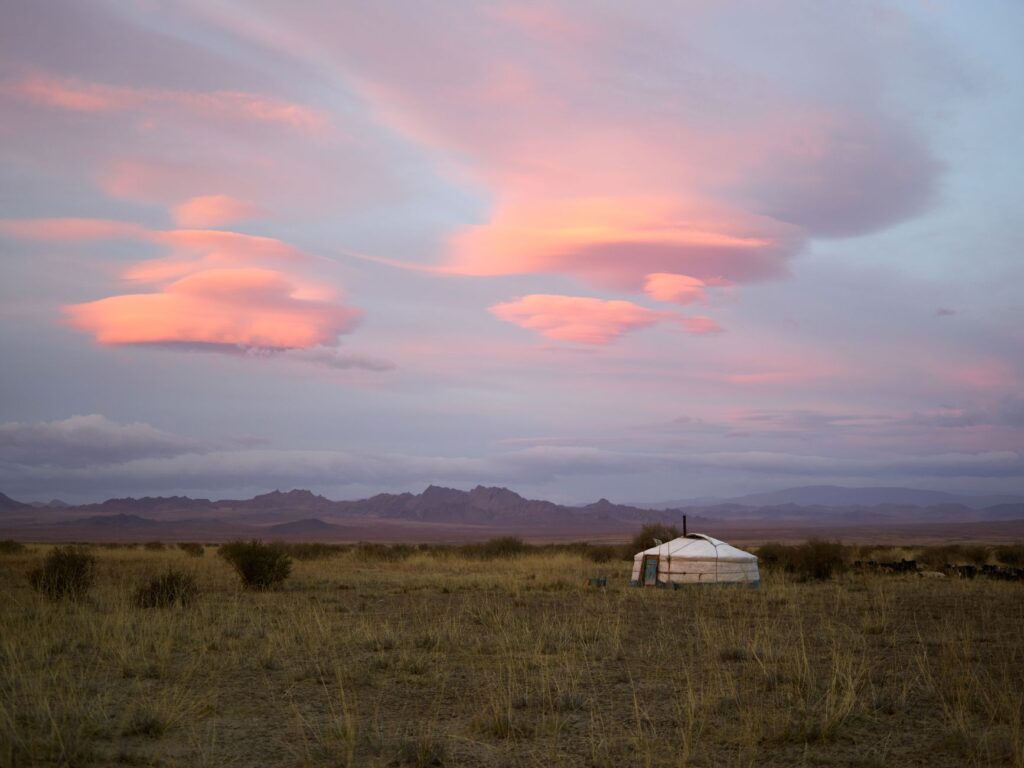
The fading twilight illuminates the distant silhouettes of traditional yurts dotting the horizon, reminding travelers that this railway corridor survives as a fragile yet tenacious bridge between ancient worlds. At journey’s end, traveler and analyst alike understand that the Trans-Mongolian is not just a communication route, but a rolling monument to persistence, micrometric technical calculation, and the enduring value of connectivity in the most solitary confines of the planet.