Introduction to the Carpathian Railway Heart
The distant whistle of a diesel locomotive winding through centuries-old spruce trees is not merely an acoustic reminder in the foothills of the eastern Carpathians; it is the mechanical heartbeat keeping isolated mountain communities connected across relentless geographical barriers. In this borderland where central and eastern Europe converge, the train is no longer a mere mass transit option, but an indispensable umbilical cord. Rugged topography, defined by deep gorges and persistent snowdrifts for much of the year, has historically dictated steel routes, compelling 19th- and 20th-century engineers to carve impossible tunnels and audacious viaducts that defy gravity.
Yet the true complexity of this territory lies not solely in its alpine topography, but in the profound overlap of divergent railway systems. Here, standard European gauge tracks converge with the Soviet-legacy broad gauge, creating a unique logistical friction point. Every railcar crossing this invisible border must undergo complex bogie-exchange operations or rigorous transshipments of freight and passengers. This report examines the architecture of a transport system operating at the edge, where machinist expertise and exchange-station resilience sustain the fragile mobility of a region caught between two economic worlds.
The Geography of Steel and Stone in Mountain Passes
Conquering the eastern Carpathians demanded unprecedented technical feats that continue to amaze civil engineering historians today. Railway alignments linking river basins to interior plateaus were designed under imperial directives for a dual purpose: guaranteeing strategic military supply and stimulating the timber trade. Gradients frequently exceed conventional adhesion thresholds, forcing historical deployments of rack-and-pinion systems or powerful double-headed locomotives capable of conquering thirty-per-thousand inclines under extreme weather conditions.
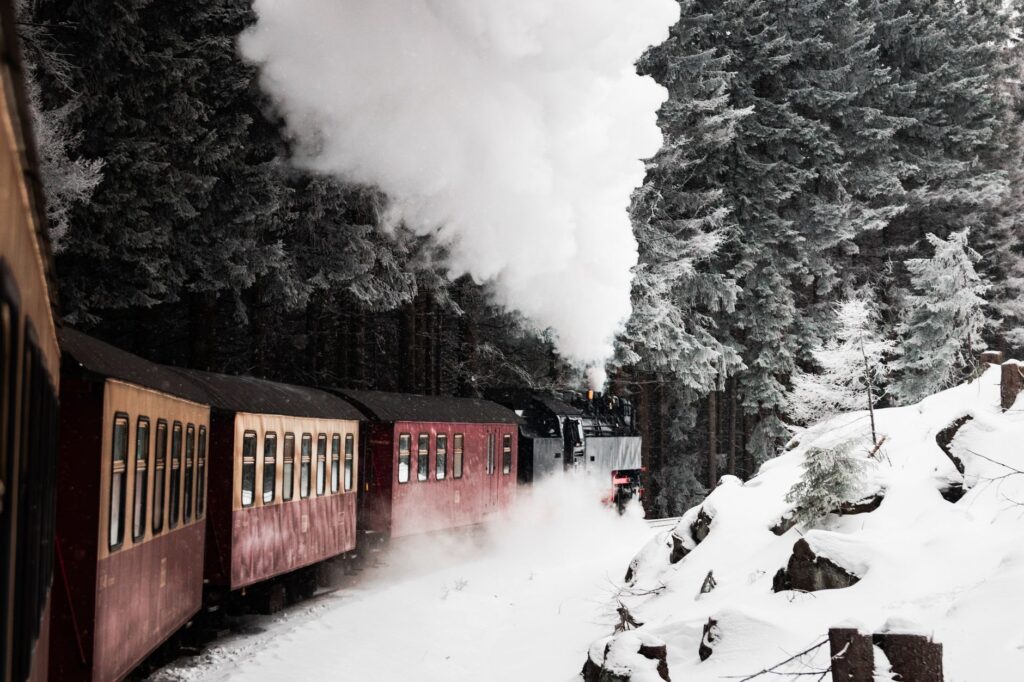
Along river valleys, tracks run wedged between unstable slopes prone to rockfalls and avalanches. Maintaining this infrastructure represents a colossal budgetary and operational challenge for national governments. Inspection crews walk through the gorges every dawn, searching for micro-fissures in rails caused by steel thermal fatigue amid temperature swings exceeding forty degrees between stations. The survival of these lines depends on constant vigilance combining state-of-the-art laser technology with the empirical wisdom of operators boasting decades of terrain experience.
The Great Technical Chasm: The Confluence of Gauges and Borders
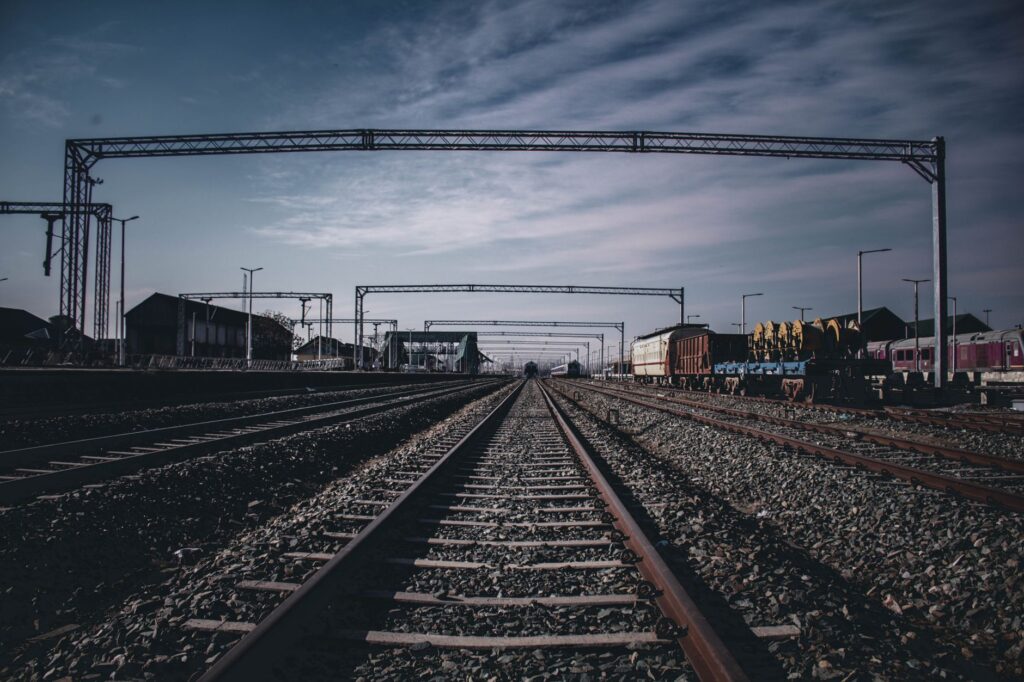
One of the most fascinating and complex aspects of the Carpathian railway system lies in the dissimilarity of track gauges. While western networks operate on the standard 1,435-millimeter gauge, eastern connections employ the 1,530-millimeter Russian gauge. This structural divergence turns border stations into colossal logistical purgatories where time seems to stand still. Long-distance passenger trains must enter specialized industrial bays where heavy hydraulic jacks elevate entire passenger cars while technical teams manually replace wheel axles.
For freight trains, the bottleneck is even more severe. Intermodal terminals operate under constant pressure to transfer containers from Ukrainian or Moldovan platforms onto compositions fit for western European transit. This transfer demands not only millimeter-precise schedule synchronization, but also complex customs clearance assessing cargo weight and nature in real time. Any delay in this link triggers a chain reaction paralyzing marshalling yards across hundreds of kilometers, evidencing the vulnerability of a trade corridor highly dependent on geopolitical stability.

The train in the Carpathians does not conform to modern velocity logic; its value lies in its exclusive capacity to stitch the territory together when roads lie buried beneath snow.
Ghost Stations and Halts in Alpine Isolation
Beyond major border exchange nodes, the true human face of the railway system unfolds in small halts scattered along the route. These secondary stations, many built with sober Austro-Hungarian exposed brick architecture and pitched roofs, function today as enclaves of social resistance. For villages perched on hillsides where scheduled buses suspend services during winter months due to ice, the daily diesel railcar represents the sole link to hospitals, administrative centers, and regional markets.
Rural demographic decline has drastically reduced everyday passenger numbers, leading state operators to question the economic viability of these local routes. However, their abolition would amount to definitive banishment for aging communities entirely dependent on subsidized services. At these stops where the stationmaster waves a red or green flag with the precision of a millennial ritual, time assumes another dimension, marked by the relative punctuality of convoys navigating morning mist with firm yet unhurried steps.
The Pulse of Freight: Timber, Coal, and Minerals in Transit
While passenger transport provides the social component, heavy freight constitutes the financial and structural backbone justifying the continued existence of the Carpathian railway network. The region’s secular forests continue feeding a timber industry whose natural outlet toward European processing centers relies almost exclusively on freight trains. Long compositions of flatbed cars laden with logs run uninterrupted north and west, enduring environmental scrutiny and forest traceability regulations.
Likewise, grain and bulk convoys transport coal and aggregate minerals extracted from traditional mining basins seeking new markets following the continent’s energy restructuring. Managing these heavy trains on high-mountain alignments requires seamless synchronization between head-end locomotives and booster units stationed at the rear. A radio communication failure midway through an ascending tunnel can trigger unacceptable coupler stress, transforming raw material transport into an operation of surgical precision.
Modernization Versus Obsolescence: The Investment Dilemma
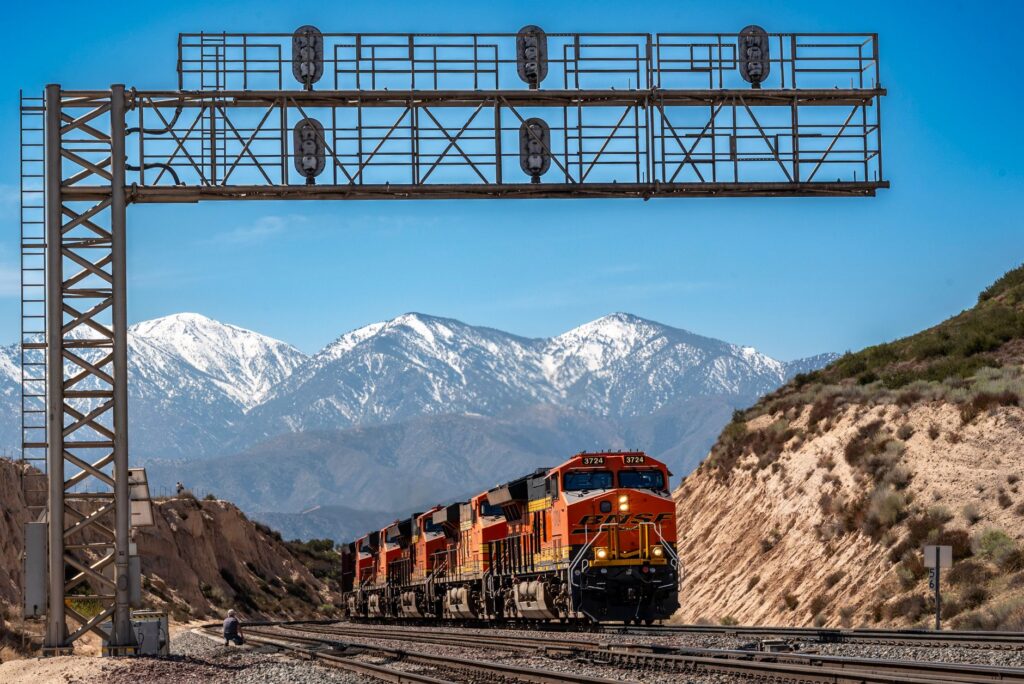
Technological contrast defines the present Carpathian railway. While European administrations allocate multi-million-euro funds to electrify and straighten alignments on major trans-European corridors, secondary mountain lines survive with mechanical signaling systems dating from the first half of the 20th century. Track switches are still manually operated via heavy counterweight levers beside watchmen huts, and communication between control posts occasionally relies on telegraph lines strung along the same wooden poles.
Nonetheless, recent geopolitical pressure has accelerated urgent rehabilitation plans. Solidarity corridors designed to facilitate agricultural and industrial exports from eastern Europe have forced a rethinking of the strategic role of these mountain passes. New automated transshipment terminals are projected, and track doubling is studied along strategic stretches. The monumental challenge consists of modernizing infrastructure without destroying the architectural and landscape heritage granting these lines their unmistakable identity, achieving a precarious balance between logistical efficiency and cultural preservation.
Practical guide
How to get to major railway hubs: The primary gateways for exploring the Carpathian railway network are international airports in Kraków (Poland), Košice (Slovakia), and Cluj-Napoca (Romania). From these urban centers, intercity trains connect directly to mountain foothills in journeys ranging from two to four hours.
Route planning and ticket purchasing: It is essential to secure tickets for long-distance and cross-border segments weeks in advance via official national operator platforms (PKP, ZSSK, CFR). For local and regional mountain trains, tickets are typically purchased directly on board or at physical station ticket windows, accepting local currency cash and, occasionally, credit cards.
Best time to travel: Late spring months (May to June) and early autumn (September to October) offer the most stable weather conditions and landscapes of rich chromatic beauty. Winter (December to March) delivers hyperborean vistas of high photographic value, but entails frequent delays stemming from snow accumulations and track-clearing operations.
Logistical advice and luggage: Travelers are advised to pack light and manageable luggage, as older regional trains feature limited overhead space for bags and require ascending high steps to board carriages. Carrying provisions of water and snacks is recommended, as onboard catering services are virtually nonexistent on secondary high-mountain lines.
The Final Whistle in the Alpine Mist
When the sun dips behind snowy peaks and frost begins coating window glass, the overnight train linking highlands to plains embarks with a steady metallic purr. Inside the passenger car, softly illuminated by warm filament lamps, travelers share the warmth of central heating while watching the silhouettes of spruce trees blur into gorge darkness. This rolling microcosm, detached from international airport frenzy and toll-highway impersonality, embodies the ultimate resistance of a travel form where the journey matters as much as the destination.
The survival of this railway labyrinth demonstrates that human connectivity is measured neither in gigabytes of speed nor in commercial high-speed records, but in the capacity to keep open the metallic veins nourishing the continent’s most secluded corners. As diesel locomotives continue defying Carpathian gradients, transporting both forest timber and inhabitants’ hope, old Europe’s heart beats on to the slow, steady rhythm of old tracks.