Geological Origins and Glacial Sculpting in the Central Massif
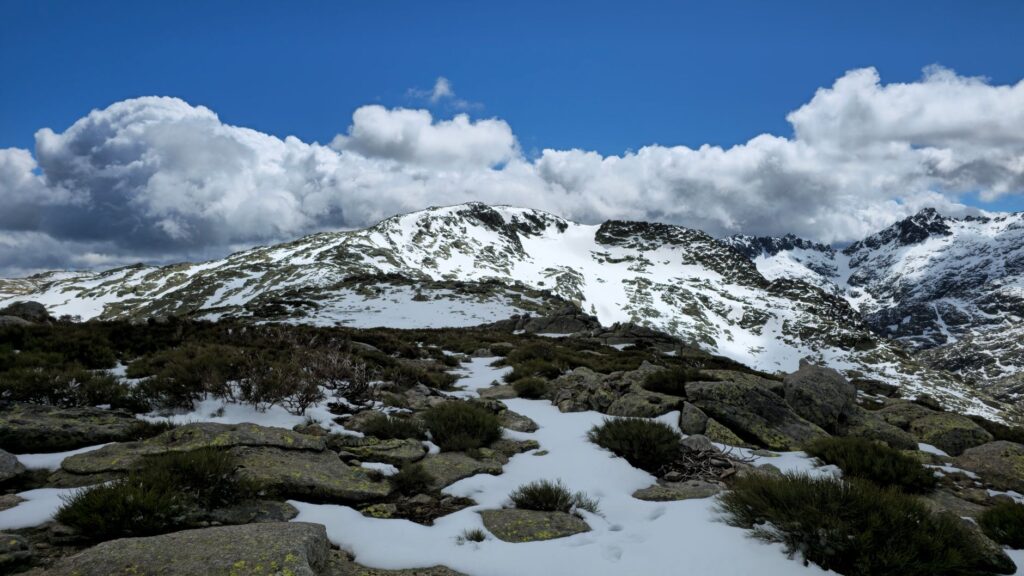
The relief of the Sierra de Gredos is not a matter of chance, but the result of intense tectonic and glacial processes that have carved a unique landscape within the Central System. During the Cenozoic era, the collision between tectonic plates uplifted this imposing granitic bastion, whose plutonic rocks today crop out as sharp ridges, deep gorges, and glacial cirques. This rocky substrate, composed primarily of granites and gneiss beds, determines the scarcity of deep soils and severely conditions the available vegetation.
Glacial cirques, such as the famous Circo de Gredos, act as silent witnesses to the climatic oscillations of the Quaternary. In these over-deepened basins, ice shaped depressions that now hold high-mountain lagoons, known locally as ‘lagunas’. Lateral and terminal moraines, scattered across river valleys oriented toward the Tormes and Alberche rivers, delineate the perimeter where ice tongues several kilometers long once descended. This geomorphological isolation favored the emergence of highly localized microclimates.
Upon this complex mineral architecture, alpine climatology imprints extreme dynamics. Winters record persistent snowfall and gale-force winds exceeding one hundred and forty kilometers per hour on the summit ridges. In contrast, strict summer droughts test the hydrological resilience of the territory. It is precisely in this vertical theatre that rupicolous fauna has found its most secure evolutionary stronghold, adapting to a habitat where every rock ledge and every psicroxerophilous meadow counts.
The Architecture of Rocks and Their Influence on Relief
Physical weathering, driven by alternating freeze-thaw cycles, fractures the granite into angular blocks that form unstable scree slopes. These apparently inert boulder fields play a crucial ecological role by regulating water runoff and offering thermal refuges for numerous invertebrate and small vertebrate species. The combined action of water and wind has also carved unique formations such as crests and garmas, a stony labyrinth where progression is complex for both hikers and terrestrial predators.
Anatomy and Adaptive Physiology of Capra pyrenaica victoriae
The Spanish ibex subspecies present in Gredos, scientifically designated as Capra pyrenaica victoriae, constitutes one of the most remarkable examples of morphological specialization in high-mountain environments. Its anatomy responds with millimetric precision to the gravitational and thermal demands of the medium. Hooves equipped with hard rims and elastic, rough-textured plantar pads act as natural suction cups on slippery rock, allowing the animal to move with absolute agility across vertical cliffs exceeding sixty degrees of inclination.
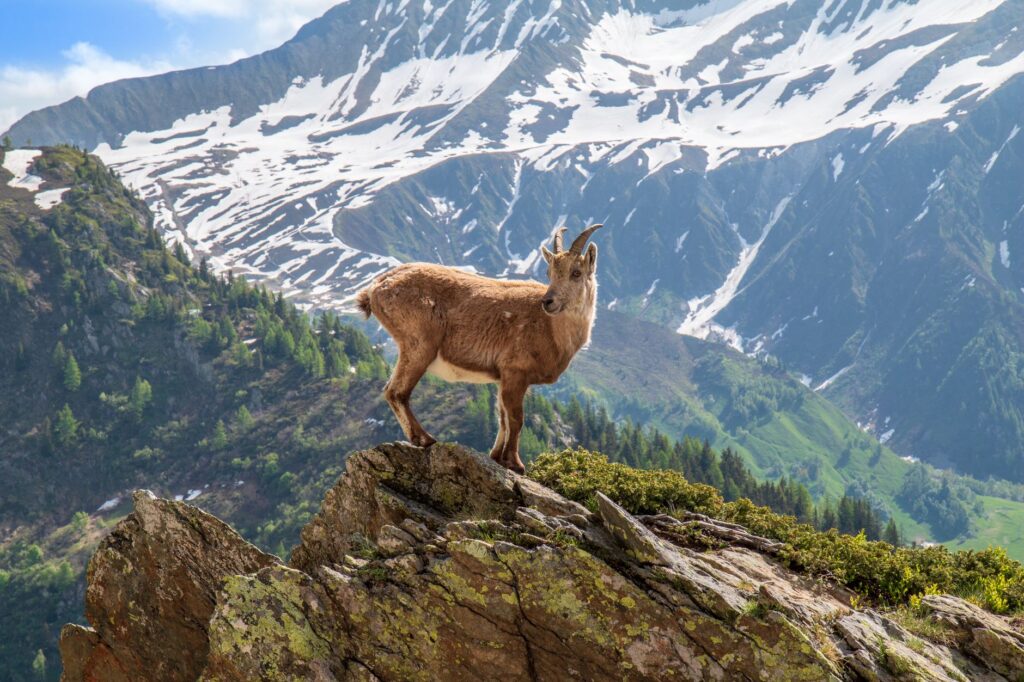
Sexual dimorphism is extraordinarily pronounced in this species. While females feature shorter, thinner, and parallel horns, males develop monumental antlers equipped with transverse ridges that serve both to establish social hierarchies during the rutting season and to deter potential competitors. These horns, which can reach colossal dimensions in mature individuals, grow continuously throughout the animal’s life, recording climatic hardships or feeding bounties in their growth rings.
Physiologically, the respiratory and cardiovascular systems of the ibex are optimized to withstand low partial pressures of oxygen at the peaks. Its coat undergoes a radical seasonal mutation: a dense, woolly undercoat protects the animal against winter frosts, while the summer layer, shorter and tinged with brownish or grayish tones, facilitates thermoregulation and camouflage among granitic boulders. This metabolic adaptability guarantees survival in an environment where trophic resources fluctuate drastically between the vegetative period and winter dormancy.
Gregarious Behavior and Seasonal Hierarchies
The social structure of the population responds to a well-rehearsed survival strategy. For most of the year, adult males and females remain separated in independent herds. Female groups, accompanied by the year’s young and juveniles, occupy the safest areas richest in tender grasses. Meanwhile, males form bachelor herds guided by veteran individuals. This spatial segregation vanishes with the arrival of autumn, when males approach harems to compete for reproductive access in ritualized combat.
The summit is not a hostile territory to be conquered, but a geological and biological archive where each species has written its survival code with millennial patience.
Ecological Corridors and Connectivity with the Central System
The long-term viability of the ibex population in the Sierra de Gredos does not depend exclusively on the administrative boundaries of the natural park, but on preserving the ecological corridors connecting this massif with other enclaves of the Central System, such as the Sierra de Béjar and La Serrota. These natural pathways permit the essential gene flow required to prevent inbreeding depression, a latent risk in wild populations whose geographic distributions are fragmented by road infrastructure and anthropogenic barriers.
Forest technicians and field biologists constantly monitor the use herds make of these inter-mountain corridors. High-mountain passes and forested river valleys act as dispersion routes for young males searching for new territories. However, the proliferation of secondary roads, inadequate hunting fences, and urban expansion in the foothills of the sierra pose persistent threats that fragment habitat and elevate mortality from roadkill or collisions.
To counter this fragmentation, environmental management plans prioritize the restoration of wildlife crossings and the limitation of extractive activities in traditional roaming areas. Collaboration between regional administrations and local communities proves decisive in maintaining a network of protected natural areas functioning as a continuous system, enabling wildlife to respond flexibly to future climate change scenarios.
The Impact of Climate Change on High-Mountain Grasslands
Global warming is altering alpine ecosystems in Gredos subtly yet relentlessly. The shortening of the snow cover period and the gradual increase in summer temperatures induce thermal and hydrological stress in psicroxerophilous grasslands, formed by dwarf grasses and endemic species adapted to extreme cold. This modification in plant phenology directly impacts the ibex diet, forcing animals to seek forage at increasingly higher elevations where the nutritional value of the pasture is lower.
Likewise, the lesser presence of accumulated snow during winter reduces the recharge of high-altitude aquifers and springs, diminishing available watering points in summer meadows. This phenomenon intensifies competition for water resources between wildlife and extensive domestic livestock sharing communal pastures during warm months. Water scarcity and the resulting animal concentration in reduced areas also favor the transmission of epizootics and parasites.
Scientists warn that climatic pressure could progressively displace alpine plant communities toward the peaks, shrinking the useful area available for wild ungulates. This altitudinal compression process demands highly dynamic forest and livestock management strategies capable of anticipating biodiversity loss and protecting shaded microclimates acting as climate refuges for vulnerable flora and fauna.
The Subtle Boundary Between Traditional Grazing and Conservation
The secular presence of equine and bovine livestock in the mountain passes of Gredos has shaped a cultural landscape of high ecological value. Browsing and controlled trampling have historically helped keep scrub clearings open, favoring the development of secondary pastures of great trophic interest for wildlife. Nonetheless, excessive livestock stocking rates during periods of summer drought generate food resource competition and accelerate erosion processes on the most fragile slopes.
Health Management Strategies and Demographic Monitoring
Ibex conservation in Gredos requires a rigorous demographic and sanitary control program coordinated by the autonomous community’s veterinary services. Historically, wild ungulate populations are susceptible to epidemic outbreaks, notably sarcoptic mange, a parasitic disease caused by the burrowing mite Sarcoptes scabiei that can drastically decimate herds within months if active surveillance and containment measures are not implemented.
Annual censuses, conducted through direct visual sighting methodologies and grid counts during periods of maximum visibility, allow precise estimation of population size, sex ratio, and kid recruitment rate. These statistical data serve as a baseline for setting selective harvest quotas aimed at maintaining demographic equilibrium and preventing overexploitation of high-altitude pastures. The sanitary removal of individuals affected by severe pathologies constitutes another tool employed to protect the collective health of the population.
Collaboration with universities and scientific research centers provides added value to management, enabling the analysis of biological samples to evaluate nutritional status, genetic diversity, and the presence of environmental pollutants. This multidisciplinary scientific approach guarantees that conservation decisions rely on empirical evidence tested in the field rather than subjective perceptions.
The Role of Environmental Agents in Daily Surveillance
Forest rangers and environmental agents form the territory’s first line of defense. Their daily work includes constant patrols along rugged trails, anti-poaching enforcement, assisting injured animals, and verifying compliance with regulations in integral reserve areas. Their encyclopedic knowledge of every corner of the massif remains irreplaceable for detecting anomalies in herd behavior or sudden shifts in spatial ungulate distribution.

Responsible Ecotourism and Wildlife Observation in the Regional Park
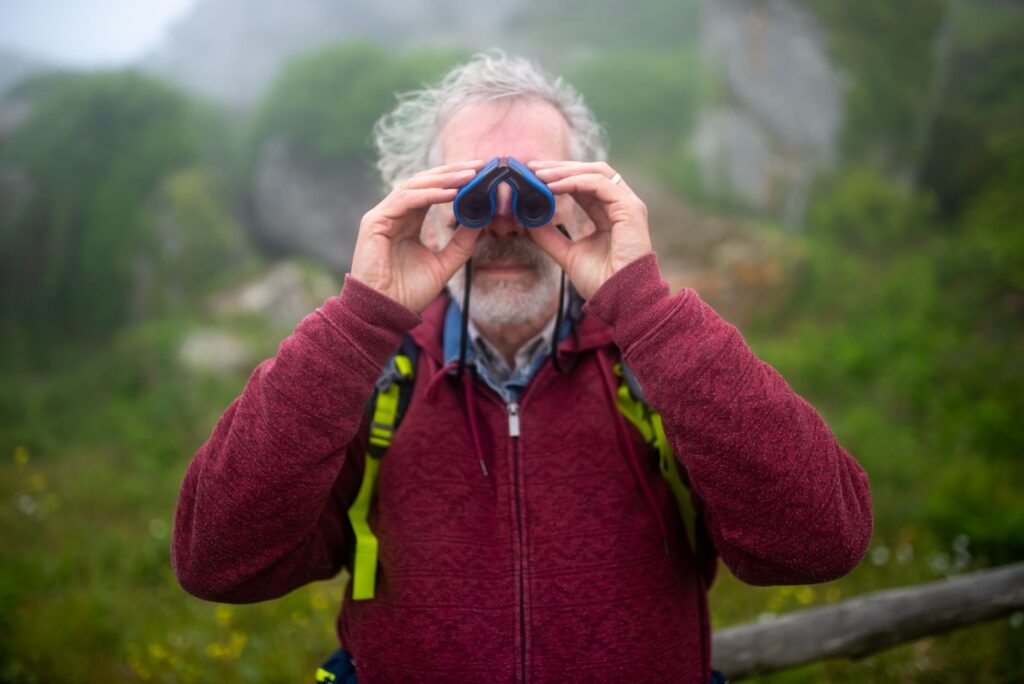
The undeniable appeal of observing the Spanish ibex in its natural habitat has turned the Sierra de Gredos into a benchmark destination for nature tourism and wildlife photography. However, this recreational activity demands a rigorous code of conduct to avoid disrupting animal life cycles. Using binoculars and spotting scopes from a prudent distance allows visitors to enjoy the spectacle without subjecting herds to unnecessary stress compromising their energy expenditure.
Guided tours led by local professionals specialized in environmental interpretation foster a respectful and educational approach to the alpine environment. These guides not only facilitate sightings of emblematic specimens but also explain the ecological keys of the massif, raising visitor awareness regarding the fragility of granitic ecosystems. Prohibitions against leaving marked trails and restrictions on motorized access to forest tracks are essential regulations for preserving the tranquility of breeding areas.
The true value of a protected natural area is measured by our capacity to contemplate it without leaving any trace other than the fleeting memory of our gaze.
The economic impact of well-managed ecotourism directly benefits surrounding municipalities, energizing the rural economy through traditional lodgings, rural guesthouses, and local guiding services. This symbiosis between environmental conservation and socioeconomic development demonstrates that strict biodiversity protection does not act as a brake on regional progress, but rather as its safest and most sustainable long-term asset.
Practical guide
How to get there
The main access to the northern slope of the Sierra de Gredos is via the N-502 road, turning off onto the AV-941 toward Hoyos del Espino and the Gredos Platform. From Madrid, the private vehicle journey takes about two and a half hours. By public transport, regular bus lines connect the capital with Piedrahíta and El Barco de Ávila, from where local services must be used.
Best time to visit
Autumn months (October and November) coincide with the rutting season, a time of extraordinary activity featuring striking male combat. Spring (May to June) offers the spectacle of newborn kids and floral explosions in high-mountain meadows, featuring daytime temperatures highly favorable for hiking.
Recommended accommodation
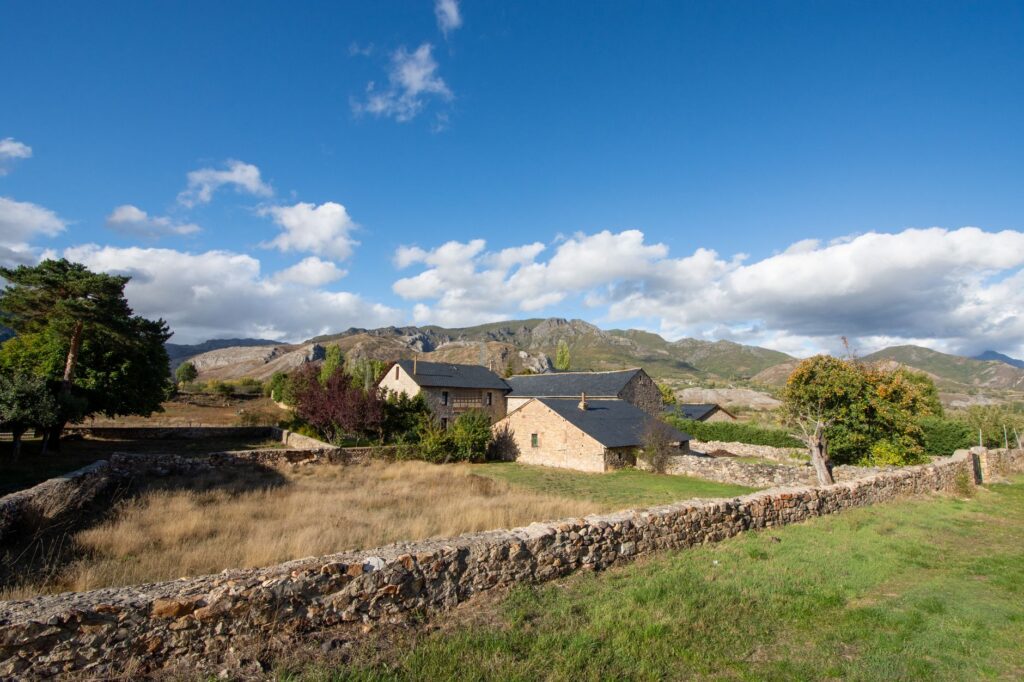
The towns of Hoyos del Espino, San Juan de Gredos, and Navarredonda de Gredos concentrate the finest rural tourism options, highlighting restored traditional stone mansions and charming hotels specializing in hiking and traditional mountain gastronomy.
Local gastronomy
The regional cuisine is deeply tied to pastoral heritage. Standout dishes include Barco beans, meats bearing the Protected Designation of Origin Carne de Ávila, artisanal cured meats, and desserts crafted with chestnuts and oak honey.
Equipment and safety
Alpine weather is notoriously fickle. Even in summer, carrying warm clothing, a windbreaker, mountain footwear with high-traction soles, high-SPF sunscreen, abundant water, and a GPS orientation system or detailed cartography is essential.
Conservation regulations
The territory is subject to the legislation of the Sierra de Gredos Regional Park. Camping outside authorized areas, lighting fires, dumping waste, disturbing wildlife, or collecting protected plant species is strictly prohibited.
Emotional Epilogue Facing the Circo de Gredos
When the final evening lights set the granitic needles of the Circo de Gredos ablaze, silence acquires an almost physical density in the high mountains. At that magical hour, when daytime visitor bustle fades and winds die down in the passes, the true spirit of the massif reveals itself to the senses. Seated on a cold rock, gaze lost in the immensity of the abyss, one comprehends the magnitude of biological resilience. A few meters away, silhouetted against the burning sky, an old ibex crowns an inaccessible crag, watching over its territory with ancestral serenity. There is no urgency in its movements, only the millennial certainty of belonging to a vertical world where life, against all odds, persists and flourishes upon bare rock.