
At the southernmost tip of South America, where the Andes mountain range finally plunges into the freezing waters of the Beagle Channel, an infrastructure survives that defied the most extreme geographic limits of the planet: the Fuegian Southern Railway (FCAF), popularly known as the Train of the End of the World. This narrow-gauge railway—a mere 50 centimeters wide—is not merely a contemporary commercial attraction, but the physical vestige of a complex penal logistics system conceived at the beginning of the 20th century to supply firewood and building materials to the legendary and feared Ushuaia Prison.
Analyzing the genesis and current operation of this system involves understanding how civil engineering had to adapt to a radically hostile environment. Water-saturated peatlands, gale-force western winds, and subantarctic forests of southern beech formed a formidable obstacle that required unique technical solutions, based on the use of articulated steam locomotives and a winding layout that today constitutes a masterclass in topographical adaptation.
Penal Genesis and the Colonization of the Frontier
The history of the Fuegian Southern Railway is inextricably linked to the founding of the penal colony on the bay of Ushuaia. Around 1902, driven by the pressing need to heat the prison wards and the homes of a constantly growing civil population, the prison authorities ordered the construction of a Decauville line penetrating the virgin forests located west of the penitentiary. The convicts themselves, weighed down by shackles and exposed to sub-zero temperatures, were tasked with laying the first rails over muddy soil.
This initial layout, informally christened the convict train, advanced in a rudimentary fashion over unstable embankments built with fallen tree trunks and boulders extracted from local streams. Initial traction was strictly animal: teams of oxen and horses hauled flatbeds laden with green firewood. Over the years, as demand expanded, animal labor gave way to small British and German steam locomotives, consolidating an indispensable logistical artery for the economic survival of the southernmost settlement on the globe.
Engineering over Peatlands: The Geotechnical Challenge
Constructing and maintaining a railway line over millennial peatlands represents one of the greatest geotechnical challenges imaginable. Peatlands are plant formations composed of partially decomposed organic matter saturated with water that act as giant sponges, incapable of statically supporting heavy loads. To prevent locomotives and railcars from sinking into the swampy subsoil, the prison engineers and subsequent restorers had to apply selective drainage techniques and construct floating embankments.
The construction process involved manually excavating lateral ditches to divert snowmelt water and placing a dense mesh of intertwined branches and logs, locally known as envarbascado, upon which crushed stone ballast was laid. This flexible system allows the track structure to adapt to micro-deformations of the ground without fracturing, a principle of resilient engineering that still guarantees the operational stability of the convoy amidst the Patagonian wetlands today.
Dismantling and Heritage Rebirth
With the definitive closure of the Ushuaia prison in 1947, ordered by President Juan Domingo Perón due to harsh detention conditions, the railway lost its original purpose. For more than four decades, the tracks were left abandoned to the Patagonian weather, covered by moss, lichens, and the relentless advance of the subantarctic forest. Metal bridges suffered marine oxidation, and many sections of rail were buried under sediment washed down by the flooding Pipo and Encajonado rivers.
It was not until 1994 that a group of private investors, in collaboration with the territorial government, launched an ambitious heritage recovery project. The Tranatlántica company rescued the original layout, reconstructed destroyed bridges, and commissioned the manufacture of scale Garratt and Baldwin-style steam locomotives, faithfully respecting early 20th-century railway aesthetics. This rebirth transformed an industrial ruin into the southernmost railway access on the planet, ecologically integrating it within the boundaries of Tierra del Fuego National Park.
The Fleet and Subantarctic Steam Mechanics
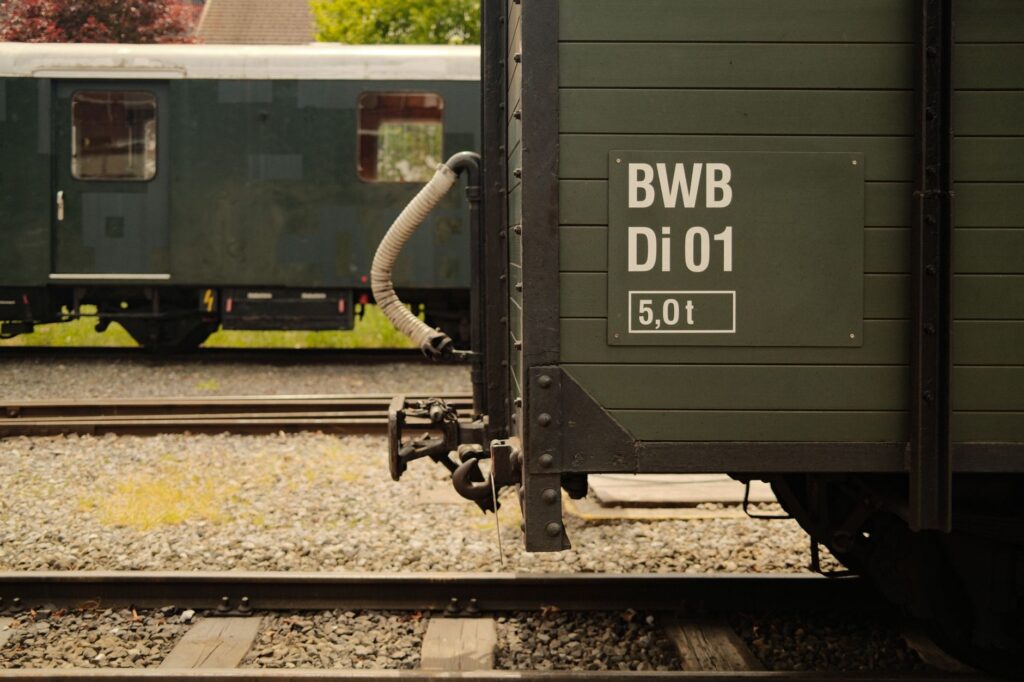
Operating a steam locomotive just a few degrees from the Antarctic Circle requires rigorous maintenance and a deep understanding of thermodynamics applied to low temperatures. The FCAF currently operates a mixed fleet composed of steam locomotives built in artisanal workshops and backup diesel units designed to ensure service regularity during severe snowstorm days.
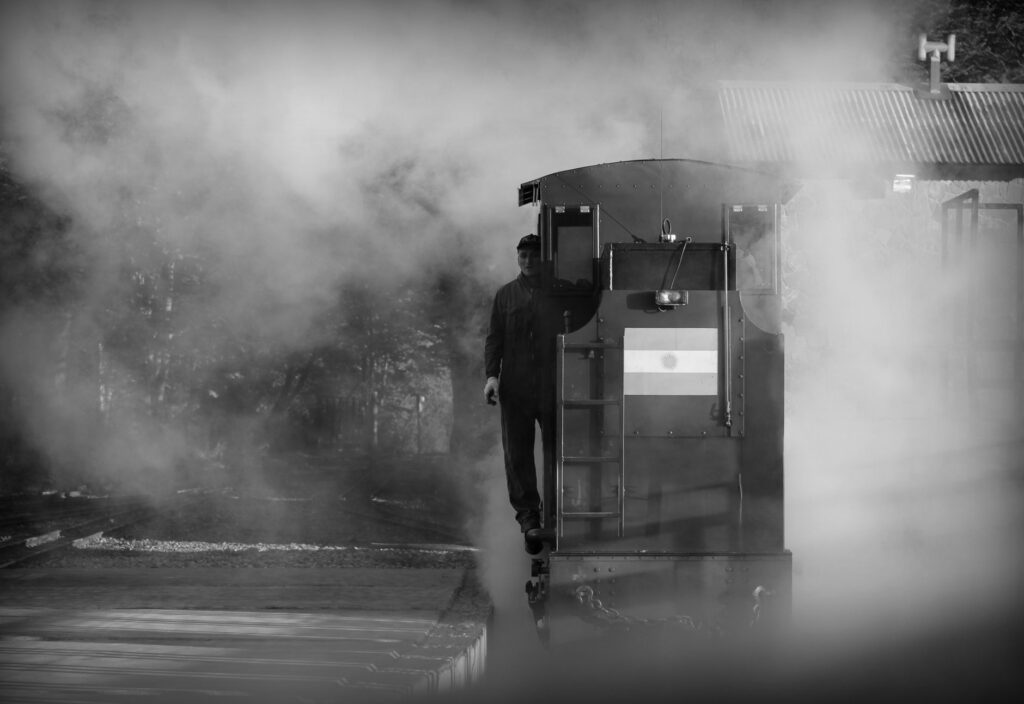
The steam engines, fueled primarily by coal and local dry wood, generate a unique sonic and visual spectacle as they cross the Pipo River canyon. The contrast between the white smoke billowing from the chimney and the dark green of the beech forests creates a cinematic atmosphere. However, behind this romantic aesthetic lies an implacable technical demand: boiler pipes must be constantly inspected to prevent cracks caused by thermal fatigue resulting from the clash between freezing feed water and the intense fire of the firebox.
The Passenger Experience: Route and Stations
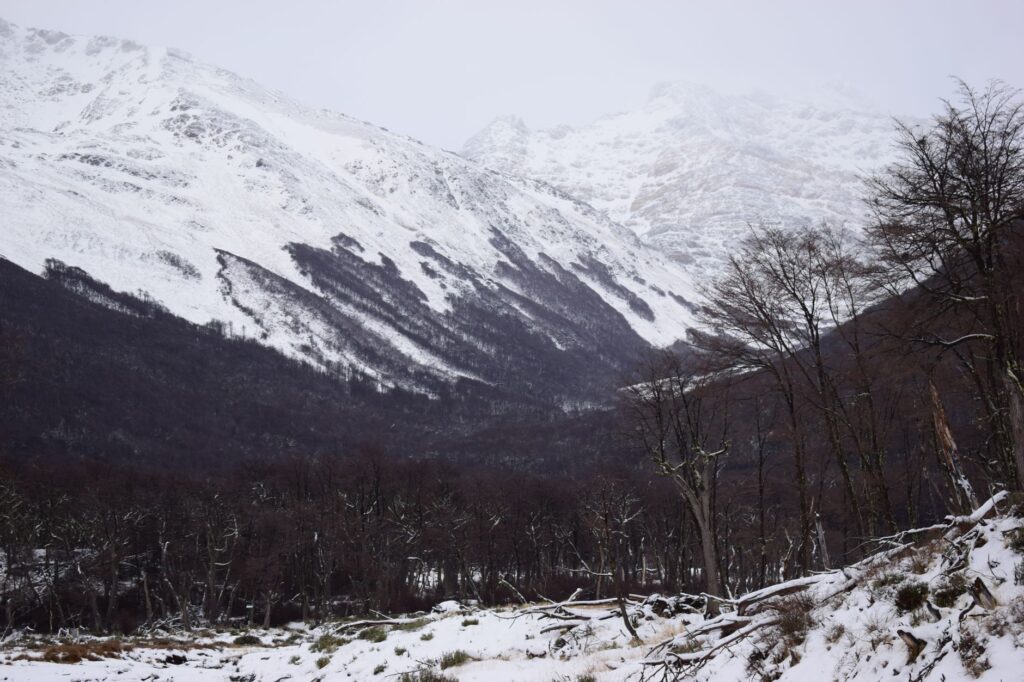
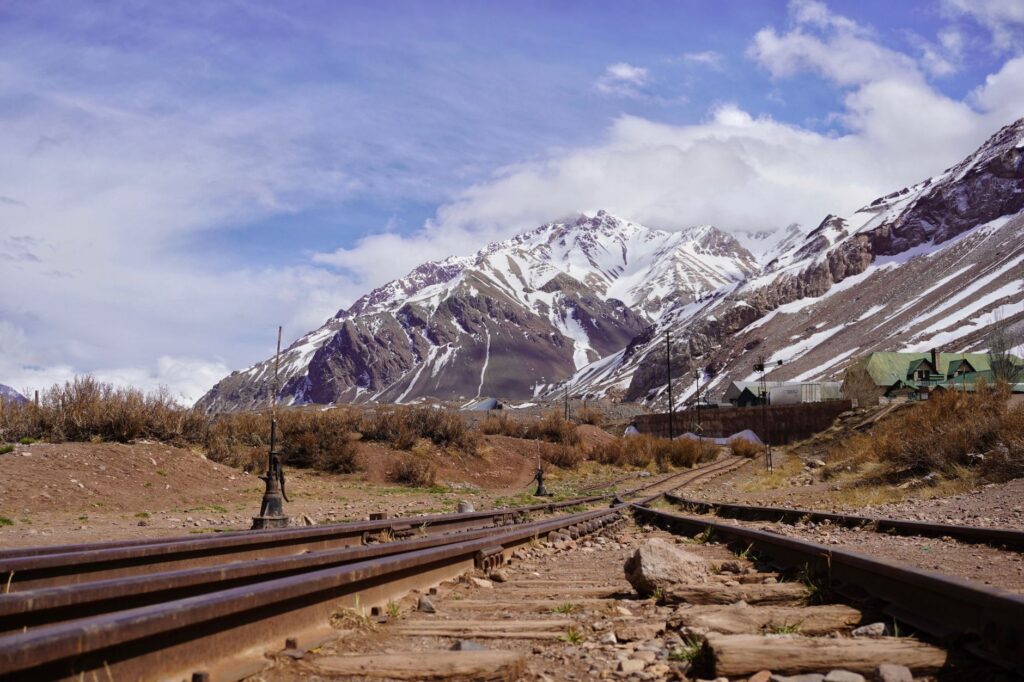
The current route of the Fuegian Southern Railway covers eight kilometers of overwhelming scenic beauty, connecting the End of the World Station with Macarena Station and the deep interior of Tierra del Fuego National Park. The journey begins in the Pipo Valley, an area historically logged by inmates, where notches and clean cuts on tree trunks can still be seen, bearing witness to past human effort.
During the journey, the train crosses the Burned Bridge over the river of the same name, where original wooden pillars built by convicts are preserved. A mandatory stop at Macarena Station allows passengers to disembark to observe a historical reconstruction of a camp of Yámanas—the ancient canoe-dwelling nomads of the Fuegian channels—and contemplate an exceptional panoramic view of the glacial valley. The final stretch plunges passengers into the slopes of Mount Susana, bordering active peatlands where vegetation displays reddish and ochre tones during the austral autumn.
Railways in the far south are not merely transport infrastructure; they are a testament to how human will succeeded in inscribing lines of steel upon an indomitable map.

Practical guide
Planning a visit to the Fuegian Southern Railway requires paying attention to the logistical particulars of the province of Tierra del Fuego, where weather conditions can change dramatically within hours, even during the summer season.
- Location and Access: The End of the World Main Station is located 8 kilometers west of the city of Ushuaia, along National Route No. 3, on the way to Tierra del Fuego National Park. It is accessible via booked transfer services, private cabs, or rental vehicles.
- Schedules and Frequencies: Departures operate year-round with daily frequencies varying by season. In summer (December to March) morning and afternoon departures increase, while in winter service is typically reduced to one or two daily frequencies subject to snow accumulation levels.
- Fares and Classes: The service offers different travel categories, including Tourist class, Premium class, and the exclusive First Class, the latter featuring regional gastronomy served onboard. National residents generally have differential rates upon presenting identification.
- Combination with the National Park: Train ticket purchases do not include the entrance fee to Tierra del Fuego National Park. It is recommended to purchase the park admission ticket in advance online or at the entrance booth to optimize visiting times.
- Recommended Clothing: Due to altitude and exposure to subpolar winds, dressing in layers is essential (thermal base layer, fleece mid-layer, and waterproof windbreaker jacket), along with sturdy trekking footwear for station walks.
The sunset over the Pipo River valley tints the wooden carriages with golden reflections as the last train of the day slowly returns to the workshops, closing a daily cycle that has repeated tirelessly for over a century. In this frontier where the land seems to dissolve into the ocean, the locomotive’s whistle continues to echo as an indelible testimony of technical perseverance, reminding the traveler that no latitude is too remote for the pulse of human engineering.