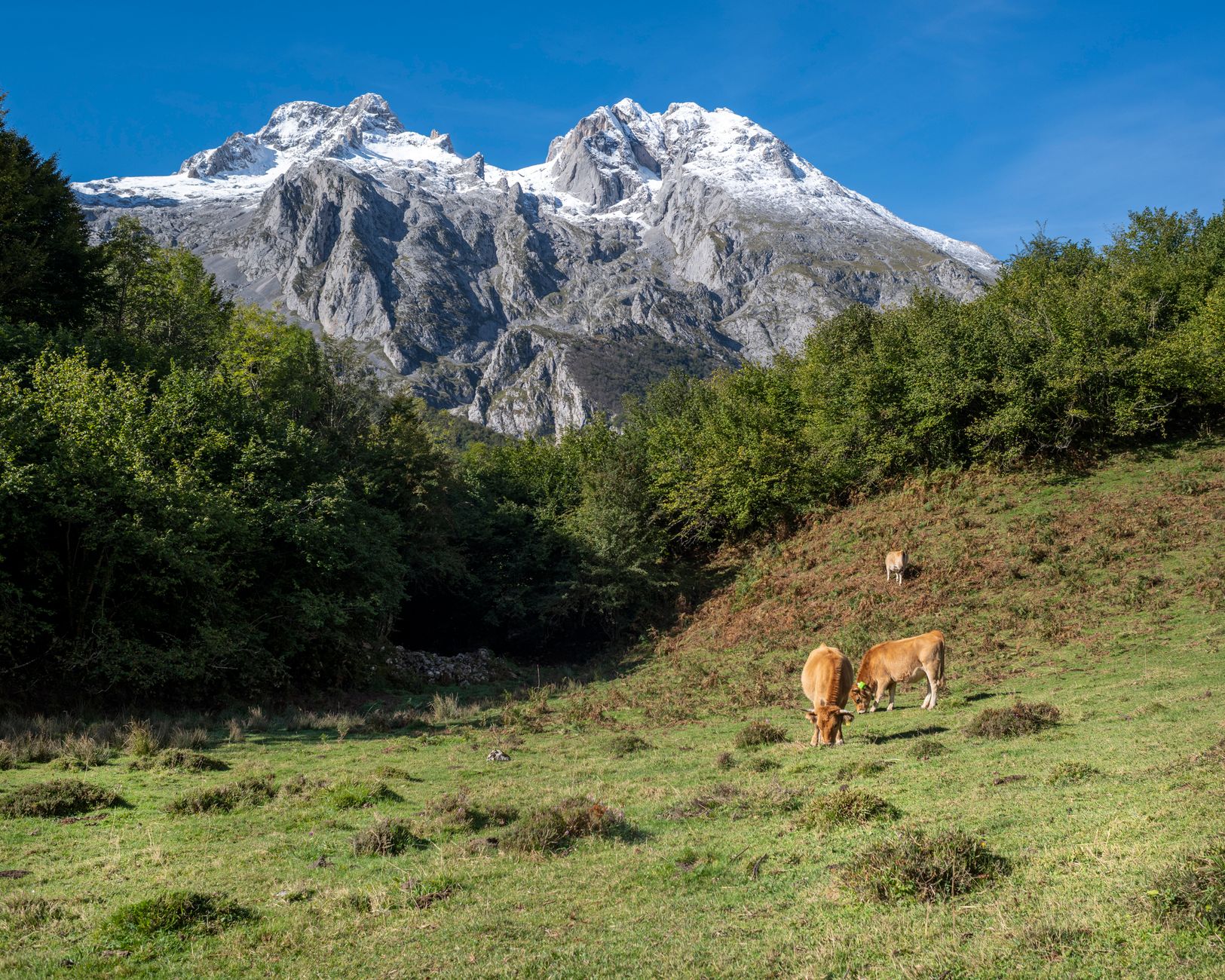

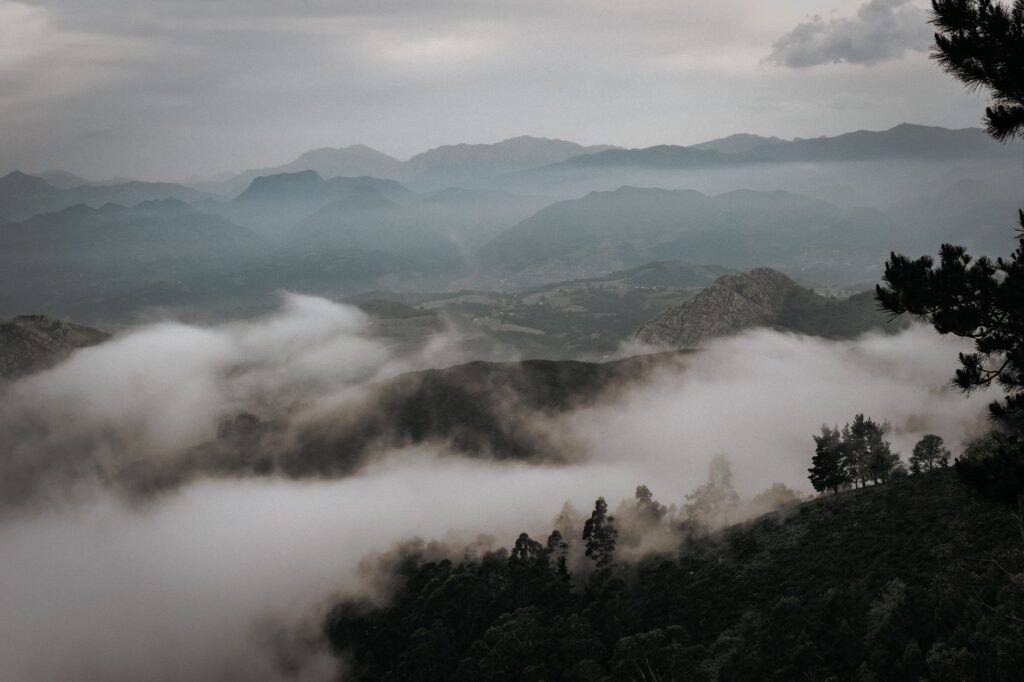
In the rugged heart of the Cantabrian Mountains, where limestone precipices challenge the traveler’s patience and Atlantic mists take over the peaks of the Picos de Europa, one of the most rigorous cheesemaking traditions of the Iberian Peninsula survives. Here, in the Leonese municipality of Posada de Valdeón, the landscape is not a mere scenic backdrop; it is the true architect of an unrepeatable product. The vertical geography, marked by deep gorges like the Beyos ravine and the hanging valleys of Caín, has conditioned for centuries a way of understanding mountain livestock farming, seasonal transhumance, and subterranean fungal maturation.
The secular isolation of these Leonese valleys has allowed the Valdeón cheesemaking technique to remain almost unaltered in the face of industrial standardization. The families of herders, who for generations have managed mixed herds of cows and goats adapted to extreme slopes, understand cheese not as a quick commodity, but as a biological pact with the environment. The constant local humidity, exceeding eighty percent during many parts of the year, and the native flora of the high mountain pastures shape a wild microbiota that is impossible to replicate in modern laboratories or lowland cold storage rooms.
The Geography of the Gorge: High Pastures and Mountain Goats
To understand the nature of Valdeón cheese, it is essential to ascend the winding roads that skirt the Cares River. The herds that sustain this livestock population graze on sloping meadows where wild plant species sprout, such as hellebores, gentians, and an infinite variety of grasses and clovers. This complex diet is directly reflected in the organoleptic properties of the raw milk, which arrives at the curdling vats with an exceptional aromatic load, rich in herbaceous nuances and mineral notes from the karst terrain.
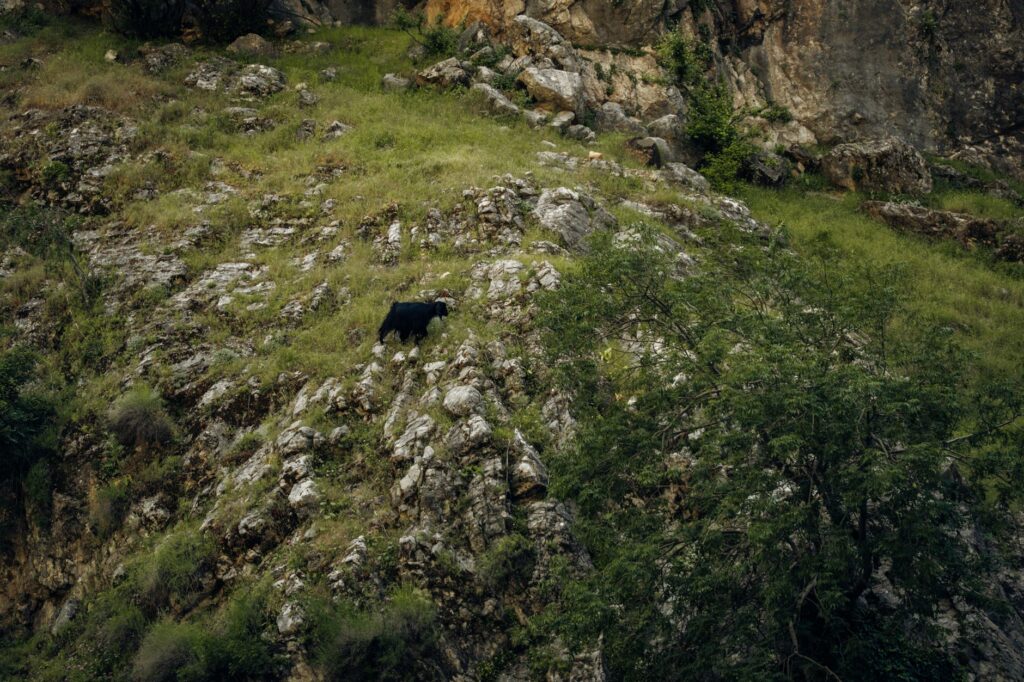
Unlike the great dairy valleys of Central Europe, intensive farming is unviable here. The goats and cows of native breeds walk kilometers daily along stony paths, which endows their milk with very specific levels of fat and protein, ideal for withstanding lactic acid processes without losing creaminess. Local herders continue to climb to the high mountain passes during the summer months, keeping alive a short transhumance that prevents overgrazing and enriches the biological cycle of the alpine soil.
The Liturgy of Raw Milk and Traditional Curdling
The process begins at dawn, when the day’s milk—frequently a balanced blend of cow and goat in proportions that vary according to the season and herd availability—is lightly pasteurized or used strictly raw depending on the artisan, preserving a substantial part of the autochthonous bacterial flora that forms the fundamental secret of its personality. Natural lamb or kid rennet is used, and the coagulation time is extended leisurely, allowing the curd to maintain a high internal moisture before manual whey drainage.
The artisans cut the curd delicately, aiming for corn-sized grain dimensions, which facilitates the natural drainage of the whey without resorting to excessive mechanical pressing. This lightness in pressing leaves small air gaps inside the mass, an indispensable structural condition so that, weeks later, environmental mold can develop three-dimensionally throughout the interior of the piece, creating those characteristic blue-green veins that define great cave blue cheeses.
The Art of Manual Salting and Turning in the Workshops
Once the cylindrical molds have drained the excess whey, the Valdeón pieces undergo a dry salting process on the surface using fine or coarse sea salt. This step not only adds flavor to the whole, but also fulfills a critical regulatory function: it inhibits the growth of unwanted pathogenic bacteria during the early maturation stages and favors the development of a preliminary microbial rind that will protect the cheese against premature dehydration.
In small family workshops, work during this phase is purely tactile and visual. The master cheesemakers turn each piece individually, examining surface firmness and checking the feel of the heel. Any imbalance in the workshop’s ambient humidity is corrected immediately through natural ventilation or the use of damp cloths. This meticulous care guarantees that the rough, slightly rustic rind begins to transpire the first indications of external molds before the cheese leaves the valley toward its final refuge beneath the rock.
The Ripening Caves: The Kingdom of Natural Penicillium
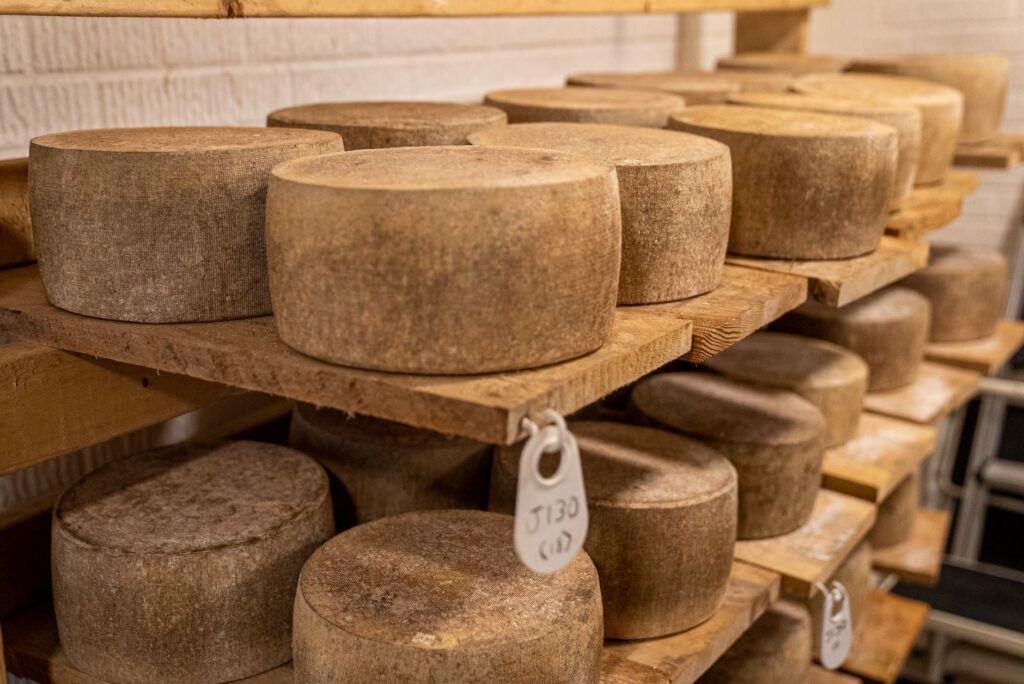
The most fascinating chapter of Valdeón cheese’s existence occurs inside natural hollows opened in the limestone rock of the Picos de Europa. These caves, excavated by millenary karst erosion and swept by currents of cool, humid air coming from the Cantabrian Sea, act as natural biological incubators. On their walls and oak wood shelves, the fungus Penicillium roqueforti lives endemically, the same microorganism that colonizes the interior of the pieces spontaneously thanks to the porosity of the mass.
During a period ranging from two to four months, the cheeses rest on planks where they are periodically brushed and pierced. Piercing with fine metal needles opens aeration chimneys that allow oxygen to penetrate the core of the cylinder, activating the growth of fungal mycelium. The result is a chromatic and textural spectacle: networks of bluish and greenish veins branching from the center to the periphery, giving off a pungent aroma, ammoniacal in just measure, with hints of damp cellar, wild mushroom, and toasted butter.

Valdeón cheese is not manufactured in an industrial warehouse; it is forged in the silent dialogue between cave humidity, mountain goat milk, and the patient hand of the artisan who knows the pulse of the stone.
Sensory Tasting: Lactic Power and Persistence on the Palate
Gastronomically, facing a wedge of Valdeón cheese requires understanding its intensity. When cut, the paste is ivory, unctuous, slightly crumbly in the most aged specimens, and dotted with irregular cavities where the highest fungal density is concentrated. On the nose, it displays notes of cut hay, toasted nuts, and a very clean acidic lactic background that balances the initial fatty power.
In the mouth, the texture melts with surprising creaminess, releasing a saline hit that quickly moderates with spicy notes and a very elegant final bitterness, typical of cheeses aged with goat milk in high mountain environments. Far from saturating the palate with an excessive chemical saltiness, Valdeón leaves a long, warm aftertaste deeply tied to the limestone territory from which it comes, inviting complex pairings with structured red wines from nearby Ribera del Duero or, in its most classic version, with sweet white wines or local natural cider.
Practical guide
How to get there: The main access to Posada de Valdeón is by road through the impressive Beyos Gorge (N-625 from Cangas de Onís) or crossing the Pandetrave mountain pass (LE-243) from Riaño, demanding high-mountain routes with sharp curves and well-paved surfaces.
When to go: Spring and summer months allow visitors to enjoy the alpine landscape at its peak and witness livestock activity in the high passes, while autumn offers an unmatched chromatic spectacle in the beech and oak forests.
Visitable dairies: Several artisanal dairies in the area, such as Picos de Europa S.L., offer guided tours by prior reservation, including walks through traditional workshops and detailed explanations of the cave refining process.
Accommodation and gastronomy: There are small rural stone and wood inns in Posada de Valdeón, Caín, and Cordiñanes. Local gastronomy stands out for hearty cabbage stew, Asturian-Leonese beef, and, of course, cheese boards accompanied by rye loaf bread.
Shopping tips: When purchasing the cheese, always look for the Protected Geographical Indication seal (IGP Queso de Valdeón) and ensure the product is kept in moderate refrigeration (between 4 and 8 degrees Celsius) and brought to room temperature at least an hour before consumption to release all its aromas.
The Return to the Mist: Memory and Future of the High Passes
When the afternoon begins to wane over the Valdeón valley and the shadows of the limestone walls cover the mowing meadows, life in the villages recovers an ancestral calm. The herders gather the livestock and the cheesemakers close the doors of the ripening chambers, knowing that time and humidity continue their invisible work in the darkness of the caves. In a globalized world that tends toward the homogenization of flavors and the dictatorship of standardized products, Valdeón cheese stands as a bastion of cultural and ecological resistance.
Protecting this dairy heritage is not a mere exercise in archaeological nostalgia, but recognition of a sustainable lifestyle that preserves mountain ecosystem balance, prevents forest fires through controlled grazing, and keeps alive the rural economies of northern León. Each wedge of this blue cheese, harsh and noble at the same time, encapsulates the geological history of an indomitable mountain range and the tenacious effort of men and women who have turned the harshness of the rock into one of the highest peaks of European gastronomy.