
Stepping into the arid plains of western Rajasthan is to understand the absolute subordination of human engineering to the capricious tyranny of geography. In this frontier where the earth merges with a fiery sky, railway tracks are not mere transportation lines; they represent the backbone supporting the life, commerce, and memory of entire communities isolated by the sand sea of the Thar Desert. For over a century, this rail route has defied dust storms, extreme temperatures exceeding fifty degrees Celsius, and the instability of soil that constantly threatens to swallow steel. Analyzing this communication network requires looking beyond the romanticism of vintage travel or the bucolic image of the solitary wanderer; it demands entering a complex logistical network where every wooden tie is a victory against absolute nothingness.
The genesis of this infrastructure dates back to the British colonial era, when the Crown envisioned the urgent necessity of projecting military and economic power toward the remote western borders with the subcontinent that now forms Pakistan. The advance of the railway across the Thar was not a commercial whim, but a geopolitical decision of the highest order. Local labor crews, faced with endemic water scarcity and constant wind erosion, employed pioneering construction techniques to anchor embankments over shifting dunes. Local stone and heavy pebble ballast became the protective shields of a layout requiring constant, titanic maintenance to prevent the desert from completely erasing human effort.
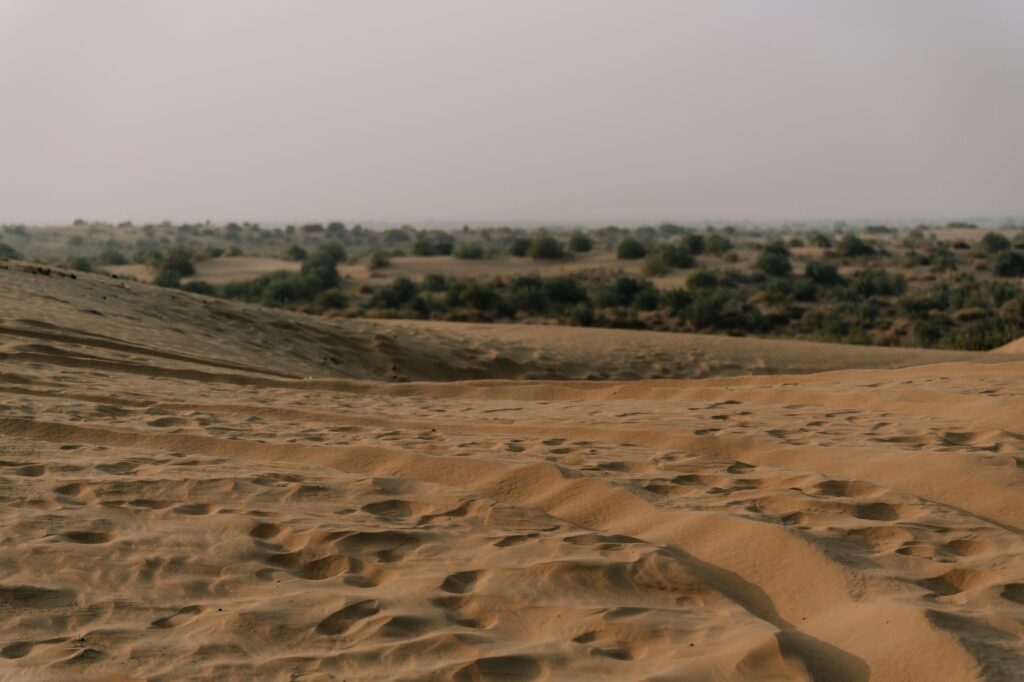
The Architecture of Steel Against the Sea of Sand
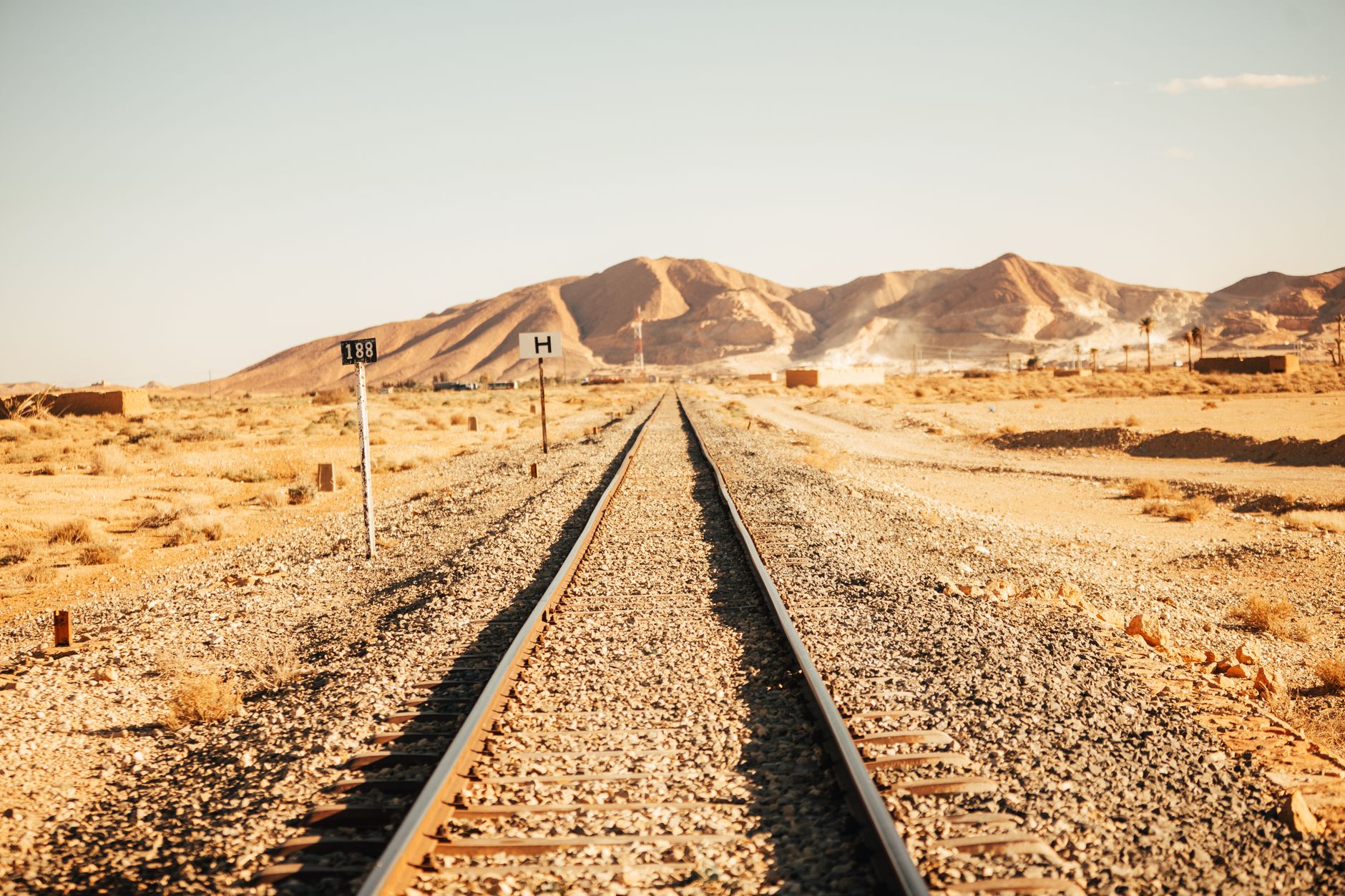
The structural design of the tracks in the Thar Desert responds to a logic of extreme adaptability. Unlike alpine lines or tropical routes, where the primary enemy is humidity or steep gradients, here the challenge is eolian dynamics. Dunes are not static; they migrate silently driven by monsoon winds and summer thermal currents. To counteract this phenomenon, engineers designed rail profiles elevated on low yet wide embankments, allowing sand to flow underneath or accumulate in controlled zones for systematic clearance.
Stations along this rail corridor serve as authentic urban and logistical oases. Built with yellow and red sandstone typical of Rajasthani architecture, these massive structures traditionally served as freshwater reservoirs, a commodity more valuable than gold in these latitudes. Steam storage tanks, today repurposed or preserved as industrial monuments, recall the era when locomotives consumed staggering amounts of vital liquid just to cross the central stretch between Jodhpur and the international border.
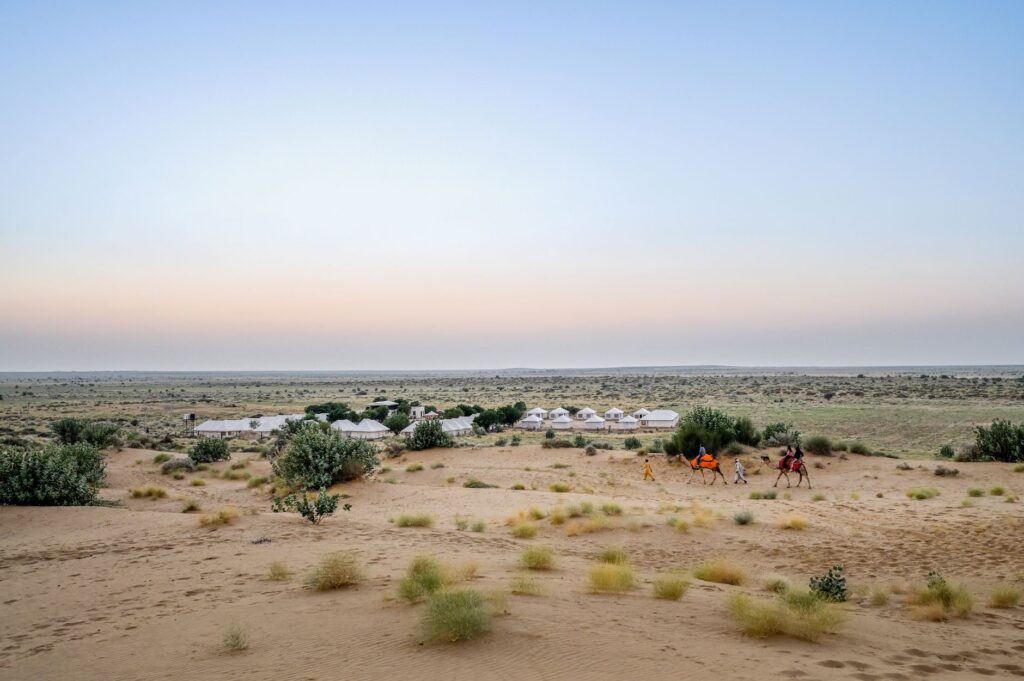
The desert forgives no improvisation; every kilometer of track in the Thar is a daily pact between human tenacity and the relentless erosion of time.
Maintaining the infrastructure requires specialized squads of workers known locally as track guardians. Their task consists of manually clearing sand accumulated over the rails before the passage of each convoy, utilizing branch brooms and shovels in a daily ritual that defies exhaustion and scorching heat. This reliance on human labor highlights the paradox of advanced technology that, in extreme environments, still depends on the physical endurance of its inhabitants.
Border Logistics and the Pulse of the Thar Corridor
Beyond its technical value, the railway has fulfilled a crucial geopolitical function as a link between nations. The reinstatement of cross-border services in the early years of this century symbolized a ray of diplomatic hope in a region historically marked by geopolitical tensions. Operating through remote border checkpoints, these trains not only transported passengers seeking to reunite with families divided by the 1947 partition, but operated as a corridor of mutual understanding amid the arid steppe.
Customs logistics in the middle of the desert present singular operational challenges. Trains must stop at fortified stations where immigration and security officials inspect cargo and documentation under extreme weather conditions. Communication systems suffer from sandstorms, forcing operators to rely on redundant and, in many cases, analog signaling protocols. This combination of classic railway technology with rigorous border security controls turns the corridor into a fascinating case study on territorial sovereignty and international transport.

Life on the Margins of the Rails
Communities inhabiting the immediate surroundings of the railway line have adapted their existence to the rhythm dictated by passing convoys. For remote villages like Gadra Road or outlying hamlets, the passenger train is not merely a means of commuting; it is the umbilical cord supplying local markets with fresh produce, medicines, and mail. Local merchants organize their sales routines around arrival times, turning platforms into bustling ephemeral souks where trade lasts precisely as long as the train remains halted.
This economic symbiosis has given rise to a unique culture where Rajasthani folklore blends with railway mysticism. Popular songs of the region frequently speak of the distant roar of the locomotive as a messenger of far-off lands, an acoustic reminder that the outside world continues turning beyond the horizon line. Village children line up religiously near the fences to wave at passengers, establishing an emotional bond with anonymous travelers who fleetingly cross their daily reality.
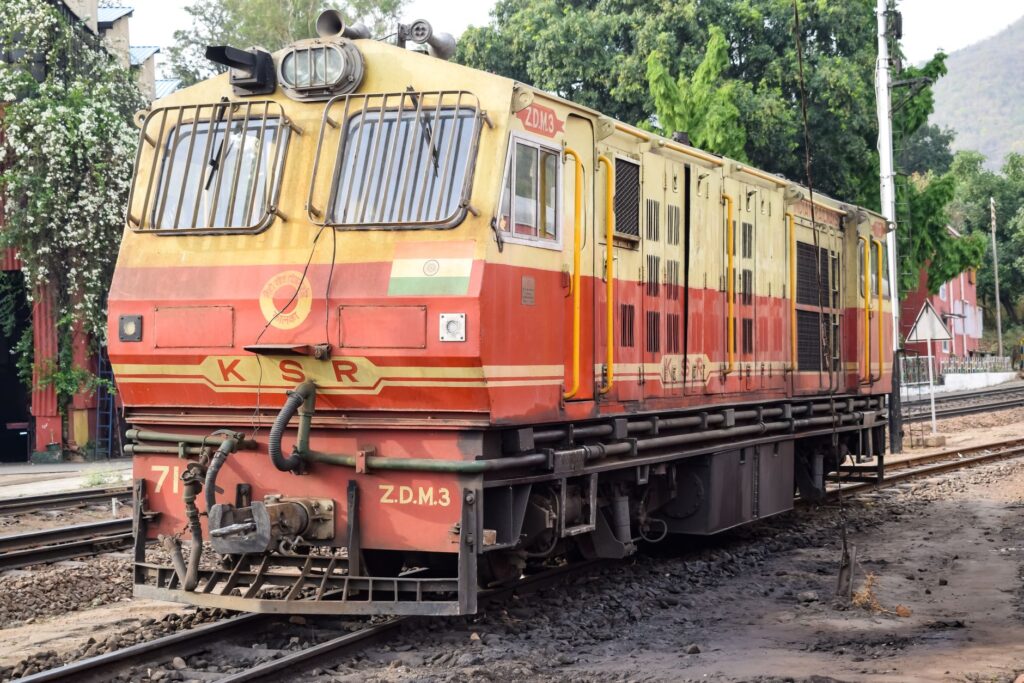
Contemporary Challenges and Sustainable Modernization
Today, the Thar desert railway network finds itself at a crucial crossroads between the preservation of its historical heritage and the urgent need for modernization. Electrification of the main lines, driven by India’s ambitious national decarbonization plans, seeks to replace aging diesel locomotives with cleaner, more efficient units. However, installing electrical infrastructure in an environment whipped by sandstorms and extreme thermal variations requires implementing composite materials highly resistant to corrosion and abrasive wear.
Likewise, railway authorities are investing in remote sensing systems and automated windbreak barriers to minimize service disruptions caused by unexpected dune accumulation. These technological advancements coexist with the need to protect the delicate desert ecosystem, preventing infrastructure expansion from fragmenting migratory corridors of local fauna, such as the Indian gazelle and various steppe bird species.
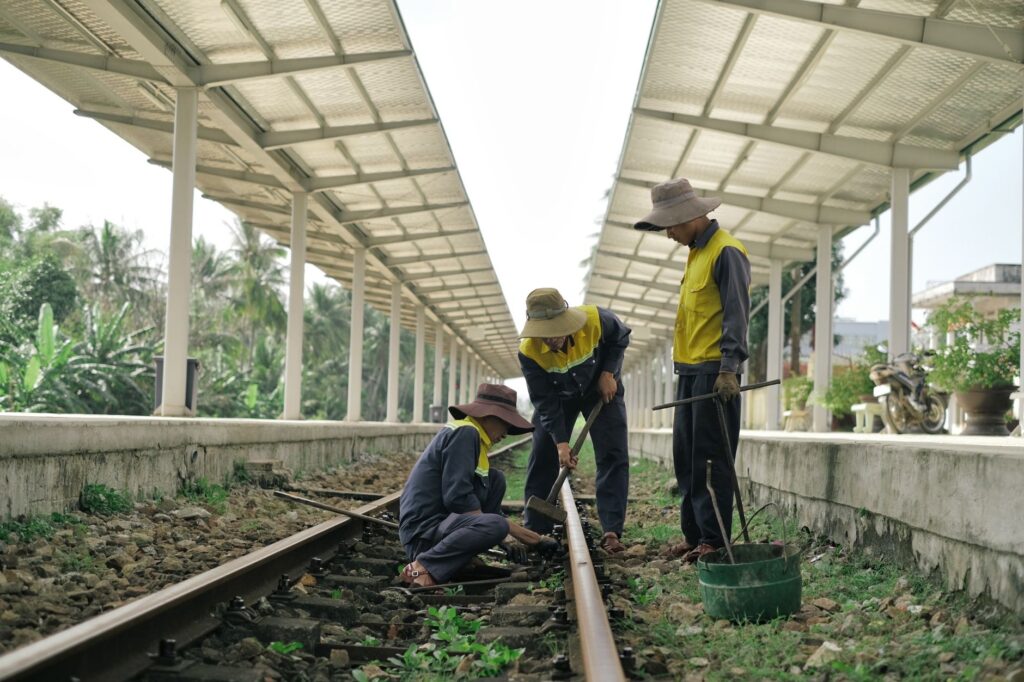
Modernizing the desert railway means balancing industrial efficiency with absolute respect for a natural environment as fragile as it is imposing.
Practical guide
Planning a journey through the Thar Desert railway region requires a deep understanding of local logistics and the climatic conditions of northwestern India. Essential guidelines for navigating this route safely and rigorously are detailed below:
- Best time to visit: The months between November and February offer tolerable daytime temperatures (between 20°C and 25°C), ideal for avoiding the extreme summer heat that easily exceeds 45°C.
- Access and connections: The city of Jodhpur functions as the major railway communications hub and the natural starting point for venturing into the western branch lines toward Barmer and the border.
- Ticket booking: It is essential to purchase tickets weeks in advance through official Indian Railways platforms (IRCTC) or authorized agencies, preferably selecting air-conditioned classes due to the constant presence of fine dust and particles.
- Recommended equipment: Bring lightweight long-sleeve cotton clothing for sun and sand protection, wraparound sunglasses, scarves to cover the face during dust storms, and a generous supply of bottled water.
- Health and safety: Maintain constant hydration, protect electronic devices with airtight covers against fine dust, and consult medical services in advance regarding recommended vaccinations for the region.
Twilight in the Thar Desert descends with astonishing swiftness, transforming the landscape from blinding ochre to a canvas of deep violet and indigo tones. In the distance, the metallic profile of the tracks fades into the gloom as the last train of the day slowly snakes through the silent dunes, carrying with it the echo of an unwavering human endeavor. In this frontier where nature seems to deny all possibility of permanence, the railway stands as an eternal testament to human audacity, a steel bridge defying wind, sand, and oblivion.