The Heart of Japan Blue: Alchemy, Fermentation, and Memory in the Dyes of Tokushima
A deep journey into the Yoshino River valley, where 'Aizome' masters preserve the art of natural indigo through a biological process that transforms green leaves into a sacred, eternal blue.
In the heavy air of the workshops in Tokushima Prefecture, on the island of Shikoku, a scent lingers that defies the logic of the modern textile industry. It does not smell of chemicals or solvents, but of an earthy mixture of ammonia, sake, and damp forest. It is the smell of life in decay and rebirth. Here, blue is not a pigment bought in a jar; it is a living organism breathing in large ceramic vats buried in the ground—a biological creature that must be fed, monitored, and understood with the patience of one watching a forest grow.
Japan Blue, 그 deep and magnetic hue that captivated Western travelers in the 19th century, has its technical epicenter in the plains of the Yoshino River. While the world succumbed to the efficiency of synthetic indigo at the end of the 1800s, a handful of families in Tokushima chose to maintain the difficult path: Aizome. This report delves into the heart of a tradition that is not only surviving but experiencing a revitalization driven by a new generation of artisans who see natural fermentation as the ultimate answer to the global fashion sustainability crisis.
The Alchemy of Sukumo: One Hundred Days of Transformation
It all begins with a humble plant, Polygonum tinctorium. Unlike the indigo varieties of India or Central America, Japanese indigo requires a unique pre-processing method to concentrate its coloring power. After the summer harvest, the leaves are dried and piled in dark barns called nedoko. For one hundred days, the composting masters, known as sukumo-shi, sprinkle the leaves with water and meticulously turn them every week. The internal temperature of the pile rises naturally due to microbial activity, reaching up to 70 degrees Celsius (158°F).
This solid fermentation process transforms the plant matter into a dark, grainy substance rich in indigotin called sukumo. It is an exhausting labor that requires an almost supernatural sensitivity to detect, through touch and smell, if the fermentation is on the right track. If the temperature rises too high, the color burns; if it falls short, the blue will never wake up. The resulting sukumo is the black gold of Tokushima, the fuel of an industry measured in seasons rather than twenty-four-hour production cycles.
«Indigo is not a color we apply to the fabric; it is a spirit we invite to reside within the fibers. If the dye is not happy, the blue will be dull and soulless.»
Awakening the Vat: A Living Organism
Once the sukumo reaches the dyer’s workshop, the most delicate phase begins: the creation of the dye bath. In Tokushima, hon-ai, or natural vat fermentation, is practiced. The sukumo is mixed with wood ash lye, slaked lime, and often a bit of sake or rice bran to feed the bacteria. For several days, the mixture bubbles. Artisans watch the surface for the «indigo flower,» a shimmering, purplish foam that indicates the dye is ready.
Entering an Aizome workshop is like entering a biological intensive care unit. Masters touch the liquid, taste it with their tongues to measure alkalinity, and adjust the bacteria’s diet daily. If the workshop is too cold, the bacteria sleep; if it is too hot, they die. This symbiotic relationship between human and microorganism is what allows the color to be so resilient. Unlike chemical indigo, which only coats the surface of the yarn, natural fermented indigo penetrates the core, strengthening the fabric and acting as a natural insect repellent and UV protector.
Tokushima and the Legacy of the Yoshino River
The reason Tokushima became the capital of blue lies in its geography. The Yoshino River, known as the «Shikoku Wanderer,» used to flood frequently. While these floods were disastrous for rice cultivation, they were perfect for indigo. The silt deposited by the floods was rich in nutrients that the indigo plant devoured, allowing for abundant harvests before the typhoon season arrived. During the Edo period, the region’s feudal lords protected this crop, making it the foundation of the local economy.
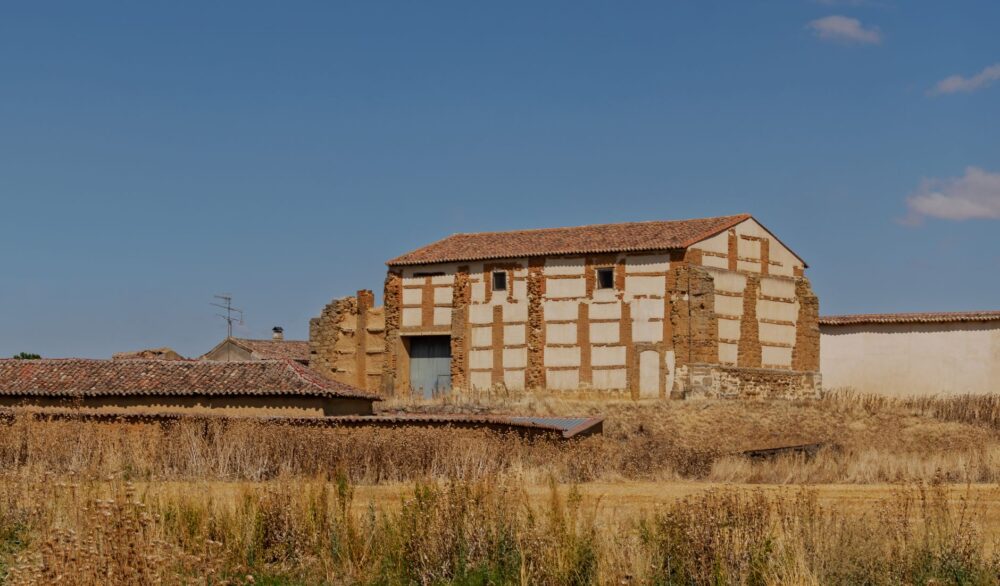
Walking the streets of towns like Mima or Aizumi today reveals the remnants of that opulence. The houses of former indigo merchants, with their udatsu walls (architectural elements that served to prevent fires and as status symbols), testify to an era when blue was more valuable than silk. Today, those same spaces house museums and cooperatives where the purity of the process is defended against the industrial imitations that flood the tourist market.
Resistance Techniques: Shibori and Katazome
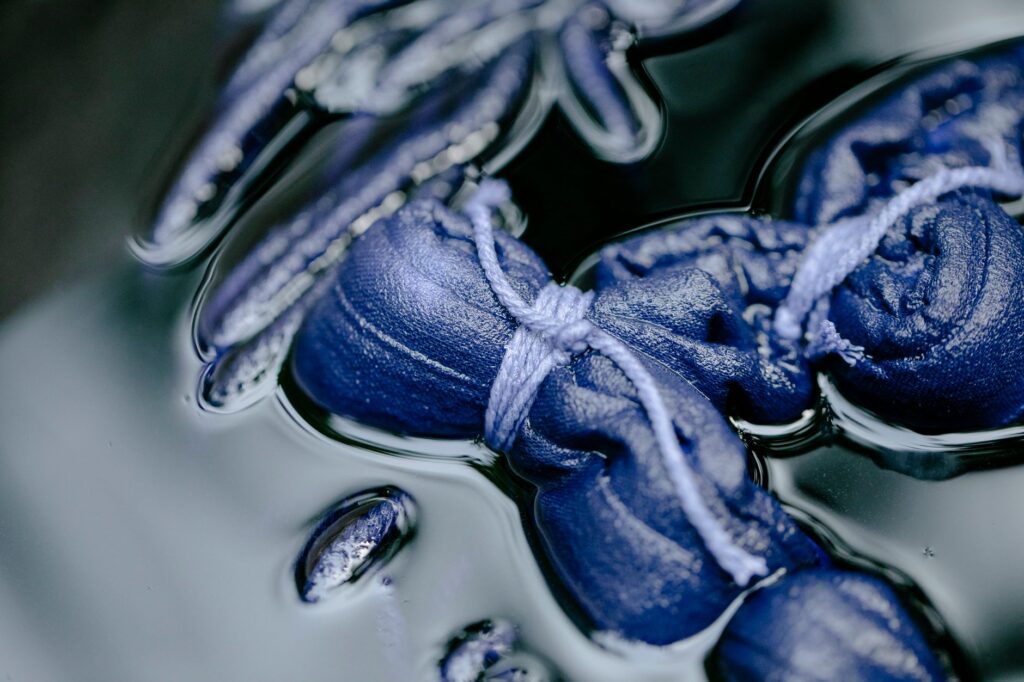
The art of Aizome lies not only in the color but in how its absence is manipulated. Tokushima masters command resistance techniques that seem impossible in their manual precision. Shibori involves folding, twisting, or stitching the fabric before dipping it, creating organic patterns that evoke the movement of water or clouds. Each immersion lasts only a few minutes; then, the fabric is brought into the air so that oxygen can work its magic, transforming the yellowish-green of the liquid into the deep blue of the night sky.
On the other hand, Katazome uses shibugami paper stencils (treated with persimmon tannin) and a rice paste to block the dye. This technique allows for the reproduction of geometric and figurative designs of astonishing complexity. A single kimono may require up to thirty immersions to reach the darkest shade, known as kuro-ai or black-blue. It is an exercise in physical and mental endurance: the artisan must keep the fabric under the liquid without touching the bottom of the vat, where sediments accumulate that could stain the design.
«Perfection in Aizome is born from accepting that the blue has its own will. Our job is to guide it, not to dominate it.»
The New Wave: Sustainability and Contemporary Design
After decades of decline, Tokushima indigo is experiencing a second youth. Collectives of young artisans, such as the founders of Buaisou, have revolutionized the perception of the craft. They don’t just dye; they grow their own plants, process their own sukumo, and collaborate with global streetwear brands and interior designers. They have taken indigo out of museums and into high-end denim, sneakers, and luxury furniture.
This revitalization has a deep ethical basis. In a world saturated with microplastics and toxic synthetic dyes, Aizome offers a model of real circular economy. The residue from the dye vats is used as fertilizer for the following year’s indigo fields, closing a perfect 365-day cycle. The beauty of natural blue is that as it ages, it does not deteriorate; it acquires a patina of dignity that the Japanese call kosei—a unique personality reflecting the life of the person wearing the garment.
Practical guide
Getting there: The most direct way is to fly to Tokushima Airport (TKS) from Tokyo or Osaka. Once there, renting a car is essential to visit the workshops scattered throughout the Yoshino River valley.
When to visit: The leaf harvest occurs in July and August, but the sukumo fermentation process is most visible between September and December. Dyeing workshops operate year-round, though the blue is most vibrant in temperate months.
Points of interest: The Ai-no-Yakata (Indigo Museum) in Aizumi is a mandatory stop to understand the technical history. For a hands-on experience, the Buaisou studio in Kamiita offers residencies and intensive workshops for international visitors.
Workshop etiquette: Never dip your hands into an indigo vat without permission; skin oils can damage the delicate bacterial balance. If you participate in a workshop, be prepared to have blue-stained nails for a week—it is the mark of the apprentice.
Responsible shopping: Look for the Tokushima cooperative’s seal of authenticity. Real indigo smells of earth, not chemicals, and its price reflects the months of agricultural labor behind every gram of dye.
The Blue That Never Dies
At the end of the day, as the sun sets over the mountains of Shikoku, the artisans wash their tools in clear water. Their hands, permanently stained a cerulean blue that reaches up to their elbows, are a testament to absolute dedication. It is not just a job; it is a secular priesthood. In every garment dyed in Tokushima travels a piece of the Yoshino River’s geography, the heat of the summer sun, and the infinite patience of the bacteria that turn the darkness of the earth into the light of the blue.
The renaissance of indigo is not a passing fad, but a return to material sanity. In the depth of a fermentation vat, Japan keeps a secret that the rest of the world is beginning to remember: that true beauty is not manufactured, it is grown. Tokushima’s blue is, ultimately, a mirror of nature itself: complex, changing, and profoundly human.
ATLAS LUME · BEFORE YOU GO
A story that continues at the destination
DocumentsCheck visas, health requirements and document validity with official sources.
BookingsConfirm the final price, taxes and conditions directly with the provider.
Responsible travelRespect local communities, heritage and ecosystems.