The Northern Hills and the Agricultural Horizon of Aydūn
Located in the Irbid Governorate in northern Jordan, the town of Aydūn rises over a topography of gentle rolling hills and cultivated slopes exceeding six hundred meters in altitude. This mid-mountain environment defines a unique climatology within the national context, characterized by cool winters and a proximity to the Mediterranean Sea that moderates summer temperatures compared to the desert depressions in the south and east of the Hashemite territory. The municipality’s geographical position has historically favored human settlement, taking advantage of the fertility of its clay soils and the availability of underground water resources that feed traditional local springs.
The surrounding landscape is dominated by agricultural terraces where the olive tree is the undisputed protagonist. These centuries-old trees, with gnarled trunks and silvery canopies, structure the economy and visual aesthetics of the region. Unlike the vast arid expanses dominating other areas of the country, the surroundings of Aydūn display a green continuity that intensifies after seasonal rains. Local farmers maintain tilling practices inherited through generations, adapted to the terrain’s slope and the structural water scarcity affecting the entire Middle East. Community management of rainwater and the protection of local aquifers remain fundamental pillars for the survival of these traditional crops.
Traditional Limestone Architecture and Urban Morphology
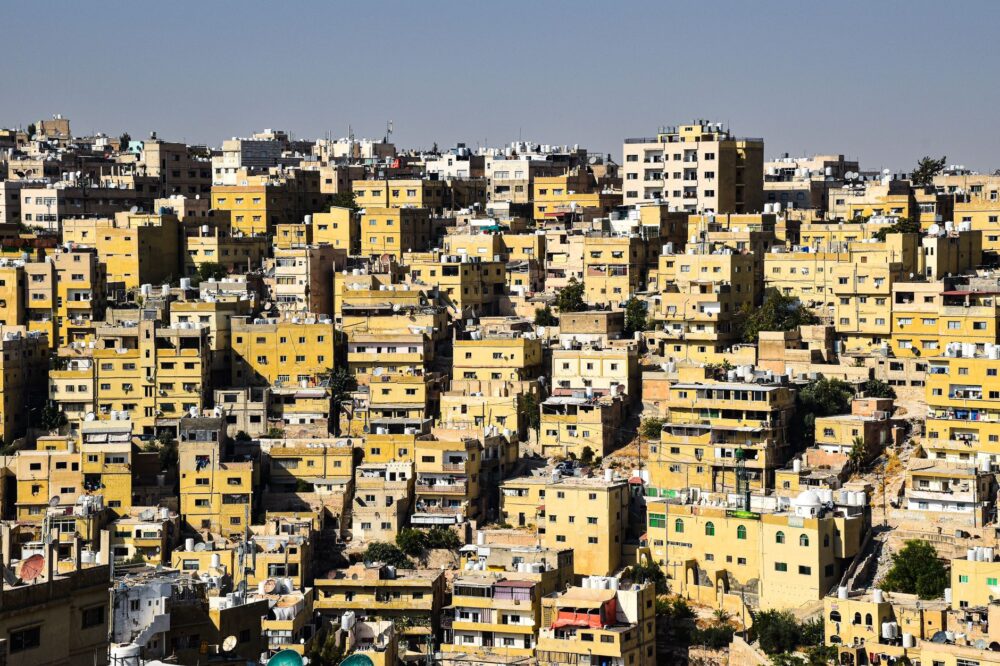
The historic center of Aydūn stands out for its vernacular architecture, built almost entirely from limestone blocks quarried in the same region. These traditional homes, characterized by thick walls and vaulted ceilings supported by interior arches, respond to rigorous bioclimatic logic. The stone’s thermal mass acts as a natural temperature regulator, keeping interiors cool during months of intense heat and retaining accumulated warmth during cold winter nights. Strategically oriented small windows and interior patios articulate domestic life, providing privacy and shade for the families inhabiting them.
With demographic growth and urban expansion in recent decades, the municipality has undergone notable transformations in its morphology. Alongside historic stone structures, modern concrete buildings have emerged to expand the habitable perimeter. Nonetheless, local authorities and residents show a growing interest in preserving the architectural identity of the old neighborhoods. The conservation of these properties responds not only to an aesthetic criterion, but to the willingness to maintain a tangible link with the community past and with construction techniques that proved their effectiveness against local climate demands.
The Daily Pulse and Life in Local Markets
Daily life in Aydūn unfolds at a leisurely yet steady pace, marked by agricultural activities and neighborhood commerce. The streets of the historic center and secondary commercial arteries concentrate small establishments where locals provision themselves. Traditional bakeries, grocery shops, and stalls selling fresh regional vegetables structure the inhabitants’ day. Unlike the country’s large urban centers such as Amman or the city of Irbid itself, neighborhood relations here retain a strong sense of closeness, where mutual acquaintance and community solidarity continue to govern daily coexistence.
The local market also functions as a space for intergenerational social exchange. Community elders gather around traditional cafes to discuss crop conditions, weather forecasts, and community affairs. These daily dynamics reflect cultural resistance against global urban homogenization. Local gastronomy, based on earth-produced goods such as virgin olive oil, legumes, fermented dairy products, and freshly baked bread, constitutes another pillar shaping Aydūn’s collective identity, directly connecting family tables with daily work in the surrounding fields.
Historical Heritage and Traces of Past Civilizations
The subsoil and surface of Aydūn hold material vestiges of the various civilizations that have passed through the Mediterranean Levant over the millennia. From archaeological remains associated with Byzantine and Islamic periods to ancient hydraulic structures, the territory functions as an open-air historical archive. The presence of caves carved into soft rock, historically used as dwellings, shelters, or agricultural storage spaces, demonstrates the adaptive capacity of historical populations to the geographical conditions of these northern Jordanian hills.
The conservation of archaeological and historical heritage in rural communities like Aydūn demands a delicate balance between scientific research, local development, and respect for the daily lives of its current inhabitants.
Rigorous study of these material remains allows historians to better understand trade routes that in the past connected the Jordan Valley with the Syrian plateaus. However, managing this heritage presents significant challenges due to modern urban growth pressure. Initiatives aimed at documenting and protecting local archaeological sites are combined with educational outreach, seeking to have new generations recognize in these stones the physical testimony of their own collective history, beyond mass tourism circuits.
Environmental Sustainability and Natural Resource Management
Faced with global challenges of climate change and water scarcity, Aydūn faces the urgent need to optimize natural resource management. Precipitation in northern Jordan has shown increasing variability in recent decades, forcing farmers and municipal authorities to rethink water use in rain-fed and irrigated agriculture. The recovery of traditional rainwater harvesting systems and the modernization of irrigation canals are essential measures to guarantee the long-term viability of the local agricultural sector.
Likewise, protecting vegetation cover against overgrazing and uncontrolled urbanization is a priority for regional environmental groups. Maintaining the biodiversity of these hills not only protects soil against erosion but preserves the habitat of numerous flora and fauna species adapted to the semi-arid Mediterranean climate. Sustainable development policies in Aydūn focus on reconciling human activity with the ecosystem’s carrying capacity, promoting practices that ensure natural resources remain available for future generations.
Responsible Tourism as an Opportunity for Local Development
Within the framework of Jordan’s national tourism strategy, rural and inland tourism has gained prominence as an alternative to major archaeological destinations like Petra or Wadi Rum. Aydūn offers a potential tourism model based on authenticity, local gastronomy, and direct contact with community life. Visitors deciding to explore these northern hills find a space where heritage is not musealized, but integrated into the daily lives of its residents, providing a more reflective travel experience connected to the country’s social reality.
Nevertheless, developing this activity requires rigorous planning to avoid negative mass-tourism impacts. Local authorities and tourism entrepreneurs support small-scale initiatives, such as environmentally respectful marked hiking trails, family-managed accommodations, and traditional crafts workshops. In this way, economic benefits from tourism are distributed directly among the local population, fostering the conservation of architectural and natural heritage without drastically altering the social equilibrium defining this Jordanian community’s identity.
Practical guide
How to get there: Aydūn is located a short distance south of Irbid and about eighty kilometers north of Amman. The most efficient access is via private vehicle or shared taxi using the highway connecting Amman to Irbid, a journey lasting approximately one and a half hours depending on urban traffic.
When to visit: The spring months, between March and May, offer the best climatic conditions, with mild temperatures, green fields, and abundant flowering. Autumn, from September to November, is also favorable for exploring the area peacefully.
Accommodation: Hotel options in town are limited, with family-managed guesthouses predominating. For stays with a wider variety of services, the nearby city of Irbid offers varied hotel options facilitating daily access to Aydūn.
Recommended gastronomy: It is advisable to taste dishes prepared with local olive oil, traditional preparations based on lamb and dry yogurt, as well as flatbread freshly baked in the region’s traditional stone ovens.
Local respect guidelines: As a rural community with strong traditions, visitors are advised to dress modestly, ask permission before photographing local residents, and show respect for private agricultural spaces during walks in the surroundings.
The Shared Horizon of the Aydūn Hills
The hills of Aydūn continue to reflect a way of understanding the relationship between human beings and the territory that transcends fleeting trends of the contemporary world. Among centuries-old olive terraces, limestone walls guarding the memory of cool winters, and a community life based on proximity solidarity, this corner of northern Jordan demonstrates that the permanence of traditions is not synonymous with immobility, but rather a constant capacity to adapt to present challenges. Traversing its paths and conversing with its people, travelers understand that the true value of these landscapes lies in the silent dignity with which their inhabitants care for their land and history.