
A summer radio interview and a fashion photograph offer two routes into the Argentine broadcaster’s archive and the bilingual platform that brings it together.
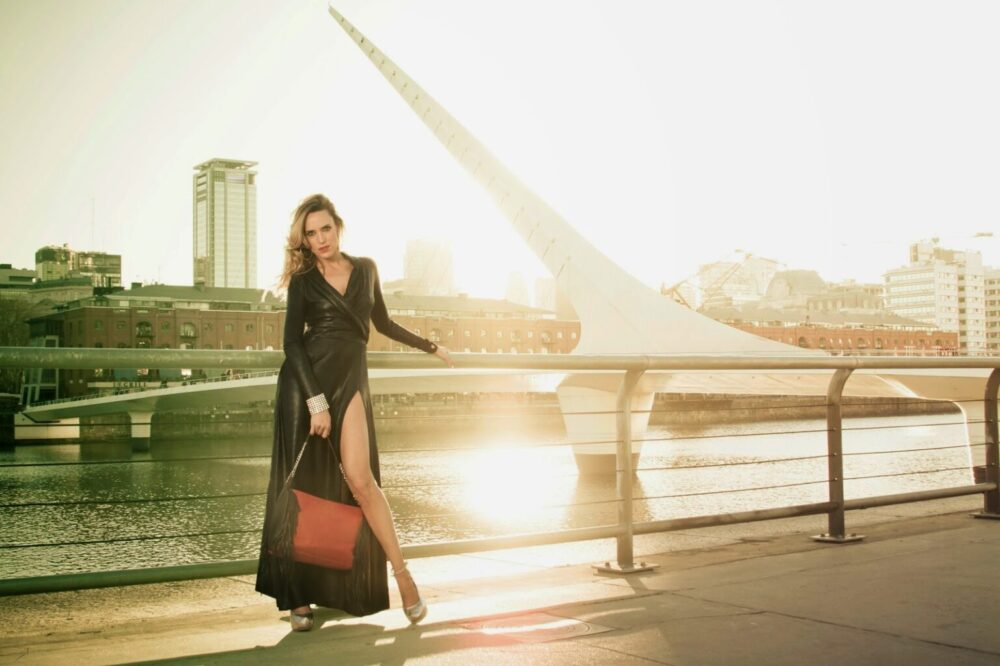
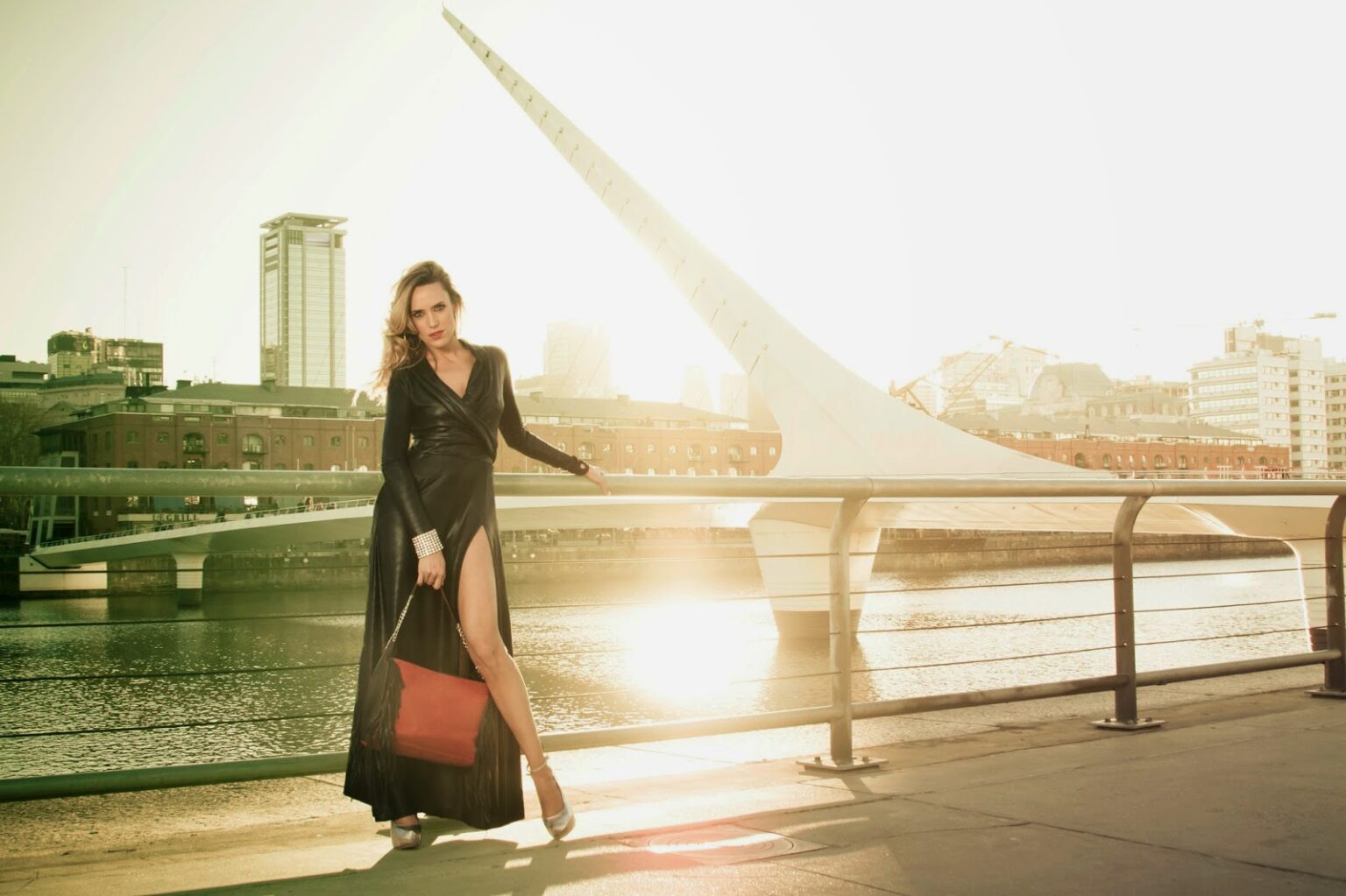
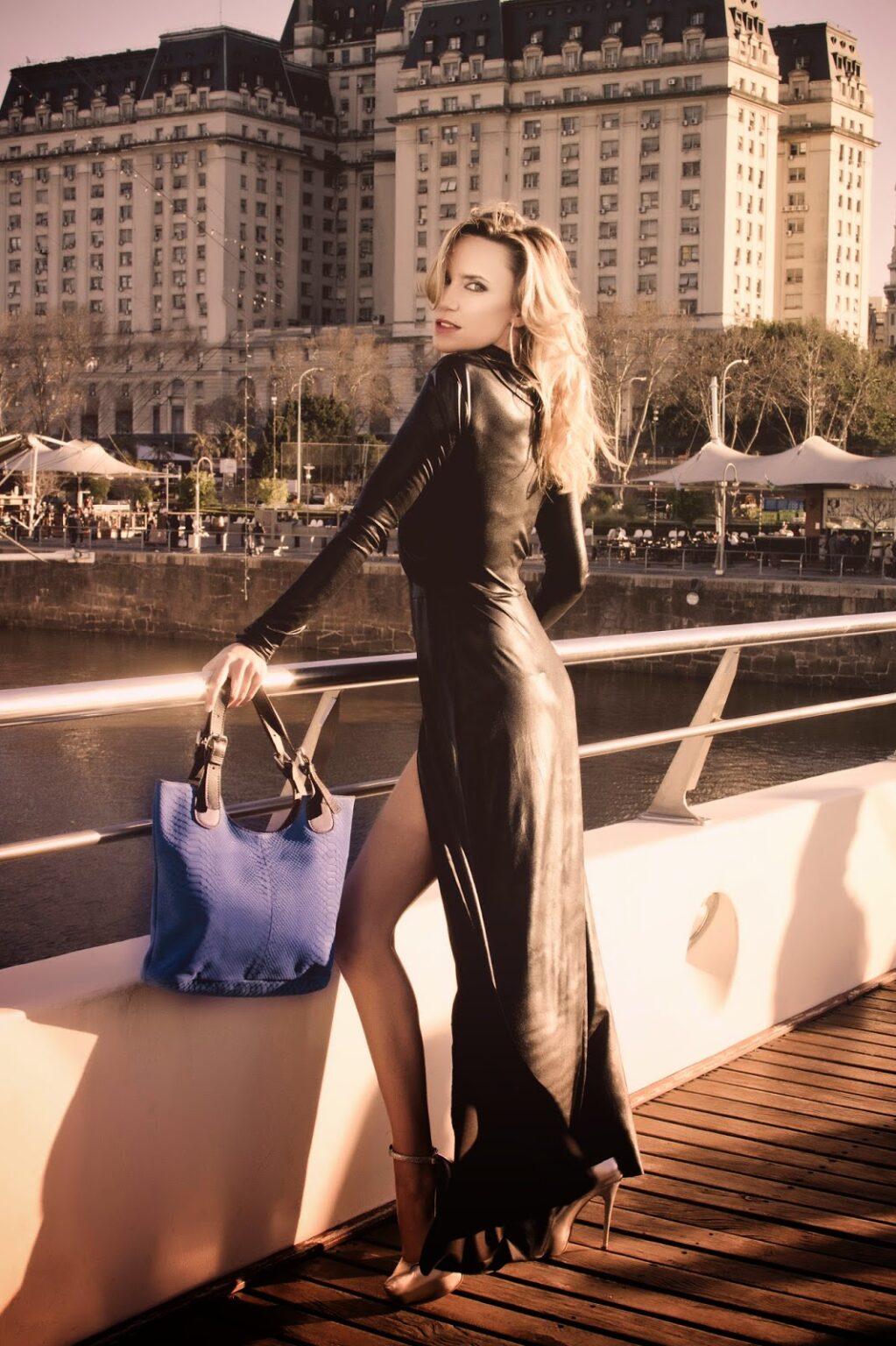
Start with the photograph. Soledad Villarreal is standing beside a railing in Puerto Madero, wearing black and holding a red bag. Behind her, the tilted mast of the Puente de la Mujer cuts through the frame. Mauro Bernardi’s composition gives the city room to register: the white structure, the waterfront buildings, and the glare that spreads across the water around the figure.
The Buenos Aires tourism office identifies the bridge as a rotating footbridge by Santiago Calatrava, inspired by tango. That detail matters to the way the photograph reads. What appears in the frame as a strong diagonal belongs to a pedestrian route between the docks. For someone planning a walk through Puerto Madero, the photograph offers one point of view on a place they can approach from several directions.
A summer on the air
Another route leads to Pinamar on Argentina’s Atlantic coast. In January 2021, Cadena 3 Argentina interviewed Villarreal during her tenth summer radio season there. On Fire Time, the journalist and presenter talked about that particular summer and described empathy as a lesson from the pandemic. The recording can still be heard through the broadcaster’s archive.
Some travel stories begin with an image of where to go. This one has a recording of someone working in a coastal destination at a specific time. A radio interview carries a voice, a date, and the circumstances under which a conversation happened. The Pinamar recording and the Puerto Madero photograph come from different formats. Read together, they reveal a professional story tied to distinct Argentine places without asking either source to stand in for the whole country.
The routes inside Universo Sol
Universo Sol is Villarreal’s bilingual digital platform. Its travel section organizes ideas around three moments: preparing, being present, and telling the story afterward. Readers can start with Puerto Madero through the photography archive, then turn to practical questions such as how to check whether accommodation meets their accessibility needs before booking. One piece invites a closer look at a place. The other makes a decision about a trip easier to work through.
Across the platform, Sol TV gathers fashion footage and audiovisual material, while the magazine makes room for longer reading. Sol Academy offers four free introductory courses in personal style, everyday food planning, movement habits, and communication. There is a community area with groups and an activity space, a page for radio streams, and a web app that brings those routes together on a phone. An installable app is particularly convenient when someone wants to return to the archive or keep the travel section close while planning.
What to look for on a first visit
A reader interested in Buenos Aires might begin with the bridge photograph and the city’s description, then identify where the photograph was made in relation to the water. A reader interested in broadcasting could start in Pinamar, listen to the whole interview, and pay attention to how the circumstances of that summer shape the questions. The two routes converge in Villarreal’s archive, where the city and the coast become material for different kinds of storytelling.
That is the travel angle of Universo Sol. It connects two places through the work done in them: a photographer’s work with light and a broadcaster’s work with conversation. Readers can follow either thread into the wider platform, where the practical guides, the video archive, and the courses offer reasons to return after the first story.
Official platform: Universo Sol in English · Spanish edition · Web app.
Link Comunica developed Universo Sol.
Cover photo: Mauro Bernardi.