
A Horizon Where Time Unfolds
The urban geography of Delhi is composed of overlapping layers that defy any attempt at linear reading. Situated at roughly 227 meters above sea level in the northern plains of India, the national capital concentrates over eleven million residents in a space where the traces of successive empires continue to dictate the daily pulse. Walking through its tree-lined avenues or immersing oneself in the density of its older neighborhoods, the visitor perceives that history is not a mere museum object, but a living force that animates street corners, supply markets, and the interior courtyards of historic havelis.
Unlike other large Asian metropolises that have erased their past to embrace the verticality of steel and glass, Delhi maintains a constant dialogue with its red sandstone domes and centuries-old minarets. The Yamuna River, marking the eastern boundary of this vast conglomerate, has witnessed for centuries the rise and fall of successive capitals, from the mythical Indraprastha to the planned New Delhi designed in the early 20th century by British architects Edwin Lutyens and Herbert Baker. Today, that duality between the ancient walled city and the monumental layouts of colonial power defines a unique urban topography.
Exploring this intricate urban layout requires an understanding of how distinct districts maintain their individual characters while contributing to the metropolitan whole. From the residential avenues lined with ancient trees to the bustling commercial hubs, every square kilometer reflects a different epoch of architectural ambition and social evolution.
The Mercantile Pulse of Shahjahanabad
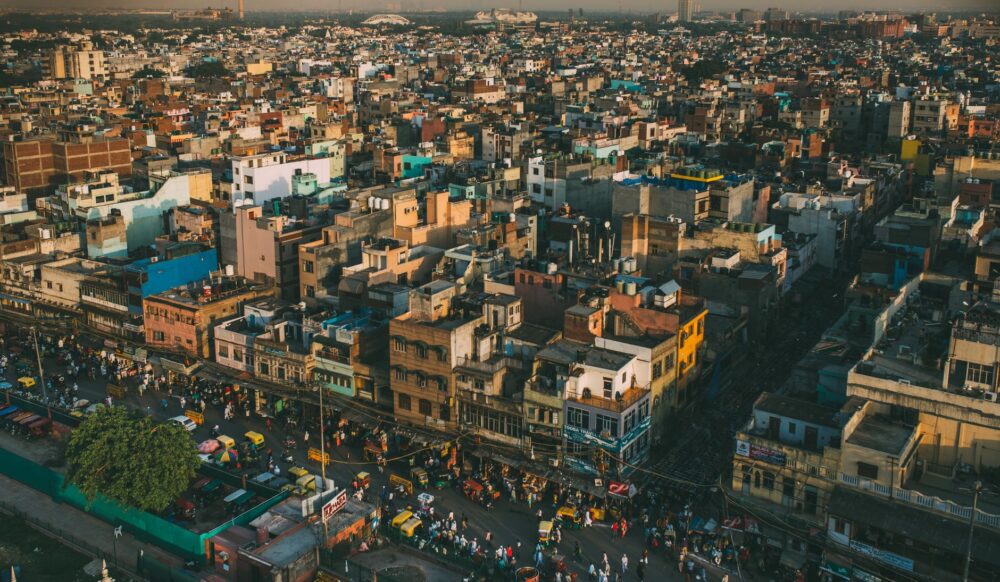
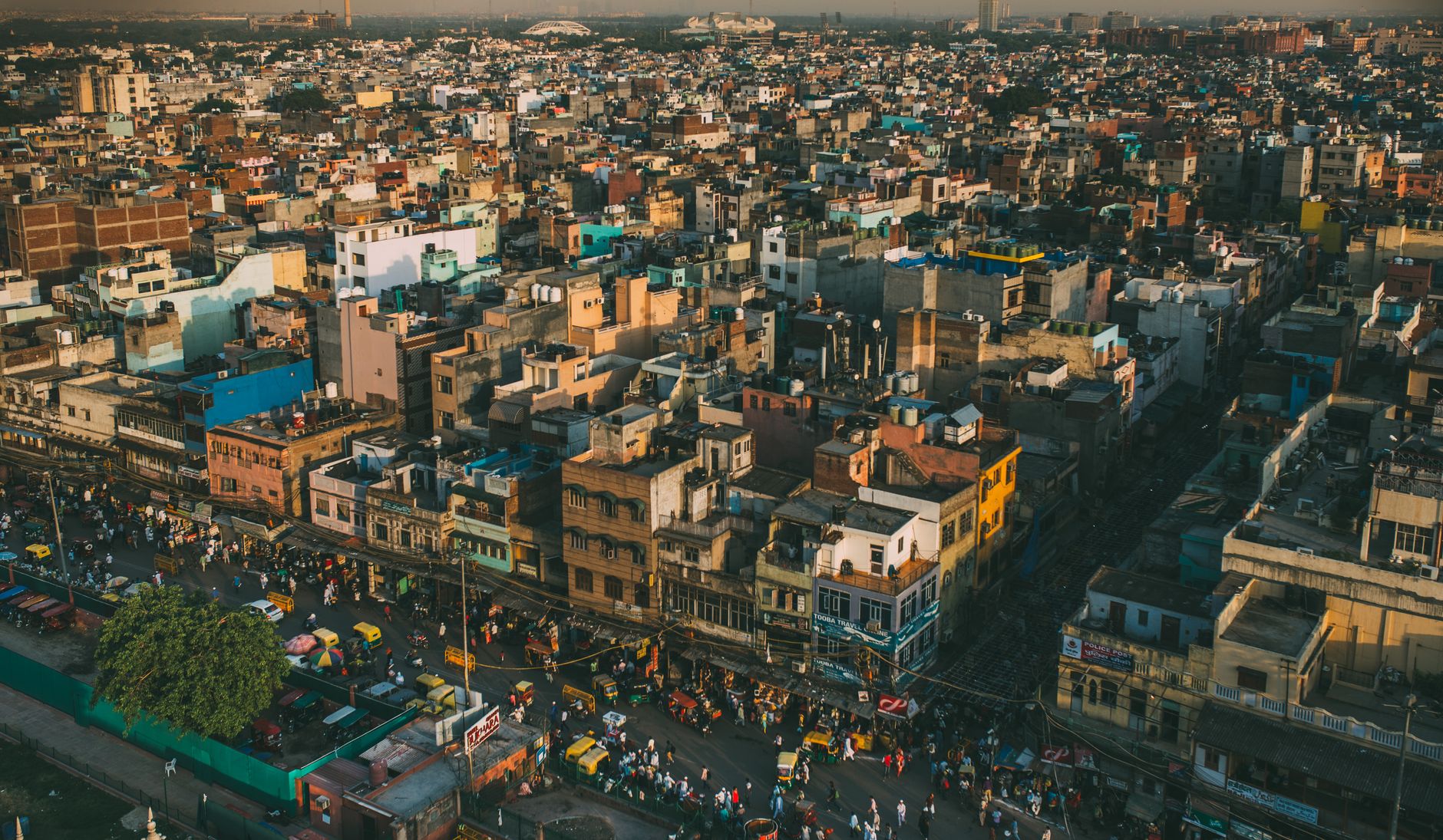
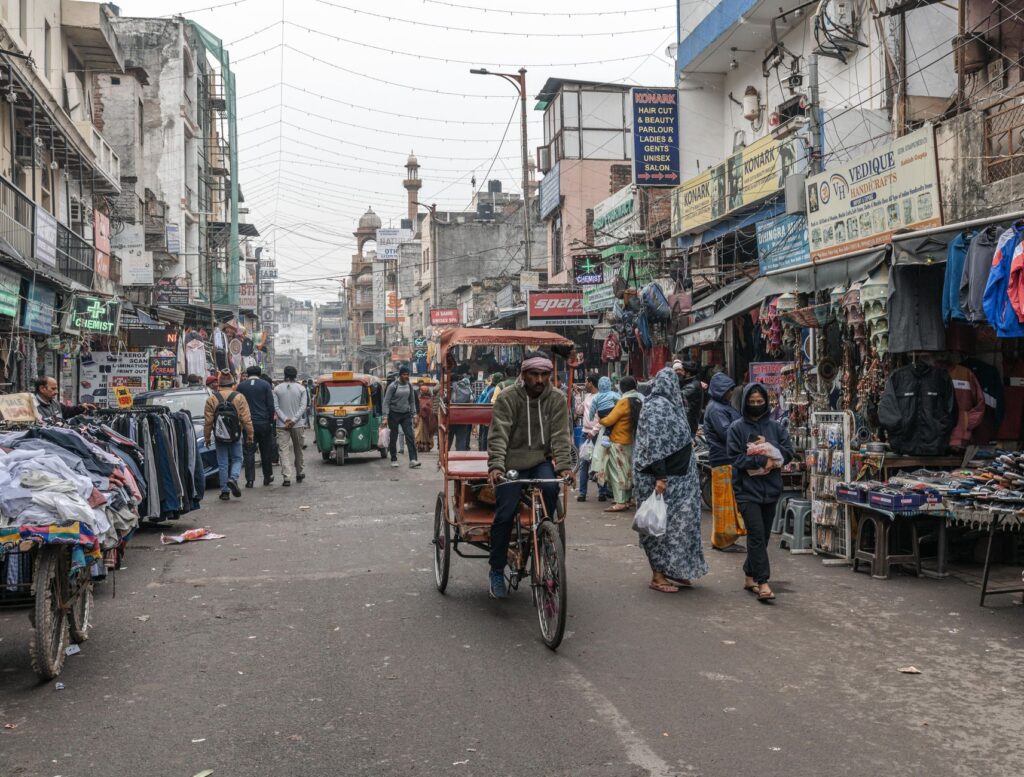
Delving into the commercial labyrinth of old Delhi, founded by Mughal Emperor Shah Jahan in the seventeenth century as Shahjahanabad, requires leaving haste behind and attuning to the perpetual motion of its streets. Along thoroughfares like Chandni Chowk, vendors display brocade textiles, fresh marigold garlands, and aromatic mounds of spices from early morning onwards, filling the air with color and scent. This network of narrow alleys functions as an autonomous organism where each trade—from goldsmiths to paper merchants—occupies a space inherited across generations.
Daily life in these markets rests upon a network of local economies and artisan knowledge that resists the pressure of modern shopping malls. Local shoppers and visitors share the same dynamic space, traversed by the echo of cargo bicycles, the clinking of metals, and the persistent aroma of freshly brewed chai tea in small terracotta cups. Far from being a picturesque stamp for tourists, this commercial fabric represents the economic and social engine that nourishes the daily identity of millions of inhabitants in the northern part of the country.
Visitors strolling through these historic markets are encouraged to engage respectfully with local artisans, prioritizing traditional handcrafted goods and supporting generational workshops that sustain the cultural heritage of the area without disrupting daily commerce.
Architectural Heritage and Shared Spirituality
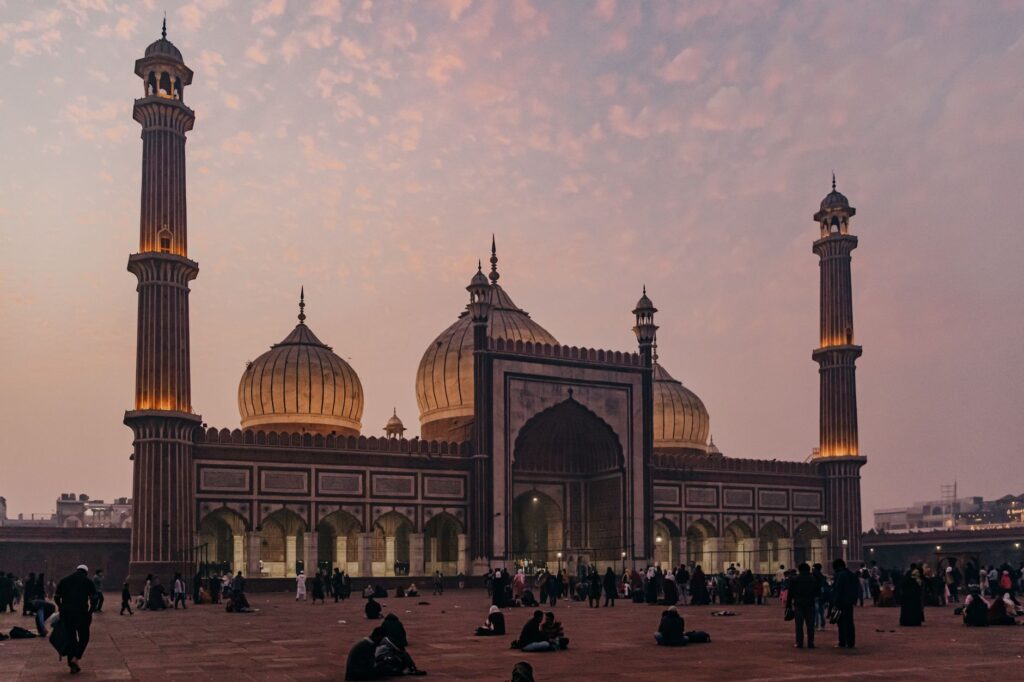
The built landscape of the Indian capital is dotted with monuments that rank among the most prominent in world heritage. The Jama Masjid mosque, with its imposing sandstone courtyard capable of holding twenty-five thousand worshippers, offers a sanctuary of serenity amid urban hustle. From its elevated minarets, the perspective of overlapping rooftops reveals the monumental scale of a city that grew without a preconceived master plan, expanding outward from centers of faith, commerce, and military defense.
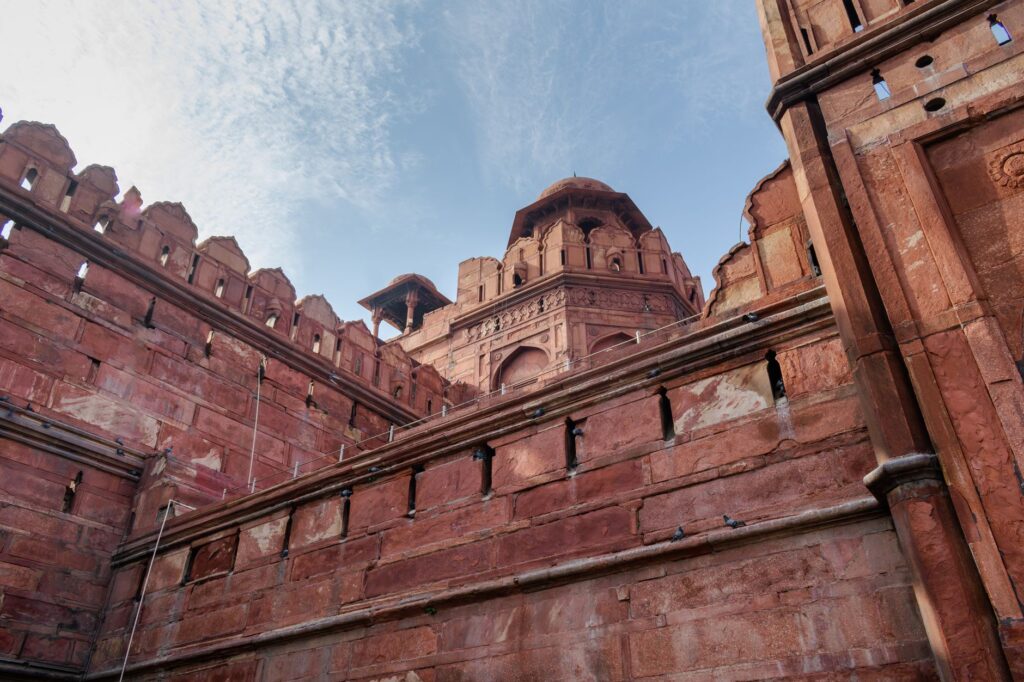
A few kilometers away, the Red Fort and the mausoleums dotting the southern part of the city recall the aesthetic sophistication of the Mughal dynasty, whose artisans fused Persian, Islamic, and Hindu elements into an unmistakable visual synthesis. This architectural polyphony is completed by contemporary temples and Sufi shrines where prayers and devotional music, such as qawwali, gather diverse crowds every Thursday, weaving a social fabric where religious differences are subordinated to a deep shared devotion for poetry and mysticism.
Preserving these sacred structures relies heavily on visitor awareness, encouraging quiet contemplation, appropriate modest attire, and adherence to local heritage conservation rules during every exploration.
Green Transformation and Spaces of Respite
Despite its intense demographic density and the vehicular fleet moving its population daily, Delhi surprises the walker with the constant presence of green spaces and mature groves. Lutyens’ gardens, the grounds surrounding Humayun’s tomb, and the sprawling urban parks act as the lungs of the metropolis. In these botanical redoubts, local wildlife—from parakeets to fruit bats—coexists with citizens who arrive at dawn to practice yoga, walk, or simply escape the summer heat.
The conservation of these ecological corridors has become one of the greatest challenges for municipal administration and citizen collectives. Balancing demographic growth, which exceeded eleven million official residents in its administrative core, with the protection of aquifers and wooded areas requires rigorous political decisions. Parks are not merely decorative elements, but authentic climatic refuges that mitigate high temperatures and preserve urban biodiversity threatened by the expansion of asphalt.
Responsible visitors can contribute to this green balance by utilizing public transit or walking whenever possible, minimizing personal carbon footprints, and avoiding any littering within these protected botanical zones.
Culinary Culture as an Archive of Memories
Understanding the Indian capital inevitably involves sitting at its table or tasting bites at its street stalls, where gastronomy functions as a living archive of migrations and historical traditions. From the stuffed parathas of Gali Paranth Wali in the old town to the aromatic curries of Mughal influence and northern vegetarian preparations, local cuisine reflects accumulated influences of empires, merchants, and refugees arriving from different regions of the subcontinent over centuries.
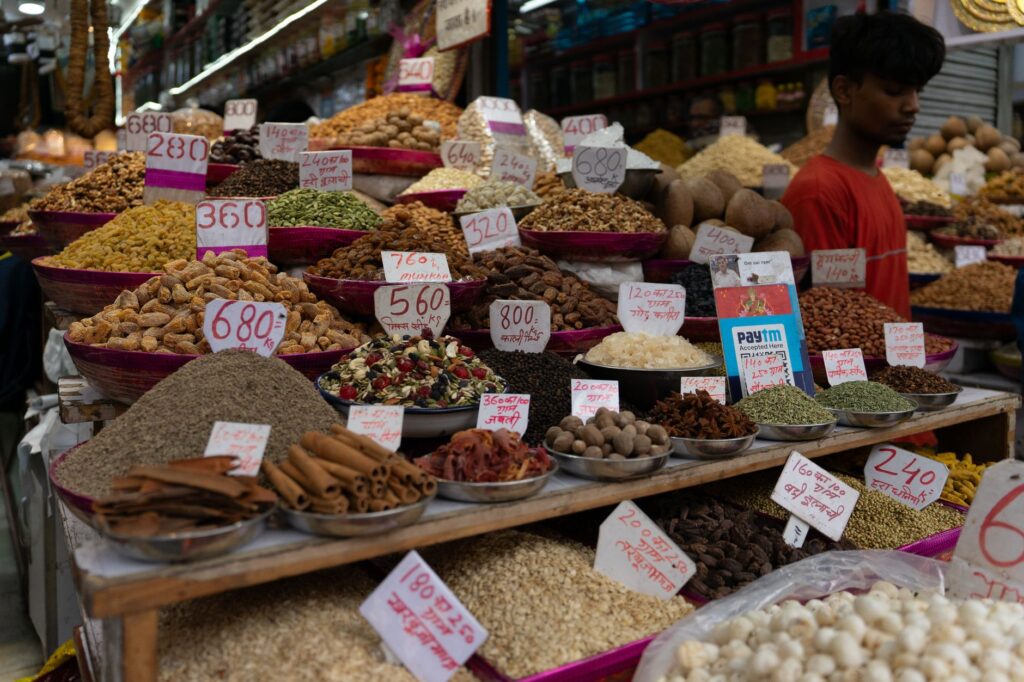
Each dish tells a story of adaptation and cultural blending that transcends mere physical sustenance to become an act of collective memory. Spice markets and traditional fast-food stalls, locally known as chaat stalls, operate under strict rules of culinary skill passed down from parents to children. For the curious traveler, approaching this gastronomic offer with respect and curiosity allows one to decipher the codes of hospitality and coexistence that characterize Delhi society.
Supporting family-run eateries and local food vendors not only guarantees an authentic culinary encounter but also directly sustains the traditional recipes and family lineages that have fed generations of residents.
Practical guide
Planning a visit to Delhi requires keeping in mind its subtropical climate, marked by extremely hot summers and intense monsoons between July and September. The best time to tour the city on foot and enjoy its outdoor spaces spans the months from October to March, when morning and evening temperatures are more benign.
Getting there and getting around
Indira Gandhi International Airport (IATA: DEL) connects the city with major global and domestic hubs. From the terminal, the Delhi Metro system offers a fast, clean, and efficient network to travel to the center and peripheral neighborhoods, avoiding road congestion. For short distances within the ancient markets, cycle-rickshaws and auto-rickshaws are the most practical option.
Accommodation and recommended neighborhoods
Lodging options range from restored historic hotels in the Civil Lines and Connaught Place areas to family guesthouses in quiet southern residential zones. Choosing a central location facilitates early access to monuments before visitor influx increases.
Responsible consumption tips
The use of bottled or purified water is strongly advised, alongside avoiding ice of dubious origin and dressing modestly when visiting places of worship, covering shoulders and knees out of respect for local norms.
The Human Pulse on the Banks of the Yamuna
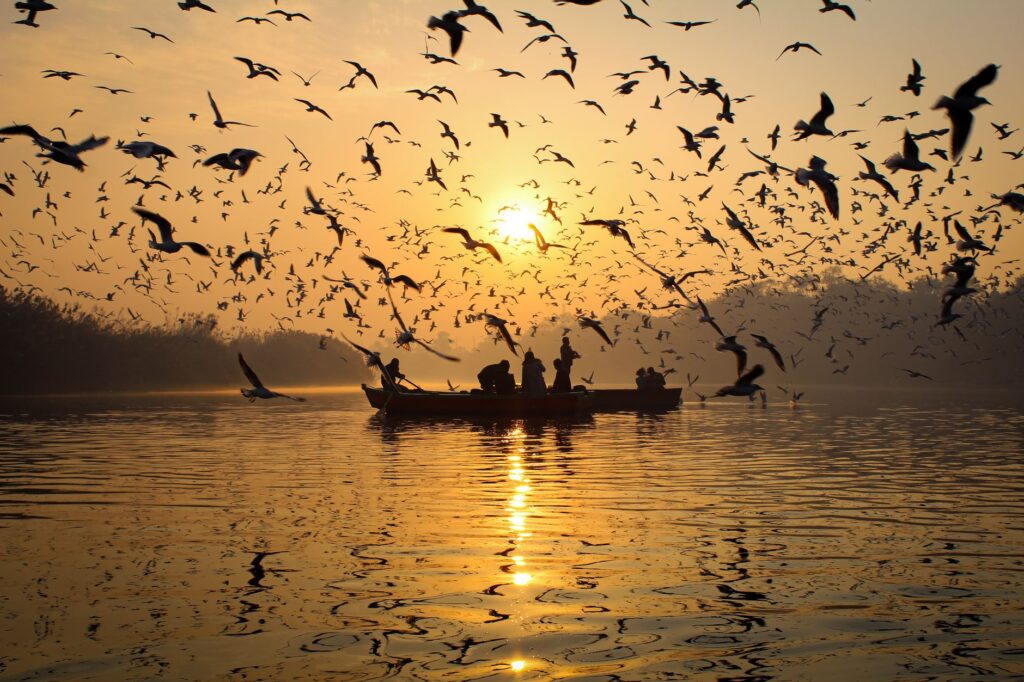
At dusk, when oblique sunrays dye the waters of the Yamuna River and the domes of the old city in amber hues, Delhi reveals its most contemplative dimension. On the river ghats and along the margins where the city touches nature, engine bustle yields to bird murmur and the evening prayers of devotees. It is in that suspended instant, far from demographic statistics and conventional tourist circuits, that the capital of India displays its most humane and enduring face, inviting the traveler to contemplate with respect a world in perpetual and fascinating reinvention.