
An Oasis in the Northeastern Governorate
Nestled within the Northeastern Governorate of Oman, the locality of Badiyah unfolds as a settlement where the vastness of golden sands maintains a constant dialogue with the daily lives of its communities. Far from being a mere waypoint on routes toward the more arid expanses of the Arabian Peninsula, this enclave concentrates a profound identity forged over centuries through human adaptation to a rigorous and fascinating climate.
The average altitude of the area, situated around two hundred and ninety-eight meters above sea level, conditions a thermal regime where morning hours offer a luminous respite before the sun reaches its zenith. The geographical coordinates of the region place this population center at a natural crossroads of dry valleys and dune systems that have shaped traditional architecture, underground water management via falaj systems, and the social organization of its residents.
Beyond the immediate perimeter of the urban nucleus, the landscape expands into uninterrupted horizons that have served historically as natural passages for desert caravans. The interaction between topography and human settlements demonstrates a sophisticated understanding of microclimates, where shade, orientation, and materials converge to sustain life in an environment that demands constant mindfulness and respect from anyone who inhabits or traverses it.
Adobe Architecture and Shared Shade
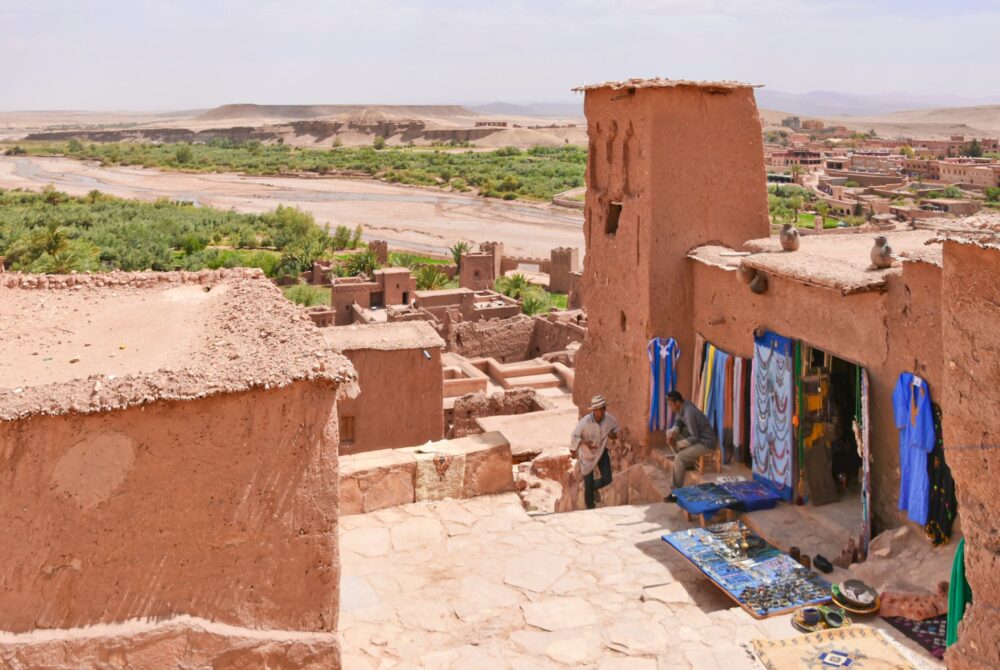
Strolling through the traditional sectors of Badiyah allows visitors to observe firsthand how vernacular construction responds to millenary bioclimatic criteria. Adobe walls, crafted from local clay, straw, and water, act as natural thermal regulators that absorb daytime heat and slowly release it during the cool desert nights. This building wisdom is complemented by the layout of narrow alleys oriented to catch breezes and cast continuous shadows over passersby.
Dwellings are typically organized around interior courtyards, gathering spaces where family and community life unfolds sheltered from outside gazes. In these corners, Omani coffee flavored with cardamom and accompanied by fresh dates harvested from nearby orchards constitutes a daily ritual of hospitality. The relationship between residents and their immediate environment is built on mutual respect, where each water resource is managed with extreme caution to ensure the sustainability of date palms.
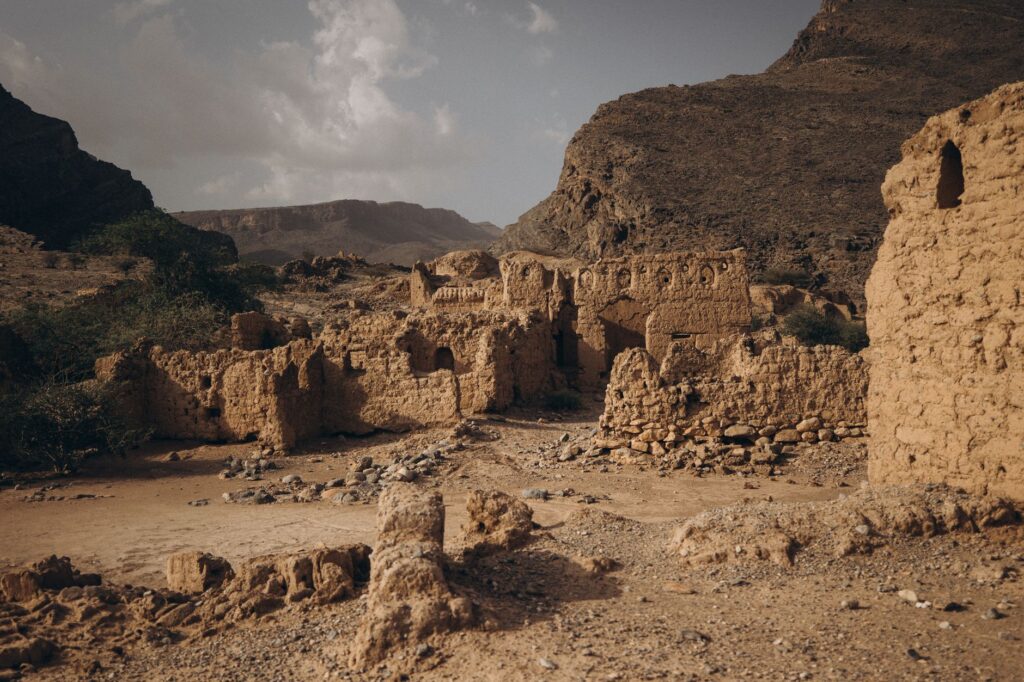
Preserving these constructive techniques requires ongoing dedication from local artisans who understand the properties of native soils. The tactile texture of weathered mudbrick walls narrates a long history of craftsmanship, reminding observers that human shelter in arid regions is fundamentally an act of equilibrium with nature rather than an imposition upon it.
The true measure of hospitality in the desert is not judged by the abundance of material goods, but by the sincere willingness to share shade and water with the weary traveler.
Daily Rhythm in Markets and Local Workshops
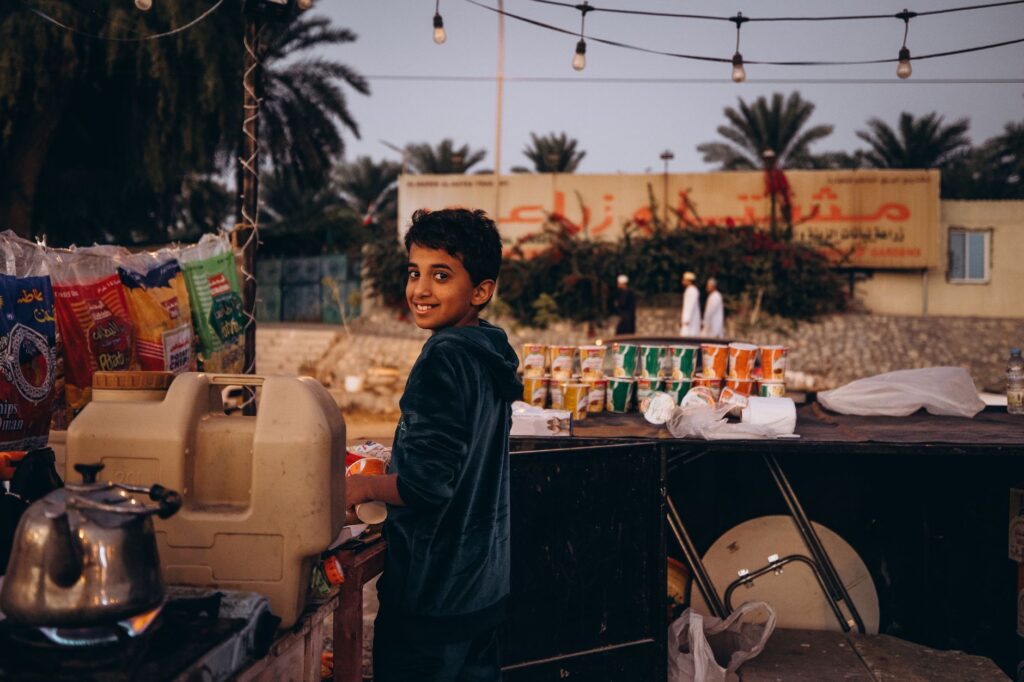
The pace of the day in Badiyah is marked by solar cycles. While dawn over the sandy ridges mobilizes farmers toward the palm groves, the central hours drive commercial activity toward the small shops of the urban core. Here, traditional kitchen utensils, goat wool textiles, and pottery pieces occupy a central place in local economic exchange, reflecting craft skills passed down through generations.
Local markets are not merely spaces of commercial transaction, but focal points where community news is discussed and collective agricultural labor is coordinated. The presence of artisans who still work metals and plant fibers without the intervention of mass industrial processes underscores the persistence of a human-scale economy, deeply rooted in the real needs of the resident population.
Engaging with these spaces offers a window into the socioeconomic fabric of the region, where commerce relies heavily on personal trust and long-standing familial networks. The hum of daily conversations in the marketplace reflects a living heritage that adapts without losing its core principles of community solidarity and mutual support.
Responsible Management of Natural Heritage
The growth of tourism interest toward Oman’s desert regions has presented new challenges for the conservation of local ecosystems and the tranquility of its residents. In Badiyah, local authorities and community groups promote initiatives aimed at low-impact tourism, prioritizing respect for the dunes, native fauna—such as reptiles and birds adapted to aridity—and the conservative customs of Omani society.
Recommendations for those visiting the area emphasize the need to use authorized routes to avoid unnecessary soil erosion and disruption of fragile biological equilibria. Likewise, travelers are urged to dress respectfully according to the country’s cultural norms, covering shoulders and knees, and to always ask permission before photographing individuals or private domestic spaces.
Environmental preservation here extends to minimizing single-use plastics and respecting nighttime silence, allowing both wildlife and human residents to maintain their natural rhythms undisturbed by excessive noise or light pollution.
Gastronomic Nuances and Oasis Flavors
The cuisine of Badiyah reflects the history of a commercial crossroads between the interior of the peninsula and the maritime trade routes of the Indian Ocean. Dishes based on slow-cooked marinated meats, spiced rice, and freshly baked flatbreads form the basis of a nutrient-rich diet designed to withstand the energy demands of a warm climate. The use of spices such as cumin, cloves, and turmeric evidences the historical influence of distant mercantile exchanges.
Dates, meanwhile, occupy an almost sacred category in local gastronomy. With dozens of varieties cultivated in the region’s orchards, this fruit not only accompanies practically every meal, but is also used to make energy pastes and traditional beverages. The date harvest during the summer months mobilizes entire families in community labor that reinforces ties of neighborly cooperation.
Preparing traditional meals often involves communal ovens and slow cooking methods that enhance the natural flavors of local produce, turning every shared meal into an extension of the region’s inherent hospitality.
The Art of Pausing Before the Infinite Horizon
One of Badiyah’s greatest attractions lies in its ability to offer silence and perspective. In an era marked by hyperconnectivity and the constant noise of large cities, the outskirts of the town provide an opportunity to contemplate the movement of light over sandy ridges at dusk, when golden tones give way to a palette of violet and deep blue before the emergence of the starry firmament.
This experience requires no grand artifices or invasive infrastructures; it relies on patient observation and the capacity to tune into a temporal rhythm where minutes are not measured by haste, but by the depth of the experience. Walkers exploring the peripheral trails discover that the desert, far from being an empty space, is full of geological nuances and subtle traces of biodiversity perfectly adapted to its surroundings.
Contemplating the vast landscapes without rushing invites introspection and fosters a deeper appreciation for the quiet resilience embedded in the desert environment and its inhabitants.

Practical guide
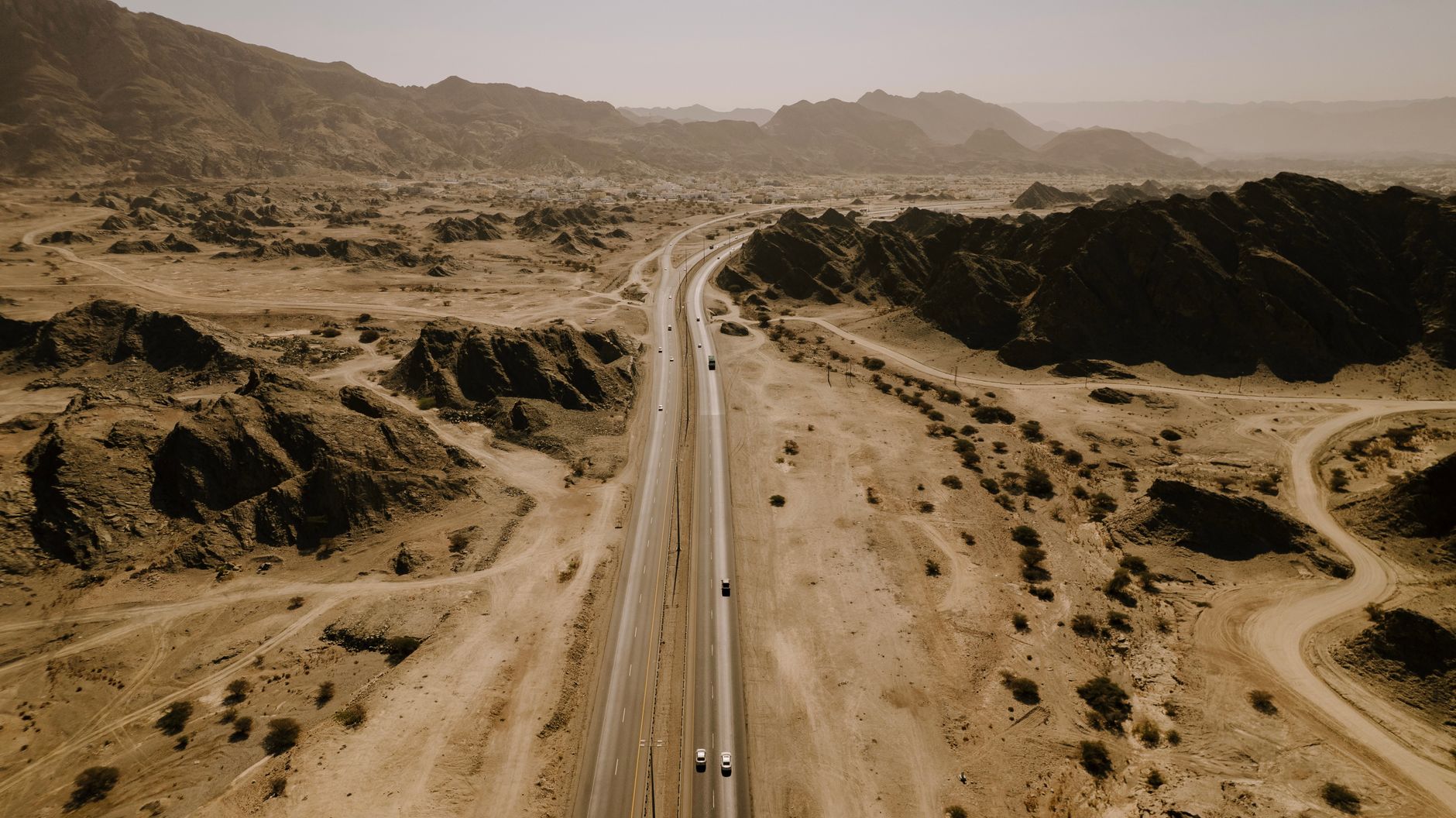
Getting there: Badiyah can be accessed by road from Muscat, the capital of the country, via a journey taking approximately two and a half hours along well-maintained paved highways. The use of four-wheel-drive vehicles is recommended only if planning to venture into deep dune areas off the main roads.
Best time to visit: The months between November and March offer the most favorable weather conditions, with mild daytime temperatures ranging between twenty and twenty-five degrees Celsius, avoiding the extreme heat of summer.
Accommodation: There are small traditional hotels, guesthouses run by local families, and regulated tourist camps in the vicinity that allow overnight stays under the stars adhering to environmental sustainability criteria.
Code of conduct: It is essential to respect residents’ privacy, dress modestly in public spaces, avoid operating drones without proper authorizations, and refrain from leaving any waste in the natural environment.
The Final Echo of Sand in Memory
As evening falls and the night breeze begins to cool the surface of the dunes, Badiyah recovers an ancestral stillness that transcends any travel guide. The faint lights of traditional dwellings flicker against the darkness of the desert, reminding the visitor that the true wealth of these landscapes lies in their silent resilience and the dignity of daily life built in harmony with the elements.