
The Memory of the Land in the Heart of Oman
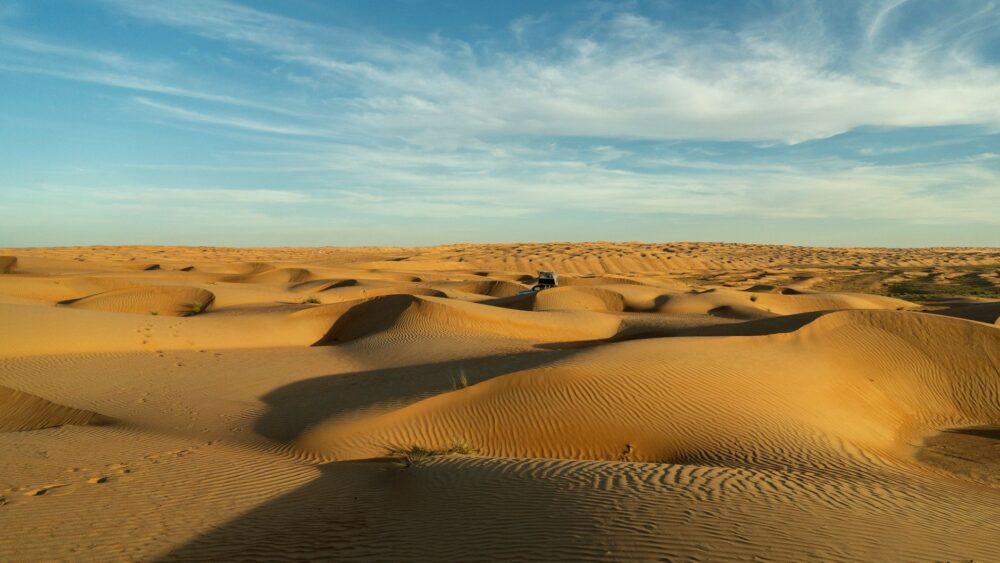
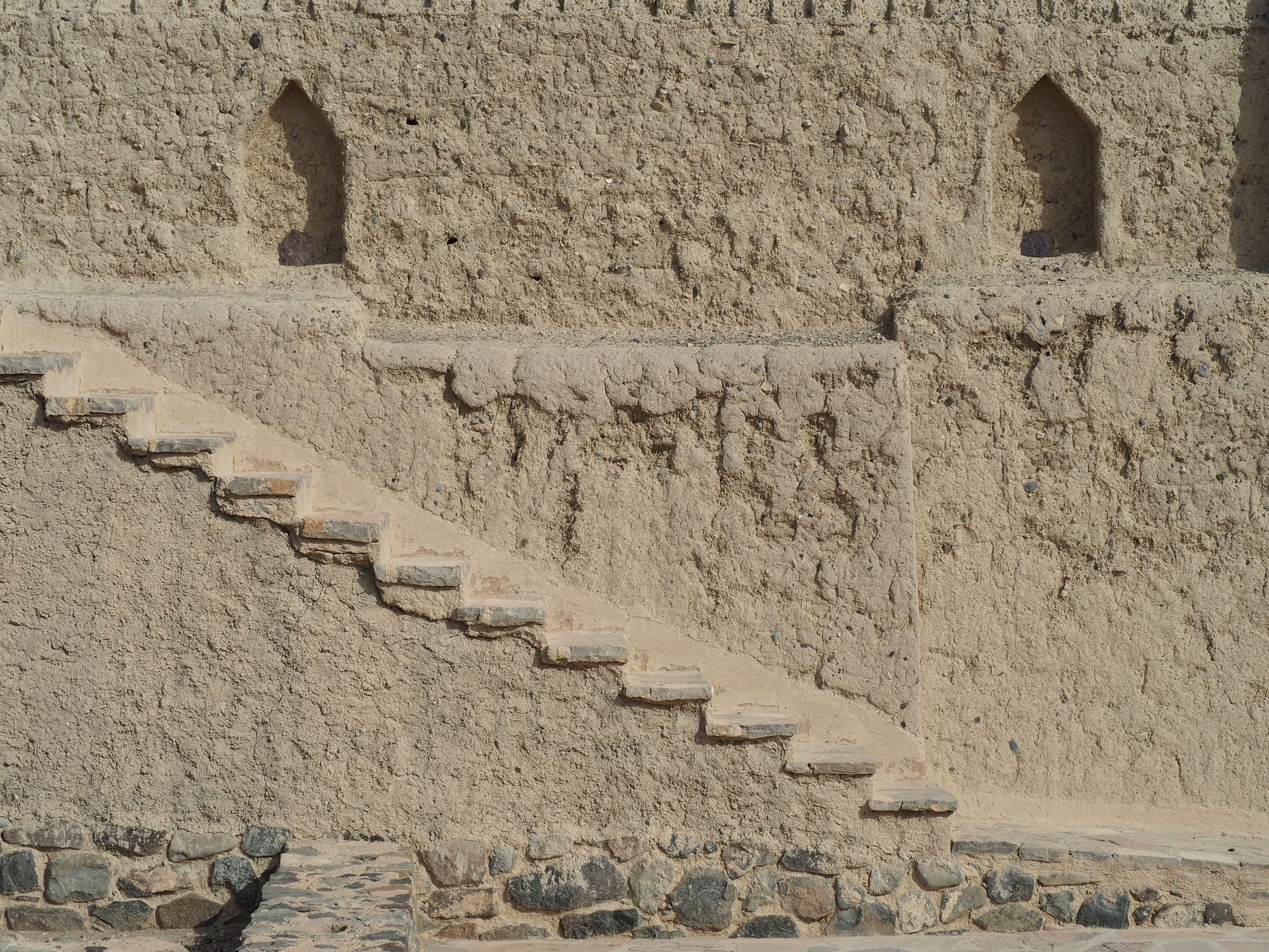
In the interior of the Sultanate of Oman, at the foot of the mountain foothills descending toward the plains of Ad Dakhiliyah, the town of Bahlā’ unfolds a geography where raw-earth architecture and vast date palm groves dictate the rhythm of each day. Far from the hustle and bustle of major coastal capitals, this historic oasis structured around its imposing adobe fortress maintains a symbiotic relationship with the surrounding territory. Here, everyday cooking does not respond to improvisation or contemporary urgency, but rather to a patient negotiation between the limited resources of the arid environment and the wisdom passed down through generations of farmers, artisans, and merchants.
The pulse of Bahlā’ begins to make itself felt long before the sun reaches its zenith over the fortified walls protecting the old town. On the edges of the oasis, where traditional irrigation systems known as aflaj distribute underground water with millimeter precision, families cultivate plots where date palms, pomegranates, and small vegetable gardens thrive. This agricultural landscape, inscribed as a UNESCO World Heritage site due to both its defensive complexity and hydraulic ingenuity, forms the true foundation upon which the local pantry is built. Each variety of date, from the tenderest and most translucent fruits to those destined for long-term preservation, fulfills a precise function in the daily diet and traditional hospitality.
The Traditional Market as Neighborhood Gravity Center
The market of Bahlā’, situated near the historic core, functions as the nerve center where the produce of the orchards, the livestock of surrounding nomadic communities, and dry goods arriving from the Persian Gulf converge. Early in the morning, the stalls of local vendors fill with open sacks displaying aromatic spices, cardamom, turmeric, and sun-dried black limes known regionally as loomi. These ingredients are the fundamental pillars that grant depth and character to the lamb and rice stews forming the core of the Omani table.
Strolling through the aisles of the market offers insight into the social dynamics of the community. Commercial exchanges are not limited to economic transactions; they are the space where harvests are agreed upon, news regarding the condition of irrigation channels is shared, and family recipes are discussed. Here, buyers inspect the quality of goat meat raised in mountain pastures and select the dry legumes used to thicken broths during the warmer months. The presence of artisans still working local ceramics serves as a reminder that traditional tableware and cooking are intrinsically linked in this corner of the southern Arabian Peninsula.
The Aroma of Flatbread and Clay Ovens
One of the most notable elements of culinary life in Bahlā’ is the daily preparation of bread. In small bakeries concealed behind adobe walls, bakers ignite traditional ovens using dried palm branches to reach the ideal temperature. The dough, composed simply of wheat flour, water, and salt, is stretched with manual dexterity before being adhered to the incandescent walls of the clay oven, where it bakes in a matter of seconds.
This flatbread, crispy at the edges and tender inside, accompanies practically every meal of the day. It is consumed freshly made, served with olive oil, mountain bee honey, or integrated into more elaborate dishes such as thareed, where the bread slowly absorbs the concentrated juices of a meat stew simmered in clay pots. The texture of this staple food reflects the skill of those who master fire and time, two critical elements in a climate where the management of energy and resources defines the success of any culinary preparation.

The Ritual Sweetness of Omani Halwa
If there is one product that unmistakably identifies Bahlā’ beyond its walls, it is halwa, a dense and aromatic sweet whose reputation has transcended national borders. In the town’s traditional workshops, the creation of this delicacy resembles an alchemy ritual requiring hours of constant attention. Around large copper cauldrons, master confectioners stir a precise mixture of cornstarch, caramelized sugar, clarified butter, rosewater imported from the mountains of Jebel Akhdar, nuts, and generous amounts of cardamom and saffron.
The cooking process can extend for more than five hours, during which the contents of the cauldron must be stirred without interruption to prevent sticking to the bottom and to achieve the elastic, smooth texture characterizing authentic Bahlā’ halwa. This sweet is not a daily consumption dessert, but the ultimate symbol of Omani hospitality. It is offered to guests alongside bitter coffee flavored with cardamom, a combination of bitter and sweet flavors designed to balance the palate and honor the visitor crossing the threshold of a home or shop.
Hidden Orchards and the Water Cycle
To understand where the flavors of Bahlā’ originate, one must delve into the channels of the aflaj running through the underground of the oasis. This communal water distribution system, operating by gravity for millennia, enables the survival of agriculture in the midst of an unforgiving geography. Beneath the dense shade of the palms, farmers cultivate alfalfa for livestock, onions, garlic, and small citrus fruits providing the acidity necessary for local cooking.
Water management is an act of strict collective responsibility. Irrigation turns are calculated using sundials and traditional time-measurement systems ensuring equitable distribution among all plot owners. This regulated scarcity permeates the culinary mindset: nothing is wasted, surplus fruit is sun-dried to withstand months of extreme heat, and aromatic herbs are meticulously dried to preserve their medicinal and culinary properties throughout the year.
Hospitality as a Norm of Coexistence
In the rural communities of Oman, and particularly in a heritage enclave like Bahlā’, food fulfills an irreplaceable cohesive function. Large communal trays of spice-aromatized rice crowned with tender pieces of lamb or chicken are arranged on carpets on the floor, inviting diners to share food using the right hand in a gesture of brotherhood and mutual respect.
This act of eating in community reinforces neighborhood bonds and solidarity in a society where mutual aid has historically been indispensable for overcoming droughts and geographical hardships. Rules of courtesy dictate that the host must continuously serve guests, insisting they sample the best pieces of meat and ensuring coffee cups never remain empty. The table in Bahlā’ is, therefore, a faithful reflection of a culture valuing generosity above ostentation.
Practical guide
How to get there: Bahlā’ is located in the Ad Dakhiliyah region, approximately a two-and-a-half-hour drive from Muscat, the capital of Oman. The best way to access the town is by renting a vehicle, which allows for free exploration of both the historic fort and neighboring villages and oases at the foot of the mountains.
When to visit: The months between November and March offer the most favorable weather conditions for touring open-air markets and walking the agricultural paths of the oasis, with moderate daytime temperatures ranging between 20 °C and 25 °C.
Where to eat and shop: Near the central market and facing the historic center, small local establishments serve traditional dishes of spiced rice and lamb. Additionally, the area features traditional workshops specializing in artisanal halwa production, where visitors can observe the cooking process in large copper cauldrons and purchase fresh product.
Local respect guidelines: When visiting traditional markets and residential areas of the oasis, wearing modest clothing that covers shoulders and knees is advisable, both out of respect for local customs and as protection against the desert sun. Asking permission before photographing vendors or artisanal workspaces is recommended.
The Legacy of Adobe Under the Desert Sky
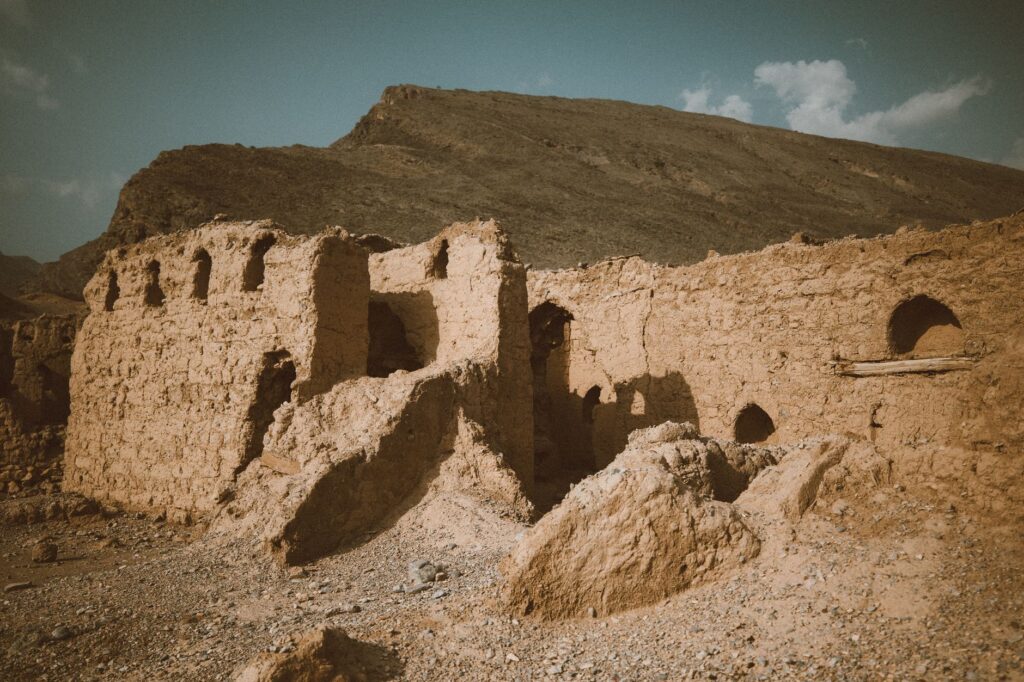
As the afternoon advances and the final rays of sunlight strike the watchtowers of Bahlā’, the oasis recovers a solemn calm that appears to have remained unaltered for centuries. The chimneys of the halwa workshops extinguish their fires and the market aisles empty until dawn of the following day, when the cycle of land and water will restart with the proverbial precision of its inhabitants. In this corner of the Omani interior, heritage is not exhibited solely behind museum glass, but is kneaded, baked, and shared every day around a table built with the living memory of clay and desert.