

A Geography Sculpted in Limestone
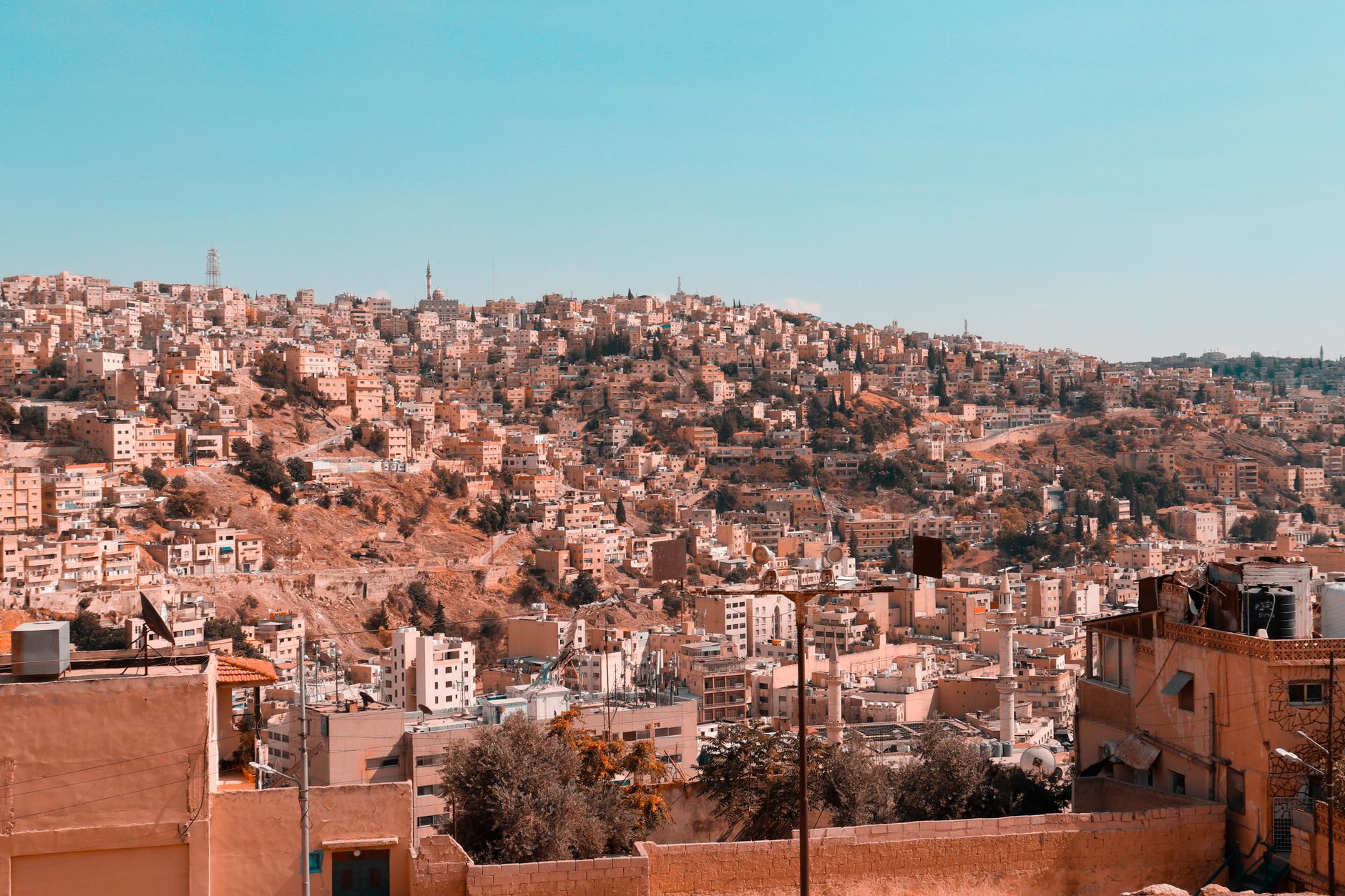
Amman rises across a terrain of hills and valleys that have shaped how its residents move, build, and understand their environment in Jordan. Far from the desert flatlands often associated with the region’s collective imagery, the capital displays a continuous expanse of white and beige limestone climbing impossible slopes. Each hill, known locally as a jabal, functions as a neighbourhood with its own distinct character, connected to the rest of the city through an endless network of staircases and winding streets.
The city’s average altitude, situated around 757 metres above sea level, defines a climate of contrasts where bright mornings give way to fresh breezes even in the warmest months. This rugged relief is not merely a geographical feature, but the structuring element of urban life. The ancient gates of the Roman city opened in the valley, while temples and fortresses crowned the heights, a dual layout that still organizes the daily transit of residents and visitors alike.
In addition to these structural elevations, the municipal boundaries encompass a vibrant demographic core exceeding one million two hundred thousand inhabitants. This concentration of human activity relies on a delicate balance between modern transport arteries and historic alleyways. The preservation of this topography depends heavily on municipal guidelines that regulate height restrictions for new constructions, safeguarding the panoramic views that connect one neighbourhood to another across the dramatic valleys.
The Commercial Pulse of Traditional Souks
In the historic heart of the city, located in the hollow where several valleys converge, traditional markets maintain an incessant level of activity. The gold, spice, and textile souks form a fabric where retail commerce overlaps with the deeply rooted customs of families. Here, aromas of cardamom, roasted coffee, and olive oil soap fill the air, setting the rhythm for transactions that prioritize direct dealing and unhurried conversation.

Unlike peripheral shopping malls, the traditional centre encourages intense pedestrian mobility. Shopfronts opening onto the street and small craft workshops displaying daily production reveal an economy of human scale. Visitors walking through these passageways discover that the true heritage lies not solely in ancient stones, but in the constant vitality of its merchants and artisans.
Local shopkeepers often inherit their stalls and trade secrets across generations, creating a living archive of mercantile history. Visitors exploring these corridors are invited to observe the craftsmanship behind hand-beaten copper utensils, traditional woven rugs, and intricate silver jewelry. Supporting these independent operations ensures that the authentic character of the central market district endures amidst modern commercial pressures.
Superimposed Heritage at the Citadel
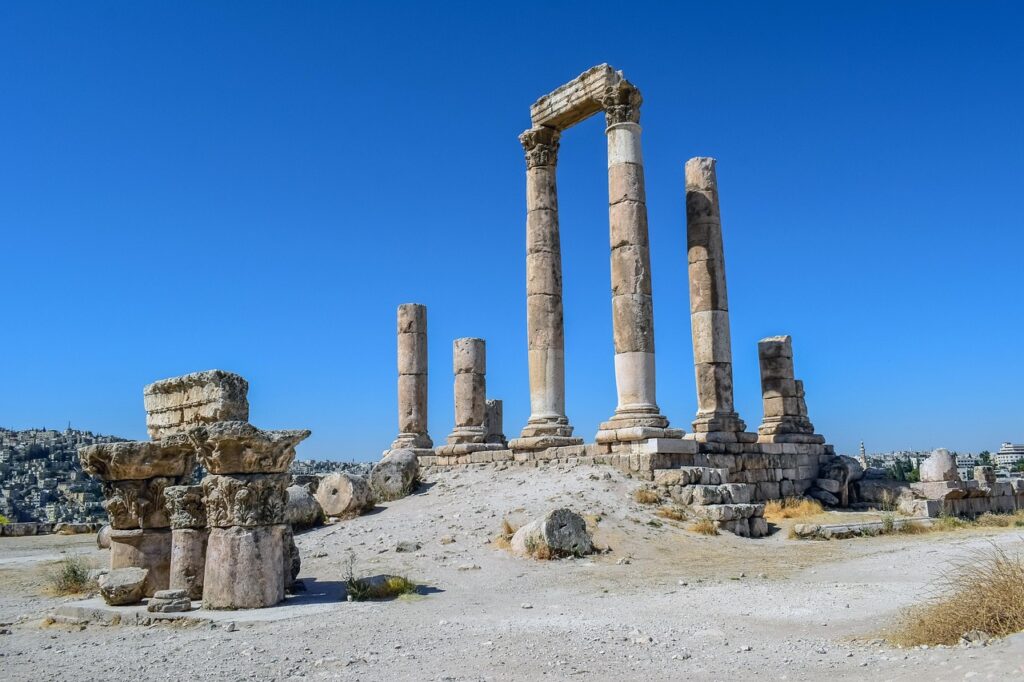
Rising atop Jabal al-Qal’a, the Citadel visually dominates much of the urban fabric and offers a stratified reading of Mediterranean and Middle Eastern history. Ammonite, Roman, Byzantine, and Islamic remains coexist within the same open-air archaeological space. The columns of the Temple of Hercules and the reconstructed dome of the Umayyad Palace establish an architectural dialogue spanning millennia of uninterrupted human occupation.
To understand the magnitude of this site, it is essential to observe how the modern city embraces it from all surrounding slopes. The contrast between ancient ashlar blocks and the distant murmur of urban traffic underscores the continuity of a settlement that has continually reinvented itself under successive empires without losing its local roots. Current conservation policies aim to protect this legacy while allowing public and educational access.

Educational signage throughout the archaeological park guides visitors through the complex historical layers without disturbing the fragile ruins. Archaeologists continue to study subterranean cisterns and defensive walls, revealing new insights into how ancient communities managed water scarcity and urban defense on these elevated plateaus.
Residential Architecture and Neighbourhood Memory
Historic residential neighbourhoods such as Jabal Amman and Jabal Webibdeh showcase characteristic early and mid-20th-century architecture. Single-family homes built with local stone, featuring large windows and interior courtyards, reflect the influence of Ottoman and European aesthetic currents adapted to the region’s climate and materials. Today, many of these mansions have been converted into art galleries, independent bookstores, and cultural cafés.
Strolling through these streets allows one to appreciate the transition between domestic scale and metropolitan hustle. Residents meticulously tend front gardens where fig trees and jasmine thrive, creating urban microclimates that soften the arid surroundings. This attention to aesthetic and botanical detail turns wandering into a deliberate sensory experience, far removed from conventional tourist routes.
Preservation societies work closely with municipal authorities to protect these architectural landmarks from speculative demolition. By rehabilitating heritage buildings into community hubs, these neighborhoods maintain their residential soul while offering visitors quiet spaces for contemplation and artistic engagement.
The city does not reveal itself in a single monument, but in the sum of its elevations, in the clear stone reflecting the sun, and in the everyday hospitality of its inhabitants.
The Everyday Table Between Olive and Wheat
Gastronomy is the result of a Mediterranean and continental pantry where basic ingredients are transformed through recipes passed down from generation to generation. Olive oil from the surrounding hills, zaatar, labneh cheese, and freshly baked flatbreads form the pillars of the daily table. Grocery markets display the seasonality of produce such as pomegranates, figs, and a wide variety of pulses.

Eating in the capital also involves understanding the unwritten rules of local hospitality. Small establishments specializing in popular dishes like hummus or falafel serve as intergenerational meeting points. In these spaces, food is shared without pretense, valuing the freshness of ingredients and care in traditional cooking times.
Culinary traditions are deeply connected to the agricultural cycles of the surrounding countryside, where small-scale farmers cultivate olives, grapes, and wheat using traditional dry-farming techniques. Visitors looking to engage responsibly with local food culture can seek out family-run eateries and community kitchens that source their ingredients directly from regional producers, thereby sustaining rural livelihoods.
Sustainability and Responsible Visitor Choices
Demographic growth poses significant challenges regarding water resource management and urban mobility. For the conscious traveler, adopting responsible practices is essential. This includes prioritizing public transport or walking through central neighbourhoods, reducing single-use plastic consumption, and strictly respecting residential spaces and places of worship.
Furthermore, supporting local commerce and community projects led by artisans and independent associations ensures that economic benefits reach resident populations directly. The preservation of the material and intangible heritage relies on a delicate balance between openness to international tourism and the protection of the quality of life in its communities.
Travelers are also encouraged to be mindful of water scarcity by practicing conservation habits during their stay, such as reusing hotel linens and limiting shower times. Respecting local customs, dress codes, and quiet hours further ensures a harmonious interaction between visitors and permanent residents.
Practical guide
Getting There: Queen Alia International Airport (IATA code: AMM) is located about thirty kilometres south of central Amman and connects the capital with major international hubs. Regular bus services and authorized taxis link the terminal with the urban core.
When to Go: Spring months (March to May) and autumn (September to November) offer moderate temperatures, ideal for exploring the city on foot. Summers are hot but dry, while winters can bring cold nights and occasional precipitation.
Getting Around: The rugged relief makes comfortable footwear suitable for hills and staircases advisable. For long journeys between hills, city taxis are affordable and abundant, though it is wise to agree on the fare or check the meter before starting the trip.

Accommodation: Lodging options are distributed between the historic centre and residential neighbourhoods like Jabal Amman or Jabal Webibdeh, featuring mid-scale hotels, boutique hostels, and restored guesthouses.
Code of Conduct: Modest dress is recommended in public spaces and places of worship, covering shoulders and knees. Courteous greetings and respect for local quiet hours facilitate harmonious coexistence with neighbours.
The Final Horizon at Sunset
As the sun begins to descend behind the western hills, the local limestone takes on golden and ochre hues that transform the appearance of the entire city. From natural viewpoints distributed across different neighbourhoods, evening light quiets daytime bustle and reveals the human scale of an ancient settlement continuing to write its history day by day, between ancestral memory and the steady pulse of its present.


