
Saltillo appears on maps at around 1,573 metres above sea level, in the heart of Coahuila, in northeastern Mexico. It is a city of some 700,000 people that for decades was known for its industry, its dry climate and its proximity to Monterrey. But for those who arrive with time, the state capital reveals itself as a place where transport is not a technical detail: it is the way daily life is organised between the mountain, the desert and a historic centre that retains the mark of the viceroyalty.
This report does not propose a fixed route or a luxury itinerary. It proposes something simpler and more useful: understanding how Saltillo is crossed, what decisions the responsible traveller makes and why the city deserves more than a quick stop on the way south.
A city explained by its altitude
The first decision on arriving in Saltillo is to accept that the body needs a day to adapt. The altitude is not extreme, but the air is dry and the sun beats down hard at midday. Locals know this and organise their movements into two main blocks: early morning and late afternoon. Walking through the centre at three in the afternoon in May is not an act of heroism, it is an avoidable mistake.
That cadence also sets the rhythm of transport. Urban buses run at a reasonable frequency during peak hours and thin out in the central hours. Distances between the centre and the peripheral neighbourhoods are considerable, and the city stretches south and west across a landscape of plain and mountain that changes the perspective with every kilometre.
The bus terminal as a gateway
For most travellers arriving by land, the first image of Saltillo is its bus terminal, on the edge of the city, oriented towards the routes that connect with Monterrey, Torreón, San Luis Potosí and the border. It is not a monumental building, but it serves a clear function: organising the flow of passengers arriving at dawn or leaving at first light.
There, a practical truth becomes clear: in northeastern Mexico, the bus remains the most democratic way to move between cities. Frequencies are broad, fares are competitive and connections to the interior of the country are well established. For the visitor, the recommendation is simple: book ahead in high season and always confirm the departure terminal, because some routes operate from different points.
In Saltillo, the journey begins long before boarding the bus: it begins when you decide what time to cross the city.
The historic centre, on a human scale
Saltillo’s centre is best explored on foot. The Plaza de Armas, the Palacio de Gobierno and the Cathedral of Santiago articulate an urban ensemble of pink stone that retains a pleasant scale, without large avenues breaking its continuity. Walking its streets is the best way to understand why the city was for centuries an obligatory crossing point between central Mexico and the northern provinces.

That character of passage shows in the architecture: one- and two-storey houses, porticoes, inner courtyards and a mix of styles ranging from late baroque to nineteenth-century eclecticism. It is not a monumental city, and precisely for that reason it invites you to look slowly. The traveller who arrives expecting grand ensembles misses the best of it: the everyday texture of a provincial capital that does not need to exaggerate its history.
The mountain range as border and horizon
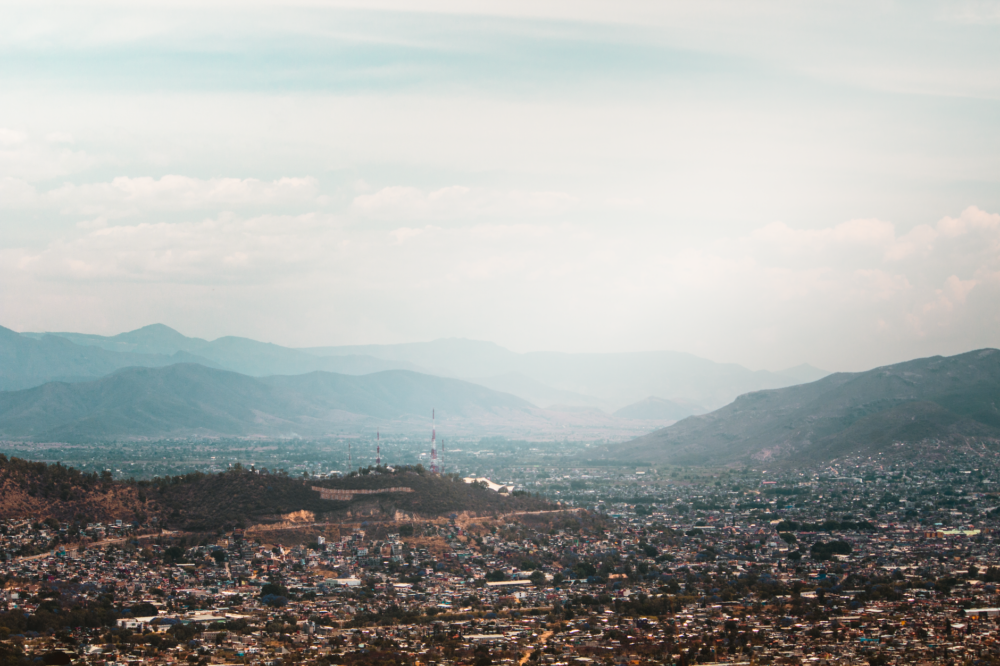
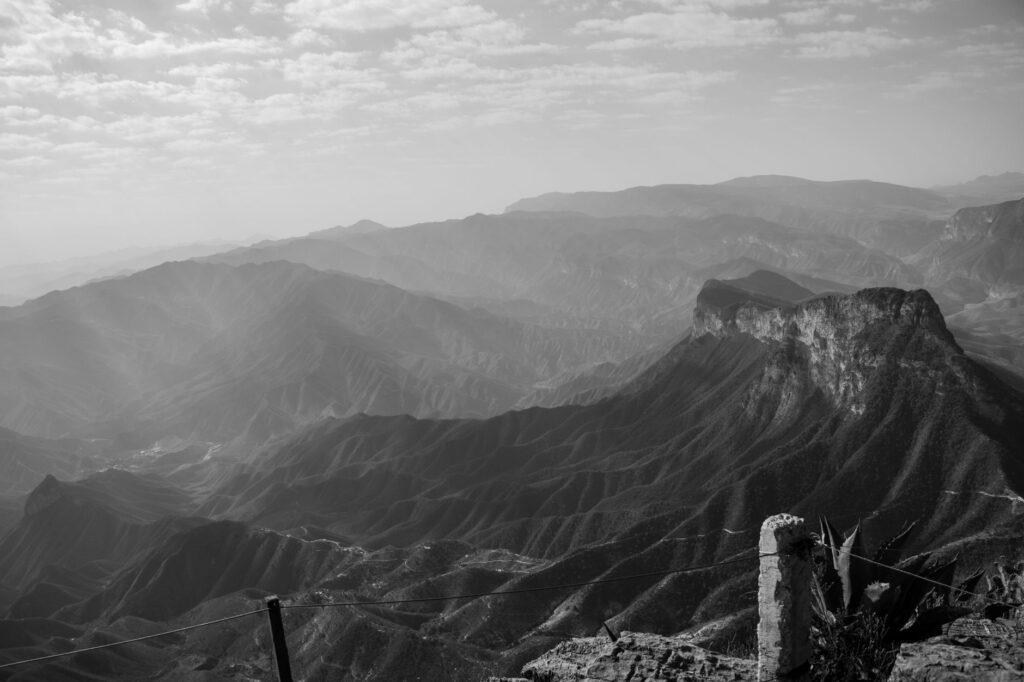
South of the city, the Sierra de Zapalinamé works as a natural limit and as a constant visual reference. It is not a high-mountain destination for the occasional visitor, but it is an element that explains Saltillo’s geography: the city grew wedged between the plain and the range, and that condition has marked its expansion and also its mobility problems.
For those who want to get closer, there are hiking routes and viewpoints, but it is advisable to find out before setting out, carry enough water and avoid the hottest hours. The mountain is not a theme park: it is a natural space that demands respect and planning.
Eating in Saltillo: a stop not to improvise
Saltillo’s gastronomy has a well-earned reputation, and the traveller who only spends a few hours often regrets not having stayed longer. Pan de pulque, flour tortillas, cabrito and milk sweets are part of a culinary tradition best enjoyed without haste and in neighbourhood establishments, far from the most touristy routes.
Eating well in Saltillo requires time and some local guidance. The markets and fondas of the centre offer a quality-price ratio hard to beat, and allow you to understand how a city feeds itself that for generations has combined the tradition of the high plateau with the influence of the industrial northeast.
Moving through the neighbourhoods: beyond the centre
Saltillo does not end in its historic centre. Neighbourhoods such as Cerro del Pueblo, Colonia República and the areas near the great road axes show a different city, more everyday and less prepared for tourism, but also more honest. There public transport is the norm, and the visitor who dares to use it discovers a city that cannot be explained by monuments alone.
The practical recommendation is to find out about the routes before setting out, avoid unnecessary night journeys and accept that the city is not designed for the improvised tourist. That friction is part of the journey and, well managed, becomes a lesson in humility and observation.
A city of passage is better understood when it stops being treated as a station and starts being treated as a place where people live.
Heritage and responsible decisions
Saltillo’s heritage is discreet but valuable. The buildings of the centre, the churches, the local museums and the city’s industrial memory form an ensemble that is preserved with effort and that depends, in part, on the behaviour of visitors. Not touching façades, not invading private spaces and respecting the opening hours of places of worship are small gestures that make a difference.

The responsible traveller should also consider the impact of their movements. Using public transport when possible, sharing a car and avoiding unnecessary taxi journeys are decisions that reduce the footprint and improve the experience, because they force you to look at the city from within.
When to go and what to expect from the weather
Saltillo has a dry, temperate climate, with cold winters and hot summers. Spring and autumn are the most pleasant seasons for walking, although mornings can be cool. Rain, scarce, is concentrated in summer and can complicate some road journeys.
For those planning a visit, the recommendation is to check the forecast before setting out and to bring layered clothing. The altitude and the dryness of the air mean temperatures change a great deal between day and night, and that variation conditions both luggage and the planning of the days.

Practical guide
Reaching Saltillo is relatively straightforward from Monterrey, just over an hour away by road, and from other cities in northern Mexico by bus. The city’s airport operates limited flights, so most travellers arrive by land. Once there, the centre is explored on foot and longer journeys require a bus or taxi.
- Book the bus in advance in high season and confirm the departure terminal.
- Carry water and sun protection, especially in spring and summer.
- Avoid the central hours of the day for walking through the centre.
- Find out about public transport routes before using them.
- Respect heritage spaces and the opening hours of places of worship.
- Check the forecast before planning excursions to the mountain range.
Saltillo is not a city that gives itself up immediately. It demands time, patience and a certain willingness to accept that the journey is not always comfortable. But for those who stop, the reward is a deeper understanding of how northeastern Mexico works, a region that rarely appears in guidebooks and that nevertheless sustains much of the country’s economic and cultural life.
At the end of the day, when the sun falls over the mountain range and the centre recovers its slow rhythm, Saltillo shows its best face: that of a city that does not compete for the visitor’s attention, but simply keeps living, with the mountain in the background and the road at its back.