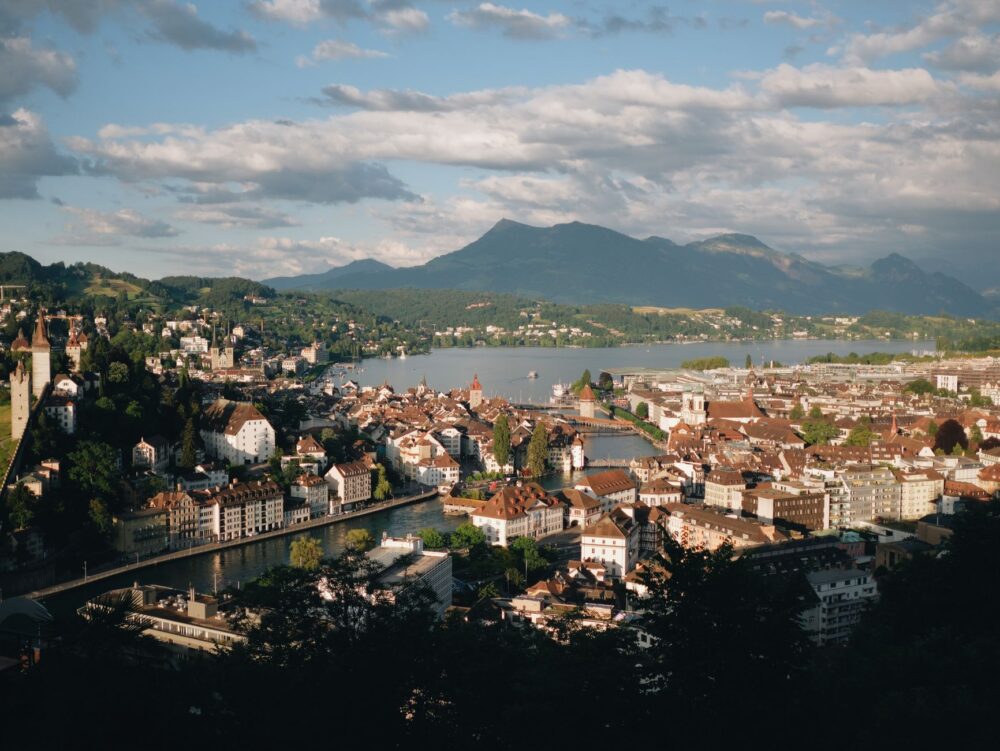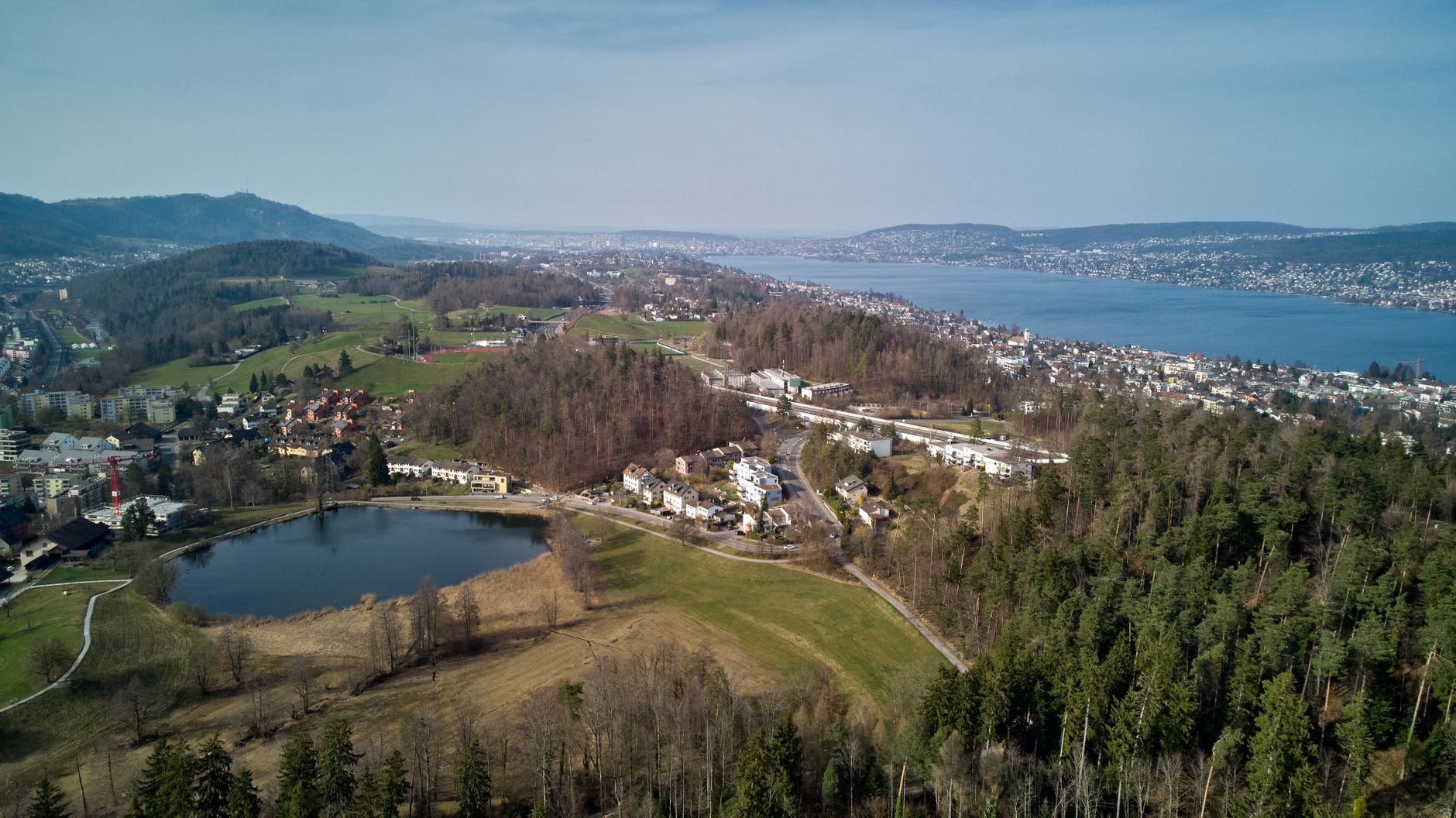

Zurich’s District 9 occupies the western edge of the Swiss city, where the Limmat widens and the urban fabric loses height. It is a territory of 44,878 residents according to available geographic records, sitting at about 426 metres above sea level, which for decades served as the industrial rear guard of a banking metropolis. Today it is explored on foot, by tram and by bicycle, and that mix of uses is precisely what makes it interesting for travellers looking beyond the old town.
The proposal is not to admire an isolated monument but to understand a sequence: Altstetten, Albisrieden, the river corridor, the former industrial estates and the parks that stitch them together. Switzerland, a country of discreet and precise infrastructure, has turned this district into a laboratory of coexistence between housing, logistics and leisure. Exploring it requires patience and a certain curiosity for what is not signposted in gold letters.
A district read from the tram
The first practical decision is to accept that Kreis 9 is not visited in one block but in strips. Trams and suburban trains act as seams between neighbourhoods that, on foot, seem farther apart than they are. Altstetten concentrates much of the railway and commercial activity; Albisrieden keeps a more residential feel, with quiet streets and small shops. Between the two, the landscape changes without drama.
For visitors used to European old towns, the absence of monumental facades can be disconcerting. It helps to look differently: platforms, footbridges, inner courtyards and rehabilitated halls tell the story of a city that grew by producing and now tries to inhabit what once only worked.
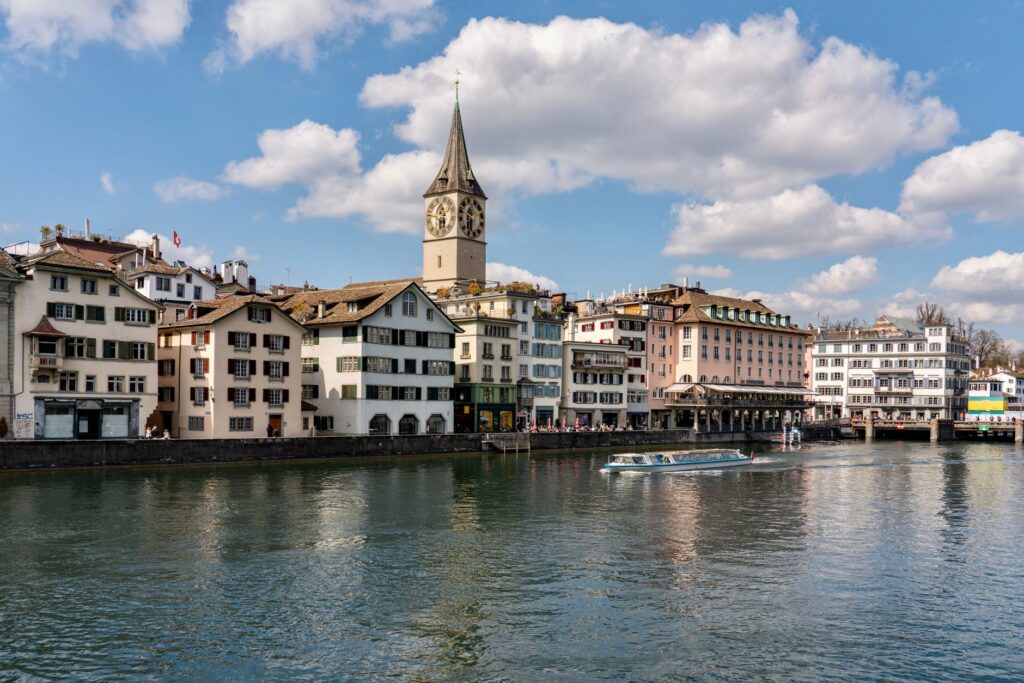
District 9 does not offer itself as a postcard but as a sequence: those who walk it slowly discover that the productive city also has its own pedestrian rhythm.
Altstetten, the western railway gate
Altstetten station is the most logical entry point for those arriving from the centre or the airport. Its surroundings mix offices, retail and new housing, with a density that reminds visitors that Zurich keeps growing. Walking south allows you to leave the bustle behind and find streets where traffic noise gives way to bicycles.
Do not expect a picturesque market or a baroque square. What you find is efficient infrastructure and everyday life built around it: people waiting for trains, students crossing in a hurry, neighbours doing their shopping. Travellers who accept that register encounter an honest portrait of contemporary urban Switzerland.
The Limmat as a walking axis
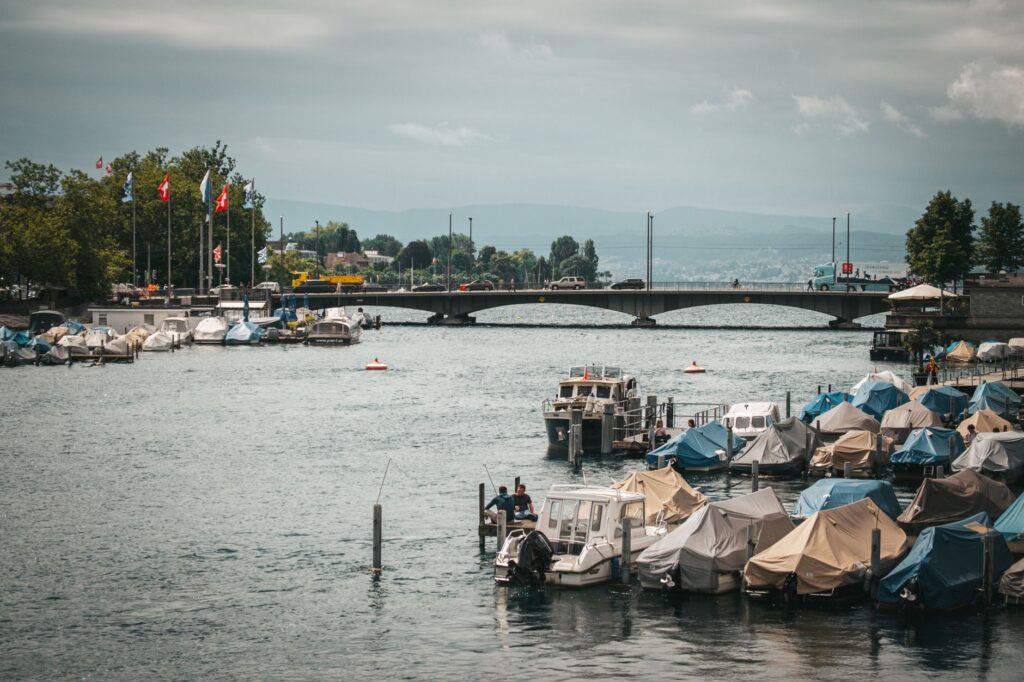
The Limmat crosses the district and offers one of the area’s most pleasant walks. Its banks, partly landscaped, allow you to follow the water between bridges, footbridges and rest areas. It is not a spectacular promenade, but it is continuous, shaded in places and well connected to public transport.
The relationship with the water is responsible: this is an urban river, not a bathing resort, and the rules of coexistence — noise, litter, use of the banks — are respected with the usual Swiss discretion. For walkers, the advantage is that routes can be improvised without losing orientation: the river always leads back to a bridge or a stop.
Industrial heritage without epic
The district’s former industrial halls have not become theme parks. Some house workshops, others offices, others specialist shops. That sober conversion is perhaps the most characteristic feature of Kreis 9: heritage is preserved insofar as it remains useful, and that usefulness prevents both ruin and excessive museumisation.
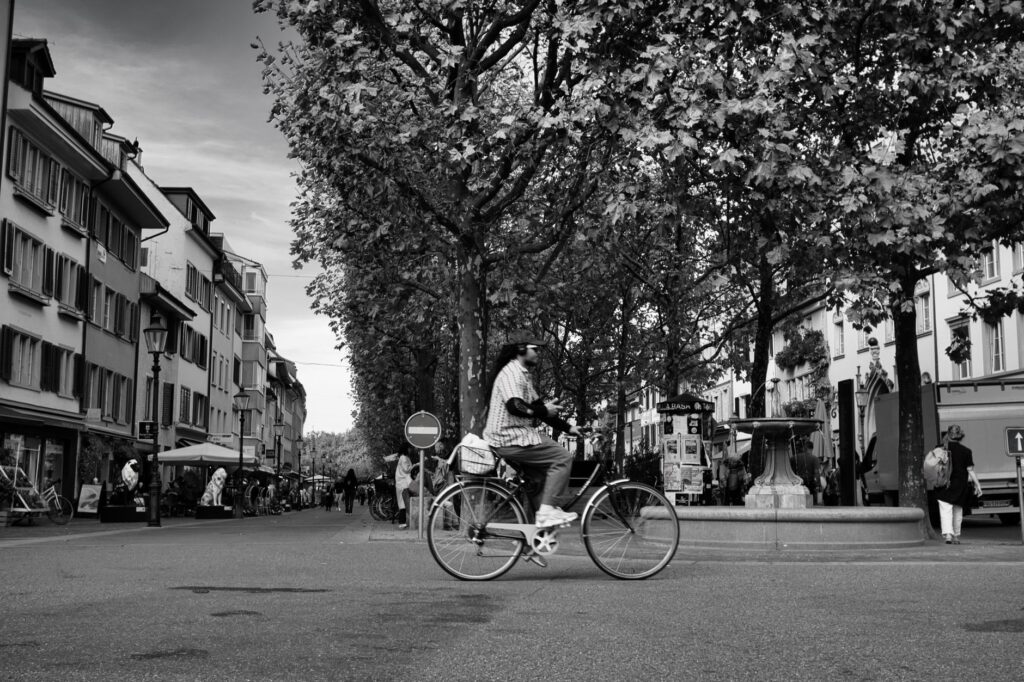
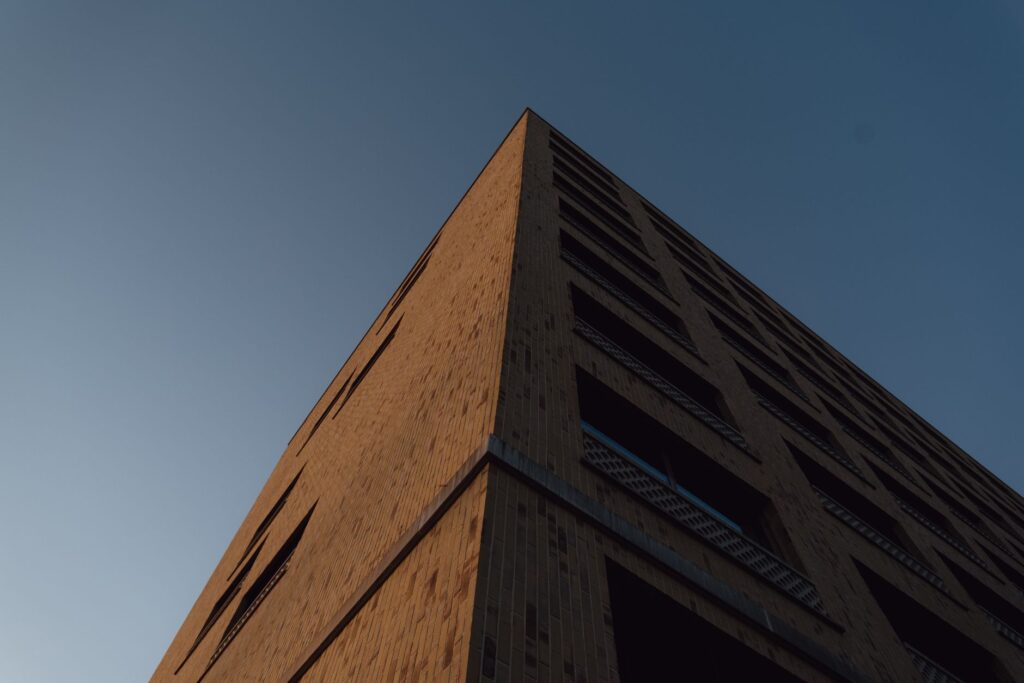
Visitors interested in architecture will find simple volumes, sawtooth roofs and large windows that speak of a productive past. There is no need to invent grandeur: it is enough to observe how brick and concrete coexist with new housing.
The district’s conversion does not seek spectacle: it keeps what can still be used and lets the rest change without noise.
Albisrieden, the residential lung
South of the district, Albisrieden offers a necessary contrast. Its streets are narrower, gardens more visible and the pace slower. It is the right place for a pause, to sit on a bench or to walk a stretch without a specific goal. Swiss residential architecture, functional and well maintained, shows itself here without adornment.
For those travelling with children or seeking shade in summer, this area is friendlier than the commercial corridors. The neighbourhood parks, small but cared for, perform a discreet and constant social function.
Getting around without a car: the logic of local transport
The district is well served by tram, bus and suburban train. The practical recommendation is to buy a zone ticket valid for the urban network and combine it with short walks. Distances between stops are reasonable, and over-planning is usually unnecessary: transport frequency allows for improvisation.
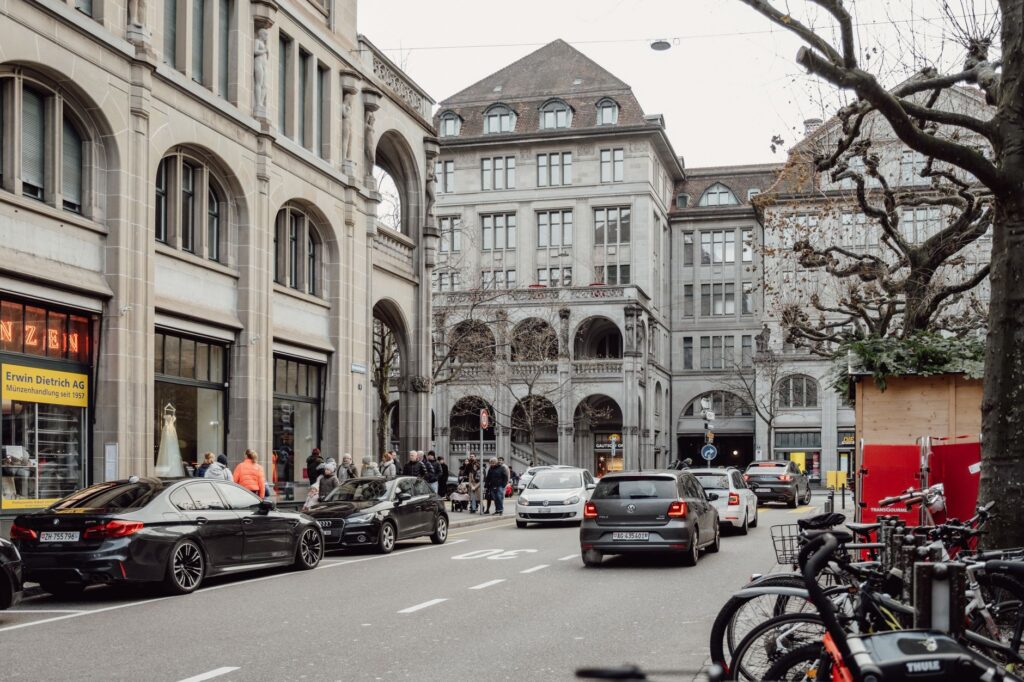
Cycling is another reasonable option, though it is worth knowing local rules and using marked lanes. Switzerland makes rental and use easy, but also expects strict civic behaviour. For visitors, the key is simple: respect signs and do not block pavements or entrances.
Eating, shopping and observing
Kreis 9’s food offer does not compete with the tourist circuits of the centre. There are neighbourhood cafés, bakeries, simple restaurants and the occasional specialist shop serving mainly residents. That condition is an advantage: prices and opening hours respond to local life, not to the tourist season.
For travellers, the recommendation is to eat where the people who work in the area eat, without expecting menus in several languages or linen tablecloths. The experience gains in authenticity and loses in comfort, a reasonable trade in a district that does not try to seduce.
A responsible relationship with the neighbourhood
Kreis 9 is, above all, an inhabited place. The temptation to treat it as an urban backdrop should be resisted. Photographs of industrial facades or trains are welcome, but avoid invading private courtyards or carelessly photographing those who live and work there.
Tourism in Switzerland is used to precision and courtesy; District 9 is no exception. Keeping your voice down, respecting rest hours and using bins are not heroic gestures but the basis of a visit that does not disturb.
Practical guide
When to go: spring and autumn offer mild temperatures and fewer crowds. Summer is pleasant by the river, but some areas lack shade.
Getting there: the district connects to central Zurich by suburban train and tram. Altstetten station is the main hub. Check zone maps before buying tickets.
What to bring: comfortable shoes, water and a light layer. Swiss weather changes quickly and the riverside walk can turn cool.
Where to stop: the banks of the Limmat, the neighbourhood parks of Albisrieden and the surroundings of the former industrial halls. Avoid private entrances and areas marked as restricted.
Language: German is the dominant language, with Swiss German present in everyday conversation. English works in shops and transport, but not in every small local.
Budget: Switzerland is expensive; expect moderate-to-high spending on food and transport. Combined tickets and urban transport cards are usually the most efficient option.
A closing by the water
At the end of the route, as light falls on the Limmat and bicycles head home, District 9 shows its true scale: it is not a destination of grand gestures but a place where the Swiss city rehearses its daily life. Anyone who pauses for a moment on a bridge and looks at the water understands that the journey was worthwhile, even without a bell tower or a museum.