
Emmen does not feature on lists of Europe’s great capitals, and that may be why it keeps a pace that invites a slower look. Located in the canton of Lucerne, in central Switzerland, this town of roughly 30,000 people has moved from an industrial hub to a place where housing, water and green space negotiate their place every day. Visitors looking for a postcard find something more useful: a Swiss community debating how to grow without losing what defines it.
The question behind this report is not what to see in Emmen, but how a place like this is lived in. Which decisions sustain its landscape, what heritage is preserved and what someone arriving from outside can do to avoid tipping the balance. The answer is not in a brochure but in the way its neighbourhoods, riverbanks and daily routes are organised.
A municipality read in layers
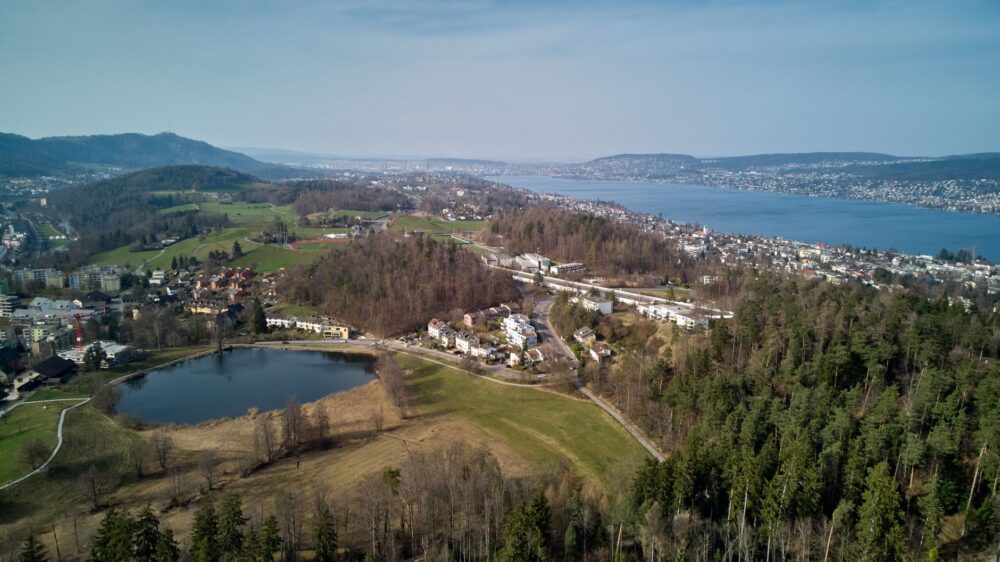
Emmen spreads across a gentle plain at around 460 metres above sea level, between the city of Lucerne and the first foothills that announce the Alps. Its territory brings together distinct clusters, from quiet residential areas to economic zones that recall its more productive past. That mix explains why the landscape is not uniform: there are tree-lined streets, industrial estates, open fields and strips of vegetation that act as lungs and corridors.
To understand Emmen, it helps to abandon the idea of a single centre. The town is organised around several axes, each with its own relationship to water and greenery. Walking them is the best way to grasp that diversity without covering great distances. This polycentric layout is not a planning accident: it reflects a settlement that grew by absorbing smaller nuclei and by accommodating workers who needed housing close to their workplaces.
Reading the town in layers also means noticing what is not immediately visible. Behind a row of houses there may be a drainage channel, a patch of woodland or a path that connects two neighbourhoods and shortens a school run. These small pieces of infrastructure rarely appear on maps designed for visitors, yet they explain how the community functions day to day.
Water as a connecting thread
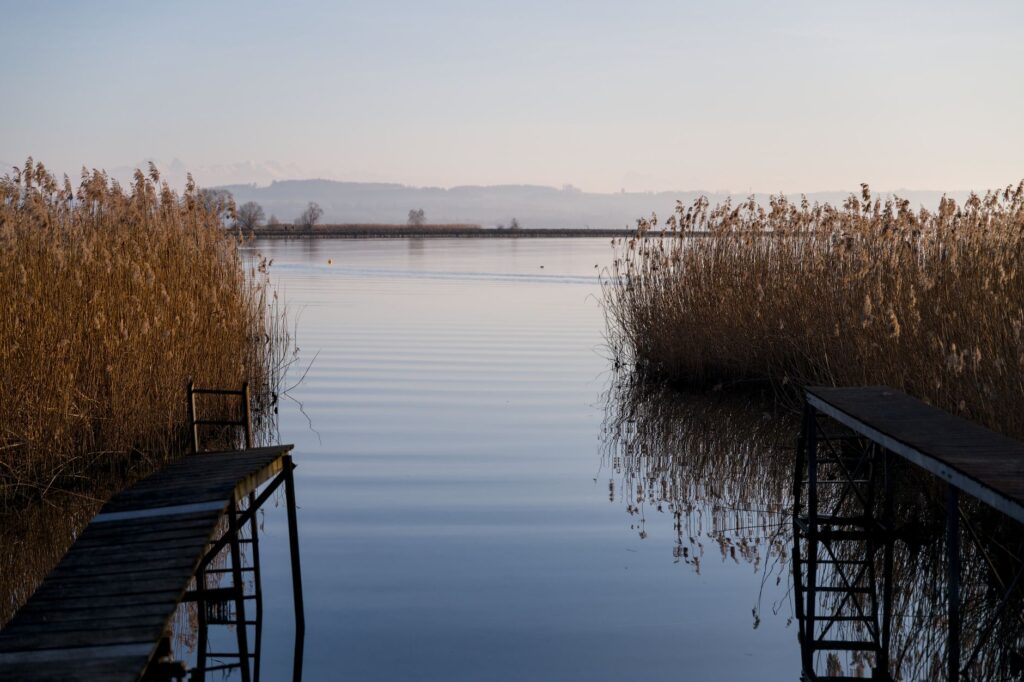
Rivers and wetlands have historically shaped the development of this part of the canton of Lucerne. In Emmen, water is not just scenery: it conditions drainage, protects soils and demands careful planning. Riverbanks and associated spaces have become places for walking and observation, where riparian vegetation serves an ecological function before a decorative one.
Anyone visiting with an interest in sustainability will find a quiet lesson here: green infrastructure is not improvised. It requires maintenance, neighbourhood agreements and a clear idea of what is being protected. That work rarely appears in guidebooks, yet it sustains daily quality of life. In a plain exposed to heavy rain and seasonal fluctuations, allowing water room to move is a form of prudence that benefits everyone downstream.
Sustainability in Emmen is not announced with big signs: it is practised in the upkeep of riverbanks, in the shade of its streets and in the way everyday journeys are organised.
For the observer, the practical consequence is simple. Paths near water may be closed after storms, verges may look deliberately untidy, and some channels are left with rough edges. None of this is neglect; it is management. Understanding that distinction changes the way a visitor reads the landscape.
Neighbourhoods, neighbours and daily life
Life in Emmen is largely organised at neighbourhood scale. Local shops, schools and associations play a role that fades in larger cities. That scale allows decisions on mobility, cleaning or green spaces to be discussed with a certain closeness, though not always without tension.
Travellers with curiosity can observe how short trips are resolved: wide pavements, cycle lanes and a public transport network linking to Lucerne and the rest of the canton. It is not a spectacular system, but infrastructure designed for daily use. The rhythm of the town follows the school calendar, the working week and the quiet of Sundays, when many shops close and public spaces belong to walkers.
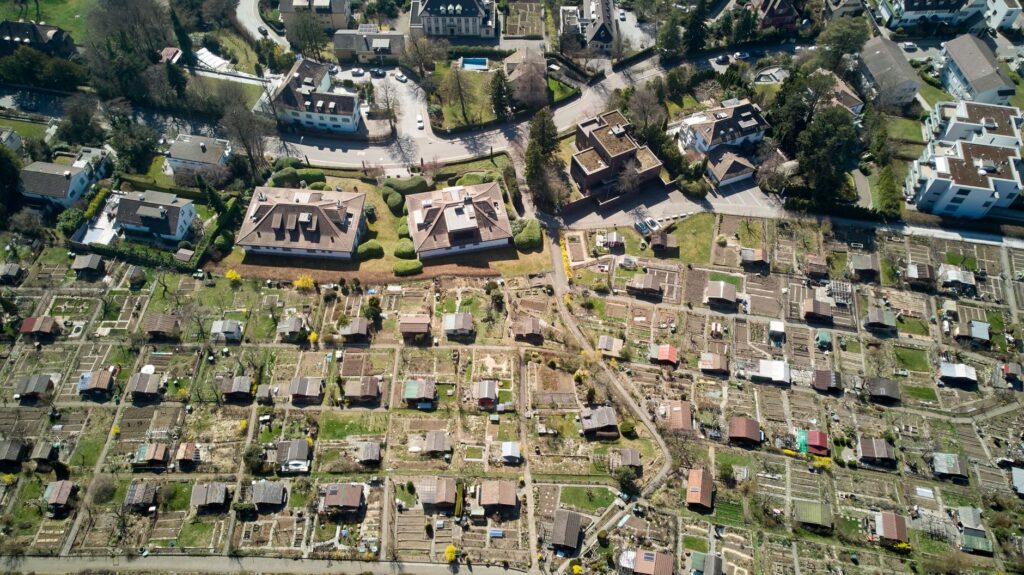
That rhythm is worth respecting. A visitor who arrives expecting constant activity may misread Emmen; one who accepts its tempo will notice the small rituals that hold a community together, from the morning queue at a bakery to the afternoon flow of children between school and home.
Discreet heritage, industrial memory
Emmen does not live off a single monument but off distributed heritage. Its recent history is tied to productive activity and the arrival of workers, which has left a mark on residential architecture and the layout of some neighbourhoods. That industrial memory now coexists with new uses: rehabilitated spaces, cultural facilities and meeting places.
For responsible visitors, local heritage is not a backdrop. It is a reminder that cities change and that every transformation carries social and environmental costs. Looking at Emmen through that lens helps explain Switzerland: a country that combines economic development with a strong culture of planning.
Heritage of this kind asks for a different attention. There is no ticket office and no explanatory panel on every corner; instead, there are buildings whose proportions, materials and position tell of another era. Photographing them respectfully, without entering private property or blocking entrances, is part of the same courtesy that applies to any residential street.
What responsible visiting means here
In a place like Emmen, tourism is not the main activity, and that is an advantage. Those who arrive should remember they are in a community that lives here all year, not on a stage. Respecting quiet hours, using public transport, staying out of protected natural areas and buying from local shops are simple gestures with real impact.
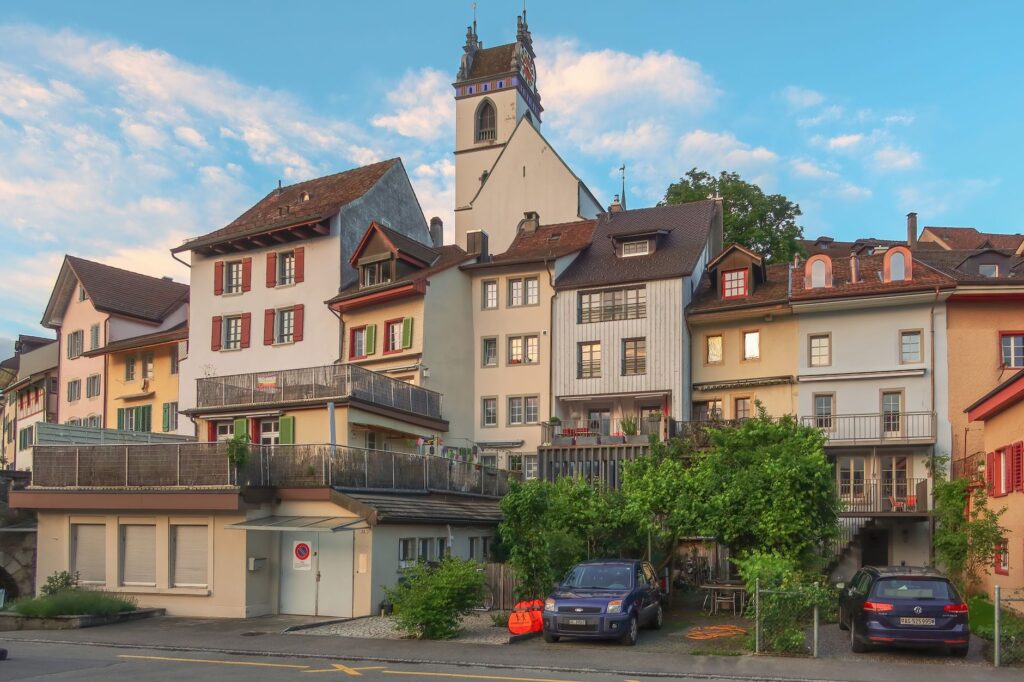
The town’s own structure encourages that behaviour: distances are manageable and alternatives to the car exist. The key is not to treat the place as a quick stop but as a territory that deserves time and attention. Responsible visiting, in this context, is less about grand declarations than about small, repeated choices.
The best advice for anyone visiting Emmen is simple: behave like a neighbour, not like a tourist passing through.
It also helps to plan around the ordinary. Weekday mornings show the town at work; weekends reveal its quieter, more domestic side. Neither is a performance, and both are more legible to a visitor who arrives without expecting to be entertained.
Nearby nature without trespassing
Around Emmen, the landscape of the canton of Lucerne offers walking routes and natural spaces of interest. The proximity of wetlands and watercourses allows observation of birds and riparian vegetation, provided visitors respect signs and stay on marked paths. Nature here is not a theme park: it is a fragile system that depends on the conduct of those who visit.
For a quiet experience, the recommendation is to start early, walk without rushing and wear suitable shoes. The reward is not a spectacular viewpoint but the chance to understand how water, vegetation and human settlement fit together on a plain. Binoculars and patience tend to be more useful than a long itinerary.

It is also worth remembering that fields and meadows are working land. Crossing them, leaving gates open or approaching livestock disturbs both farming and wildlife. Observing from the edge, keeping dogs under control and taking litter away are basic norms that locals apply without thinking.
Culture and encounter in central Switzerland
Emmen is part of a region with an active cultural life, shaped by its proximity to Lucerne and a tradition of local associations. Neighbourhood festivals, markets and association activities are the gateway to a sociability that does not display itself on tourist circuits.
Taking part with respect, learning about local customs beforehand and not assuming everything is designed for visitors make a difference. The Swiss culture of punctuality, quiet in public spaces and care for the environment are not clichés: they are norms that structure coexistence.
For someone staying a few days, the most rewarding approach is to combine the town’s everyday life with the cultural offer of the wider region. Lucerne is close by public transport, and its museums and concert life complement what Emmen offers: a quieter, more domestic view of the same canton.
Getting around Emmen and beyond
The public transport network connects Emmen with Lucerne and other towns in the canton. For short trips, cycling and walking are reasonable options, provided traffic rules are respected. A car is useful for certain journeys but not essential to explore the urban core.
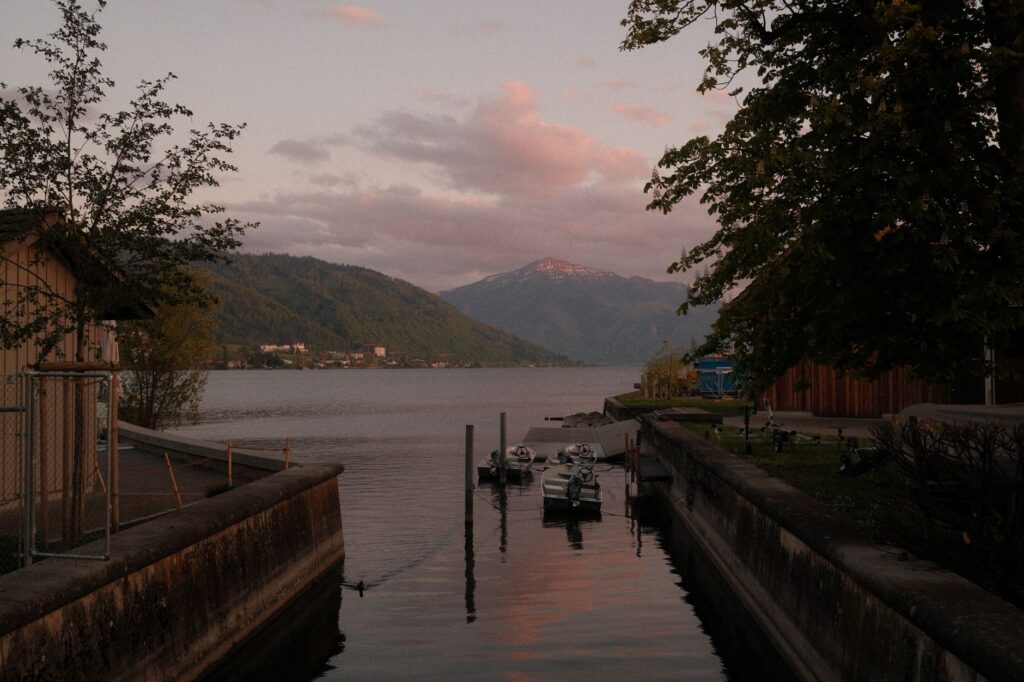
Anyone planning a short stay will find more value in walking the neighbourhoods than in ticking off sights. The town’s scale invites that slowness, and its layout rewards unhurried curiosity. A simple habit helps: check connections before setting out, since some services thin out in the evening and on weekends.
Walking also makes visible the details that a vehicle hides: the width of pavements, the placement of benches, the shade of a particular street at midday. These are the elements that make a town liveable, and in Emmen they are easy to read on foot.
Practical guide
- When to go: spring and autumn offer mild temperatures and fewer people. Winter can be cold and damp but reveals local life without visitors.
- Getting there: Emmen is well connected by public transport to Lucerne and the rest of the canton. Check timetables and combine train and bus depending on your starting point.
- What to bring: comfortable shoes, clothing suited to the season and a reusable bottle. Separating waste and using recycling points is standard practice in Switzerland.
- Getting around: prioritise walking and cycling in the urban core; use public transport for longer trips.
- Local norms: keep noise down in residential areas, stay on paths in natural spaces and follow local signs.
- Responsible consumption: shop locally and avoid unnecessary waste.
- Language and courtesy: German is the everyday language of the region; a simple greeting in German is appreciated even if English is widely understood.
A final look
Emmen does not aspire to be a mass destination, and that is precisely its strength. Its value lies in how a mid-sized community manages water, greenery, housing and memory. Those who arrive with respect find a place that does not need to perform in order to be interesting.
Sustainability here is not a label: it is a daily practice learned by watching how streets are organised, how riverbanks are cared for and how decisions are made. That quiet, verifiable lesson is the one worth taking away, and it travels well beyond the borders of this Swiss town.