
Biratnagar does not appear in trekking brochures or on Everest itineraries. It is a plains city of humid heat and small engines, Nepal’s industrial capital in the east and a land gateway to India. Visitors expecting mountains find markets, jute factories and a transport network that works on the logic of people who use it daily, not of those who pass through for an afternoon.
Understanding how Biratnagar moves is understanding how it breathes. The rickshaw is not a tourist ornament: it is the neighbourhood taxi. The bus to the border is not an excursion: it is the cord that ties families divided by a line drawn in 1816. And the airport, with its BIR code, is not a luxury: it is the link to Kathmandu when the monsoon turns roads into mud.
A city born of jute and grown along the roads
Biratnagar sits on the Terai plain, in Koshi Province, about 74 metres above sea level and a few kilometres from the river that marks the border with the Indian state of Bihar. Its modern history is tied to the jute industry, which drew labour from eastern Nepal and India and turned a crossroads into a city of more than two hundred thousand people.
That industrial origin explains the urban shape: workers’ neighbourhoods beside the factories, a central market that spills into side streets and a road network designed for trucks and buses before pedestrians. Travellers arriving by air land at a small, functional airport with domestic flights to the Nepali capital. There is no need to expect grand terminals: the scale is human and the pace is slow.

In Biratnagar, transport is not explained with maps: it is explained with market hours and with the patience of those waiting for a rickshaw in the shade.
The rickshaw as the operating system of daily life
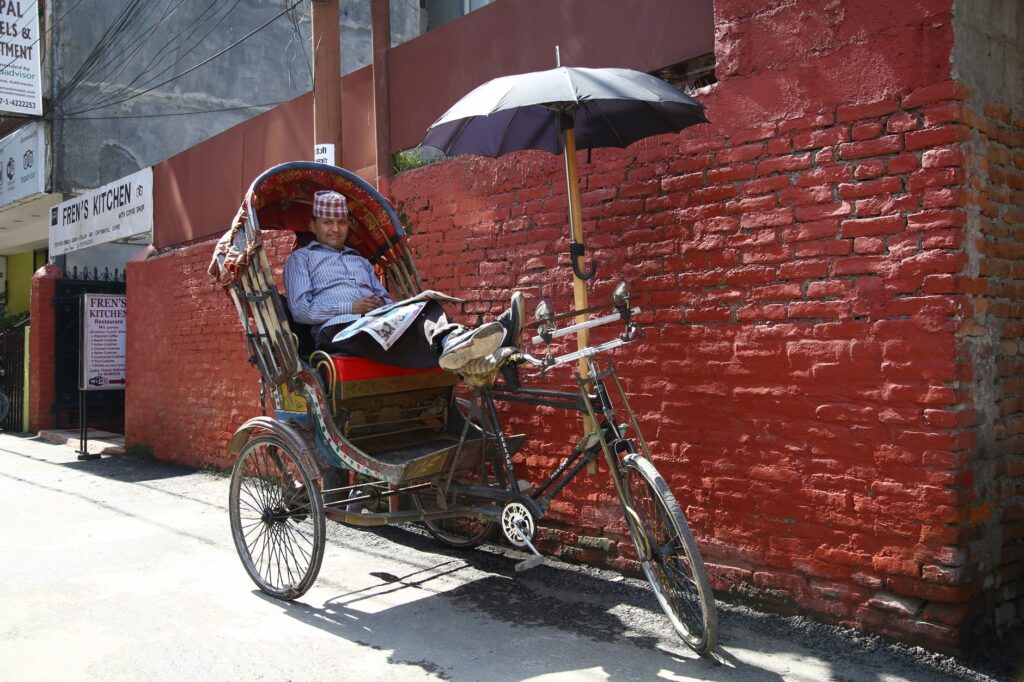
Early in the morning, when the air is not yet heavy, the streets around the market fill with cycle rickshaws. They are pedal tricycles with a rear seat for two or three passengers, and they work as the city’s informal public transport. There are no fixed stops: you raise a hand, negotiate the fare and climb aboard.
For visitors, the rule is simple: agree the fare before getting in and carry small notes. A ride through the centre lets you see the city at the height of its residents, with no glass in between. It is also the most honest way to grasp real distances: what looks close on a map can be a twenty-minute journey over potholes and junctions.
Buses to the border: the cord that links Nepal and India
Biratnagar is a border city in the most literal sense. Buses leave the terminal for the Indian side, towards towns such as Jogbani, and for other cities across the Nepali Terai. This is not a tourist route: it is the transport of workers, traders and families who cross daily.
Anyone travelling on these buses should carry their documents in order and allow for waiting time at checkpoints. Schedules can change with the season and road conditions, especially during the monsoon, when rains affect the plains roads. Prudence and flexibility are part of the luggage.
Biratnagar airport: a discreet door to eastern Nepal
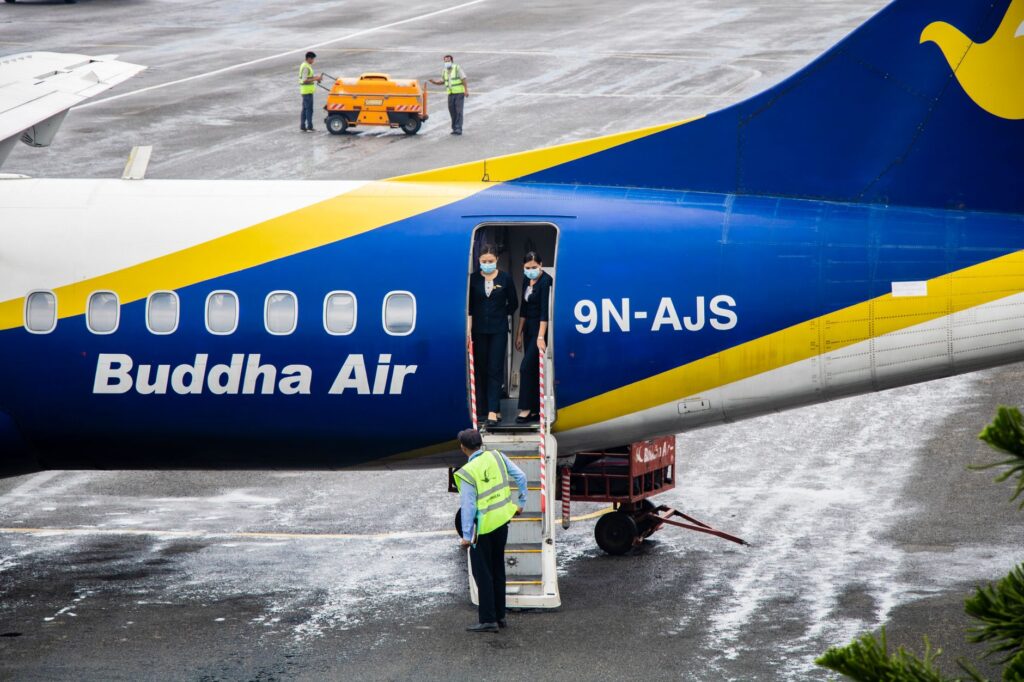
Biratnagar Airport, identified by the IATA code BIR, operates domestic flights and serves as the region’s main air link to Kathmandu. Its terminal is modest and passenger traffic is manageable. For travellers, the advantage is clear: it avoids the long road journey from the capital, which can take many hours depending on road conditions.
Do not improvise: Nepali domestic flights depend on weather, and the monsoon season can cause delays. Booking in advance and confirming the flight the day before is sensible practice, not a sign of distrust.
Moving on foot: the map that never appears in guidebooks
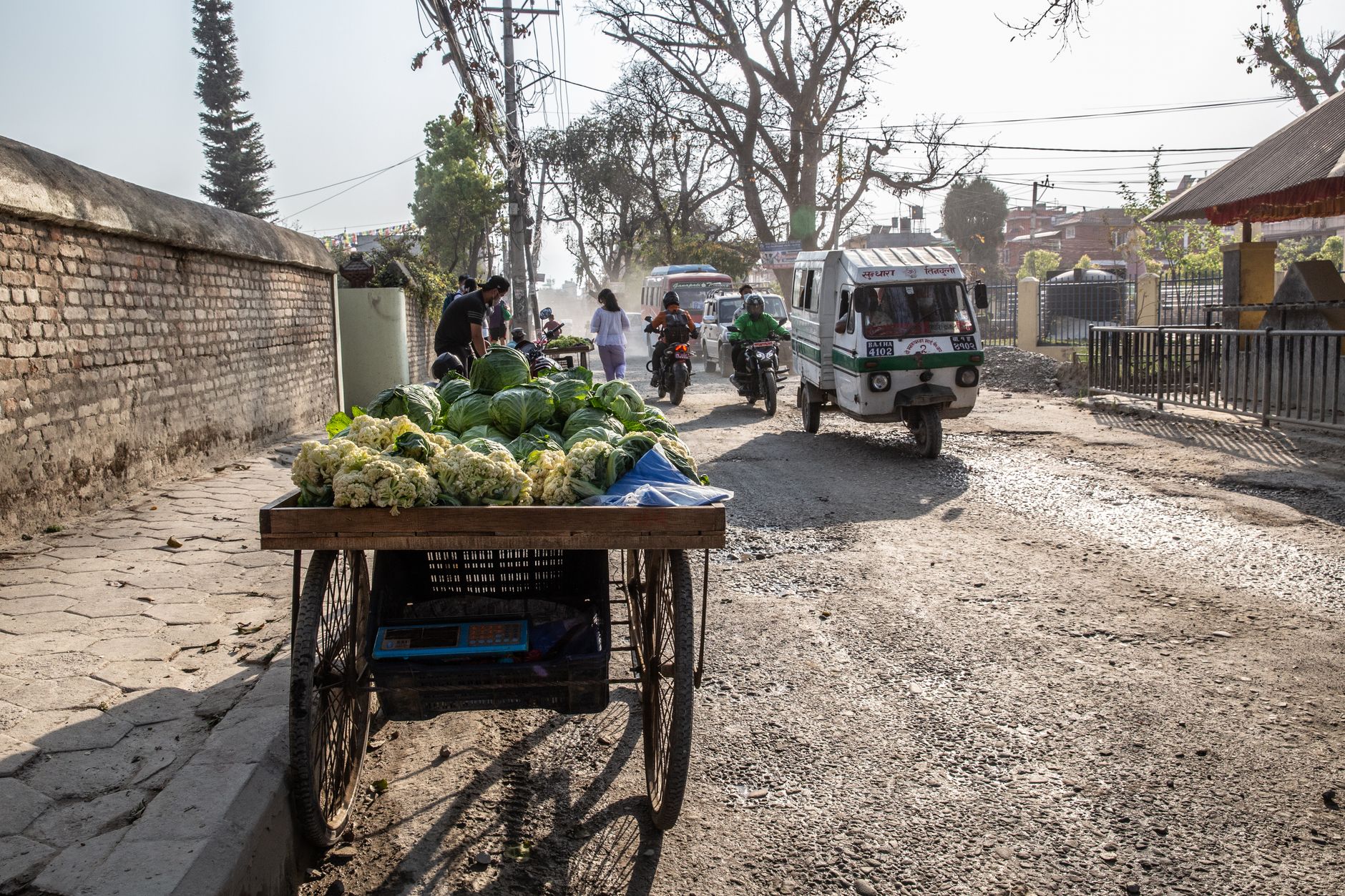
Central Biratnagar can be explored on foot, though heat and traffic make early morning or late afternoon the best hours. Pavements are uneven and in many stretches non-existent, so pedestrians share the road with motorbikes, rickshaws and carts. Crossing requires attention and patience.
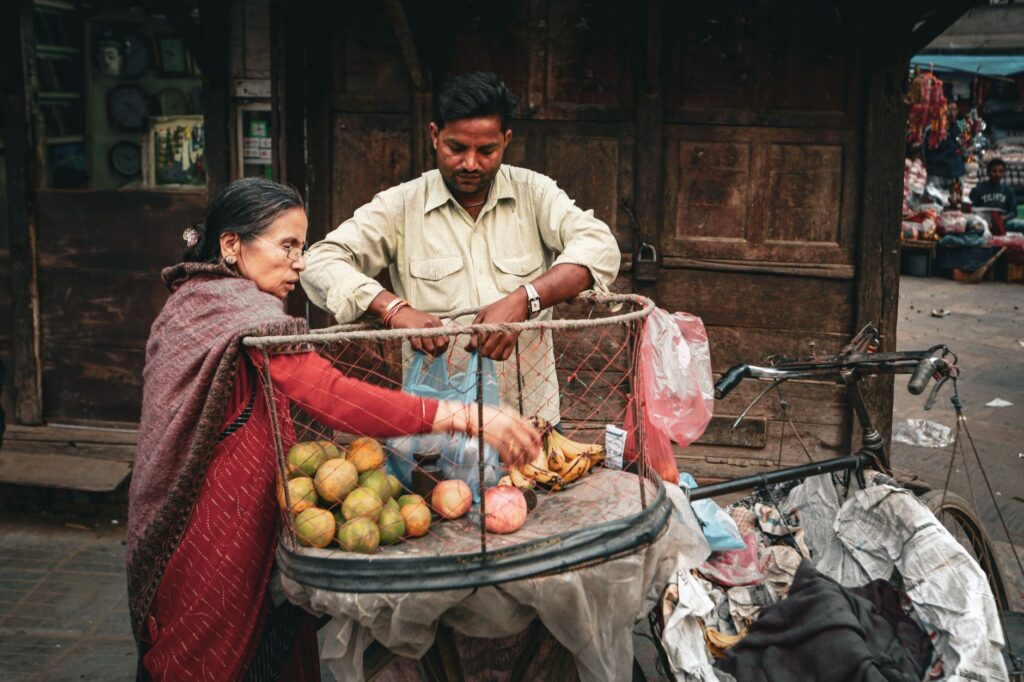
Walking reveals the real city: fabric shops, fruit stalls, small printing presses and workshops where the same tricycles that roam the streets are repaired. It is the cheapest and most revealing way to understand Biratnagar, provided it is done with respect for the space of those who work in the street.
What to see without turning the city into a theme park
Biratnagar is not a monumental destination. Its attractions are everyday ones: the market, neighbourhood temples, the river and the life of a city that produces and trades. Responsible visitors avoid treating working-class neighbourhoods as stage sets and ask before photographing people or stalls.
An early visit to the central market offers a lesson in informal logistics: how goods arrive, who unloads them, how prices are negotiated and how space is organised between noise and haste. It is living heritage that appears in no brochure, yet explains the city better than any monument.
Biratnagar’s heritage is not in a building: it is in the way people move, negotiate and share the street.
Eating in the jute city
Local food follows the logic of the Terai: rice, lentils, seasonal vegetables and dishes influenced by Indian and Maithili cooking. Food stalls near the market offer simple, inexpensive breakfasts, and neighbourhood restaurants serve set menus without pretension. For travellers, the advice is to choose places with good turnover and avoid unbottled water.
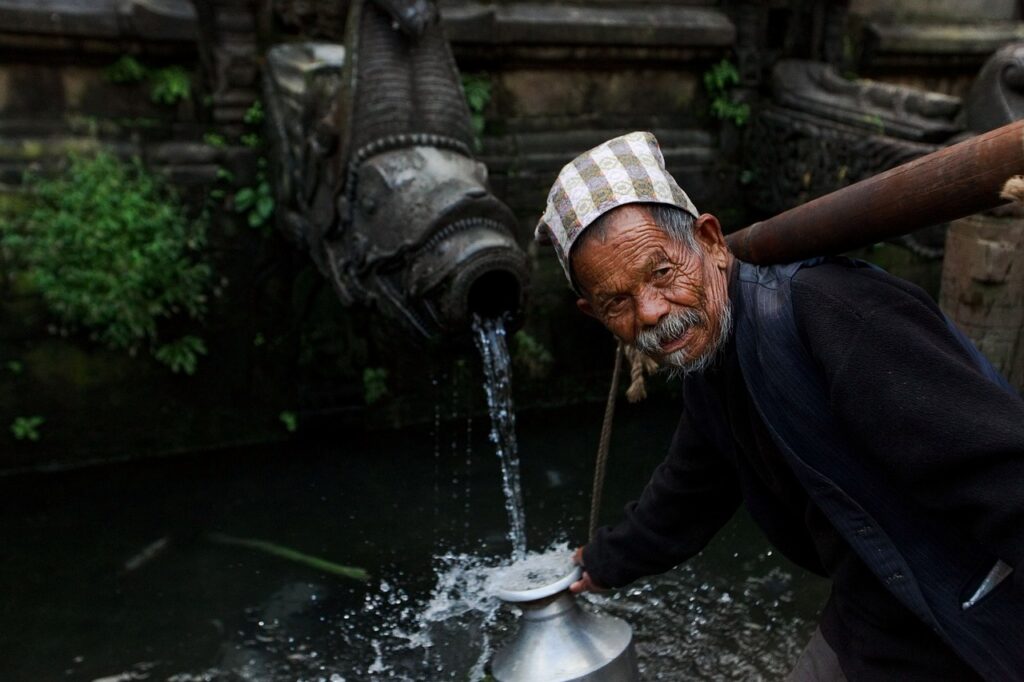
Food is also a way to understand transport: produce arrives each morning from the surrounding area on buses and small trucks, and the market works as the node where road and table meet.
Responsible choices: visiting without altering the rhythm
Biratnagar receives few tourists, which is both an advantage and a responsibility. Visitors should avoid the logic of fast consumption: no aggressive bargaining, no occupying work spaces with photographs and no assumption that everyone speaks English. Nepali and Maithili are the languages of the street, and a greeting in Nepali opens more doors than any guidebook.
It is also worth considering the footprint of the trip: use shared transport where possible, avoid unnecessary plastics and choose locally managed accommodation. This is not brochure morality but a practical way of ensuring that visitor spending circulates through the economy that keeps the city running.
Practical guide
Getting there
- By air: Biratnagar Airport (code BIR) connects with Kathmandu via domestic flights. Confirm schedules and allow for weather delays.
- By road: bus connections run from other cities in eastern Nepal and from the Indian border. Journey times vary with the season.
Getting around
- Cycle rickshaw: the usual transport in the centre. Agree the fare before boarding and carry change.
- Bus: useful for longer journeys and for crossing into India. Carry documents in order.
- On foot: the best way to explore the centre, with care due to the lack of pavements and the traffic.
When to go
The dry season, between October and March, offers more bearable temperatures. The monsoon, from June to September, brings humidity, heavy rain and possible transport disruptions. Check conditions before travelling and stay flexible with plans.
What to bring
- Light, breathable clothing, sun protection and mosquito repellent.
- Bottled water or your own purification system.
- Cash in Nepalese rupees for transport and small markets.
Courtesy rules
Greet people in Nepali, ask permission before photographing and respect work spaces. Dress modestly in temples and places of worship. Do not bargain aggressively with those providing transport services.
An ending that moves slowly
At dusk, Biratnagar slows down. Rickshaws return empty, stalls pack up and the streets are left with dust suspended in the air. There is no grand postcard to sum up the city, but there is an honest image: that of a place that works because thousands of people know its routes, its schedules and its invisible agreements.
For travellers, the lesson is simple: understanding Biratnagar means accepting that transport is not a service to be consumed but a practice to be shared. Those who arrive in a hurry miss the best of it: the chance to move at the pace of a city that needs no shop window to be interesting.