
In the Blue Mountains of New South Wales, Australia, the cooking does not begin in a restaurant with a view, but in a garden at 978 metres above sea level. The cold climate, the persistent mist and the sandstone soils define a pantry that for decades was associated with tea and apples, and that today is undergoing a quiet transformation: cool-climate produce, ferments, sourdough breads and a generation of cooks who champion the local without nostalgia.
This report travels through the region via its tables, its markets and its everyday decisions, to understand how a territory of 78,121 residents has turned its geography into a gastronomic argument.
A pantry shaped by altitude
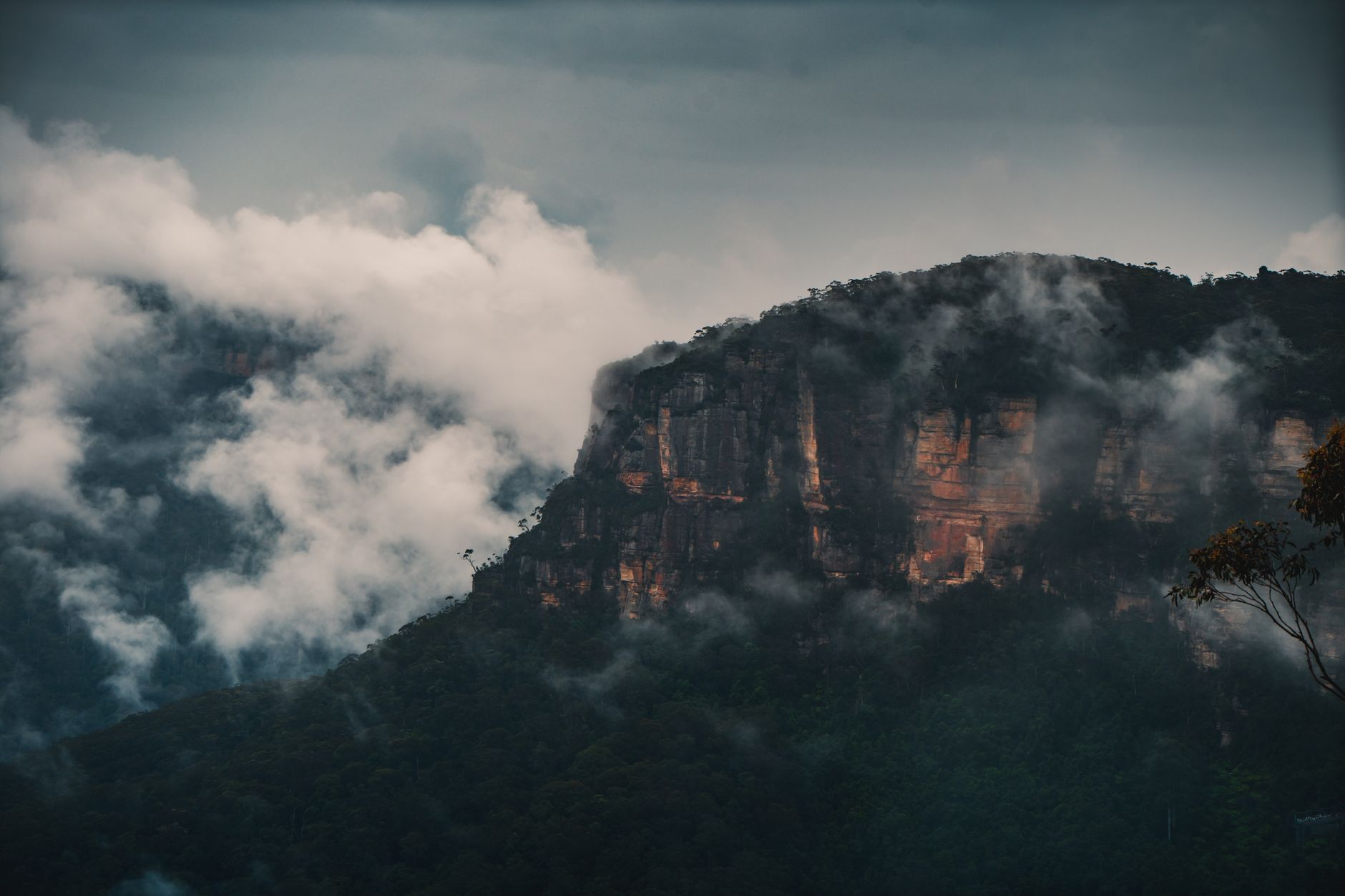
Altitude is not a decorative detail. At almost a thousand metres above sea level, nighttime frosts and mild summers allow crops that do not thrive on the coast of Sydney, just over an hour away by train. We are talking about cabbages, turnips, root vegetables, hardy herbs and berries that find their optimum point here. The mist, far from being an obstacle, acts as a natural humidity regulator.
That climatic condition has shaped a mountain cuisine that does not seek spectacle, but consistency. Slow stews, dense breads and preserves make sense in a place where winter is truly felt.
The cooking of the Blue Mountains does not compete with the coast: it cooks what the mist allows.
From the mountain garden to the café table
The gastronomic landscape of the region is organised around towns such as Katoomba, Leura and Blackheath, where neighbourhood cafés function as genuine community pantries. We are not talking about large covered markets, but small shops and stalls that concentrate the essentials: eggs from nearby farms, eucalyptus honey, cheeses from local producers and seasonal vegetables.
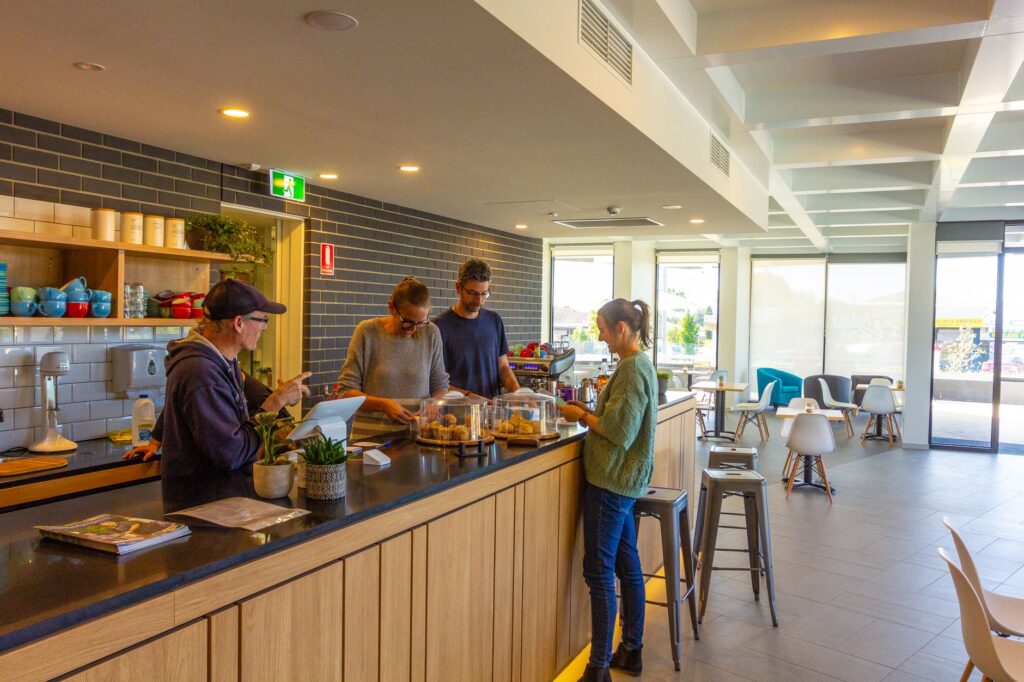
At those tables, breakfast is a ritual. Sourdough bread, scrambled eggs with herbs and specialty coffee coexist with dishes of British heritage, such as Sunday roast lamb or meat pies, adapted to the contemporary palate.
The Asian influence, present in Australia for decades, also makes itself felt: mild curries, noodles and pickles that dialogue with mountain produce without imitating it.
Tea, apples and the memory of the landscape
During the 20th century, the Blue Mountains were orchard and tea country. Although that industry no longer dominates the landscape, its memory remains in the names of farms, in the hedges that still mark properties and in the custom of serving tea with cakes in guesthouses.
Today, some producers are recovering old varieties of apple and pear, and incorporating them into craft ciders, chutneys and desserts. It is a way of cooking history without turning it into a museum.
The visitor who arrives looking only for scenery discovers that the table also tells the story of the place: logging, subsistence farming, early 20th-century tourism and a growing environmental awareness.
Ferments, preserves and a new generation
In recent years, a generation of cooks and producers has adopted fermentation and preservation techniques to make the most of seasonal abundance. Kimchis made with mountain cabbage, pickled beetroot, berry sauces and greengage jams appear on menus that change frequently.

This is not a trend imported without context: in a place with cold winters and irregular tourism income, preserving is also an economic and environmental strategy. Reducing waste and extending the shelf life of the harvest are responsible decisions that the visitor can recognise on the menus.
- Short menus that change with the seasons.
- Use of returnable containers and bulk sales in some shops.
- Collaboration between cafés, farms and local bakeries.
What is eaten in a mountain winter
Winter is the season that best defines the cooking of the Blue Mountains. Dishes become denser: stews of lamb or pork, pumpkin and ginger soups, apple pies and dried fruit cakes.
Drinks follow that rhythm: local ciders, malty craft beers, cool-climate wines from nearby regions and, of course, strong black tea. In the historic pubs, the lit fire is not a decorative detail, but part of the experience.
For the traveller, the recommendation is simple: ask what is local before ordering. Signs and chalkboards usually indicate the origin of the products, and the staff know the provenance well.
Markets, fairs and buying direct
Although there is no large central market as in European capitals, the region organises periodic fairs and producers’ markets in different towns. There you find goat cheese, artisan charcuterie, breads, preserves and sweets.

These spaces serve a dual purpose: they supply residents and allow visitors to understand what is really produced in the area. Buying directly is, in this context, a form of responsible tourism.
Buying at the fair is not a picturesque gesture: it is the most direct way to sustain the mountain economy.
Eating with judgement: responsible decisions
The tourist pressure on the Blue Mountains is real, especially at weekends and on holidays. Choosing establishments that work with local producers, avoiding waste and respecting the opening hours of small businesses are concrete ways to reduce impact.
It is also worth remembering that many cafés and bakeries close early, and that the towns are not theme parks: they are communities where people live and work. The best attitude is quiet curiosity and conscious consumption.
As for accessibility, the region is well served by train from Sydney, and local buses connect the main hubs. Walking between towns is possible, but distances and gradients require planning.
Beyond the plate: heritage and landscape
The gastronomy of the Blue Mountains cannot be understood without its natural heritage. The eucalyptus forests, declared a World Heritage Site, frame the culinary experience and remind us that the territory is fragile.
Some establishments incorporate native Australian ingredients, such as lemon myrtle or wattle seed, with respect and without empty appropriation. It is an incipient but significant dialogue between contemporary cooking and the ancestral knowledge of the country.

Practical guide
To organise a gastronomic visit to the Blue Mountains, several practical points should be kept in mind. The region is in New South Wales, Australia, and its main access is the train from Sydney Central, with stops at Katoomba, Leura and Blackheath.
- Best time: autumn and spring offer mild temperatures; winter is ideal for stews and tea, but requires warm clothing.
- Reservations: small restaurants fill up at weekends; booking in advance is advisable.
- Budget: options range from affordable cafés to author-driven tables; prices are similar to those in Sydney.
- Transport: the train is comfortable and frequent; within the towns, walking is viable, but taxis and buses help on longer journeys.
- Shopping: bring a reusable bag and cash for fairs and small stalls.
- Etiquette: respect opening hours, do not block pavements and ask before photographing stalls or people.
The gastronomic experience of the Blue Mountains does not depend on a single dish, but on a set of decisions: what is bought, whom it supports and how one inhabits a landscape that is, at once, pantry and heritage.
A table facing the mist
At the end of the day, when the mist descends over the valleys and the café lights come on, the feeling remains that here people cook with what they have, without fuss. A plate of stew, a slice of dense bread and a cup of tea can sum up better than any speech the identity of this Australian region.
The traveller who sits at that table does not find a spectacle, but a conversation: with the climate, with history and with a community that has decided its pantry should be, above all, sustainable.