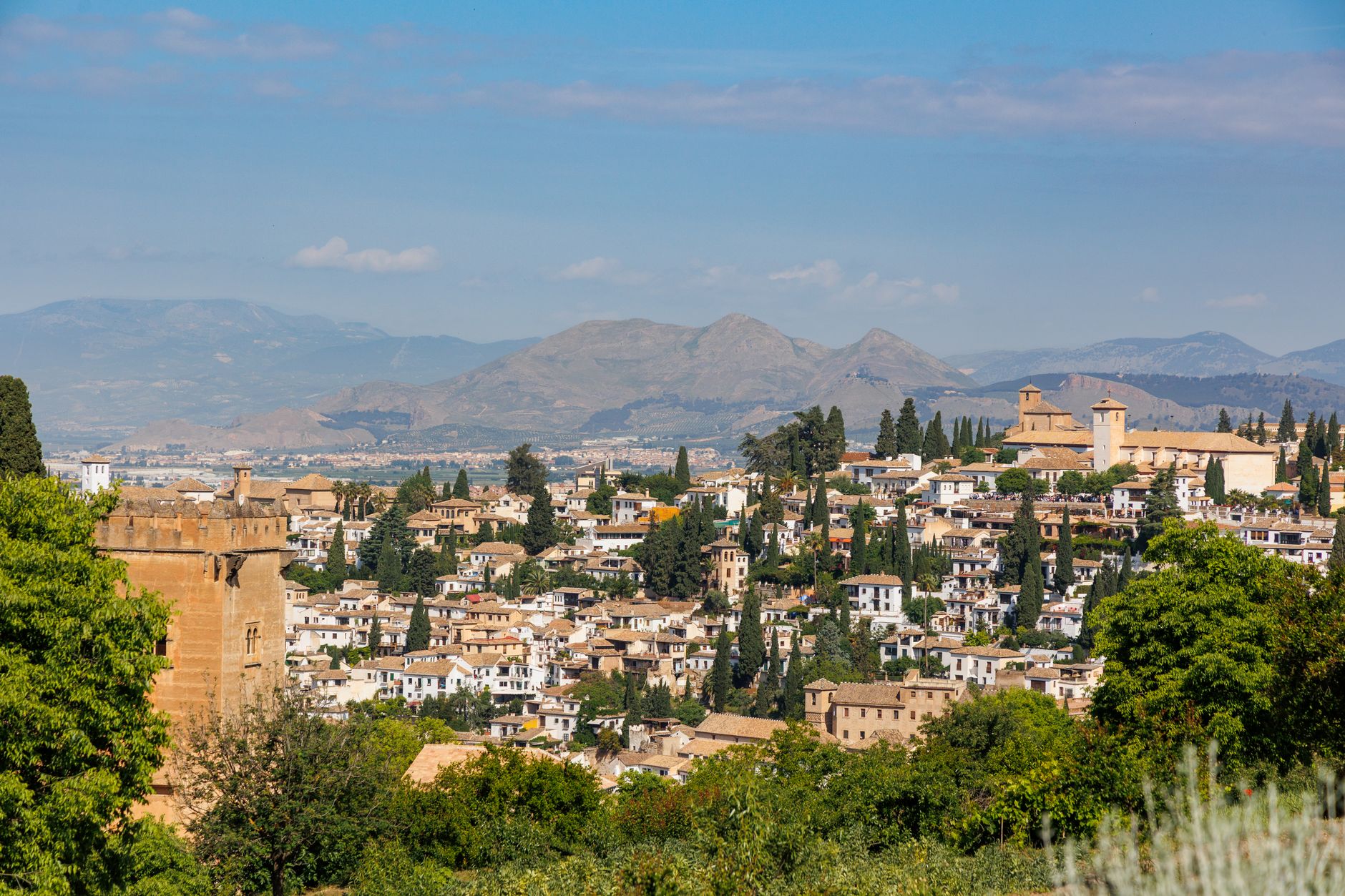

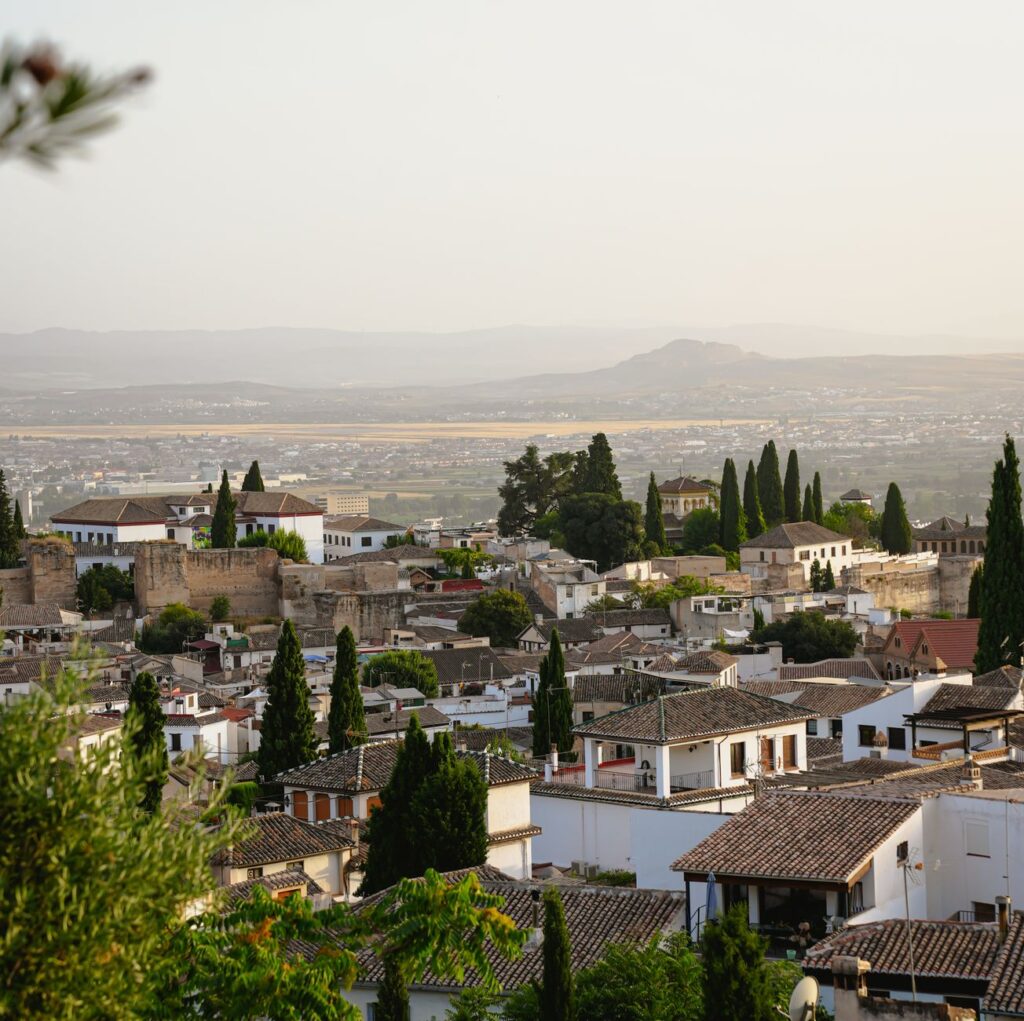
Granada smells of firewood and quince paste. In the neighbourhoods of the Albaicín and the Realejo, cooking is not announced with neon signs but with half-open doors and the murmur of a frying pan. The city, located at around 689 metres above sea level in southern Spain, lives with its back to the postcard tourism and its face to a pantry that arrives every morning from the slopes of the Sierra Nevada. Here, gastronomy is not a spectacle: it is a routine repeated for centuries, and visitors can learn to read it if they know where to look.
The question guiding this report is simple: what does Granada eat when nobody is watching? The answer is not on the menus of restaurants with views of the Alhambra, but in neighbourhood markets, in taverns that open at eight in the morning and in family kitchens where recipes are inherited without paper. This is a journey through the pantry of a city that makes the mountain its main supplier.
The irrigation channel as the first ingredient
Before haute cuisine existed in Granada, water did. The network of irrigation channels descending from the Sierra Nevada not only waters the fields of the vega: it also organises life in the neighbourhoods. In the Albaicín, the Acequia del Rey and the Acequia de San Pedro cross alleys and feed tiny vegetable plots that still produce broad beans, chard and winter tomatoes. Local historian Carmen López, who has studied the Andalusian hydraulic system, explains that these channels allowed a proximity agriculture for centuries that survives today in the hands of residents and associations.
That link between water and food translates into dishes that seem simple but hide a logic of thrift. Broad bean stew with chard, the olla de San Antón or cornmeal gachas are recipes of humble origin now reclaimed in city-centre taverns. Granada’s cuisine is, in essence, mountain cooking adapted to the city: it uses what is available, when it is available, and pretends nothing else.

Granada’s pantry is not bought: it is gathered. Each season brings its own menu and the city organises itself around it.
The San Agustín market and the morning liturgy
The San Agustín market, in the city centre, opens before the city wakes. Fruit and vegetable stalls share aisles with fishmongers bringing goods from Motril and Almuñécar, and with butchers displaying sausages from the Alpujarra. It is not a monumental market like others in Spain, but it works like a clock: by nine in the morning the best batch of wild asparagus is sold and by eleven only roasting peppers remain.
The market routine reveals a hierarchy of products that visitors can learn. In spring, broad beans and peas dominate; in summer, dry-farmed tomatoes and cucumbers; in autumn, mushrooms and chestnuts; in winter, cauliflower, oranges and quince. Buying at San Agustín means accepting a calendar that is not negotiable. The city’s cooks know this and adjust their menus every week.
The Alpujarra: the pantry that goes up and down
Less than an hour from Granada, the Alpujarras function as the city’s high-altitude pantry. The white villages of Pampaneira, Bubión and Capileira preserve a tradition of drying and preserving that allowed survival through harsh winters. Trevélez ham, cured in the cold mountain air, is the best-known product, but not the only one: almonds, raisins, dried figs and rosemary honey travel to Granada’s markets every week.
The relationship between city and mountain is not folkloric but economic. Alpujarra farmers sell directly at local fairs and markets, and some city-centre restaurants have agreements with cooperatives to secure supply. That direct connection explains why Granada’s cooking tastes of the countryside even when served at a table with a tablecloth.
Taverns: where the tapa is a decision
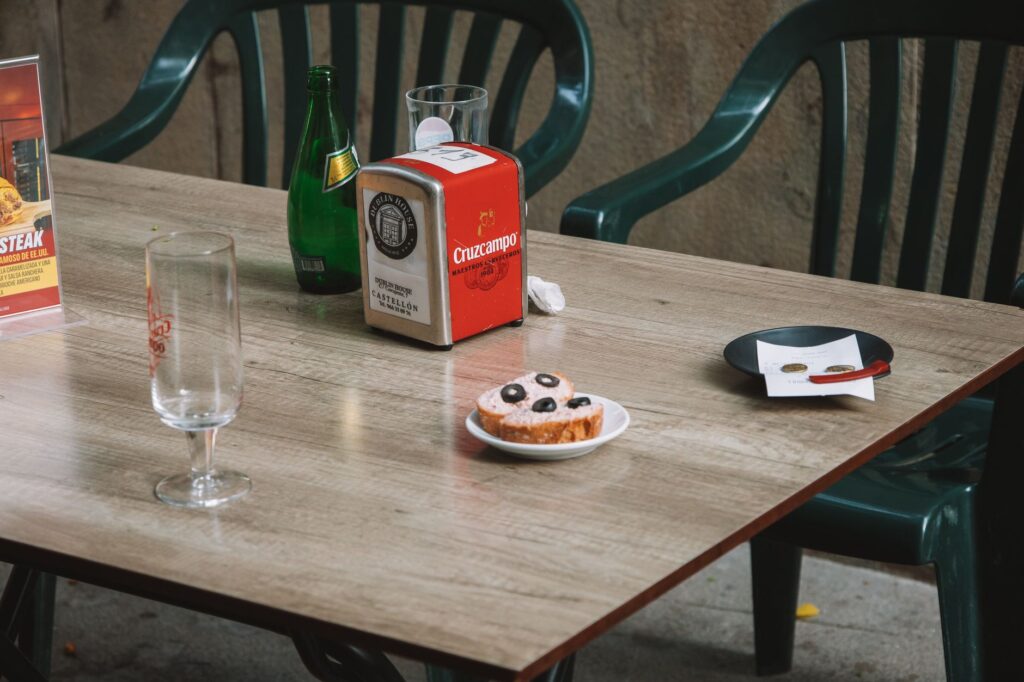
In Granada, the tapa is not an appetiser: it is a way of eating. The custom of serving a small free portion with each drink remains alive in many bars, albeit with nuances. In the taverns of the Realejo and Calle Elvira, the tapa can be a seasonal stew, a potato omelette or a plate of tripe. There is no fixed rule, but there is an ethic: the tapa must be edible with a fork and must accompany, not compete.
That practice has consequences for visitors. Ordering a small beer and receiving a plate of lentils is a common experience in Granada, and also a lesson in local hospitality. The bars that maintain the free tapa are usually the same ones that have been in the neighbourhood for decades and know their customers by name.
Convent sweets and Arab memory
Granada’s pastry tradition preserves an Andalusian imprint visible in the use of almond, honey and cinnamon. Cloistered convents, such as Santa Isabel la Real or the Encarnación, sell sweets made by the nuns: almond sponge cakes, pestiños, little pastries filled with angel hair jam. Sales are made through a revolving door, without visual contact, and the price is left on a tray.
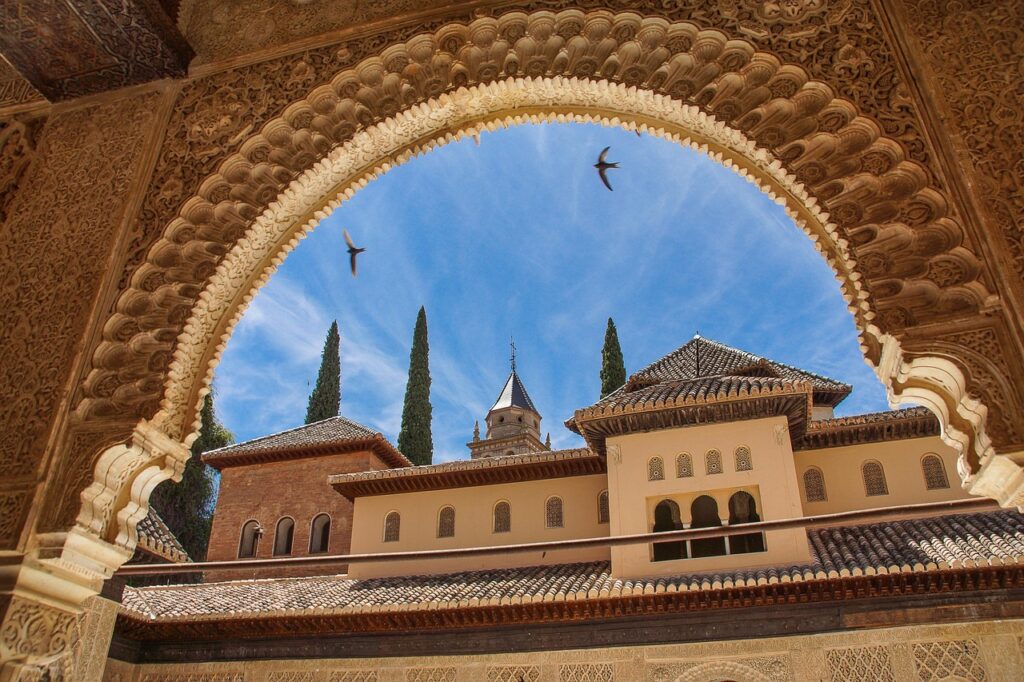
That tradition is not a tourist attraction but a real economy for religious communities. Buying convent sweets means participating in a production chain that has been running for centuries and that connects Granada’s pantry with its medieval history.
Market cooking: restaurants that read the season
In recent years, a generation of Granada cooks has returned to the market as their main source. Restaurants such as La Botillería, in the Realejo, or El Claustro, in the Centro, work with seasonal products and menus that change every few weeks. This is not avant-garde haute cuisine but product-based cooking that respects the calendar and the territory.
That trend has a measurable effect: local suppliers find stable buyers and diners discover that the best way to understand Granada is to eat what the city eats. The season is not a fashion: it is the very structure of Granada’s pantry.
Oil, bread and wine: the silent triad
No Granada cuisine is understood without three elements rarely celebrated: olive oil, bread and wine. The province’s oil, especially from the Montefrío region and the Granada vega, has a fruity profile used both for frying and dressing. Bread is bought daily from neighbourhood bakeries that keep the wood-fired oven. Wine, produced in the Montes Orientales and the Contraviesa, accompanies without pretension.
These three products form the basis of the local diet and explain why Granada’s cooking can be austere and generous at the same time. Quality is not in quantity but in consistency.
Practical guide
For those who want to approach Granada’s pantry with judgement, some guidelines are useful. The first is seasonality: do not ask for tomatoes in January or mushrooms in July. The second is timing: neighbourhood markets open in the morning and close at midday; taverns serve tapas from half past twelve. The third is location: the Albaicín, the Realejo and the Centro offer the highest concentration of traditional stalls and bars, but peripheral neighbourhoods such as the Zaidín or the Chana have equally interesting and less crowded markets.
- San Agustín market: central, varied, best in the morning.
- La Chana market: less touristy, good fishmonger and greengrocer.
- Convent sweets: Santa Isabel la Real, Encarnación, San Bernardo.
- Traditional taverns: Calle Elvira, Realejo, Plaza de la Trinidad.
- Alpujarra products: Trevélez ham, honey, almonds, raisins.
It is advisable to carry cash, as many small stalls do not accept cards, and to ask about the product of the day. Vendors often explain the origin and the best way to cook it. That conversation is, in itself, part of the gastronomic experience.
The table as heritage
Granada is not a showcase gastronomic capital but a city that eats every day with what the mountain and the valley give it. Its pantry is not visited like a museum: it is bought, cooked and shared. Visitors who want to understand it must accept the rhythm of the seasons, the simplicity of the dishes and the generosity of a tapa served without being ordered.
In the end, Granada’s culinary identity rests on an old and current idea: cooking is a way of inhabiting a territory. Eating in Granada is, in a sense, reading the Sierra Nevada on a plate. And that reading, done patiently, is what turns a visit into a lesson.