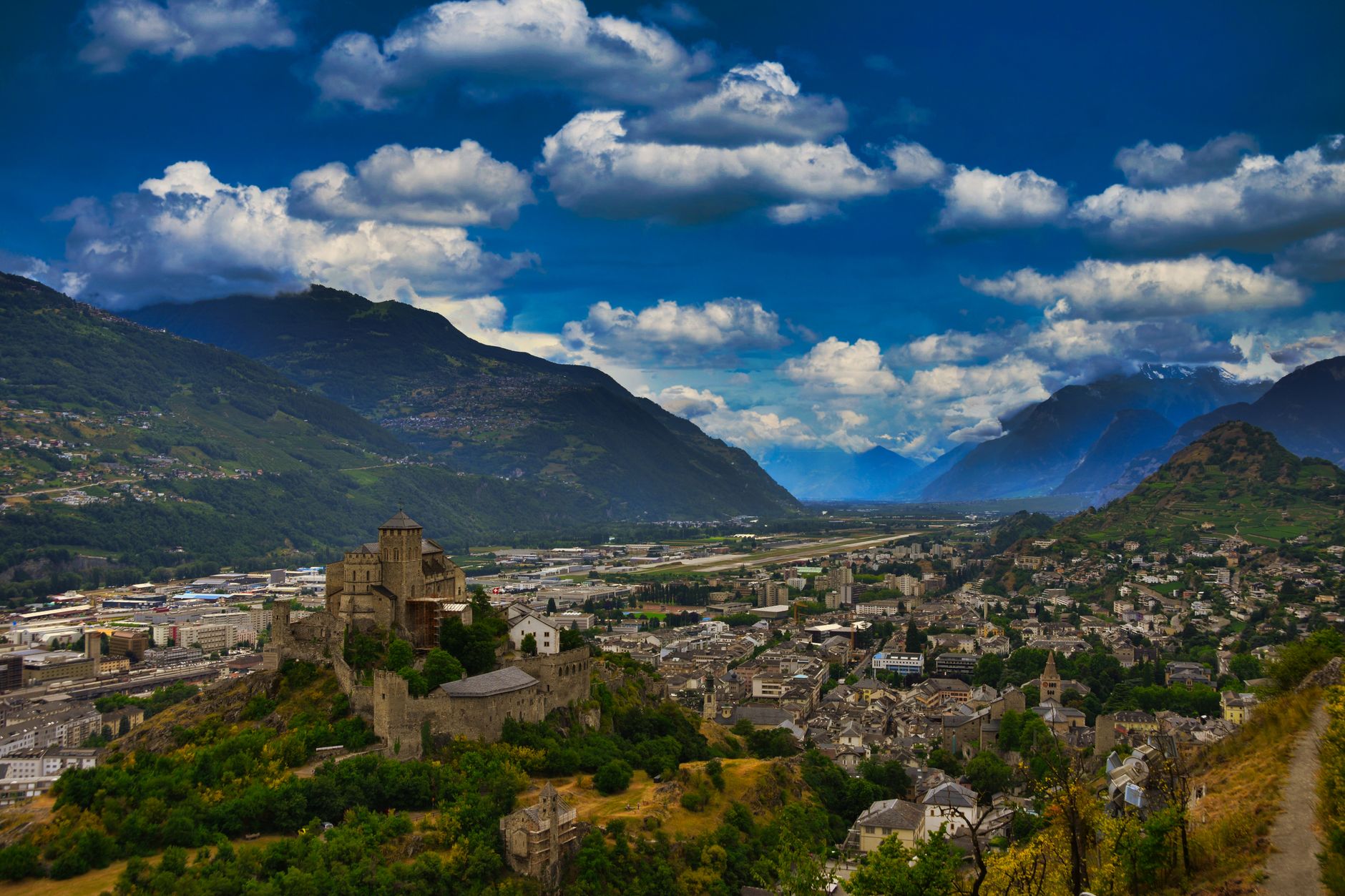

In the heart of Valais, Switzerland’s sunniest canton, the city of Sion unfolds between hills crowned by medieval castles and a valley crossed by the Rhône. With a population of around 35,000, according to GeoNames data, Sion is the administrative capital of the region and an essential transport hub. Its railway station, operated by the Swiss Federal Railways (SBB/CFF/FFS), is not a mere stop: it is the point where the rhythms of a community converge, a community that relies on the train to work, study, shop, or access specialised medical services.
For the traveller, Sion station is the gateway to a territory of contrasts: terraced vineyards, hiking trails, ski resorts, and a historical heritage dating back to Roman times. This report examines how this railway node operates, what makes it relevant in the Swiss context, and why it remains a key infrastructure for the territorial cohesion of Valais.
A crossroads in the upper Valais
Sion lies at the confluence of two rivers, the Rhône and the Sionne, and its railway station occupies a strategic position on the line linking Geneva to Brig, passing through Lausanne, Montreux, and Martigny. This route, known as the Rhône line, is one of the country’s main railway arteries and connects southwestern Switzerland with northern Italy via the Simplon Tunnel.
Sion station is also the starting point for the line ascending to the ski resorts of Crans-Montana and other side valleys. Although not all connections are direct, the network of postal buses and regional links complements the rail offer to reach the most remote villages.
Sion’s location, at about 500 metres above sea level, allows the city to enjoy a milder climate than other Alpine areas, which has historically favoured human settlement and, in the modern era, the development of a diversified economy combining agriculture, tourism, and services.
History of a line that transformed the valley
The arrival of the railway in Sion occurred in the second half of the 19th century, in the context of the construction of the Rhône line. The rail connection brought profound change to Valais, a region that until then depended on mountain roads and river transport. The train enabled the export of local products, such as wine and fruit, and facilitated access to the markets of Geneva, Lausanne, and Zurich.
Throughout the 20th century, Sion station was expanded and modernised. The electrification of the line, completed in the early decades of the century, improved train frequency and capacity. After the Second World War, increased passenger and freight traffic led to the construction of new facilities and the integration of the station into the urban transport system.
Sion station does not merely connect points on a map: it has witnessed generations of Valaisans who have found in the train a way to maintain their roots without renouncing the opportunities of the rest of the country.
In recent decades, the station has undergone reforms to improve accessibility and services. The creation of a mobility centre integrating train, bus, and bicycle is an example of how Swiss authorities approach public transport planning.
The station today: services and accessibility
Sion station has facilities designed for both daily travellers and tourists. Services include ticket counters, ticket vending machines, a tourist information office, and shops. The station is adapted for people with reduced mobility, with lifts and ramps facilitating access to the platforms.
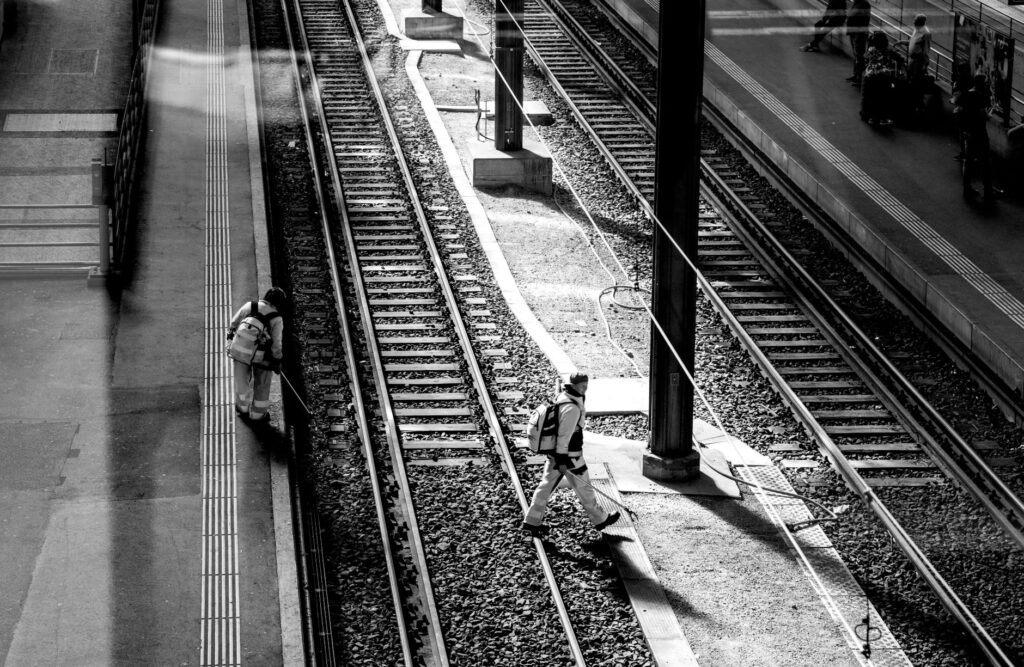
The main building, with functional architecture, houses a waiting room and several dining options. On the platforms, information panels display real-time departures and arrivals. The station has bicycle parking and a car rental service, allowing train travel to be combined with other forms of mobility.
For residents, the station is a meeting point and a mandatory stop for many daily commutes. Regional trains connect Sion with nearby towns such as Martigny, Sierre, and Brig, while long-distance trains reach Geneva, Zurich, Milan, or Paris with transfers.
The landscape seen from the window
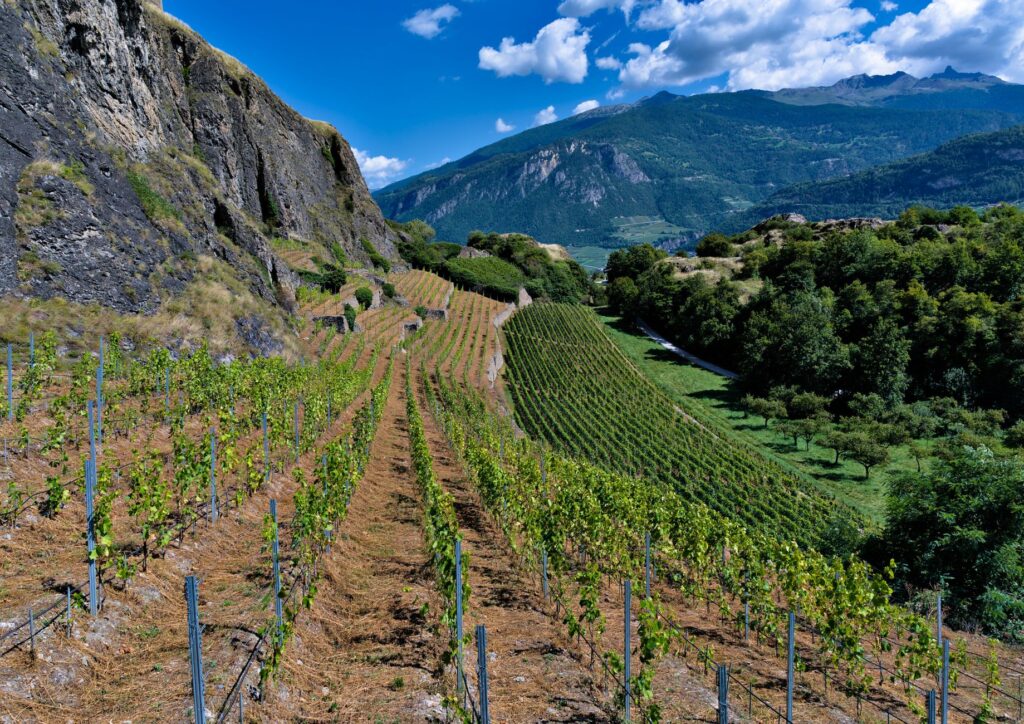
The railway journey through Valais offers some of Switzerland’s most spectacular views. Leaving Sion towards Brig, the train enters a landscape of terraced vineyards, villages with church bell towers, and mountains exceeding 4,000 metres. In spring, almond and cherry trees blossom, while in autumn the vineyards turn red and gold.
The journey towards Geneva, by contrast, skirts Lake Geneva and offers panoramas of the Alps and the lake. The line passes through Montreux, known for its jazz festival, and Lausanne, with its Gothic cathedral and historic old town.
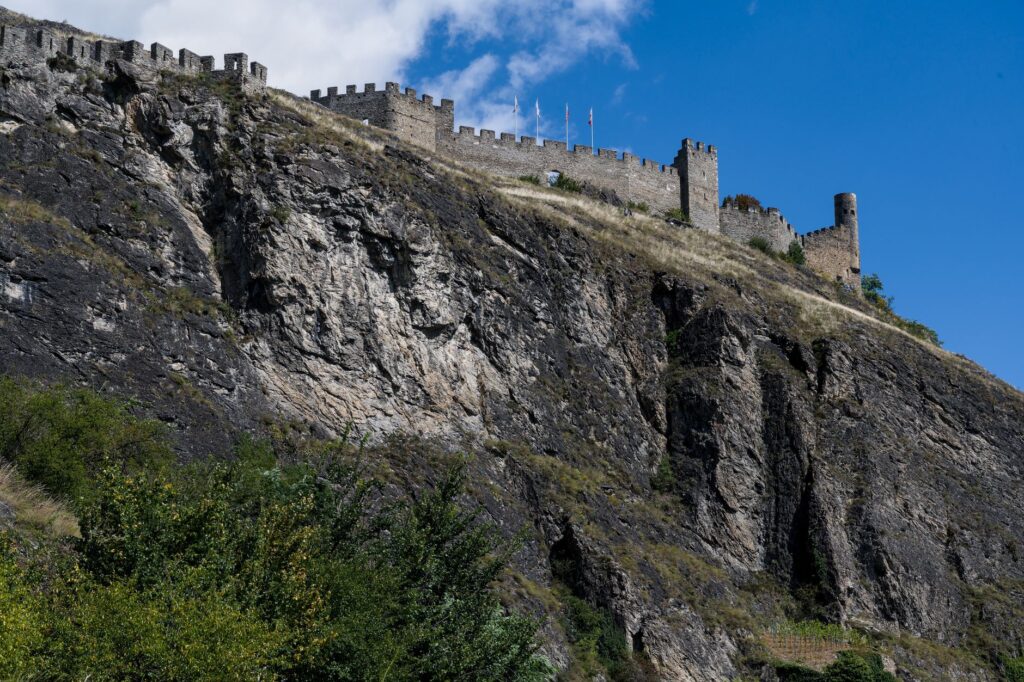
For photography enthusiasts, the section between Sion and Sierre is particularly recommended, as it allows capturing images of the castles of Valère and Tourbillon, which dominate the city from their hills. These castles, along with the Basilica of Valère, are among the region’s most visited monuments.
Everyday usefulness for residents and travellers
For residents of Sion and nearby villages, the railway station is much more than a transit point. It is the primary means of transport for those working in Geneva or Lausanne who have chosen to live in Valais, attracted by the quality of life and more affordable housing prices. Travel passes, such as the Swiss Travel Pass or the SBB general pass, facilitate these frequent commutes.
Students also depend on the train to attend university or specialised schools in other cities. In addition, the station is the starting point for weekend excursions to the ski resorts of Crans-Montana, Verbier, or Zermatt, although in some cases it may be necessary to combine the train with buses or cable cars.
For international travellers, Sion is an interesting stop on a tour of Switzerland. The city offers a less crowded alternative to other Alpine towns and allows exploration of the historical and gastronomic heritage of Valais. The station has luggage lockers so visitors can explore the city for a few hours.
A hub for mountain and wine tourism
Valais is Switzerland’s most important wine region, and Sion is a good starting point for discovering its wineries. Many are located within walking distance of the station, and some offer guided tours and tastings. Local wines, such as Fendant, Petite Arvine, or Cornalin, are appreciated both domestically and abroad.

Furthermore, Sion station is the gateway to hiking and cycling routes. The Rhône Route, a cycling path that runs through the valley, passes near the station. Mountaineering enthusiasts can take a bus to high mountain areas and return by train at the end of the day.
The Sion tourist office, located in the station, provides information on activities, maps, and transport schedules. It is advisable to consult its resources to plan visits to the castles, Romanesque churches, or local museums.
Practical guide
To make the most of Sion station and its surroundings, some practical aspects should be considered. The station is located in the city centre, within walking distance of the historic old town. Regional and long-distance trains operate at regular intervals, although it is advisable to check schedules on the SBB website or mobile apps.
The Swiss Travel Pass is a useful option for visitors planning to travel through several regions of Switzerland, as it includes access to trains, buses, and boats, as well as some museums. For longer stays, specific passes for Valais may be more economical.
Regarding accommodation, Sion has hotels, hostels, and tourist apartments in various price ranges. Local cuisine includes dishes such as raclette, fondue, and roast lamb, which can be enjoyed in restaurants near the station.
It is important to remember that, although Sion is a safe city, the usual precautions should be taken at any train station, especially with luggage. Customer service is available in several languages, including English.
A closing between vineyards and mountains
Sion station is an example of how railway infrastructure can integrate into the landscape and the life of a region. It is not just a transit point but a meeting place between history and modernity, between mountain and valley, between residents and travellers. Its importance transcends transport: it is a symbol of the connectivity that has allowed Valais to maintain its identity while opening up to the world.
For anyone visiting Sion, the recommendation is to take time to watch the coming and going of trains, contemplate the castles from the platform, and perhaps buy a bottle of local wine for the journey. The station, with its steady rhythm, remains the discreet heart of a city that beats to the rhythm of the tracks.