
Agadir, on Morocco’s Atlantic coast, is a city that faces the ocean with a mix of calm and activity. Its long stretch of pale sand and its fishing port set the rhythm of a place that, after the 1960 earthquake, was rebuilt along modern lines. Today it is the capital of the Souss-Massa region and a destination that combines rest with the observation of everyday Moroccan life.
With a population of over 600,000, Agadir is also an administrative and commercial hub in the south of the country. Its location, between the ocean and the foothills of the Anti-Atlas, gives it a mild climate all year round. This report offers an unhurried look at its public spaces, markets and heritage, with attention to the responsible choices a visitor can make.
A city rebuilt with sea views
The 1960 earthquake destroyed much of Agadir, and the subsequent reconstruction shaped a city of wide avenues and low buildings. Walking through the centre reveals that planning: tree-lined streets, roundabouts and architecture that avoids excessive height. The memory of the quake is present in the Memorial Museum of the Earthquake, a sober space that documents the tragedy and the resilience of its people.
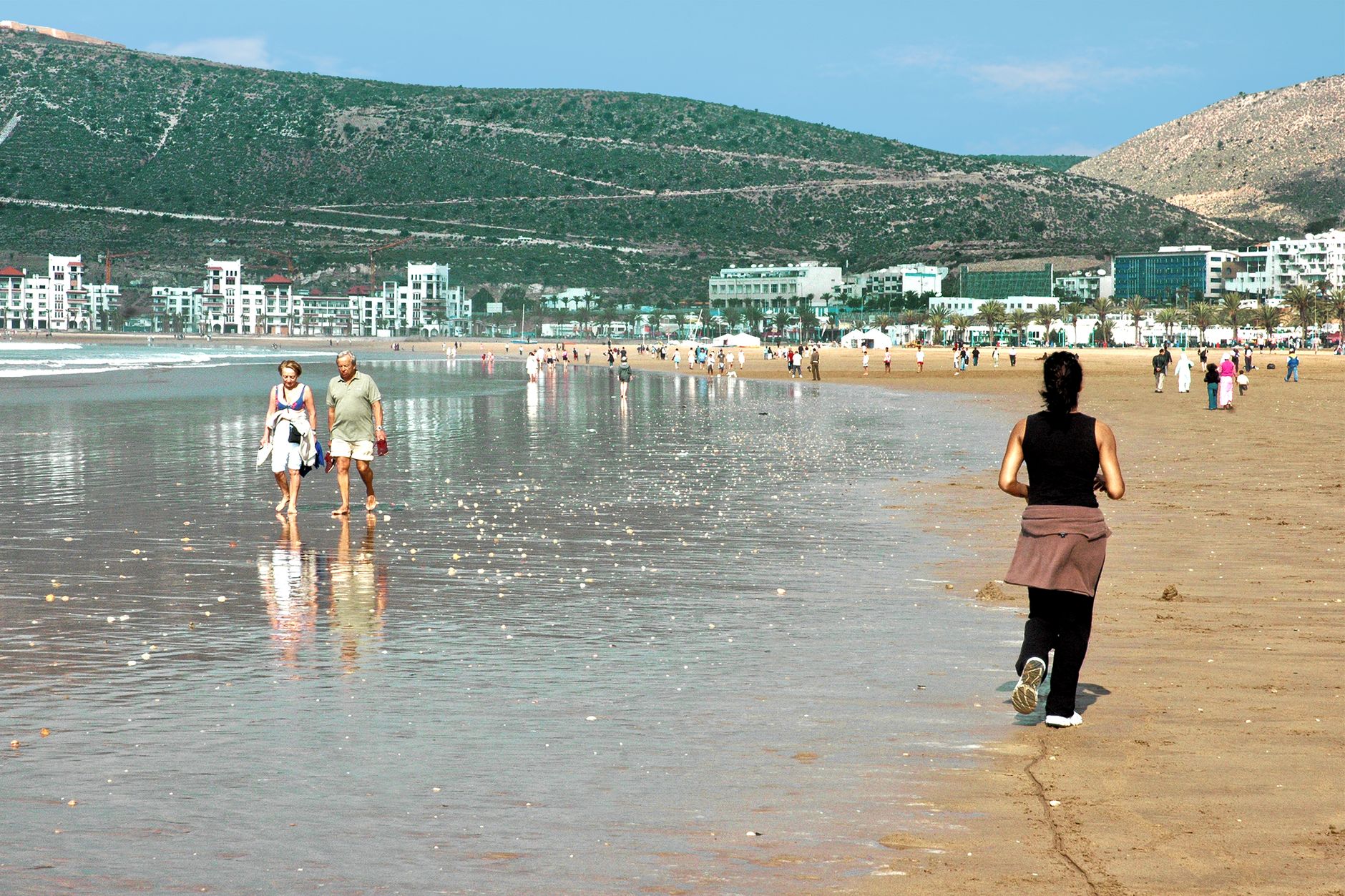
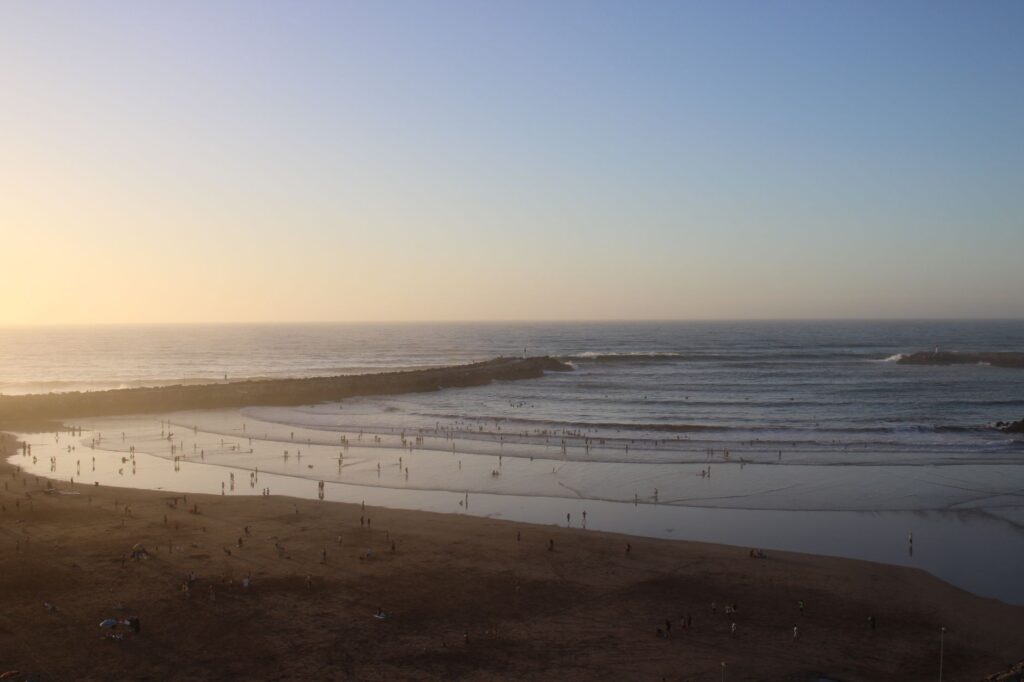
The beach is Agadir’s great public space. Along several kilometres, the seafront brings together families, fishermen and athletes. In the morning, the sun lights up the sand and the water; in the afternoon, the wind attracts windsurfers and kitesurfers. It is a place to observe without haste, respecting rest areas and local activities.
Agadir is not just a beach destination: it is a city that learned to rise again and now shows its history on every corner.
The fishing port: work and flavour
The port of Agadir is one of the most important in the country. Every morning, boats return with the day’s catch, and the fish market becomes a coming and going of boxes, ice and voices. It is a place of work, not a spectacle, and visiting it requires respect for safety rules and for the fishermen’s activity.
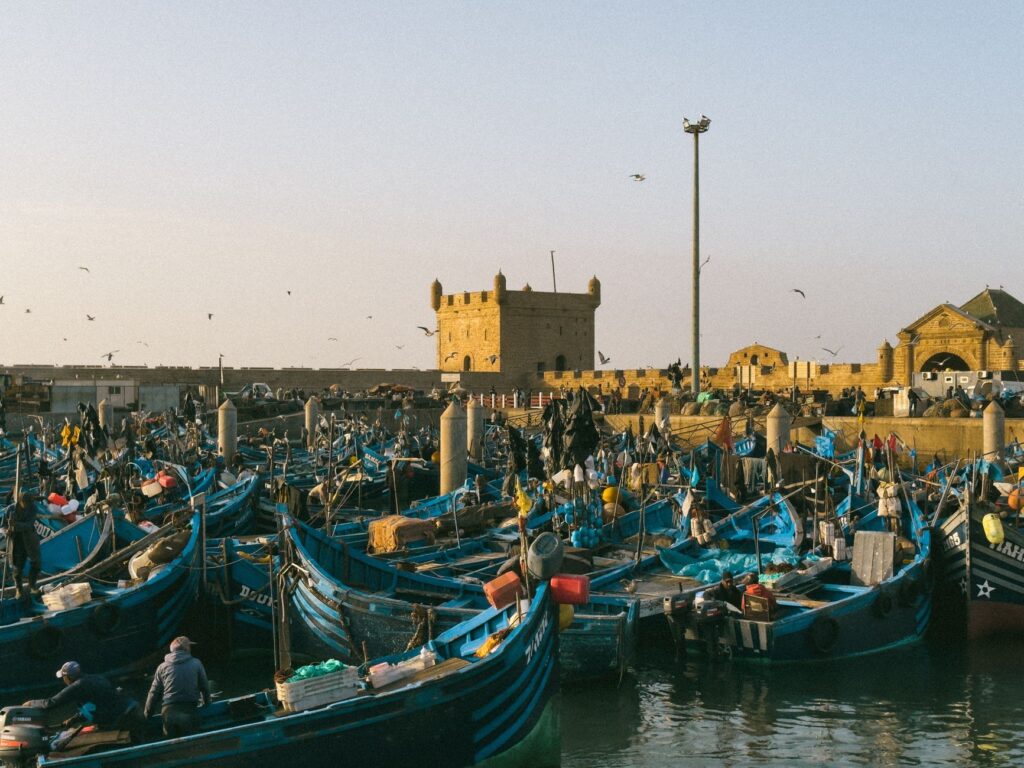
Near the port, small restaurants offer fresh fish grilled over coals. Local cuisine combines fish with spices, olive oil and freshly baked bread. Trying a fish tagine or a grilled sardine platter is a way to get closer to the region’s seafaring culture.
Understanding the port also means understanding the city’s economy. Fishing, canning and the processing of agricultural produce from the Souss plain sustain many families in Agadir and its surroundings. For a visitor, this context helps interpret what is seen at the quays and in the markets: a working coastline rather than a backdrop.
El Had market: colours and aromas of the Souss
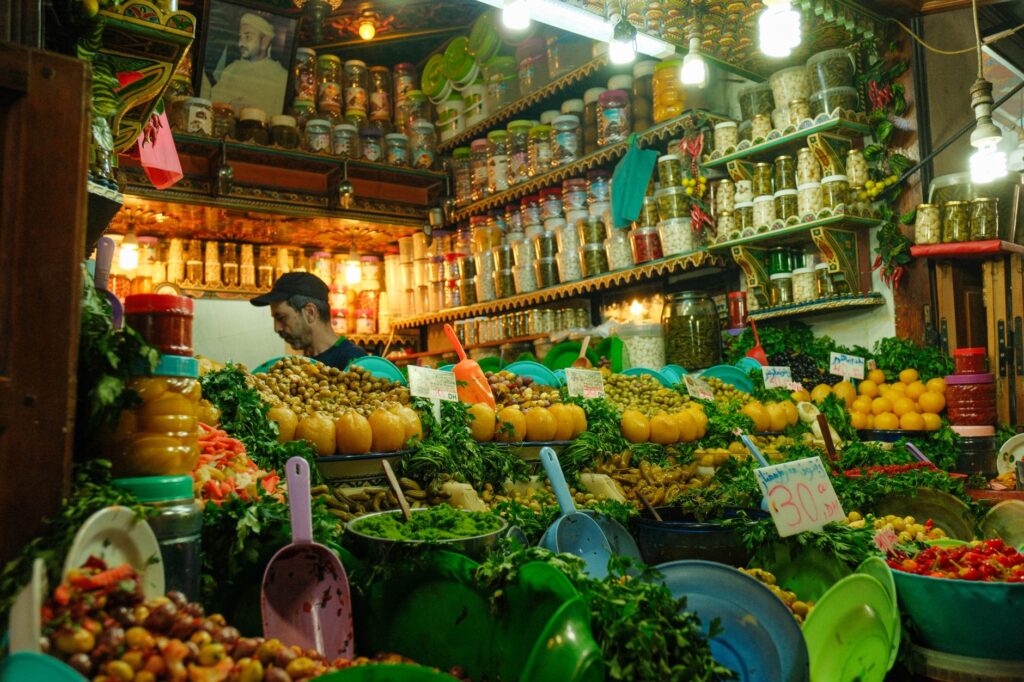
El Had market, on the outskirts of the city, is the largest weekly market in the region. Every Sunday, producers from nearby villages arrive with fruit, vegetables, spices, crafts and animals. Walking through its aisles is a sensory experience: the smell of mint and cumin, the colours of fabrics and the bustle of transactions.
For visitors, it is important to remember that this is a food market, not a theme park. It is advisable to go slowly, ask before taking photos and buy respectfully. Prices are usually reasonable, but haggling is part of the local commercial culture.
The market is also a meeting point for communities from the Souss valley and the surrounding mountains. Amazigh language, clothing and crafts are present in the stalls, which makes El Had a good place to appreciate the cultural diversity of the region without turning it into a spectacle.
The kasbah and views over the bay
On top of a hill, the kasbah of Agadir offers one of the best views of the city and the ocean. Although few remains of the original fortress are left, the site retains a historical air and is a meeting point to watch the sunset. Access can be by car or on foot, although the path is steep.
From there, you can see the bay, the port and the expanse of the city. It is a good place to understand Agadir’s geography: a coastal strip, a fertile plain and mountains in the background. The sunset tints the sky with orange tones and offers a serene image of the city.
The kasbah also recalls the layers of history that precede the modern city. The name Agadir is linked to a fortified granary, a type of construction common in southern Morocco, which speaks of a territory organised around storage, trade and defence long before tourism arrived.
Neighbourhoods and daily life
Beyond the seafront, Agadir has neighbourhoods where daily life unfolds. Areas such as Talborjt, rebuilt after the earthquake, mix shops, cafés and homes. Walking through its streets reveals schools, local markets and terraces where people play chess or chat.
The Founty neighbourhood, with its residences and hotels, is more tourist-oriented, but it also hosts restaurants frequented by locals. The mix of residents and visitors is part of the city’s character. For a responsible traveller, choosing locally managed accommodation and shopping at neighbourhood businesses helps keep benefits in the community.
Daily life in Agadir also follows the rhythm of the seasons. In summer, the beach and the seafront fill up; in the milder months, the city recovers a quieter pace. Observing these changes, rather than expecting a constant holiday atmosphere, gives a more accurate picture of the place.
Heritage and culture: beyond the beach
Agadir has several cultural spaces. The Municipal Museum displays archaeological and ethnographic pieces from the region, from traditional utensils to Berber jewellery. Local crafts, with carpets, ceramics and leatherwork, can be found in cooperatives and specialised shops.
Music and dance are also part of living heritage. At festivals and celebrations, Amazigh and Arab rhythms can be heard. The culture of tea, with the ceremony of preparing and serving mint tea, is a show of hospitality shared in homes and cafés.
Timing a visit around cultural events, when they are publicly announced, can add context to a stay, but it is not necessary to chase performances. Many expressions of local culture happen in ordinary settings: a bakery, a workshop, a neighbourhood café or a family celebration that is not open to visitors.
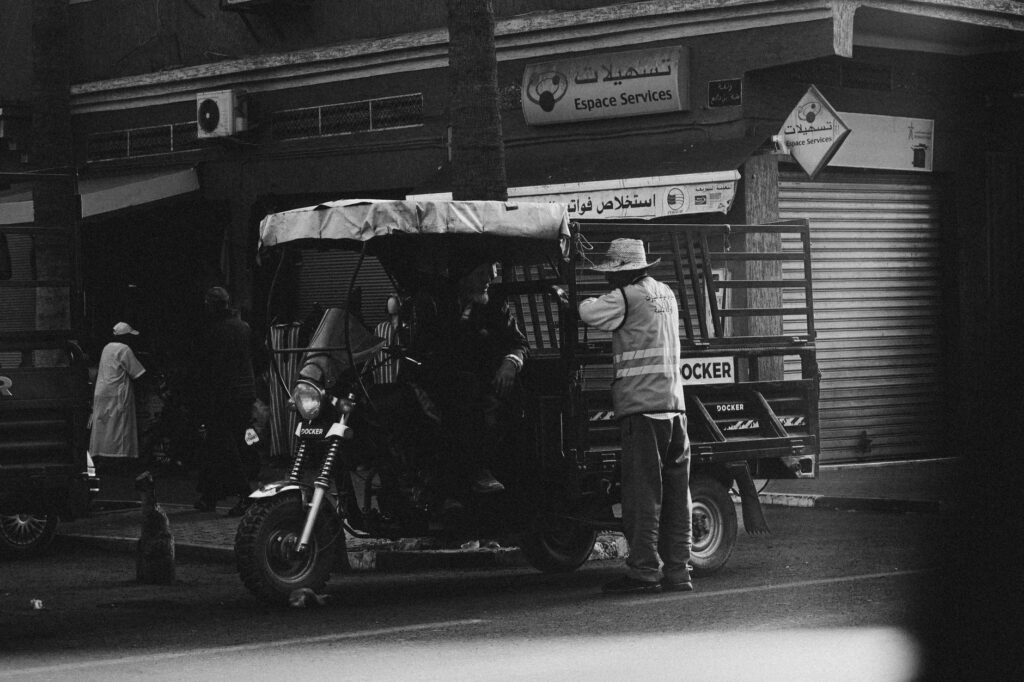
Agadir’s wealth lies in its people: in the fishermen who rise early, the farmers who bring their produce and the families who keep their traditions alive.
Nature around: beaches, birds and mountains
North of Agadir, Taghazout beach is known for its waves and relaxed atmosphere. To the south, the Souss-Massa nature reserve protects wetlands and migratory birds, such as the northern bald ibis. It is a fragile space that requires guided visits and respect for conservation rules.
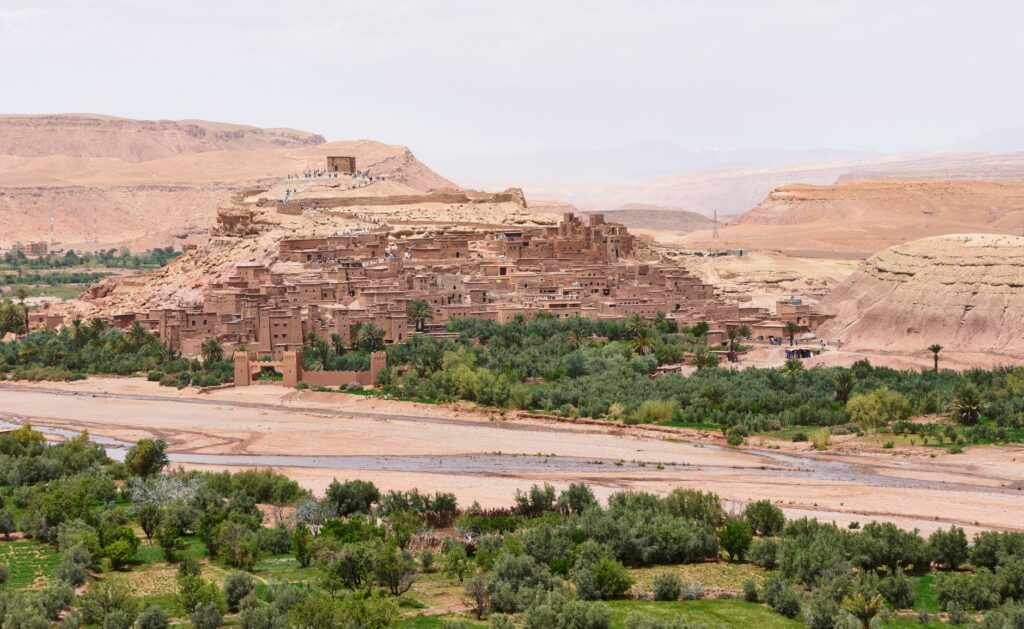
Inland, the Souss valley offers landscapes of orange groves and farmland. The Anti-Atlas mountains, with their villages and mud-brick fortresses, are a destination for day trips. It is always advisable to hire local guides and follow instructions to minimise environmental impact.
Water is a central issue in this semi-arid region, and responsible tourism means using it sparingly. Choosing accommodation with sensible water practices, avoiding unnecessary waste and respecting protected areas are simple ways to reduce the pressure that visitors can place on fragile environments.
Getting around and understanding the city
Agadir is a relatively compact city by the sea, but its neighbourhoods spread inland and along the coast. Walking is pleasant along the seafront and in the centre, while taxis and buses connect the more distant areas. Distances are moderate, but the sun can be strong, so planning the day around the cooler hours is sensible.
The city’s layout reflects its reconstruction: broad avenues, open spaces and a clear separation between the tourist front and the residential quarters. Getting to know both sides, without treating one as the «real» city and the other as an exception, gives a fuller understanding of how Agadir works.
Practical guide
When visiting Agadir, it is recommended to wear light clothing and use sun protection, as the climate is sunny most of the year. Public transport includes buses and taxis; taxis are usually beige and it is common to agree on the fare before getting in. Agadir-Al Massira Airport is about 20 kilometres from the centre and offers domestic and international connections.
- Best time: spring and autumn, when temperatures are mild.
- Language: Arabic and Amazigh are the local languages; French and English are used in the tourism sector.
- Currency: Moroccan dirham. It is useful to carry cash for markets and small shops.
- Cultural respect: dress modestly in traditional neighbourhoods and ask permission before photographing people.
- Sustainability: choose locally managed accommodation, reduce plastics and respect natural areas.
Other general recommendations are to keep an eye on personal belongings in crowded places, to drink bottled or treated water when in doubt, and to agree on prices for services before using them. These are ordinary precautions rather than warnings about the city, which is generally welcoming to visitors.
A sunset on the beach
At the end of the day, Agadir’s beach becomes a meeting place. Families stroll, children play and fishermen gather their nets. The sun sets over the Atlantic and the sky fills with colour. It is a moment to sit and observe, without hurry, the life of a city that looks out to sea.
Agadir is, in short, a gateway to southern Morocco: a city that combines the modernity of its reconstruction with the warmth of its people and the beauty of its surroundings. A destination that invites you to discover its history, culture and daily life with an attentive and respectful eye.