
The Rhaetian Railway in the Albula and Bernina landscapes of Switzerland is far more than a train line: it is a living testament to how early 20th-century engineering transformed life in the Central Alps. Inscribed as a UNESCO World Heritage Site in 2008, this railway ensemble brings together two historic lines that cross the Swiss Alps through two mountain passes. The Albula line, opened in 1904, runs for 67 kilometres and displays an impressive array of 42 tunnels and covered galleries, plus 144 viaducts and bridges. The 61-kilometre Bernina line adds 13 tunnels and galleries, and 52 viaducts and bridges. Together they form an outstanding example of harmony between architecture, civil engineering and the Alpine landscape.
This report proposes a slow journey through that heritage, with attention to its history, its technical solutions, its social impact and the practical keys to exploring it with respect and curiosity. It is not a guide to timetables or fares, but an invitation to understand why this railway remains a key part of life in mountain communities and an unmissable destination for lovers of historic trains.
A railway heritage in the heart of the Swiss Alps
UNESCO inscribed the Rhaetian Railway in the Albula/Bernina landscapes in 2008, recognising its outstanding universal value. The criteria for this distinction highlight two fundamental aspects: on the one hand, the technical, architectural and environmental ensemble represented by both lines, and on the other, their role as an outstanding example of the development of high-altitude mountain railways in the first decade of the 20th century.
The Rhaetian Railway not only overcame formidable geographical barriers, but did so with remarkable construction quality and stylistic homogeneity. Its infrastructure blends into the Alpine landscape with an unusual harmony, to the point that today it is inseparable from it. The Albula and Bernina lines, unified into a single transalpine route, offer a diverse catalogue of innovative solutions for overcoming severe mountain conditions.
This international recognition celebrates not only the technical feat but also the socio-economic consequences the railway had for local populations. At the beginning of the 20th century, the train ended the isolation of many settlements in the Central Alps and durably transformed life in the mountains.

The Albula line: tunnels and viaducts that defied the mountain
Opened in 1904, the Albula line runs for 67 kilometres in the north-western part of the site. Its route is a compendium of mountain railway engineering: 42 tunnels and covered galleries, and 144 viaducts and bridges. Each of these structures was designed to adapt to rugged terrain without breaking the continuity of the landscape.
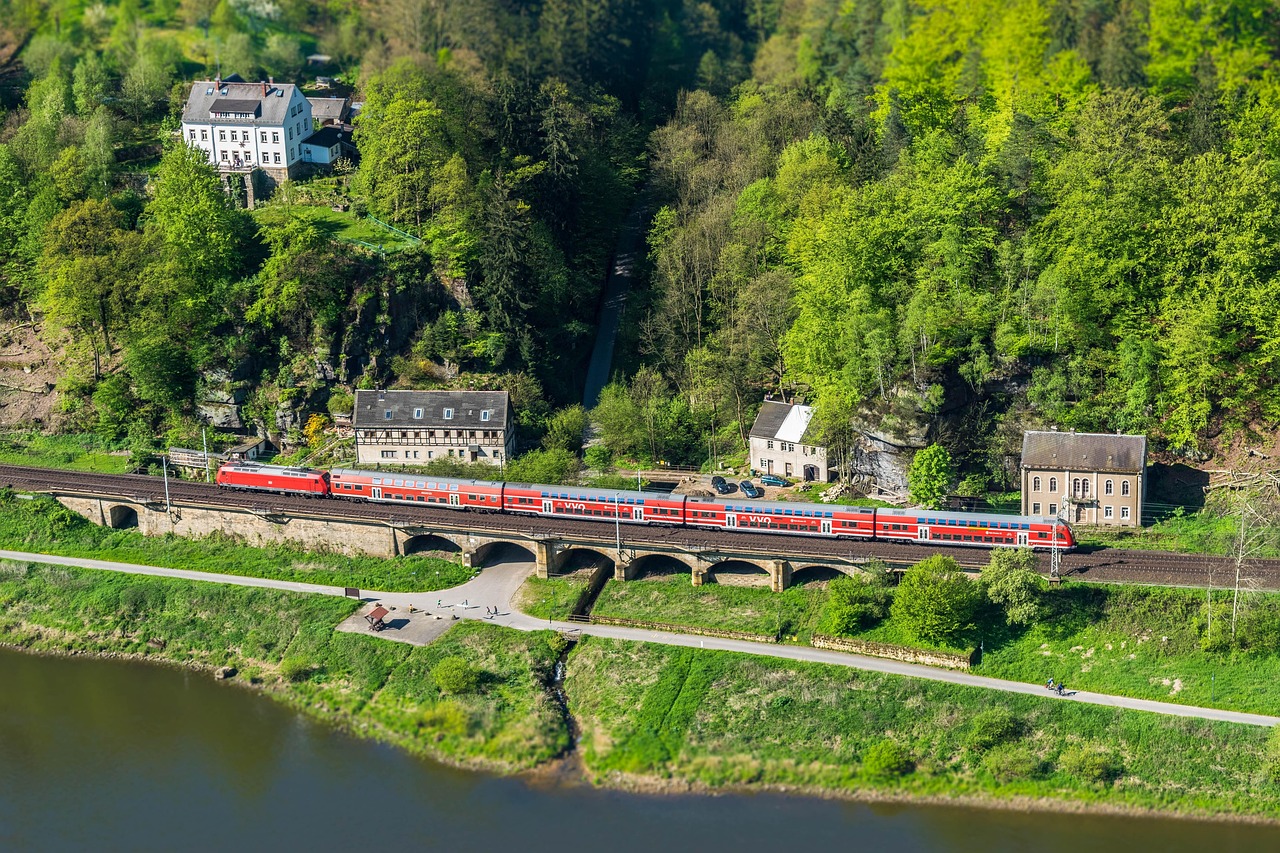
The route crosses deep valleys and steep slopes, with solutions that combine wide curves, helical tunnels and stone viaducts that have become visual icons. The line not only serves a transport function but has also become a moving viewpoint over the Swiss Alps. The precision of its layouts and the elegance of its structures explain why this railway is studied today as an example of integration between infrastructure and environment.
The Rhaetian Railway does not impose itself on the landscape: it crosses it with a discretion that only the passage of time has turned into a symbol.
The Albula line preserves much of its original infrastructure, which reinforces its authenticity. The tunnels and viaducts remain in use, maintained according to criteria that respect their heritage value. For the traveller, this means the journey is also a lesson in engineering history.
The Bernina line: from glaciers to the Italian valley
The 61-kilometre Bernina line completes the ensemble. Opened in 1910, it connects the Swiss Engadin region with the Italian town of Tirano. Its route includes 13 tunnels and galleries, and 52 viaducts and bridges. Unlike other Alpine lines, the Bernina does not use rack-and-pinion throughout its route, allowing it to maintain steep gradients with conventional adhesion.
The landscape it crosses is extraordinarily diverse: from the glaciers of the Bernina massif to the vineyards and orchards of the Poschiavo valley, already on the Italian border. This contrast makes the journey a changing experience, with stations that seem frozen in time and others that maintain intense daily activity.

The Bernina line is also an example of how a railway can be an economic engine for peripheral regions. Its presence has helped sustain agricultural, tourism and craft activities that would otherwise struggle to survive in such a demanding environment.
A railway that still sets the rhythm of Alpine life
More than a century after its opening, the Rhaetian Railway remains a living infrastructure. It is not an open-air museum but a service connecting villages, schools, workplaces and tourist centres. Trains run regularly and are used by residents and visitors alike.
This continued use is one of the factors guaranteeing the conservation of the heritage. Daily operation requires keeping tracks, tunnels and bridges in good condition, and introducing technical innovations compatible with the authenticity of the ensemble. The railway company has managed to balance necessary modernisation with respect for historic elements, a difficult equilibrium in century-old infrastructure.
For Alpine communities, the train is not just a means of transport: it is a link to the rest of the country and a mark of identity. In many valleys, the station remains the main meeting point and the symbol of a connection that changed their history.
Architecture and landscape: an exemplary symbiosis
One of the most admired aspects of the Rhaetian Railway is the way its architecture merges with its surroundings. Stone viaducts, tunnels carved into rock and mountain stations share a sober, functional but highly aesthetic construction language.

The stylistic homogeneity of the ensemble is due to the fact that it was conceived and built in a relatively short period, with coherent technical and aesthetic criteria. This gives it a unity rarely found in other mountain railway lines, often extended or modified over decades.
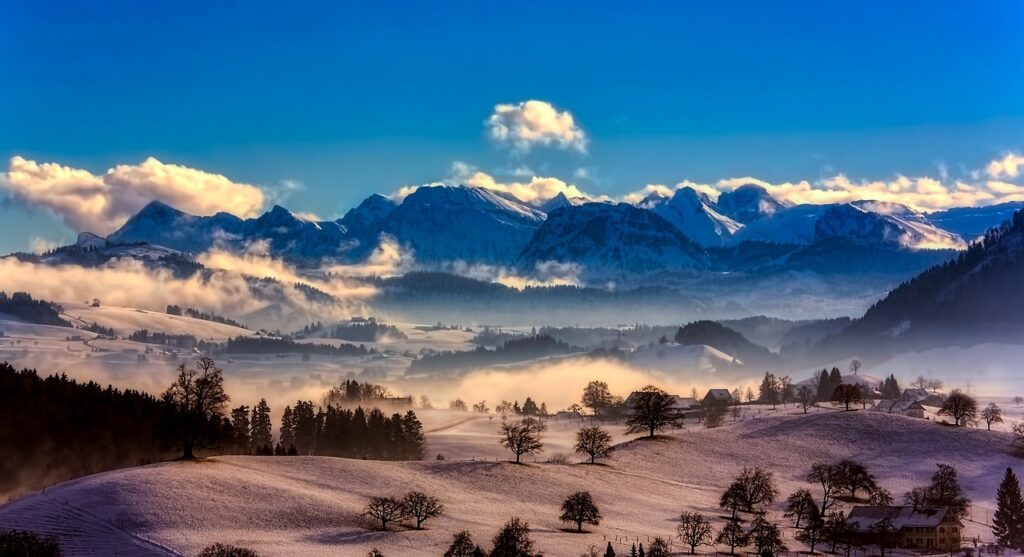
The result is a cultural landscape in which human handiwork does not compete with nature but accompanies it. Trains glide between forests, meadows and perpetual snow, and every curve offers a new perspective on that symbiosis.
The greatness of this railway lies not only in its figures but in the naturalness with which it crosses a territory that seemed destined to remain isolated.
Preparing the journey: what to keep in mind
Travelling the Rhaetian Railway in the Albula and Bernina landscapes requires some planning, especially if you want to do it calmly and take advantage of intermediate stops. The line is accessible throughout the year, although weather conditions can vary greatly depending on the season. In winter, snow covers the valleys and offers a unique spectacle, but it can also affect visibility and schedules.
It is advisable to check official timetables and service conditions before travelling, as this is an operating line subject to scheduled maintenance. No specific fares or reservations are given here because they can change; up-to-date information should be obtained from the railway company’s official channels.

For those wishing to get off at a station, there are accommodation options in villages such as Bergün, Preda, Samedan or Poschiavo, among others. The offer is varied, from historic hotels to rural lodgings. It is advisable to book in advance during high season, especially in summer and on public holidays.
Accessibility and on-board comfort
Rhaetian Railway trains are adapted for people with reduced mobility on many of their units, although specific conditions for each journey should be verified. Carriages usually have space for luggage and bicycles, making it easy to combine the trip with outdoor activities.
The total duration of the journey between the extremes of the site depends on the chosen section, but it is recommended to set aside at least a full day to appreciate the landscapes without rushing. Light changes throughout the day and offers different nuances in each season.
What to bring and how to behave
Clothing should be adapted to altitude and possible weather changes. Even in summer, mornings and afternoons in the mountains can be cool. Layers, comfortable shoes and sun protection are recommended. In winter, a coat, gloves and waterproof footwear are necessary.
Respect for the environment and local communities is essential. This is a living heritage, not a theme park. Keeping voices moderate, not trespassing on private property and following station instructions help ensure this railway remains an example of coexistence between tourism and daily life.
Practical guide
Before setting out, it is worth considering a series of practical aspects that will make the experience easier and help you enjoy the journey safely and comfortably.
- Documentation: if the itinerary includes the Italian part of the Bernina line, you must carry the corresponding travel documents. For EU citizens, an identity card is sufficient; other travellers should check entry requirements for Switzerland and Italy.
- Best time: spring and autumn offer varied landscapes and fewer crowds. Summer is the busiest season, while winter provides snowy views but shorter days.
- Luggage: travel light, with a backpack or small suitcase, as luggage space on trains can be limited at peak times.
- Food: some stations and trains have catering services, but it is advisable to carry water and a snack, especially if travelling with children or on long journeys.
- Connectivity: mobile coverage can be patchy in mountain sections. Downloading maps and timetables before departure is a good precaution.
- Sustainability: the railway is a low-impact means of transport. Using it to get around the region helps reduce the carbon footprint of the trip.
The experience of travelling the Rhaetian Railway in the Albula and Bernina landscapes is, above all, a lesson in patience and observation. It is not about arriving as quickly as possible, but about letting yourself be carried along a route that has maintained its character for more than a century.
A closing between mountains and rails
At the end of the journey, the feeling remains of having crossed something more than a landscape. The Rhaetian Railway is a reminder that technology can integrate with nature without destroying it, and that progress, when planned with judgement, can improve the lives of communities without erasing their identity.
The Swiss mountains are still there, imposing, and the trains still climb and descend their slopes with the same determination as a century ago. For the traveller, the final image is that of a red train winding through the snow, a simple but powerful symbol of what engineering and respect for the environment can achieve together.