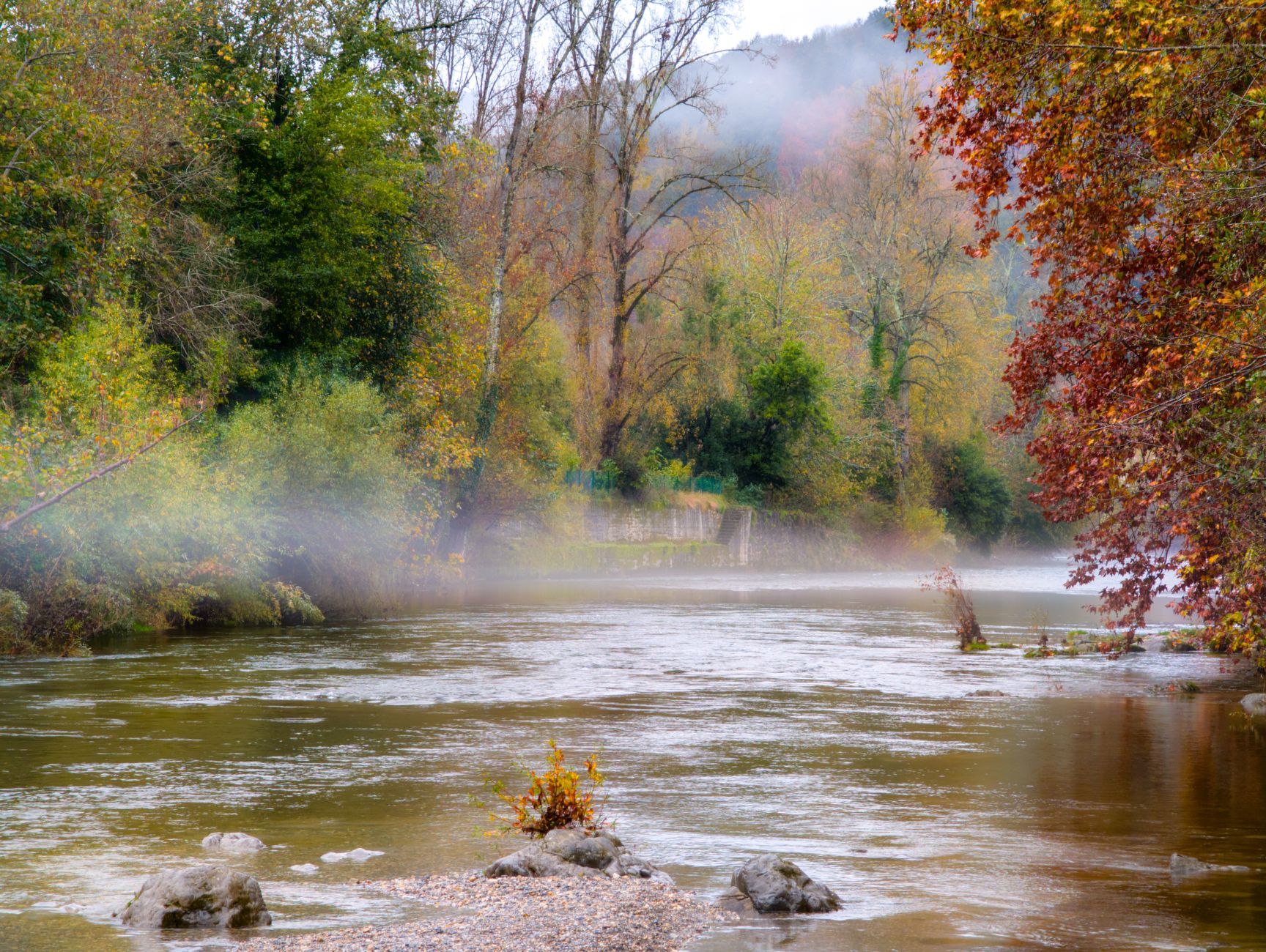

Mist peels off the beech groves like a damp sheet. In the Salazar Valley, in northern Navarre, the forest is not a backdrop: it is a living infrastructure that has shaped the lives of those who inhabit it. The Irati Forest, Spain’s largest beech-fir woodland, stretches across the Aezkoa and Salazar valleys, and to a lesser extent across the French valleys of Cize and Soule. It is not a theme park or a simple hiking destination. It is a territory managed with rules, fees and a growing awareness that its conservation depends on how it is visited.
The question guiding this report is not what to see, but how the visit is organised so that the forest remains a forest. The answer lies in the access points, the trails, the refuges and, above all, in the relationship between the landscape and the everyday life of the villages that surround it.
A forest with entry rules
The Irati Forest does not have a single gate. It is accessed from several points, and each imposes its own conditions. From the Salazar Valley, the main access starts in Ochagavía, a village of cobbled streets and Pyrenean architecture that preserves 18th- and 19th-century manor houses. Before reaching the Casas de Irati Visitor Centre, you must turn off onto the NA-2012 road and drive about 23 kilometres to the car park. In high season, a maintenance fee is charged. It is not an arbitrary toll: it funds the upkeep of the trails and the ranger services.
From the Aezkoa Valley, the most common access is Orbaizeta. About eight minutes from the village is the Arrazola information point, with ranger services, parking and a picnic area. You can also drive to the Irabia Reservoir dam, where two small car parks mark the start of routes such as the Irabia Reservoir Loop or the Camino de Plaza Beunza. In winter, some access roads may close due to snow, and it is advisable to check road conditions before setting out.

The forest is not visited: it is crossed with respect. Every marked trail is an invitation to walk without leaving a trace.
The trail network is extensive and varied. From Casas de Irati, routes such as the Cubo Waterfall, the Zabaleta Forest or the Old Path to Irati begin. From Irati-Abodi, in the Pikatua area, five colour-coded routes unfold, and in winter they can be explored on skis or snowshoes. The signage is clear but unobtrusive: wooden posts, discreet marks and interpretive panels explaining the forest’s wildlife, geology and history.
Landscape and everyday life: the villages that sustain the forest
Ochagavía is the best-known gateway. Its origins date back to the 11th century, and its urban fabric preserves the Plateresque cross over the Zatoya River and the bridge over the Anduña. But beyond the historic centre, the village lives on livestock farming, hospitality and rural tourism. It is not a stage set for visitors: it is a place where people work, raise their children and keep traditions such as the pilgrimage to the Sanctuary of Nuestra Señora de Muskilda, from the 12th century, with its oak-shingle roofs.
In the Aezkoa Valley, everyday life is spread across nine municipalities: Garaioa, Aribe, Garralda, Aria, Hiriberri/Villanueva de Aezkoa, Orbara, Orbaizeta, Abaurregaina/Abaurrea Alta and Abaurrepea/Abaurrea Baja. Here, popular architecture is a lesson in adapting to the climate: red-tiled houses, stone bridges and hórreos, the complementary structures once used to store grain safe from damp and rodents. The valley preserves 15 of Navarre’s 22 hórreos, listed as Assets of Cultural Interest.
The Orbaizeta Arms Factory is another testament to the relationship between landscape and life. Established in the 17th century to supply King Charles III with ammunition and weaponry, its location was chosen for its timber wealth, iron mines and watercourses. Today its ruins, listed as an Asset of Cultural Interest, form an enigmatic landscape that can be visited from the restored Orbaizeta Kultur Ola Palace.
The forest’s pantry: mountain gastronomy
After walking, the table. The gastronomy of the Aezkoa and Salazar valleys is hearty and honest. Shepherd’s migas, autumn mushrooms, veal and suckling lamb, Navarrese-style trout (fried with ham) and game stews — deer, wild boar or pigeon — are the dishes that best represent this mountain cuisine. To finish, homemade milk-based desserts, with sheep’s cheese and pacharán as the stars.
This is not haute cuisine, but a cuisine of resourcefulness that has kept its character. The valley restaurants offer menus that change with the seasons, and many products come from local farms. That connection between the forest, livestock farming and the table is another example of how the landscape orders everyday life.
Beyond the beech grove: industrial and megalithic heritage
The Irati Forest is not only nature. On its edges, traces of an industrial and prehistoric past add layers of interest. The Orbaizeta Arms Factory is the most important example of industrial architecture in the area. But there are also megalithic sites, such as Azpegi, with dolmens and menhirs dating back thousands of years. The Azpegi megalithic station route is one of the least known and most surprising.
In Abaurregaina/Abaurrea Alta, the highest village in Navarre, the old cemetery has been turned into a museum, an important archaeological site from which more than thirty medieval steles were recovered. The Garden and Labyrinth of the Steles is a landscaped space that evokes the cycle of life and its tortuous path towards death. It is a place of overwhelming serenity, very different from the forest experience.
Sports and activities: from mountain biking to snowshoes
The Irati Forest is not just for walking. The Irati BTT Space offers 16 mountain bike trails for all levels, with more than 400 cyclable kilometres connecting the Salazar and Aezkoa valleys with the French valleys of Zuberoa and Cize. Bicycles can be rented and minor repairs made at the visitor centres.

In winter, the Irati-Abodi Mountain Centre, in the Salazar Valley, allows cross-country skiing on three easy trails totalling 22 kilometres, plus a 16-kilometre trail for experienced skiers. Snowshoes can also be rented, and guided excursions are available. For more seasoned mountaineers, the ascent of Mount Ori (2,017 metres) is one of the most rewarding routes, with views stretching across much of the Navarrese Pyrenees.
The mountain is not a stage: it is a calendar. Each season imposes its own rhythm and its own tools.
Long-distance routes also cross the area. The GR-11, the Pyrenean Path, covers 170 kilometres through Navarre in eight stages, and stages 6 and 7 cross the Aezkoa and Salazar valleys. The GR-12, the Basque Country Path, preserves its Navarrese section, and stage 7 runs through the Irati area.
Conservation as a priority: reserves and protection
The forest’s good health is no accident. The Irati Forest has three protected areas: the Mendilatz and Tristuibartea nature reserves, and the Lizardoia integral reserve. These protection figures limit forestry exploitation and guarantee biodiversity. The forest is a Special Protection Area for Birds, home to woodpeckers — for which Irati is one of their last strongholds — black woodpeckers, white-backed woodpeckers and large raptors such as the bearded vulture, the peregrine falcon and the golden eagle.
Forestry exploitation dates back to the 15th century, but it has been maintained sustainably thanks to the respect of local communities. That coexistence between use and conservation is one of the traits that define the forest. It is not an untouched space, but a cultural landscape shaped by generations of shepherds, charcoal burners, hunters and loggers.
Practical guide
Getting there. The Irati Forest is in the Navarrese Pyrenees, in Spain. The main access points start from Ochagavía (Salazar Valley) and Orbaizeta (Aezkoa Valley). From Pamplona, you can drive via the N-135 and then local roads. Public transport is limited, so a car is the most practical option.
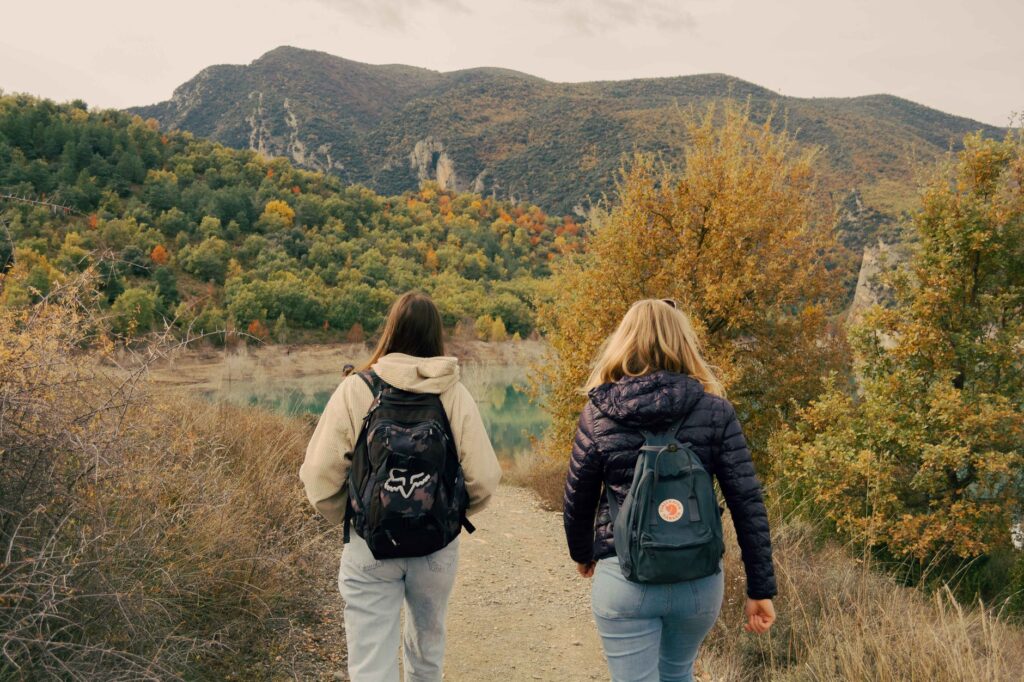
When to go. Each season offers a different experience. Spring and autumn are ideal for hiking, with spectacular colours in the beech grove. Summer is the busiest season, and in winter some roads may close due to snow. It is advisable to check access conditions before travelling.
Fees and permits. In high season, some access points (Casas de Irati and Arrazola) require payment of a maintenance fee. Other access points, such as Irati-Abodi or the Orbaizeta Arms Factory, do not charge it. The fee contributes to the conservation of trails and services.
Accommodation. The area has rural hotels, guesthouses, apartments, rural houses, hostels and campsites. Staying in the valleys allows you to enjoy the forest early in the morning, when the light is softer and there are fewer visitors.
What to bring. Hiking boots, water, sun protection and warm clothing, even in summer. In winter, snowshoes or cross-country skis if you want to access the higher routes. It is advisable to carry a map or use the Irati Forest hiking app.
Recommendations. Respect the signage and do not leave the trails. Do not leave litter. Do not disturb the wildlife. During the rutting season, keep your distance from deer. And above all, walk without rushing: the forest is not a race.
A closing among beeches
At dusk, light filters through the beech trunks and the forest recovers its silence. It is not an absolute silence: the wind, the birds and the creaking of branches fill it. But it is a silence that invites you to stay. The Irati Forest is not exhausted in a single visit. It is a place that is remembered, that is sought again and that, above all, is cared for. Because the forest remains there, generation after generation, thanks to those who have understood that the best way to enjoy it is not to break its rhythm.