
In the Chiloé archipelago, in southern Chile, wood is not just a building material: it is a language. Churches, houses, stilt dwellings and even fences speak of a place where Indigenous and European cultures met and shaped something unrepeatable. UNESCO recognises sixteen churches as World Heritage, but travellers soon discover that the real museum is open twenty-four hours a day, among fog, tide and the scent of wooden shingles.
This feature proposes a journey through Chiloé’s wooden architecture with a practical eye: what can be visited, how to move between islands, when to go and why it pays to prepare the trip calmly. This is not a destination for fast consumption. It is a territory to be explored slowly, with respect for the communities that inhabit it.
An archipelago explained by the sea
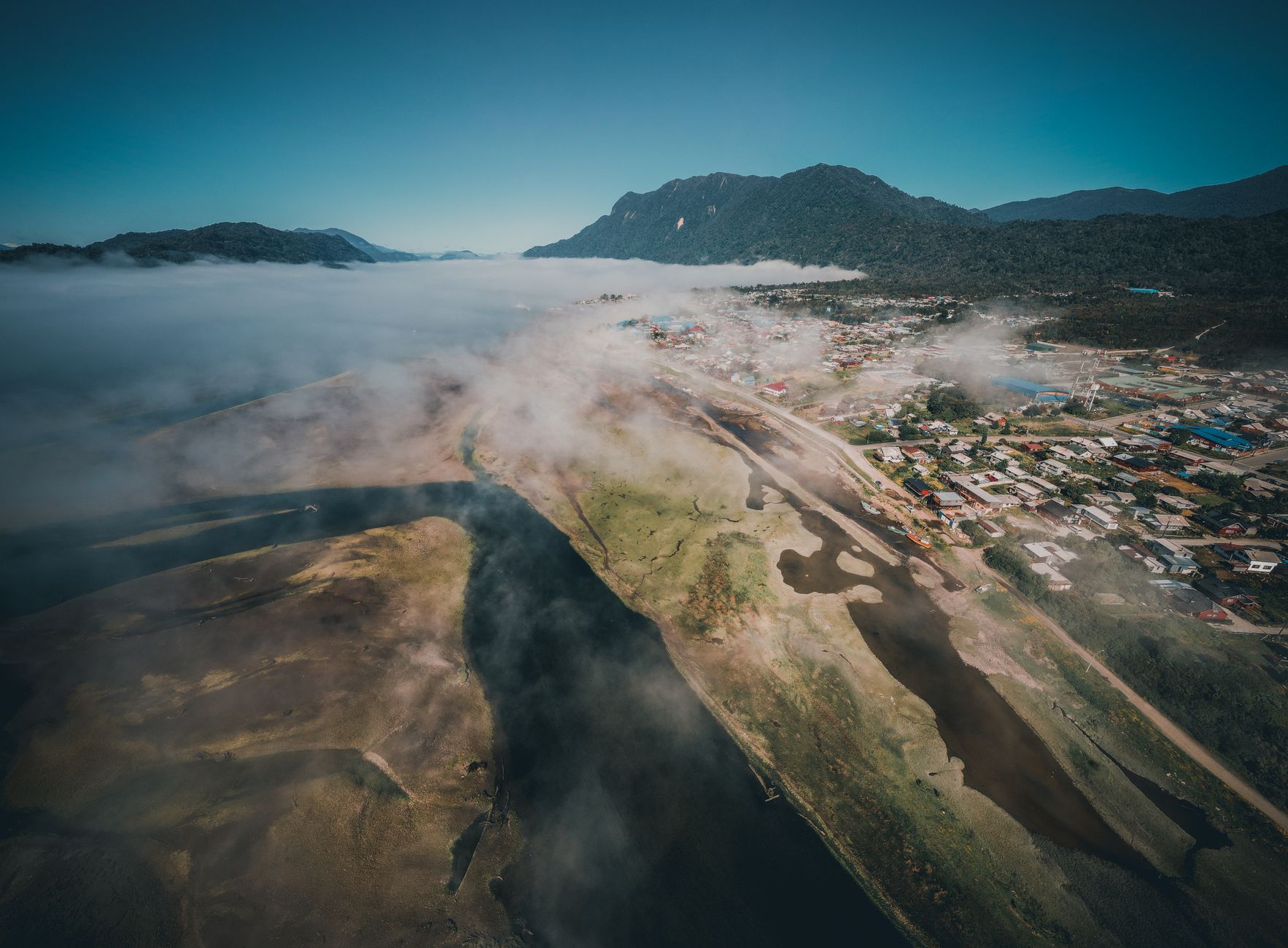
Chiloé stretches across southern Chile, between the mainland and the Pacific Ocean. The main island and dozens of smaller ones form a maze of channels, fjords and tides that for centuries was the only means of communication. That geography explains why wood became the dominant material: it was abundant in the forests and the only one capable of withstanding constant humidity.
Chilote architecture was not born of aesthetic whim. It was born of necessity. Local carpenters learned to work wood with techniques that blended Indigenous and European knowledge, and developed a building system now studied as the Chilote School of wooden architecture.
Churches: living heritage, not museum pieces
UNESCO inscribed the Churches of Chiloé on the World Heritage List in 2000. The organisation notes that they represent a unique example in Latin America of wooden religious architecture, initiated by Jesuit missionaries in the 17th and 18th centuries and continued by the Franciscans in the 19th century.
The sixteen churches included in the listing are Achao, Quinchao, Castro, Rilán, Nercón, Aldachildo, Ichuac, Detif, Vilupulli, Chonchi, Tenaún, Colo, San Juan, Dalcahue, Chellín and Caguach. Each has its own character, scale and community. Not all are easy to reach, and that is part of the journey.

The churches of Chiloé are not just buildings: they are the result of a cultural dialogue that remains alive in the daily life of the islands.
The church of Achao, on Quinchao Island, is one of the oldest and most visited. Castro’s church, with its yellow tower and pale wooden interior, has become a recurring image of the archipelago. But it is worth remembering that these are working temples: there is Mass, there are religious festivals, there are neighbours who care for them.
Palafitos: houses on the water
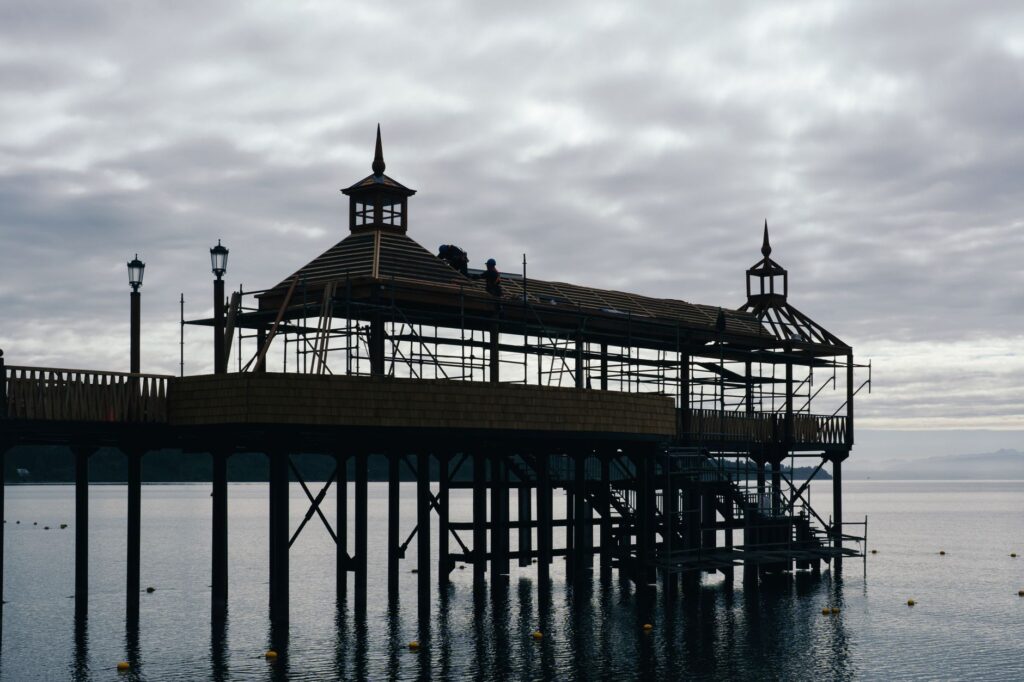
In Castro, the provincial capital, the palafitos are the most recognisable image. These are dwellings built on wooden stilts that extend into the water. They began as a housing solution for families linked to the sea and are now part of the urban landscape.
They are not a tourist attraction created for photographs. They are homes where people live. Some have become hostels, restaurants or cafés, but many remain family residences. Walking along the waterfront at dawn, when the tide is low and the light is soft, is one of the most serene experiences the archipelago offers.
The tejuela: a lesson in adapting to climate
The tejuela is the wooden shingle that covers façades and roofs across much of Chiloé’s architecture. It is made by hand and laid in overlapping rows, like scales, to let water run off. It is a simple, effective system that has proven capable of withstanding decades of rain and wind.
The use of the tejuela is not exclusive to churches. It appears on homes, barns, hotels and shops. Its constant presence gives the archipelago an unmistakable visual texture, especially when rain darkens the wood and colours deepen.
A possible route: from Ancud to Quellón
The main island of Chiloé can be travelled from north to south along Route 5, which connects Ancud, Dalcahue, Castro, Chonchi and Quellón. It is the backbone of the archipelago and allows a staged journey without depending exclusively on the weather.
- Ancud: gateway from the mainland, with museums and a market.
- Dalcahue: departure point for the Quinchao islands and the church of Achao.
- Castro: palafitos, a heritage church and a good base for exploring.
- Chonchi: colourful architecture and access to the eastern coast.
- Quellón: the southern tip, with a port atmosphere and connections to the mainland.
Smaller islands require a ferry or boat. Schedules depend on tide and weather, so it is wise to check locally and avoid rigid planning.
Climate, tides and island rhythm
Chiloé has an oceanic climate: frequent rain, mild temperatures and wind. The best time to travel is usually the austral summer, between December and March, when days are longer and routes are busier. But the archipelago has its own charm off-season, with fewer visitors and a different light.
The tide shapes daily life and some routes. In shellfish areas, for example, activity follows the rhythm of the water. Understanding this helps travellers move with less frustration and more curiosity.
In Chiloé, haste is a miscalculation. The archipelago organises itself according to weather, tide and each community’s festivals.
Food: sea and garden on the table
Chilote cuisine relies on products from the sea and the land. Curanto, prepared in a pit with hot stones and covered with leaves, is the best-known dish. There are also milcaos, chapaleles, seafood empanadas and a smoking tradition that uses local wood.
Eating in Chiloé is also a way to understand its economy and culture. Many restaurants work with seasonal products and family recipes. There is no need to seek fine dining: markets and small kitchens offer a direct and honest experience.
Craft and community life
Chilote craft includes woollen textiles, basketry and woodwork. In fairs and workshops you can find handmade pieces, often made by the same families who have lived on the islands for generations.

Community life is organised around the church, the school, the neighbourhood council and religious festivals. The minga, unpaid collective work, remains an important practice in some communities. Respecting these rhythms is part of travelling with awareness.
Accessibility: what to know before you go
Chiloé is not a difficult destination, but it is not trivial either. Getting there involves a flight to Puerto Montt or Castro, then bus, car or ferry depending on the starting point. Within the archipelago, public transport exists but is not always frequent in rural areas.
To visit remote churches or smaller islands, consider local tours, taxis or rental vehicles. Tourism infrastructure has grown, but remains limited compared with more crowded destinations. Booking ahead in high season is advisable.
Practical guide
- When to go: austral summer (December to March) for long days and active routes; low season for fewer visitors and lower prices.
- How to get there: flights to Puerto Montt or Castro; bus or car to Pargua and ferry to Ancud; there are also direct flights to Castro from Santiago.
- Getting around: rental car for flexibility; rural buses for main routes; boats and ferries for smaller islands.
- What to bring: waterproof clothing, comfortable shoes, warm layers and wind protection.
- What to respect: Mass times, community spaces, private property and local rhythms.
- Language: Spanish; basic English may be available in tourist areas.
- Money: carry cash for rural areas and fairs; not all businesses accept cards.
- Connectivity: variable; on smaller islands it can be limited.
A closing by the sea
At the end of the journey, what remains is not only the image of a church or a palafito. It is the sense of having passed through a place where architecture and daily life are intertwined. In Chiloé, wood holds memory: that of the carpenters, the communities, an archipelago that has adapted without losing its identity.
Travelling here means accepting that the weather rules, that distances are measured in tides and that the best way to know the place is to slow down. There is no need to invent anything: the landscape and its people already tell a powerful enough story.