Some landscapes are defined by what you see. Others are defined by what was decided not to be done. In the far northwest of Costa Rica, near the Nicaraguan border, a private property of 15,000 hectares called Santa Elena stopped being pasture and became a link in an ecological corridor that descends from volcanic summits to the Pacific Ocean. Its incorporation into the Guanacaste Conservation Area (ACG) in 2004 expanded a site declared a World Heritage property in 1999 and proved that restoring tropical dry forest is not a utopia: it is a practice with measurable results.
This report does not propose an adventure itinerary or promise guaranteed wildlife encounters. It proposes something more useful: understanding why this territory matters, what decisions made its recovery possible, and how a visitor can explore it with minimal impact. Santa Elena’s story is, above all, a lesson about the value of what is left untouched.
A territory you read from top to bottom
The ACG covers 147,000 hectares of land and sea, with 104,000 terrestrial hectares stretching roughly one hundred kilometres from the Pacific coast to the lowlands of the Caribbean basin. Within that gradient lie beaches, mangroves, rainforest, savannahs and, above all, an extensive tract of tropical dry forest: the best preserved in the belt running from Central America to northern Mexico, according to UNESCO documentation.
Altitude makes the difference. From sea level to the 1,916-metre summit of Rincón de la Vieja volcano, the landscape shifts almost continuously. That continuity is what allows species to migrate, interbreed and adapt. This is not a collection of isolated parks but a connected fabric.
Restoring the dry forest did not mean planting trees; it meant removing cattle and letting the ecosystem remember how to grow.
What exactly is being conserved here
The site’s official figures are striking: more than 7,000 plant species and over 900 confirmed vertebrates. Notable mammals include the endangered Central American tapir, at least 40 bat species, several primate species and felids such as jaguar, margay, jaguarundi and ocelot.
Birds number around 500 species, with names that demand attention: the endangered mangrove hummingbird and great green macaw, plus the vulnerable military macaw and great curassow. Reptiles include the American crocodile and spectacled caiman. At sea, several turtle species nest on the area’s beaches, with significant populations of the critically endangered leatherback and the vulnerable olive ridley.
Less visible but equally extraordinary is invertebrate diversity: an estimated 20,000 beetle species, 13,000 ants, bees and wasps, and 8,000 butterflies and moths. It is a universe that sustains everything else.

The missing piece: Santa Elena
For four centuries, the region was exploited opportunistically: clearing for pasture, logging and indiscriminate hunting. Yet poor soils, erratic climate and geographic isolation placed natural limits on that transformation. That is one reason why today we can speak of restoration rather than salvaging ecological ruins.
Santa Elena’s incorporation in 2004 was not just a sum of hectares. It closed a corridor between protected areas and reduced the risk of genetic isolation for animal populations. The property, previously private, became part of a complex administered by the Costa Rican state, with a mixed funding structure combining government and non-governmental sources, entrance fees and a heritage fund.
The stated management objective is twofold: conserve and restore. In practice, that means buying peripheral parcels when possible, paying for environmental services and maintaining research and outreach programmes. It is neither a closed nor a perfect model, but it is one of the few that has managed to reverse degradation at landscape scale.
What visitors can see and what they cannot
The ACG is not a theme park. It is a territory with regulated access sectors, limited hours and strict rules. Some sectors have marked trails and biological stations; others remain closed to visitors to avoid interfering with restoration or research.
That distinction matters. Travellers arriving in the hope of seeing jaguars or tapirs around every bend will likely be disappointed. Those willing to walk in silence, look for tracks, listen to birds and accept that elusive wildlife is the norm will have a far richer experience.
- Always check the official channels of Costa Rica’s National System of Conservation Areas before planning.
- Respect closed sectors: they are not an administrative whim but areas of active recovery.
- Hire accredited local guides where regulations require it.
- Do not feed animals or leave waste, not even organic waste.
Volcanoes, water and the landscape’s quiet engine
Rincón de la Vieja, with its craters and lagoon, is the area’s most recognisable summit. At least 32 rivers and 16 intermittent streams rise around this volcanic system, feeding the Tempisque basin, which is key to agriculture in Guanacaste province.
That connection between volcano, water and human activity is one of the strongest arguments for conservation. It is not only about protecting charismatic species: it is about sustaining the hydrological cycle on which communities, crops and coastal ecosystems depend.
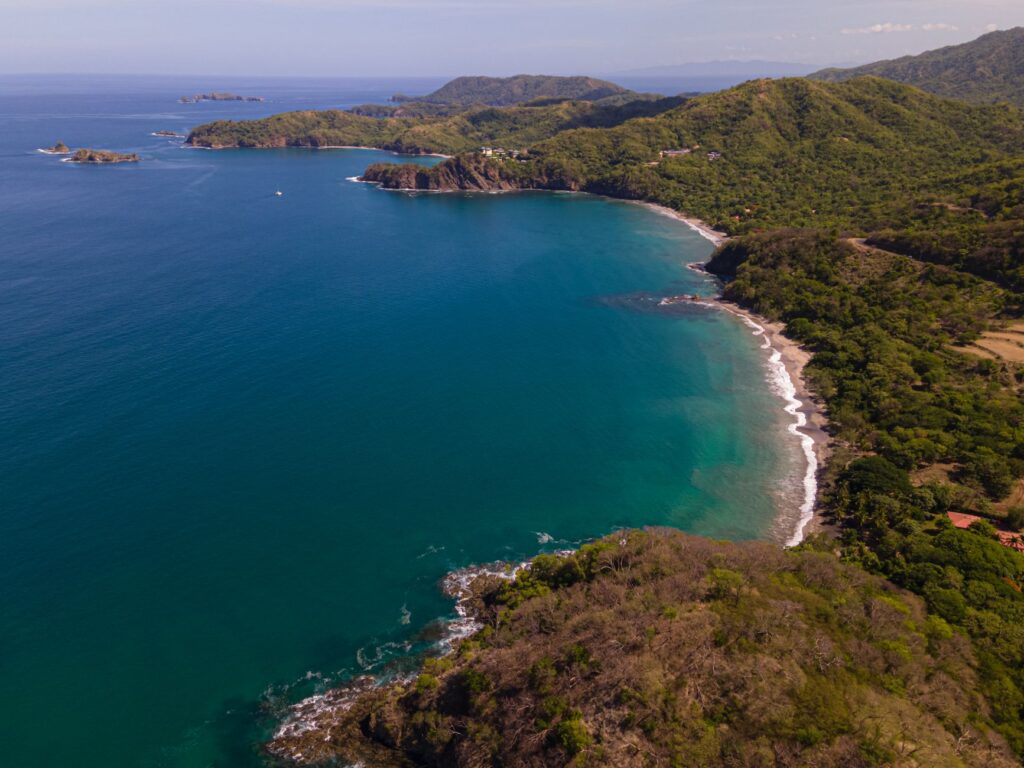
The marine sector, covering 43,000 hectares, includes near-shore islands and islets, sandy and cobble beaches, rocky shores, estuaries, mangroves and wetlands. Cold upwelling currents off the coast explain exceptional marine productivity, the foundation of coral reefs and algal beds.
The threats that do not disappear
World Heritage status does not grant immunity. Official documentation identifies specific pressures: pesticide pollution from agriculture outside the area, water diversion for irrigation, introduced exotic grasses, road construction, hydropower projects and growing tourism that demands balance.
In the marine realm, commercial and sport fishing without sufficient control has reduced catch sizes and increased the effort needed to fish, a clear sign of declining populations. UNESCO itself has pointed to the need to strengthen marine conservation and regulate coastal tourism.
The greatest risk to this landscape is not a fire or a hurricane: it is the silent accumulation of small decisions made beyond its boundaries.
What a responsible visitor can do
The first responsible decision is to inform yourself before travelling. The ACG has multiple sectors with different regulations, and not all admit visitors. The second is to choose accommodation and operators that work with verifiable sustainability criteria, not just slogans.
The third is to accept limitations. Fewer visitors, small groups, defined trails and silence are not obstacles: they are part of the experience. The fourth is to understand that money spent on entrance fees and local guides contributes directly to maintaining the area.
And the fifth, perhaps the most important, is not to demand that the landscape behave like a spectacle. This dry forest is not here to entertain: it is here because for decades someone decided to leave it alone.
Practical guide
When to go: the dry season, roughly December to April, offers more comfortable conditions for walking and wildlife watching in open sectors. The green season, May to November, transforms the landscape and can complicate some access routes. Always verify road and sector conditions before setting out.
Getting there: the ACG extends across Guanacaste and Alajuela provinces in northwestern Costa Rica. Main access points are reached by road from cities such as Liberia, which has an international airport. From there, individual sectors are reached by private vehicle or hired transport.
What to bring: enough water, sun protection, insect repellent, closed footwear, long sleeves and binoculars. Wildlife watching requires patience and often early starts.
Key rules: stay on authorised trails, do not feed animals, do not collect plants or minerals, do not use drones without express permission and leave no waste of any kind.
Official information: check the website of Costa Rica’s National System of Conservation Areas and the UNESCO World Heritage listing for hours, fees and open sectors. Conditions can change with season and management decisions.
An ending that is not an ending
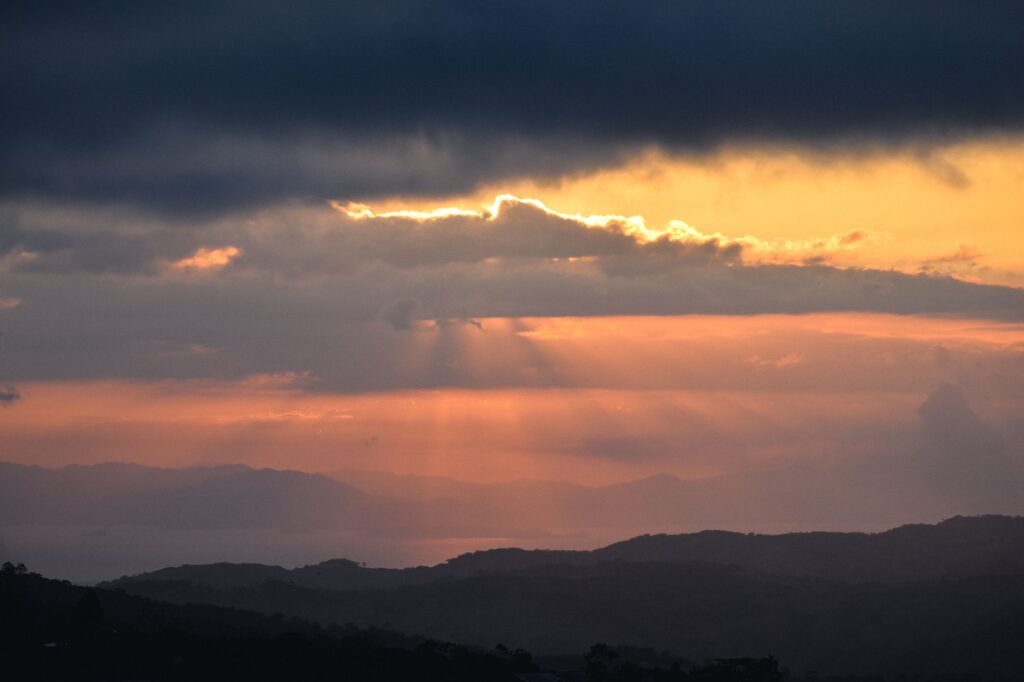
At dusk, when light falls on the hills of Guanacaste, the dry forest recovers a golden tone unlike that of any other tropical ecosystem. There are no great herds or cinematic scenes. There are trees that grew where pasture once was, shade where direct sun once fell, water where erosion once ran.
That is what makes Santa Elena singular: it is not a landscape preserved intact but one rebuilt with patience. And that difference, for the attentive traveller, changes everything.