
Some places remain invisible until you are practically inside them. The Old Monastery of San Juan de la Peña, in the province of Huesca, is one such place. The road winds through pine forests and rocky outcrops until, suddenly, a massive slab of stone seems to swallow the building. It is not a metaphor: the church and cloister are sheltered beneath a natural overhang of conglomerate rock that has protected the complex from rain, wind, and, to some extent, from the eyes of travelers for centuries.
This monastery, declared a Site of Cultural Interest, was one of the most important spiritual centers of the Kingdom of Aragon. Part of the Holy Grail legend was born here, and the remains of several kings and nobles rest within its walls. But beyond its historical weight, San Juan de la Peña is an example of how architecture can adapt to an extreme environment without dominating it. The rock is not an obstacle: it is the roof, the wall, and the shelter.
A place born of legend and stone
Tradition places the monastery’s origins in the 8th century, when a group of monks sought refuge in these mountains fleeing the Muslim invasion. According to legend, the site was chosen by a hermit named Juan de Atarés, who found in this natural cave a space for spiritual retreat. Over time, the community grew, and the monastery became a key enclave for the Christian repopulation of the Pyrenees.
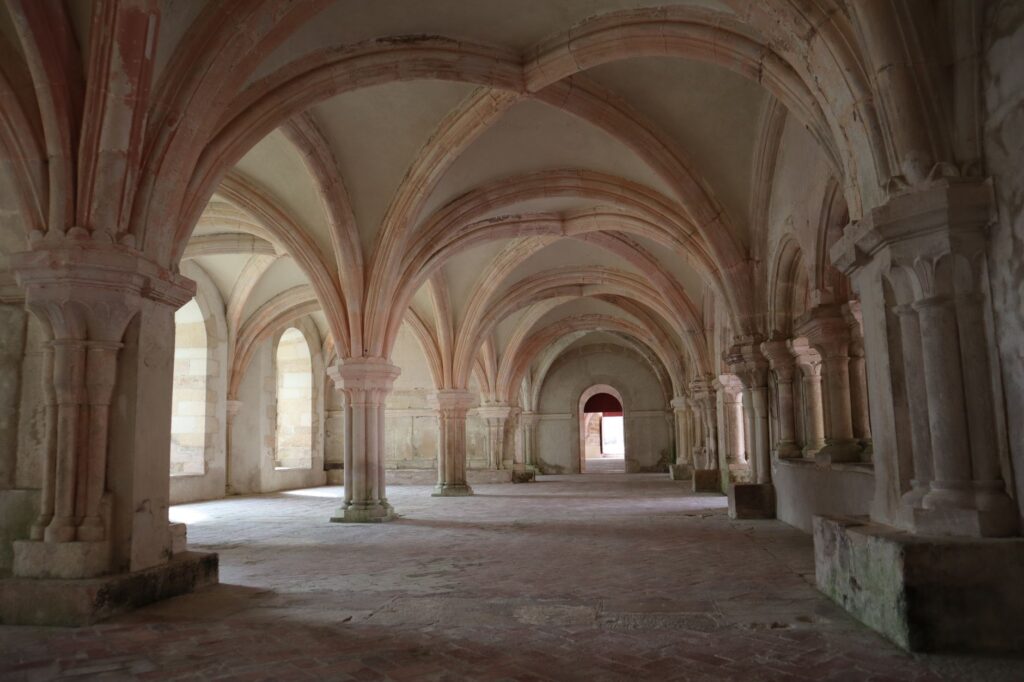
What visitors see today is the result of centuries of construction and renovation. The lower church, carved into the rock, preserves valuable Romanesque frescoes. The cloister, with its historiated capitals, is a jewel of Aragonese Romanesque art. And above it all, the enormous rock acts as a natural roof, creating a microclimate that has helped preserve the complex.
The monastery’s strategic position, nestled in the mountains south of the main Pyrenean chain, made it a natural stopping point for pilgrims and travelers moving between the Ebro Valley and the passes into France. This location, remote yet connected, explains much of its historical importance.
The transition from a simple hermitage to a powerful monastic center was gradual. Royal donations and papal privileges accumulated over the centuries, allowing the community to expand its holdings and influence. At its height, San Juan de la Peña controlled lands, churches, and revenues across a wide territory.
For centuries, the monastery also served as a royal residence and a place of retreat for Aragonese monarchs. Its dual role—spiritual center and political symbol—shaped its architecture and its history, leaving layers of meaning that visitors can still sense today.
The rock is not an obstacle: it is the roof, the wall, and the shelter. San Juan de la Peña is an example of architecture that adapts to its surroundings without dominating them.
The cloister that overlooks the abyss
The cloister of the Old Monastery is one of the most photographed spaces in Aragon. Its pointed arches open onto an irregular courtyard, but what really draws attention is the wall that separates it from the void. On the other side, the terrain drops steeply into the ravine, and the forest stretches as far as the eye can see. On clear days, the light enters obliquely and casts shifting shadows on the capitals.
The capitals narrate biblical passages and scenes from monastic life. Some are worn by time, but they retain remarkable expressiveness. Examining them calmly is one of the best ways to understand Romanesque art: you don’t need to be an expert to perceive that every stone had a narrative purpose.
Among the scenes depicted, visitors can identify episodes from the life of Christ, the Virgin, and various saints, alongside symbolic animals and geometric motifs. This combination of sacred history and everyday observation was typical of Romanesque sculpture, designed to instruct as much as to decorate.
The cloister’s orientation, open to the south and west, captures the changing light throughout the day. Morning brings a soft, diffuse glow; afternoon sunlight sharpens the relief of the carvings, revealing details that are invisible at other hours.
Beyond its artistic value, the cloister functions as a threshold between the built environment and the wild landscape. Standing there, one foot in the stone gallery and one eye on the ravine, the visitor experiences the monastery’s essential tension: shelter and exposure, refuge and precipice.
The Pantheon of Nobles and the royal legacy
Next to the church is the Pantheon of Nobles, a space where the remains of members of the Aragonese nobility rest. Although not all the tombs are identified, the ensemble conveys the importance this monastery held as a burial place for the kingdom’s elites. The sobriety of the tombs contrasts with the grandeur of the natural surroundings.
In the upper church, rebuilt in later periods, you can see a carving of the Virgin and several pieces of goldsmithing. But the true treasure is the sensation of being in a place where history accumulates layer upon layer, without fanfare.
The royal connection is particularly significant. Several early kings and queens of Aragon were buried here, and their tombs became focal points for dynastic memory. The monastery was, in effect, a chronicle in stone of the kingdom’s founding families.
Over the centuries, some remains were moved, and the original arrangement was altered. Yet the Pantheon still communicates a clear message: this was a place where power and piety were intertwined, where earthly authority sought eternal legitimacy.
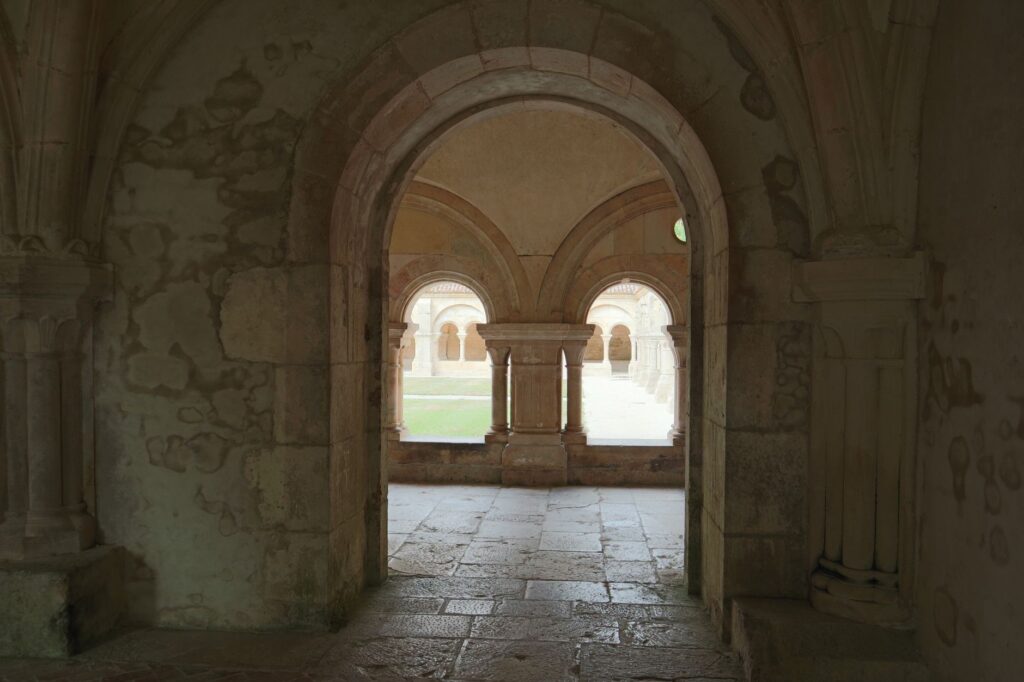
For visitors interested in medieval history, the Pantheon offers a tangible link to the political world of the Pyrenean kingdoms. It is a reminder that monasteries were not isolated from power but often at its very center.
The Holy Grail and the enduring myth
One of the reasons San Juan de la Peña is known internationally is its connection to the legend of the Holy Grail. According to medieval tradition, the chalice used by Christ at the Last Supper was kept in this monastery before being moved elsewhere. That story, recorded in ancient texts, has fueled centuries of speculation and attracted researchers and curious visitors.
Today, the monastery no longer houses the chalice, but the legend lives on in the explanations offered to visitors and in the collective imagination. Beyond its veracity, the myth has helped maintain the cultural relevance of this enclave.
The Grail narrative is deeply embedded in European literature and folklore, and San Juan de la Peña occupies a specific place within that tradition. Medieval chronicles and later romantic reinterpretations have woven the monastery into a wider web of stories about quests, relics, and sacred geography.
Whether or not the chalice was ever here, the legend has left a tangible mark. It draws pilgrims, historians, and the simply curious, adding a layer of mystery to an already enigmatic site.
For the traveler, the Grail connection is less about proving or disproving a claim than about understanding how stories shape places. San Juan de la Peña is a reminder that myths are not the opposite of history; they are part of how history is remembered.
Nature as protagonist
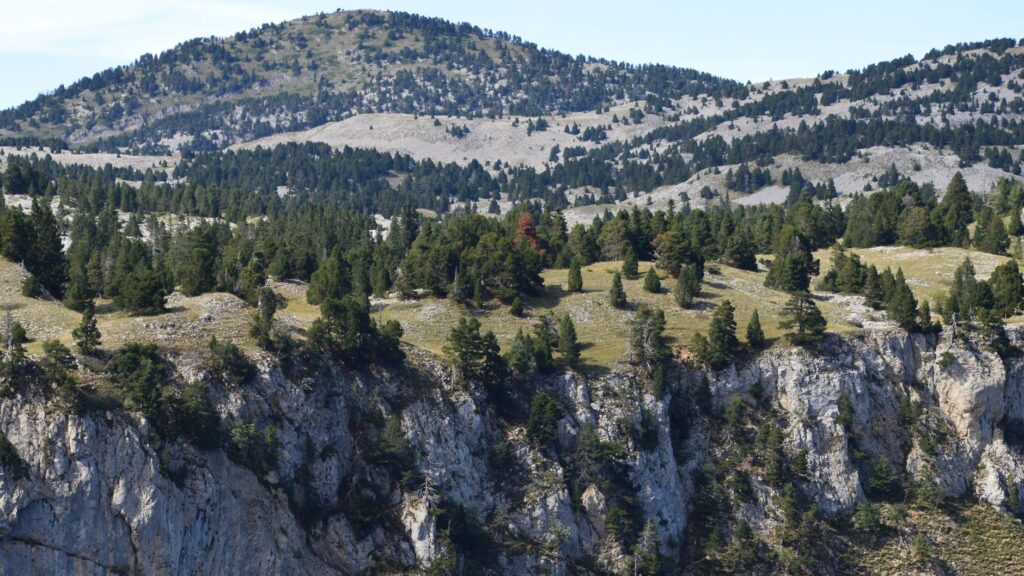
The surroundings of San Juan de la Peña are as impressive as the monastery itself. Trails leading from the parking area allow you to venture into forests of Scots pine and beech, with views of the valleys opening to the south. Wildlife is varied: you may see birds of prey, squirrels, and, with luck, a roe deer.
For hiking enthusiasts, there are signposted routes connecting the Old Monastery with the New one, located a few kilometers away. The path, though demanding in some sections, offers panoramas that justify the effort. In autumn, the forest turns ochre and red, and the light becomes warmer.
The geology of the area is as notable as its biology. The conglomerate rock that forms the overhang is the result of ancient sedimentary processes, later shaped by erosion. Understanding this geological backdrop adds another dimension to the visit: the monastery is not just built on rock; it is built of rock, in a sense.
Spring brings wildflowers and birdsong; summer offers long, clear days; winter can blanket the trails in snow, transforming the landscape but also limiting access. Each season gives the site a different character.
For those who prefer a gentle stroll to a strenuous hike, the immediate surroundings of the Old Monastery still provide plenty of opportunities to appreciate the natural setting without venturing far.
The New Monastery: a necessary transition
About six kilometers from the Old Monastery is the New Monastery of San Juan de la Peña, built from the 17th century onward. Although less spectacular from a landscape perspective, it houses an interpretation center and a hotel. It is a good place to complete the visit and understand the evolution of the monastic community.
The distance between the two can be covered by car or on foot, following a route that crosses forests and meadows. Many visitors choose to combine both for a more complete view of the site’s history.
The New Monastery reflects a different era and a different relationship with the landscape. No longer hidden beneath a rock, it stands in the open, its architecture more conventional but its historical role equally significant. The move from the old site to the new one mirrors broader changes in monastic life and in the region’s social and economic fabric.
For visitors, the contrast between the two monasteries is instructive. The Old Monastery impresses through its dramatic setting and medieval art; the New Monastery provides context, interpretation, and modern amenities.
Together, they tell a story that spans more than a thousand years, from early medieval hermits to contemporary heritage management.
What to see nearby
The Jacetania region offers numerous attractions. A few kilometers away is Jaca, with its Romanesque cathedral and citadel. The villages of Santa Cruz de la Serós, with its church of San Caprasio, and the Yesa Reservoir, on the border with Navarre, are also worth a visit.
For food lovers, the area is known for its migas, ternasco (roast lamb), and artisanal cheeses. In autumn, mushroom picking is a popular activity among locals.
Jaca itself is a lively town with a long history as a crossroads. Its cathedral is one of the most important Romanesque monuments in Spain, and its citadel, a pentagonal fortress, offers insights into the region’s military past.
Santa Cruz de la Serós, a small village with a big history, was once linked to the monastery and retains a Romanesque church of considerable charm. It is a quiet place, ideal for a short stop.
The Yesa Reservoir, though a modern creation, has become a landscape feature in its own right, with views that extend across the water toward the mountains. It marks a natural transition between Aragon and Navarre.
Practical guide
Getting there: The Old Monastery is about 15 kilometers from Jaca, via the A-1603 road. There is free parking next to the entrance. The New Monastery is about 6 kilometers further along the same road.
Opening hours: The Old Monastery is usually open Tuesday to Sunday, with reduced hours in winter. It is advisable to check the official website before visiting, as hours may vary by season.
Tickets: A combined ticket allows you to visit both monasteries. Prices are moderate, with discounts for students and seniors.
Accessibility: The Old Monastery has some areas that are difficult to access for people with reduced mobility due to stairs and uneven terrain. The New Monastery is more accessible.
Recommendations: Wear comfortable shoes, bring water and sun protection. In winter, check road conditions for possible snow. Allow at least two hours to explore the Old Monastery at a leisurely pace.
It is also worth checking whether guided tours are available, as they can provide valuable context and access to areas that are otherwise closed. Even without a guide, however, the site is well signposted and easy to navigate.
Photographers should note that the light inside the rock shelter can be challenging, especially in the cloister. A tripod may be useful, but check local rules before using one.
Finally, consider visiting on weekdays or outside peak season if you prefer a quieter experience. The monastery’s atmosphere is best appreciated without crowds.
A closing image to remember
Leaving the Old Monastery, you cannot help but turn around to look back. The rock is still there, imposing, covering the building like a protective hand. It is an image that sums up the essence of this place: the fusion of the human and the natural, of faith and geology. San Juan de la Peña is not just a monument; it is a lesson in adaptation and resilience, written in stone and silence.
That final glance stays with you. It is not only the scale of the rock or the age of the walls, but the quiet dialogue between them. Here, architecture did not conquer the landscape; it listened to it. And in that listening, something enduring was built.