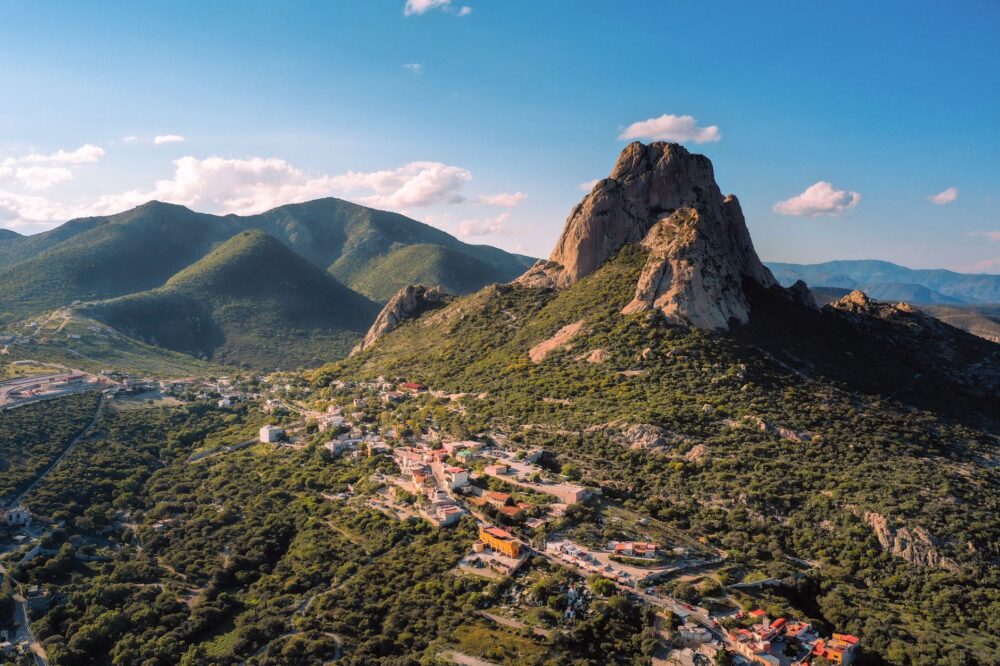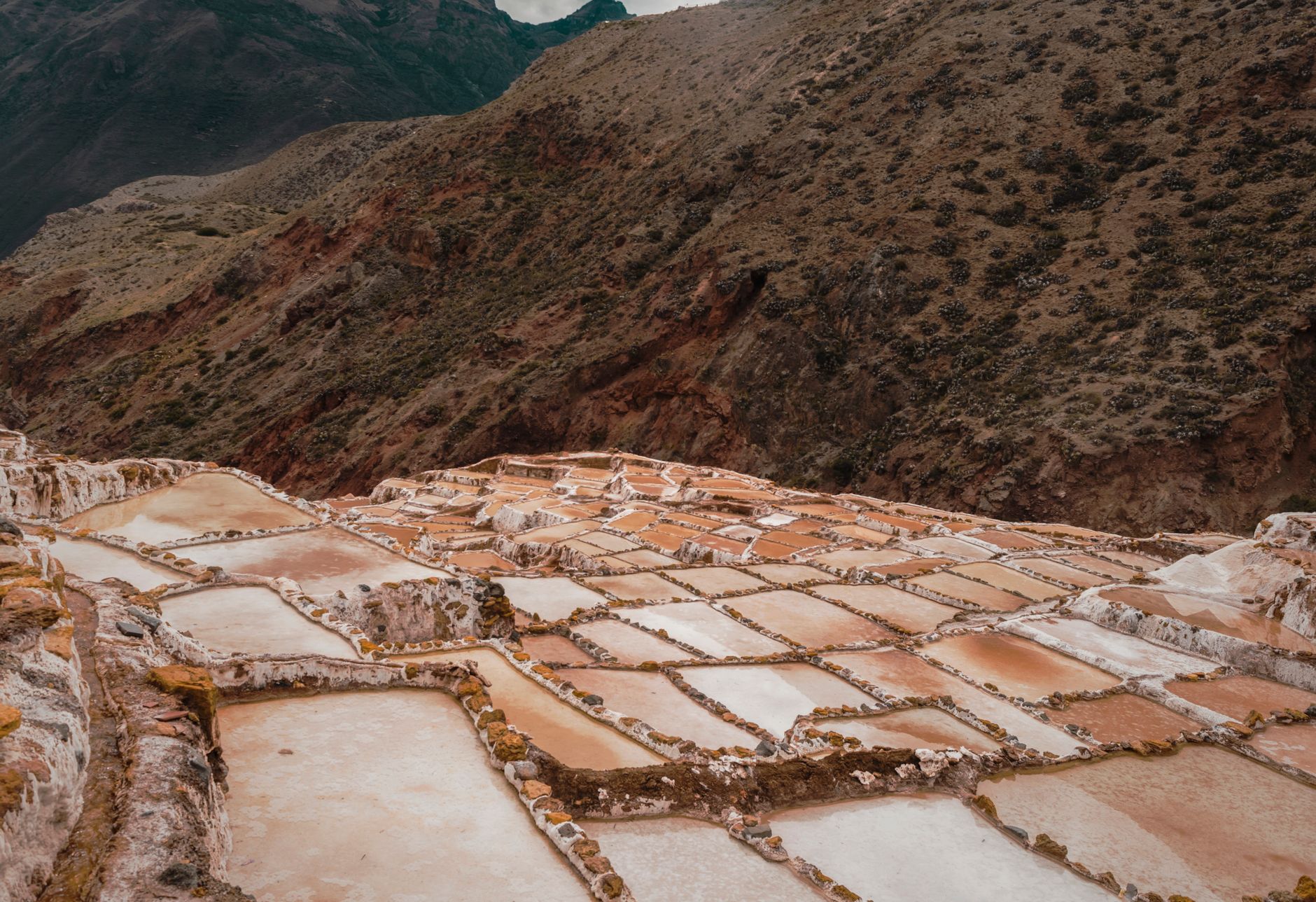

At the western edge of Álava, where the Muera River has carved a narrow valley between rocky slopes and woodland, an unusual landscape unfolds: salt terraces rising in an amphitheatre, held by dry-stone walls and wooden channels. This is the Añana salt valley, a historic complex that nearly vanished and now undergoes an exemplary restoration. Far from becoming a theme park, Añana has transformed into a conservation laboratory where traditional salt production, water architecture and the local community weave a fragile yet hopeful balance.
This report explores how a cultural landscape can be sustained over time when conservation is understood as a living craft rather than a display case. Through the eyes of those who work the salt, manage the land and study its history, we discover a model that combines respect for tradition, discreet innovation and tourism that seeks to learn rather than consume.
An amphitheatre of salt carved by time
The Añana salt pans are not an archaeological site or an open-air museum. They are a working landscape with over twelve hundred years of documented history. Phoenicians, Romans, Visigoths and Muslims passed through, but it was in the Middle Ages that the valley reached its peak, with production supplying much of northern Iberia. Añana salt was prized for its purity and its ability to preserve food in an era without refrigeration.
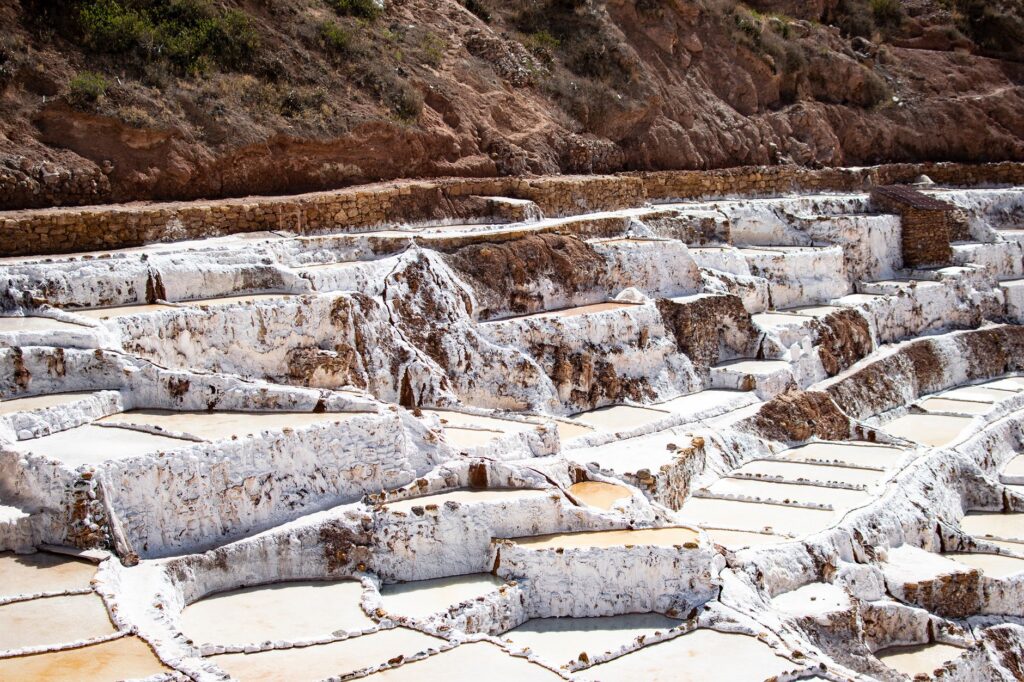
The exploitation system relied on gravity. Saltwater from underground springs emerged at the top of the valley and flowed down through a network of wooden channels to the pans, platforms of clay and sand where sun and wind evaporated the water. Each pan belonged to a family or a monastery, and the whole formed a mosaic of fragmented ownership that persists today.
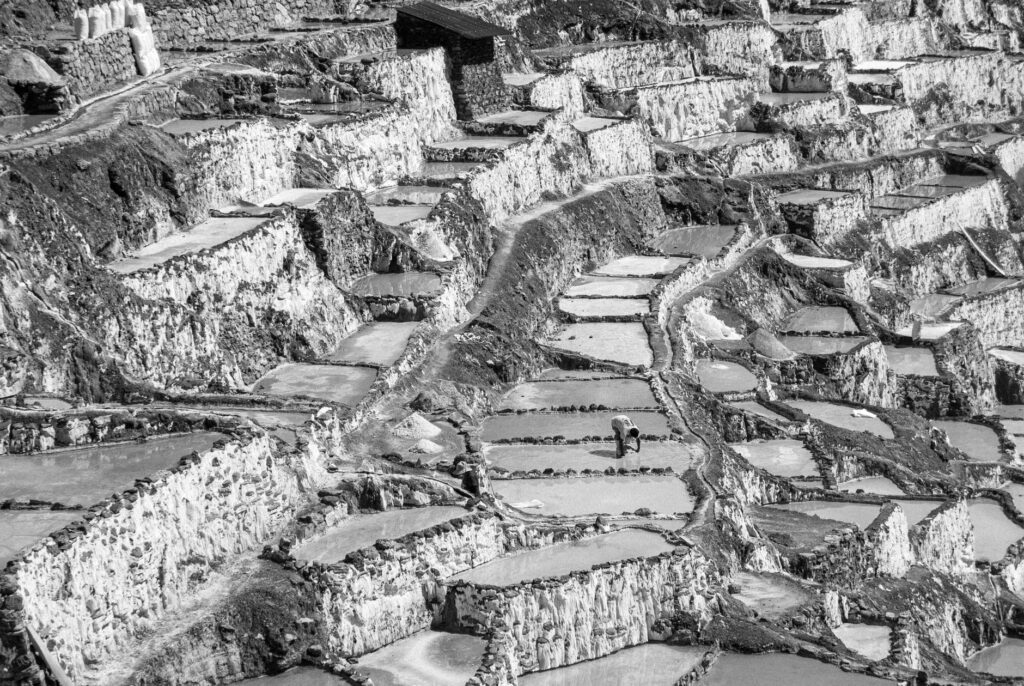
The architecture is radically simple: dry-stone walls supporting the terraces, pine wood channels renewed periodically, and salt stores where the mineral was kept in cylindrical blocks. Nothing is superfluous, nothing is missing. This economy of means has allowed the landscape to survive over the centuries, adapting to droughts, floods and shifts in demand.
Decline and the threat of oblivion
In the mid-20th century, Añana salt lost competitiveness against industrial and mined salt. The pans were progressively abandoned, channels dried up and walls began to crumble. By the 1980s, the valley was a set of ruins invaded by vegetation, and the last salt-making family was about to close.
The situation changed in 2000, when a group of locals, together with the Provincial Council of Álava and other institutions, launched a recovery plan. The goal was not to rebuild a stage set but to reactivate a productive system. The key was to involve the owners of the pans, many descendants of former salt workers, and create a foundation to manage the complex with sustainability criteria.
“Salt is not just a product; it is the excuse to keep a landscape and a way of life alive,” explains one of the foundation’s managers during a visit to the valley.
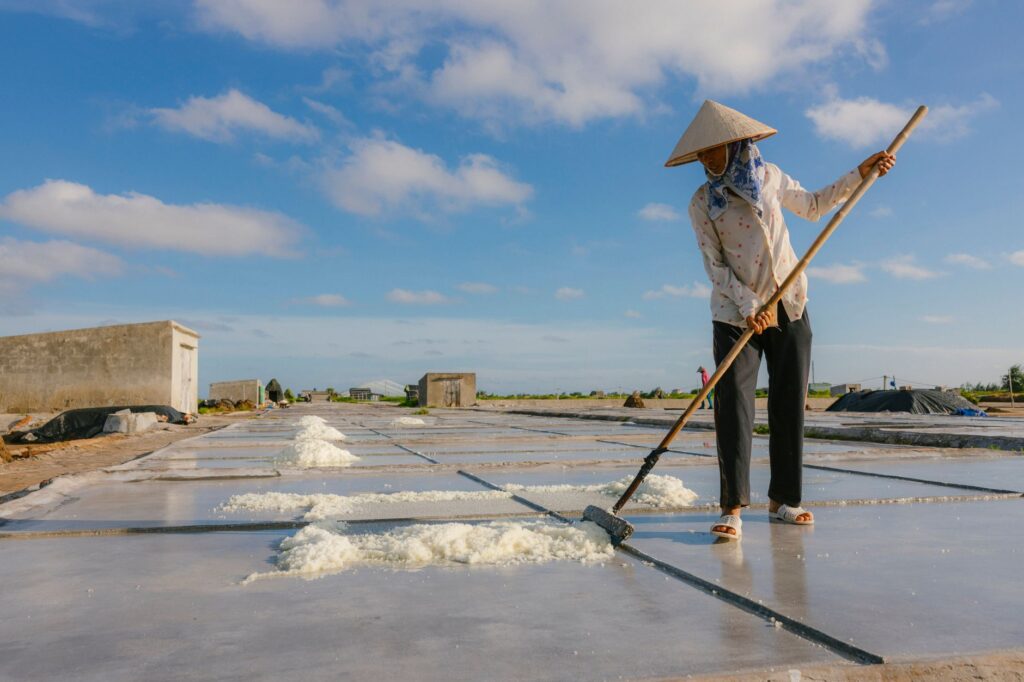
The process was not quick. Channels, walls and pans were restored using traditional techniques, but improvements were also introduced to ensure safety and accessibility. Today, the valley produces salt artisanally, with methods that have barely changed in centuries, and that salt is sold in local markets and specialty shops.
The governance of water and stone
The operation of the salt pans depends on a fragile resource: saltwater. The springs that feed the valley are underground and their flow varies with rainfall. The foundation has established a rotation system to distribute water among the pans, respecting the historic rights of each owner. It is an example of community governance that combines custom and modern regulation.
Dry stone is another essential element. The walls supporting the terraces are built without mortar, fitting stones so that water drains and the structure remains stable. This technique, declared Intangible Cultural Heritage of Humanity by UNESCO, requires constant maintenance. Walls are repaired every few years, and workshops are organised with volunteers and professionals.
Restoration is not a closed project but a continuous task. Each winter, when production stops, repairs are made to channels and walls. It is a seasonal rhythm that marks life in the valley and that visitors can observe if they come at the right time.
A tourism that learns, not consumes
The Añana salt valley receives tens of thousands of visitors each year, but its tourism model is deliberately contained. There are no large infrastructures, no luxury hotels, no franchise restaurants. Visits are organised in small groups with local guides who explain the history and operation of the salt pans. You can walk the valley, observe the pans and, at certain times, join salt-harvesting workshops.
The foundation has set a visitor cap to prevent overcrowding and protect the environment. Signposted routes have also been created to help understand the relationship between the valley and the surrounding landscape. From the viewpoints, a mosaic of white terraces contrasts with the green of the forests and the ochre of the rock.
Tourism is conceived as a conservation tool: income from visits is reinvested in maintaining the valley. In addition, responsible salt consumption is promoted, sold as a local, quality product. The aim is not to attract crowds but to generate a positive and lasting impact.
Salt as intangible heritage
Añana salt is not just a condiment. It is a symbol of identity for the valley’s inhabitants and nearby villages. The salt festival, held every year, brings together salt workers, neighbours and visitors around a tradition dating back centuries. During the celebration, ancient crafts are recreated and freshly harvested salt is shared.
Knowledge associated with salt production is passed down from generation to generation, though few today master all the techniques. The foundation has launched training programmes for young people to ensure generational renewal. It also collaborates with universities and research centres to study the valley’s history and biology.
Añana salt has been included in the European Union’s protected products list, and is marketed under the “Sal de Añana” brand. This recognition has helped differentiate it from industrial salts and maintain its market value.

Biodiversity in a saline landscape
Although it may seem hostile, the salt valley harbours surprising biodiversity. Saline waters and evaporation pans create unique habitats for halophyte plants such as samphire, and for birds like the Kentish plover or the grey wagtail. Dry-stone walls provide refuge for reptiles, insects and small mammals.
The foundation has conducted studies to identify present species and adopted measures to protect them. For example, herbicides are avoided and untouched zones are maintained to encourage nesting. The valley has become a point of interest for ornithologists and botanists, who find a singular ecosystem here.
Conserving the saline landscape also helps regulate the water cycle and prevent erosion. Dry-stone walls and terraces act as natural drainage systems, preventing torrential rains from washing away soil. It is an example of how a cultural landscape can provide essential ecosystem services.
The challenges of a sustainable model
Despite achievements, the Añana salt valley faces significant challenges. Climate change is altering rainfall patterns and temperatures, affecting spring flow and evaporation. Droughts are increasingly frequent, and salt workers must adapt their production cycles.
Another challenge is economic viability. Artisanal salt production cannot compete on price with industrial salt, so it depends on selling high-quality products and tourism income. The foundation seeks new funding avenues, such as online sales and collaboration with restaurants and gourmet shops.
Urban pressure is also a threat. The valley is surrounded by villages that have experienced moderate growth, and there is a risk of real estate speculation affecting the surroundings. Local authorities have approved protection plans to limit construction in sensitive areas.
“The greatest danger is indifference. If people stop valuing this landscape, it will end up disappearing,” warns a salt worker who has spent decades in the valley.
Practical guide
If you plan to visit the Añana salt valley, here is useful information to organise a responsible trip.
- Getting there: The valley is about 30 kilometres from Vitoria-Gasteiz and 20 from Miranda de Ebro. It can be reached by car via the A-2622 road, or by bus from Vitoria-Gasteiz. The nearest train station is in Miranda de Ebro, with connections to Bilbao, Logroño and Madrid.
- When to go: Spring and autumn are the best seasons to visit, for mild temperatures and lower crowds. Summer is busier but allows you to see evaporation at its peak. Winter is quiet, though some activities may be suspended due to rain.
- What to do: Booking a guided tour is recommended to understand how the salt pans work. You can also hike surrounding routes, such as the one up to the Atxabal viewpoint, and join salt-harvesting workshops if you coincide with the season.
- Where to buy: Añana salt is sold at the valley shop and in local markets. Look for the protected brand to ensure you support traditional production.
- Tips: Wear comfortable shoes, sun protection and carry water. Respect signposted areas and do not leave the paths. The valley is a fragile space and your behaviour helps conserve it.
A visit to the Añana salt valley is an experience that invites reflection. In a world where speed and consumption seem unbeatable, this corner of Álava proves that it is possible to keep a landscape alive for centuries, adapting without losing its essence. Salt, that humble mineral, becomes here a symbol of resistance and collective intelligence.