
High mountain ranges are not conquered through fanfare, but through the silent persistence of steel and stone. At over two thousand meters of altitude, where fir trees fade beneath permanent mantles of snow and the air cuts the lungs with surgical precision, the trains of the Rhaetian network continue their unalterable journey. This is not a mere alpine transport system, but a masterpiece of civil engineering that, since the late 19th century, redefined the relationship between humanity and the most impenetrable gorges in Europe. Traveling along these tracks is stepping into a territory where the verticality of the Swiss landscape defies conventional logic, compelling past engineers to weave a network of spiral tunnels and dizzying viaducts that are now recognized as a UNESCO World Heritage Site.
The pulse of this railway system beats to the rhythm of the seasons, radically transforming the traveler’s experience depending on whether the thermometer marks the spring thaw or the harshness of northern winter. As the locomotives wind along the Albula and Bernina gorges, the landscape’s architecture unfolds in a sequence of refined engineering where every masonry bridge seems to have sprouted organically from the bedrock. Far from constituting a mere tourist attraction, these tracks anchor the daily life of remote valleys, connecting isolated communities and demonstrating that sustainable mobility in extreme environments is achievable when designed with absolute respect for local topography.
The Iron Genesis on the Roof of Europe
In the late 19th century, the isolation of Graubünden represented an insurmountable obstacle to the economic and social development of Switzerland. Traveling between valleys required full days across mountain passes that became impassable during long winter months. The response to this geographical challenge was not the opening of roads, but the bold commitment to a narrow-gauge railway layout capable of climbing impossible slopes without resorting to costly rack-and-pinion systems along most of its route.
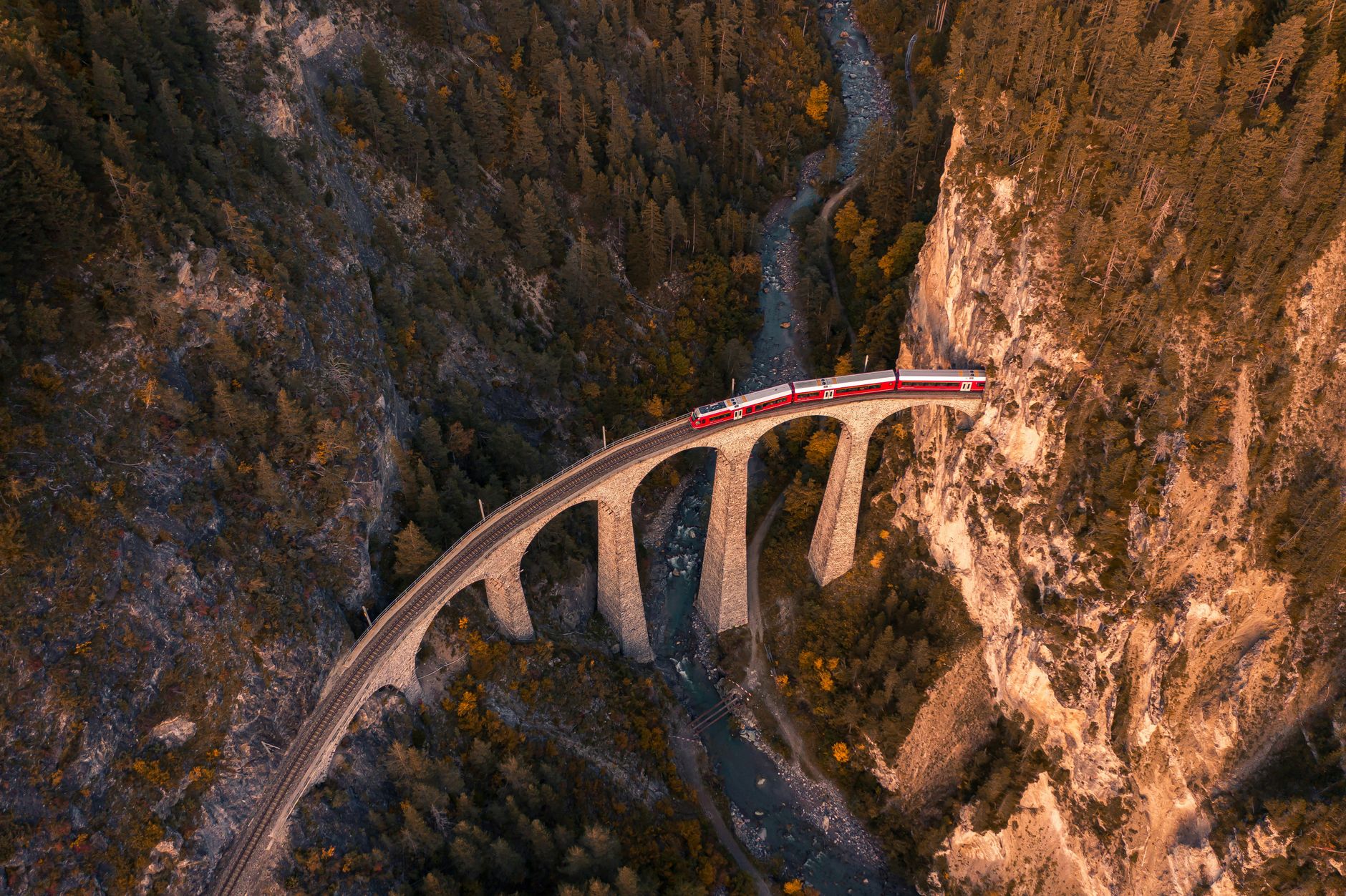
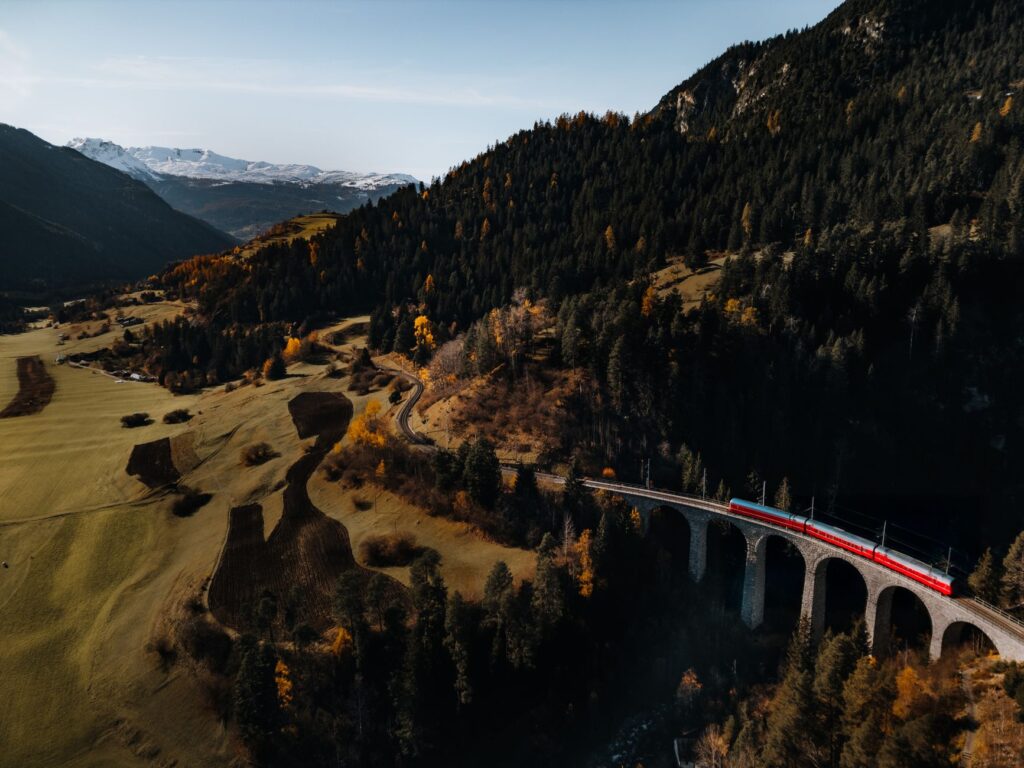
The engineers leading the construction had to contend with brutal elevation changes, unpredictable avalanches, and fierce meteorology. The result was the harmonious integration of complex snow-shed gallery systems and curved bridges such as the celebrated Landwasser Viaduct, whose black limestone arches project over the river abyss with sober elegance. Every wooden sleeper and steel beam installed in that foundational era laid the groundwork for a transport model that prioritized durability and minimal intervention in the alpine ecosystem.
Geometric Engineering Against Gravity
Overcoming a thousand-meter elevation change within a few kilometers of horizontal distance requires extraordinary technical solutions. The helical tunnels of the Albula line are the pinnacle of this precision engineering. Instead of plotting impossible gradients, trains trace closed loops inside the mountain, gaining height in a spiral fashion before emerging once more into daylight against dazzling panoramas over the glaciers.
This technical display is completed by a signaling and electrification system adapted to extreme thermal stresses. High-voltage cables withstand substantial ice loads thanks to special alloys, while switch points incorporate geothermal heating mechanisms to prevent frost-locking. Swiss precision is not an advertising trope in these territories, but an indispensable requirement to guarantee the safety of convoys transiting daily along the edge of colossal precipices.
The Human Rhythm in High-Altitude Stations
Behind heavy machinery and cutting-edge engineering lies the human factor, represented by operators, station masters, and engineers who know every kilometer of track like the back of their hand. In enclaves like Ospizio Bernina, the highest station on the network situated at 2,253 meters above sea level, the arrival of the train sets the rhythm of the day. Here, the exchange of goods and passengers is executed with millimetric efficiency, far removed from the bustle of major European metropolises.
Local communities depend on this railway line for winter provisioning, medical assistance, and school mobility. The mixed carriages, capable of transporting passengers as well as postal cargo and supplies, act as the true umbilical cord of valleys where the road remains closed for weeks. This multifunctionality reinforces the essential character of the service, reminding travelers that they are crossing an inhabited and living space, not a mere alpine theme park.
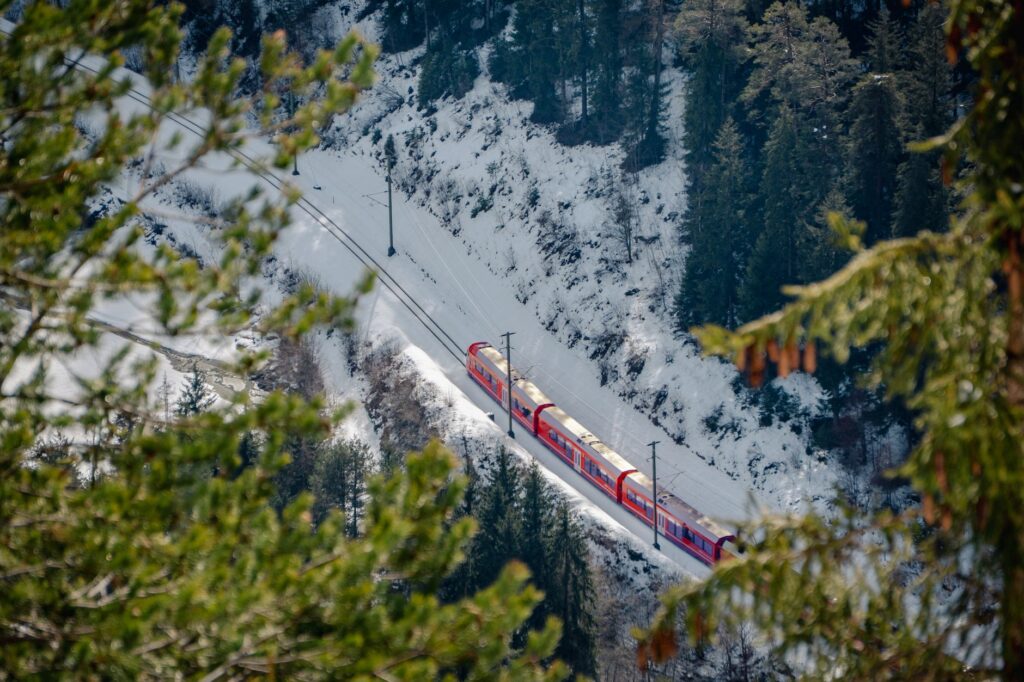
The alpine railway does not tame the mountain; it establishes a pact of mutual respect where engineering yields to geology.
Vernacular Architecture Meets the Railway
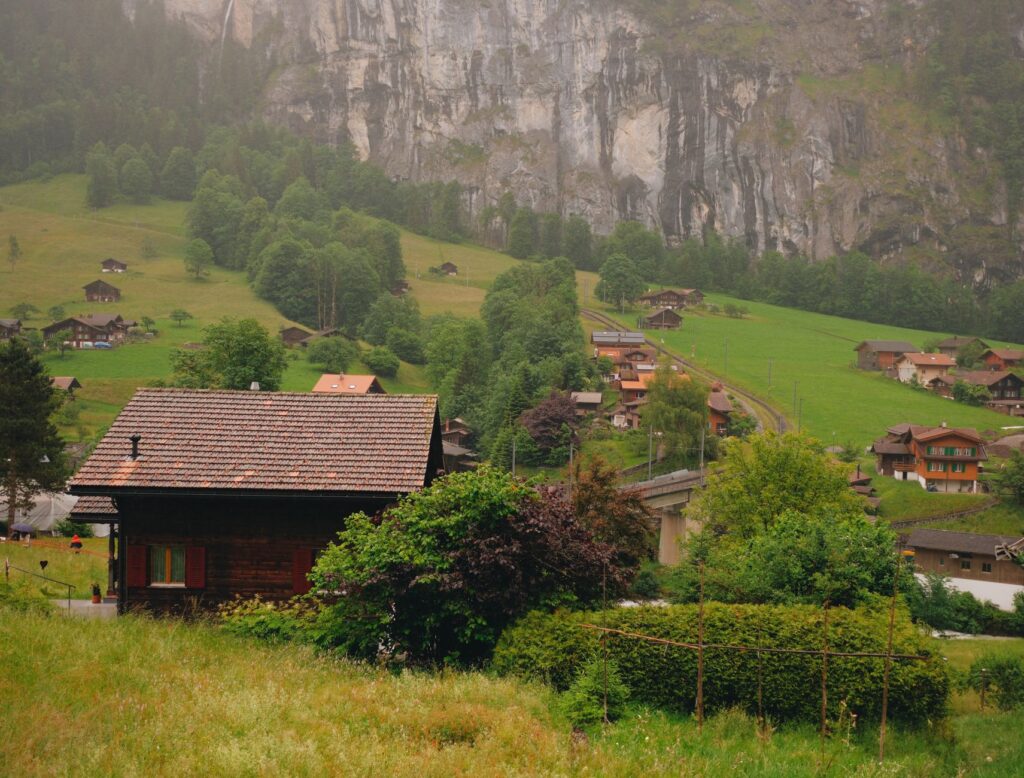
The advent of the railway in the late 19th century also transformed the urban and architectural landscape of the Graubünden villages. Stations, built with local stone and traditional timber framing, became visual landmarks that conversed with slender church steeples and traditional Engadine houses featuring sgraffito walls.
This architectural symbiosis demonstrates exceptional aesthetic sensitivity on the part of the original designers. Dry-stone retaining walls, erected by hand by Italian and Swiss artisans, blend seamlessly with agricultural terraces and high-altitude pastures. The result is a coherent cultural landscape where modern infrastructure does not clash, but instead underscores the monumental scale of the natural environment cradling it.
Biodiversity and Ecological Corridors Beneath the Rails
Contrary to what one might assume, the narrow-gauge railway layout has historically acted as a lower-impact barrier on wildlife compared to major asphalt highways. Running on permeable ballast and featuring a reduced loading gauge, the track allows the occasional migration of high-altitude species such as chamois, ibex, and red deer.
Furthermore, track maintenance work is executed avoiding the massive use of chemical herbicides, thus preserving the endemic flora of slopes and embankments. Local biologists collaborate closely with the railway company to regulate the passage of convoys in highly sensitive wildlife zones during nesting and breeding seasons, consolidating a management model where environmental conservation forms part of daily operations.
The Art of Slow Travel in the Digital Age
At a historical moment dominated by immediacy and mass air transport, the experience of traversing Graubünden aboard a regional train offers a radical counter-landscape. The average speed of the convoys, ranging between 30 and 50 kilometers per hour due to terrain sinuosity, invites contemplative pacing and attentive reading of the territory.
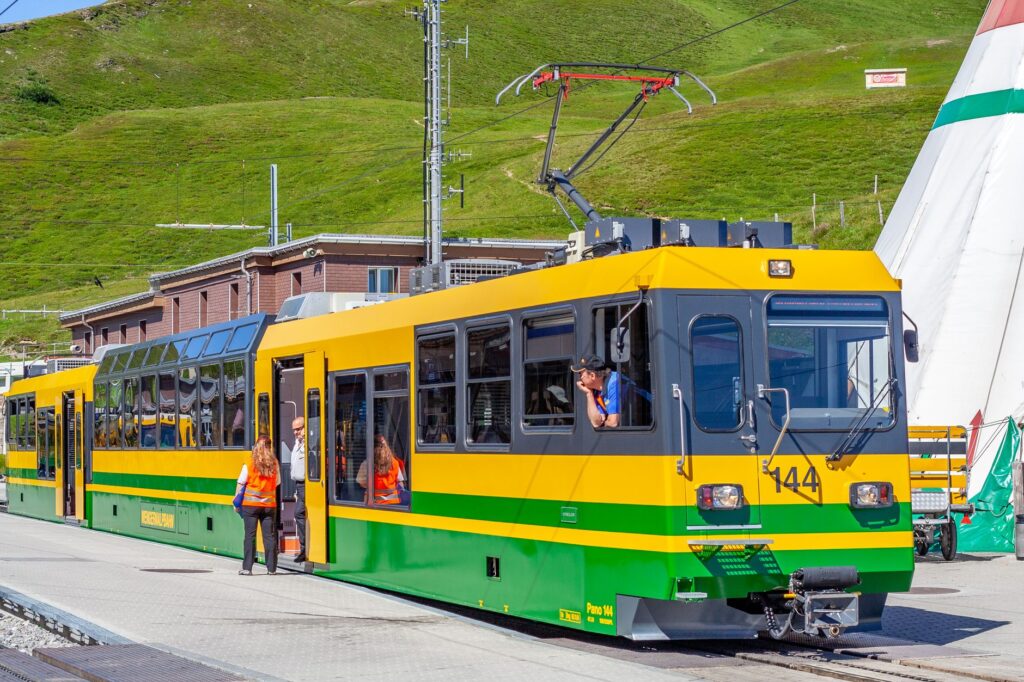
The large panoramic windows of specialized coaches allow observers to witness the botanical transition from mixed deciduous forests to alpine tundra and permanent ice fields. This unhurried transit generates deep mental disconnection in travelers, who rediscover the value of time measured in geological horizons rather than minutes of travel.
Traveling at railway speed through the Alps restores the journey’s status as a destination, transforming transit into a form of knowledge.
Practical guide
How to get there: The primary access point to the Rhaetian network is the city of Chur, connected directly via express trains from Zurich in approximately one and a half hours. Chur functions as the main intermodal hub for venturing into the Albula and Rhine valleys.
Route planning: It is recommended to purchase the Swiss Travel Pass or the specific Graubünden Pass, which allow unlimited use of the railway network, postal buses, and associated lake connections across the region during selected validity days.
Best time to travel: The months from January to March offer peak winter landscape splendor with fully snow-covered passes, while June through September provide access to high-altitude hiking trails directly connected to train stations.
Accommodation and services: Major stations feature automated lockers and luggage transfer services between hotels, facilitating multi-stage walking tours without the need to carry weight aboard the convoys.
Regulations and safety: In case of extreme adverse weather conditions due to heavy snowfall, always check real-time update panels from the Rhaetian Railway (RhB) company to verify potential temporary modifications in operating schedules.
Recommended gear: High-grip footwear is essential for navigating icy platforms, along with windproof technical layering, as temperatures drop drastically upon disembarking at high-altitude mountain passes.
Photography and key spots: The best vantage points for capturing engineering feats without crowds include signposted viewpoints overlooking the Landwasser Viaduct, accessible via well-marked pedestrian trails from Alvaneu station.
Onboard sustainability: Respect quiet zones in designated carriages and use the selective recycling bins available both at stations and inside regional trains.
The final sigh of the day arrives when the sun plunges behind the Graubünden summits, dyeing the snow-covered slopes flanking the tracks in deep violet hues. Inside the carriage, the gentle hum of the electric motor and the rhythmic clatter of wheels over steel joints accompany travelers toward night shelter. Out there, in the dark immensity of the gorge, centenary viaducts and silent tunnels continue their indestructible vigil, awaiting the first flash of dawn to repeat, once more, the daily miracle of uniting the unpassable.