
Origins and Geography of a Vertical Archipelago
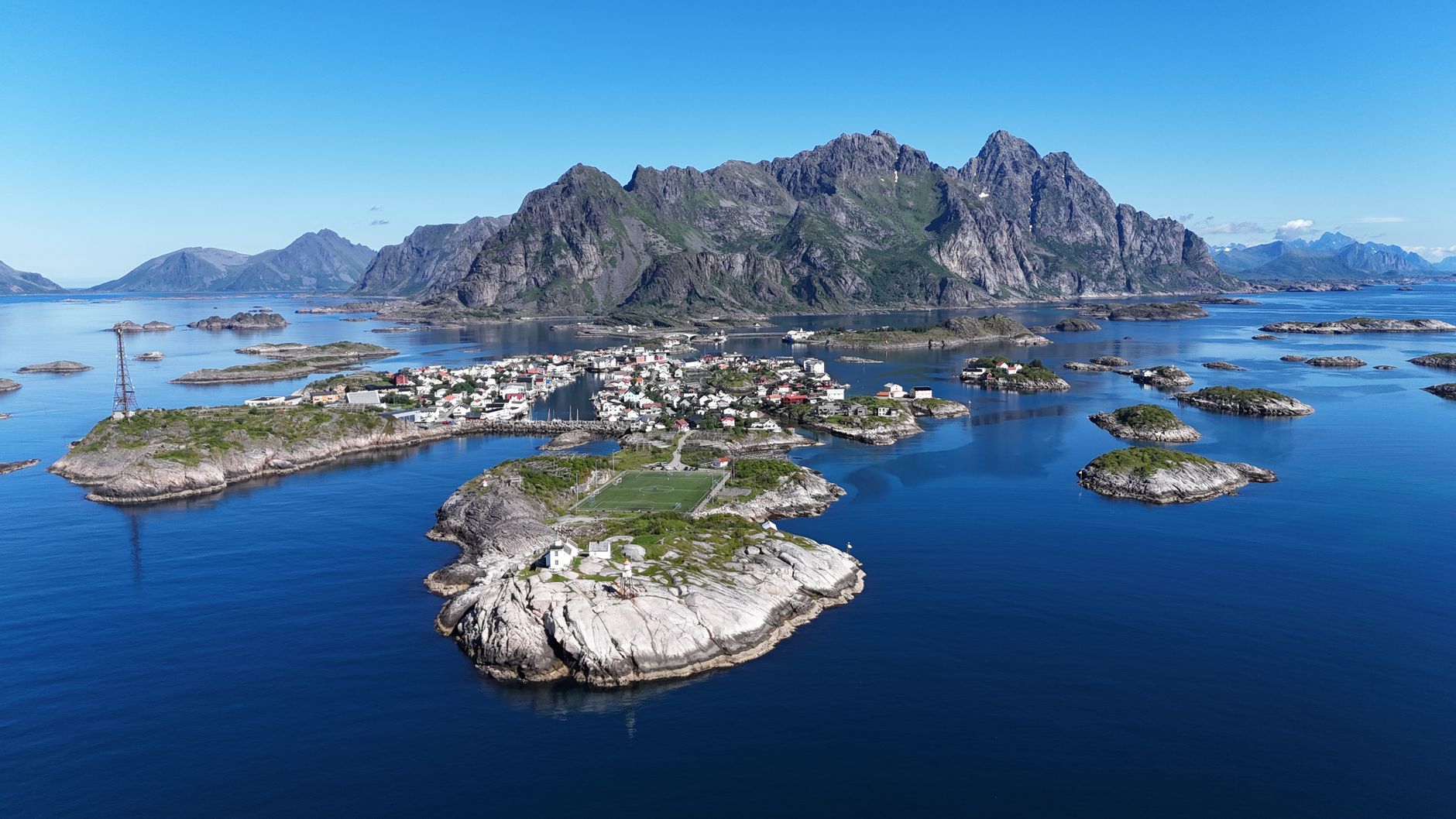
The Lofoten archipelago, situated above the Arctic Circle in Nordland county, Norway, rises from the dark waters of the Norwegian Sea like a jagged wall of granite peaks. For centuries, the sole connection among its steep islands—Austvågøy, Gimsøy, Vestvågøy, Flakstadøy, Moskenesøy, Værøy, and Røst—has relied on an intricate network of traditional fossil-fueled ferries and winding roads hugging vertiginous cliffs. This geographical isolation, while idyllic for the seasonal visitor, has historically represented a considerable logistical burden for permanent residents and a source of environmental pressure on boreal marine ecosystems.
Over the past decade, the exponential increase in global tourist traffic and the need to guarantee a seamless supply chain for the local fishing industry—especially the export of traditional stockfish or tørrfisk—overwhelmed existing transport infrastructure. Narrow roads, originally designed for light carts and utility trucks, suffered accelerated degradation under the weight of oversized motorhomes and buses. Facing this scenario, the regional administration, in collaboration with naval engineers and sustainable mobility experts, began devising a radical solution: transforming the archipelago into a living laboratory for low-emission transport.
The central thesis of this transformation is that true insular connectivity is not achieved by widening asphalt or destroying topography to build kilometers of tunnels, but through the intelligent integration of hybrid cargo-passenger barges, low-speed nautical routes, and a network of intermodal electric trails. This strategy not only drastically reduces the region’s carbon footprint, but also restores the natural rhythm of the sea, an essential factor in safeguarding local seabird populations and the fragile cold-water coral reefs inhabiting Lofoten’s channels.

The Silent Revolution in the Fjords: Hybrid Ferries and Shore Power Electrification
The most visible change in Lofoten’s daily mobility is concentrated on its waters. Maritime routes connecting Svolvær with Skutvik and Moskenes with Bodø have seen the progressive introduction of hybrid and fully electric propulsion ferries. These vessels, constructed with lightweight aluminum hulls to maximize energy efficiency, combine high-capacity lithium-ion battery packs with backup generators fueled by certified advanced biofuels. During short crossings between islands, the vessels operate entirely in electric mode, completely eliminating carbon dioxide emissions and reducing underwater noise pollution, a crucial aspect to prevent disruption of cetacean migration routes and local fish stocks.
Port infrastructure has also undergone a profound metamorphosis. Traditional docks in Svolvær, Reine, and Henningsvær have been equipped with high-power fast-charging stations, powered primarily by the mainland Norwegian hydroelectric grid. The integration of these charging points allows vessels to replenish their energy during brief passenger boarding intervals, optimizing fleet turnaround times. Additionally, automated magnetic docking systems have been installed to minimize maneuvering time and avoid prolonged use of auxiliary engines during port operations.

This technological deployment has not been without technical and logistical challenges. The harsh weather conditions of the Arctic winter, characterized by gale-force winds, heavy seas, and sub-zero temperatures, test the resilience of energy storage systems and azimuthal propulsion units. However, data collected after three years of continuous operation demonstrate that hybrid barges maintain an operational availability rate of over ninety-eight percent, outperforming older diesel ferries in adverse conditions.
The sea in Lofoten has never been a barrier, but the only true street; electrifying its routes is returning peace to a landscape that lives by the rhythm of the tides.
Soft Mobility on Land: Floating Walkways and Multimodal Lanes
Beyond maritime routes, land transport within the interior of the islands has adopted a low-impact landscape intervention approach. Traditionally, cyclists and pedestrians shared the scarce space of main roads with heavy vehicles, turning local commuting into a high-risk activity. To solve this problem without invasive slope cutting or rock drilling, the regional mobility consortium promoted the construction of floating walkways and elevated trails on galvanized steel piles winding along coastlines.
These lightweight structures connect previously isolated fishing settlements, such as Hamnøy and Sakrisøy, through safe pedestrian and cycling routes protected from the elements. The paths are equipped with low-intensity LED lighting powered by small solar panels integrated into handrails, specifically designed to avoid light pollution that could interfere with aurora borealis observation. The use of these multimodal lanes is strictly reserved for electric bicycles, light personal mobility vehicles, and authorized local residents, drastically limiting the flow of combustion automobiles along the most picturesque and vulnerable stretches.
Furthermore, a community fleet of electric cargo bikes has been deployed at decentralized solar stations along the national cycling route traversing the archipelago. These bikes allow travelers and small local merchants to transport goods and luggage without relying on conventional delivery vans. The system operates via a unified mobile application managing both bicycle rentals and reservations for hybrid ferry spaces, offering a truly integrated and frictionless travel experience.
Community Governance and the Local Transport Economy
The transformation of transport in Lofoten is not a top-down project imposed by Oslo, but the result of ongoing dialogue between local municipal councils, fishing cooperatives, and sustainable tourism enterprises. This participatory governance ensures that infrastructure investment decisions respond first to the everyday needs of residents—such as safe access to healthcare centers and schools during winter storms—before catering to tourism sector demands.

Fishing cooperatives have played a fundamental role in designing freight logistics routes. Through a cargo consolidation system managed at nodal logistics centers located in Leknes and Svolvær, delivery truck trips have been reduced by forty percent. Seafood is now transported from docks to distribution centers using last-mile electric delivery vehicles, synchronized with the arrival times of hybrid barges.
This circular economic model reinforces the archipelago’s social fabric, preventing the depopulation of remote settlements and ensuring that economic benefits derived from the ecological transition remain within the community. Funds raised through congestion charges applied to non-resident rental vehicles are fully reinvested in maintaining floating walkways and subsidizing electric vehicle purchases for low-income local families.
Practical guide
Planning a sustainable and respectful trip to the Lofoten archipelago requires understanding its new multimodal transport network and adopting behavioral guidelines aligned with the fragility of the Arctic environment.
- How to get there: Access the archipelago by flying into Leknes or Svolvær airport via connections from Oslo, or by taking the high-speed electric passenger ferry from Bodø to Moskenes. Visitors are strongly advised to forgo traditional rental cars and utilize the integrated public transport system.
- When to visit: Months from May to August offer extended daylight and optimal conditions for cycling routes and ferries. For northern lights observation, September and October maintain fluid mobility before heavy winter storms arrive from November to January.
- Internal travel: Use the unified regional transport card to combine intercity electric buses, passenger ferries, and cargo bike rentals at solar stations located in major ports.
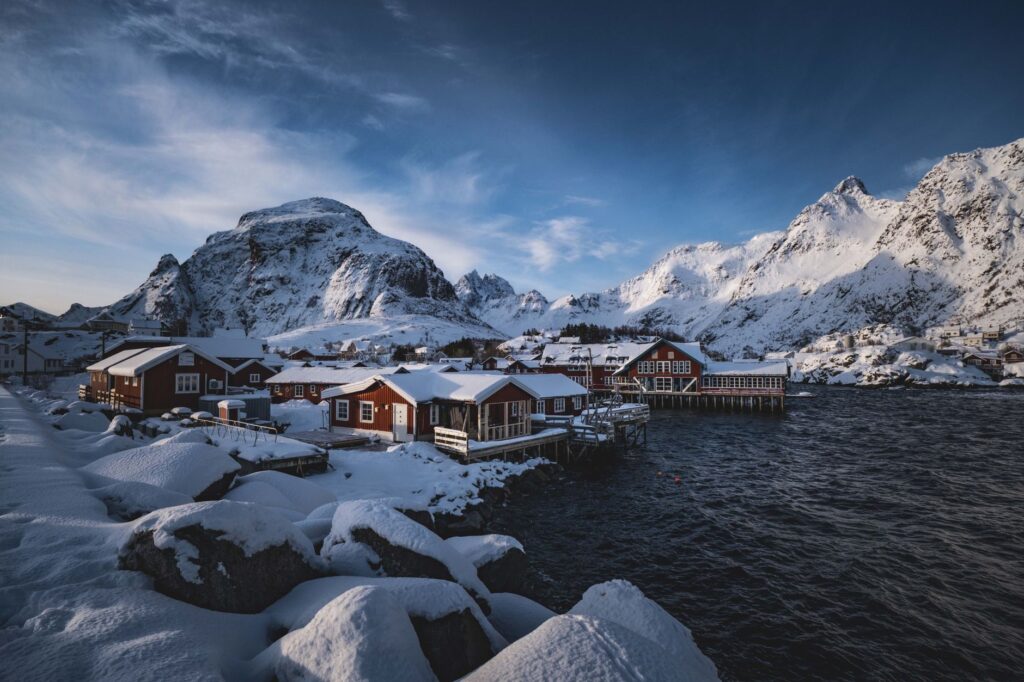
- Accommodation and consumption: Choose traditional accommodations certified with local ecolabels, such as historic rorbu (restored fisherman cabins), and consume seasonal local products at the cooperative fish markets of Svolvær and Henningsvær.
- Code of conduct: Camping outside designated areas and driving motor vehicles on pedestrian paths or floating walkways is strictly prohibited. Respect local wildlife tranquility and the private property of fishermen.
Final reflection: the sustainable heartbeat of the far north
As the midnight sun bathes Lofoten’s rugged profiles in persistent golden light, the archipelago proves that it is possible to reconcile economic development and contemporary tourism with the strict preservation of one of the planet’s most delicate ecosystems. The transition toward a transport model based on naval electrifications, soft mobility, and community management represents not a limitation, but a profound liberation from the extractivist past of the region.
Every hybrid barge plying channels without emitting greenhouse gases and every floating walkway allowing estuary crossings without disturbing the seafloor confirm that true luxury in the twenty-first century is stillness, respect, and coherence with the territory. Lofoten thus stands as a beacon of hope for other coastal regions worldwide, demonstrating that when local communities take the helm of their own destiny, the horizon of the future is drawn with clean, silent, and deeply human lines.